
Ram Dakota: The Tacoma Rival's 2026 Status, Explained
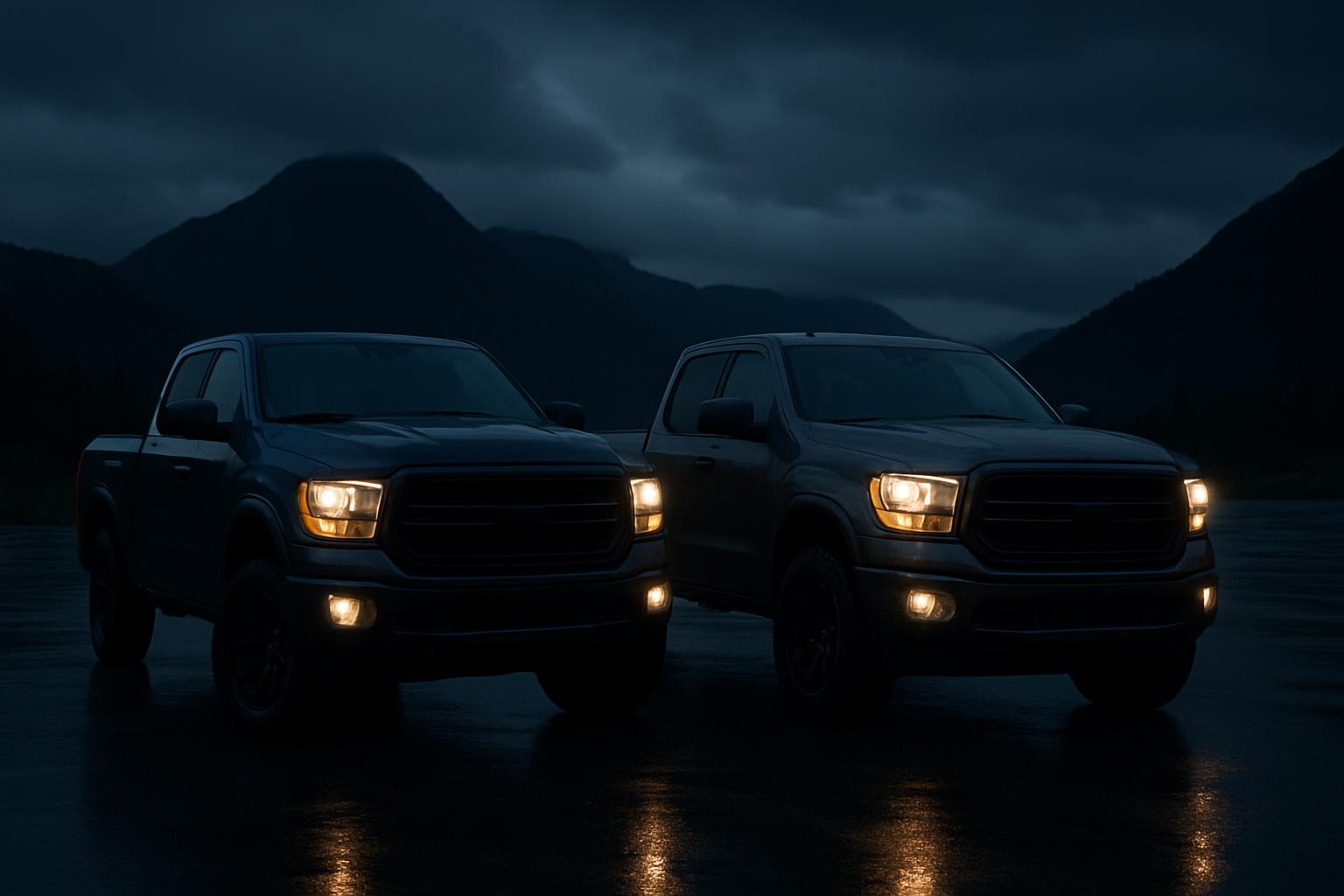
The Ram Dakota is officially happening. Ram boss Tim Kuniskis has confirmed the brand's return to the midsize truck segment with a revived Dakota nameplate, a body-on-frame pickup built to challenge the Toyota Tacoma, Ford Ranger, and Chevrolet Colorado. As of mid-2026 the production truck has not been revealed, but the plan is locked: pilot production starts in 2027, the truck arrives as a 2028 model built in Toledo, Ohio, and Ram has promised to keep it under $40,000.
Ram confirmed the Dakota name and the mission
After years of rumors, Ram has put its intentions on the record. CEO Tim Kuniskis said the company's new midsize truck needs to be 'a real truck' that costs less than $40,000, and Stellantis has gone further, claiming the Dakota will be the 'most powerful' truck in the midsize class. It will be built alongside the Jeep Gladiator at the Toledo North Assembly Plant in Ohio, backed by a slice of a much larger US investment push. Here is what Ram and Stellantis have publicly committed to so far:
- Name: Dakota, reviving the badge Ram last sold for 2011
- Body-on-frame construction, not a unibody crossover-truck
- Built in Toledo, Ohio, alongside the Jeep Gladiator
- About $400 million of a $13 billion Stellantis US investment plan
- Capacity targeted near 100,000 trucks per year, adding 900-plus jobs
- Promised under $40,000 and billed as the 'most powerful' midsize truck
When does the Ram Dakota come out?
The timeline points to a 2027 introduction and 2028 sales. Pilot production, the low-volume build that validates the assembly line, is slated for March 2027, with full-scale manufacturing ramping for the 2028 model year. That means a public reveal is likely in 2026 or 2027, with trucks reaching dealer lots in late 2027 or into 2028. Treat any earlier on-sale claim as optimistic until Ram confirms a reveal date.
How much will the Ram Dakota cost?
Ram has committed to a sub-$40,000 truck, and industry expectations point to a starting price near $30,000 for a base model. That would slot it right against the Toyota Tacoma, Ford Ranger, and Chevy Colorado, which all open in the low-to-mid $30,000s before options. The exact MSRP is not confirmed, and pricing will depend on which engines and trims Ram leads with, but the strategic promise is clear: undercut or match the segment leaders rather than launch as a pricey halo product. That sub-$40,000 ceiling is a deliberate line in the sand, because pricing a midsize truck too close to the full-size Ram 1500 would give buyers little reason to choose it.
What engine will the Ram Dakota have?
Nothing is officially confirmed, but the strong expectation is Stellantis' Hurricane turbocharged engine family, most likely starting with a turbo four-cylinder and potentially adding a more powerful inline-six or an electrified plug-in option higher in the range. Stellantis' claim that the Dakota will be the 'most powerful' midsize truck suggests the lineup will be tuned to out-muscle the Tacoma and Ranger on horsepower and torque, which is a bold target given Toyota's i-Force Max hybrid already pushes past 320 horsepower. The Hurricane four has shown strong output in other Stellantis vehicles, so the hardware to back up the claim exists. Until Ram releases official specs, though, treat any specific power figure as expected rather than confirmed.
Is the Ram Dakota the same as the Jeep Gladiator?
No, despite being built in the same Toledo plant. Reporting indicates the Dakota will use a unique body-on-frame platform developed for Ram, widely believed to be Stellantis' STLA Frame architecture, rather than sharing the Gladiator's solid-axle, Wrangler-derived underpinnings. The reasoning is simple: Stellantis does not need two nearly identical midsize trucks, so the Dakota is being engineered as a more on-road-friendly, mainstream pickup while the Gladiator keeps its hardcore off-road identity.
How does it stack up against the Tacoma and Ranger?
The midsize segment is crowded and selling well, which is exactly why Ram is returning. The Tacoma was fully redesigned for 2024 with turbo and hybrid power, the Ford Ranger is back with a Raptor halo, and the Chevy Colorado and GMC Canyon have strong off-road trims and recently won segment praise. Ram's pitch is power and price: be the strongest midsize truck while staying under $40,000, and lean on the Ram 1500's reputation for a comfortable, well-finished cabin to stand out in a class where interiors are often an afterthought. The risk is timing, since these rivals will have several more years of sales momentum and loyal owners before the Dakota even reaches showrooms.
- Toyota Tacoma: redesigned 2024, turbo-four and i-Force Max hybrid
- Ford Ranger: turbo lineup plus the high-performance Raptor
- Chevrolet Colorado / GMC Canyon: turbo power, capable off-road trims
- Ram Dakota (2028): body-on-frame, Hurricane power expected, under $40,000
Will there be a hybrid or electric Dakota?
Electrified power is expected but not confirmed. Industry reporting points to gasoline engines at launch with a plug-in hybrid likely to follow, drawing on the same electrification tech Stellantis is rolling out across Ram, including the range-extender approach seen on the larger Ramcharger. A fully electric Dakota has not been announced. As with the rest of the spec sheet, treat any hybrid or EV detail as a reasonable expectation rather than a promise until Ram says so.
Is Ram building a smaller compact truck too?
Yes, reporting indicates the Dakota is only half of Ram's truck expansion. Alongside the midsize Dakota, Ram is also developing a smaller, more affordable compact pickup, and the company has signaled both trucks should land under $40,000. The compact would slot beneath the Dakota to chase value-focused buyers and unibody rivals like the Ford Maverick and Hyundai Santa Cruz, while the Dakota takes on the body-on-frame Tacoma and Ranger. Details on the compact are thinner than on the Dakota, so treat its specs and timing as early-stage, but the two-truck strategy shows how seriously Ram is attacking the smaller-truck market it abandoned.
Why is Ram getting back into midsize trucks now?
Because it left money on the table. Ram exited the midsize space after the last Dakota in 2011, just before the segment roared back to life behind the Tacoma, Ranger, and Colorado. Buyers increasingly want a truck that is easier to park and cheaper to fuel than a full-size half-ton, and Ram had no answer in that space for more than a decade. With Stellantis under pressure to broaden Ram's lineup and recapture those shoppers, the Dakota is a direct response. Early dealer reactions, reported after a private preview, have been positive, which is part of why Ram is moving ahead with significant factory investment in Toledo rather than testing the waters.
What to watch next
The next milestones are a full design reveal, confirmed engine specs, and official pricing, all expected to firm up as the 2027 pilot build approaches. The big questions are whether Ram can truly deliver the 'most powerful' midsize truck while staying under $40,000, whether the promised Hurricane and electrified options arrive at launch or later, and whether showing up years after the latest Tacoma and Ranger leaves the Dakota playing catch-up. For now, the takeaway is straightforward: the Dakota is real, it is funded, and it is coming, just not as soon as the 2026 chatter might suggest. Expect the noise to get much louder as the reveal nears.
Sources
Related coverage
- 2026 Nissan Rogue Plug-in Hybrid Starts at $45,990: The Buyer Math
- 2027 Nissan Rogue Hybrid e-POWER: Why It Matters More Than the PHEV for Some Buyers
- Hyundai Palisade Hybrid Recall Watch: What Family SUV Buyers Should Check
More from MotorRank: Latest car news · Expert car reviews