
REVIEWS / Sports Cars
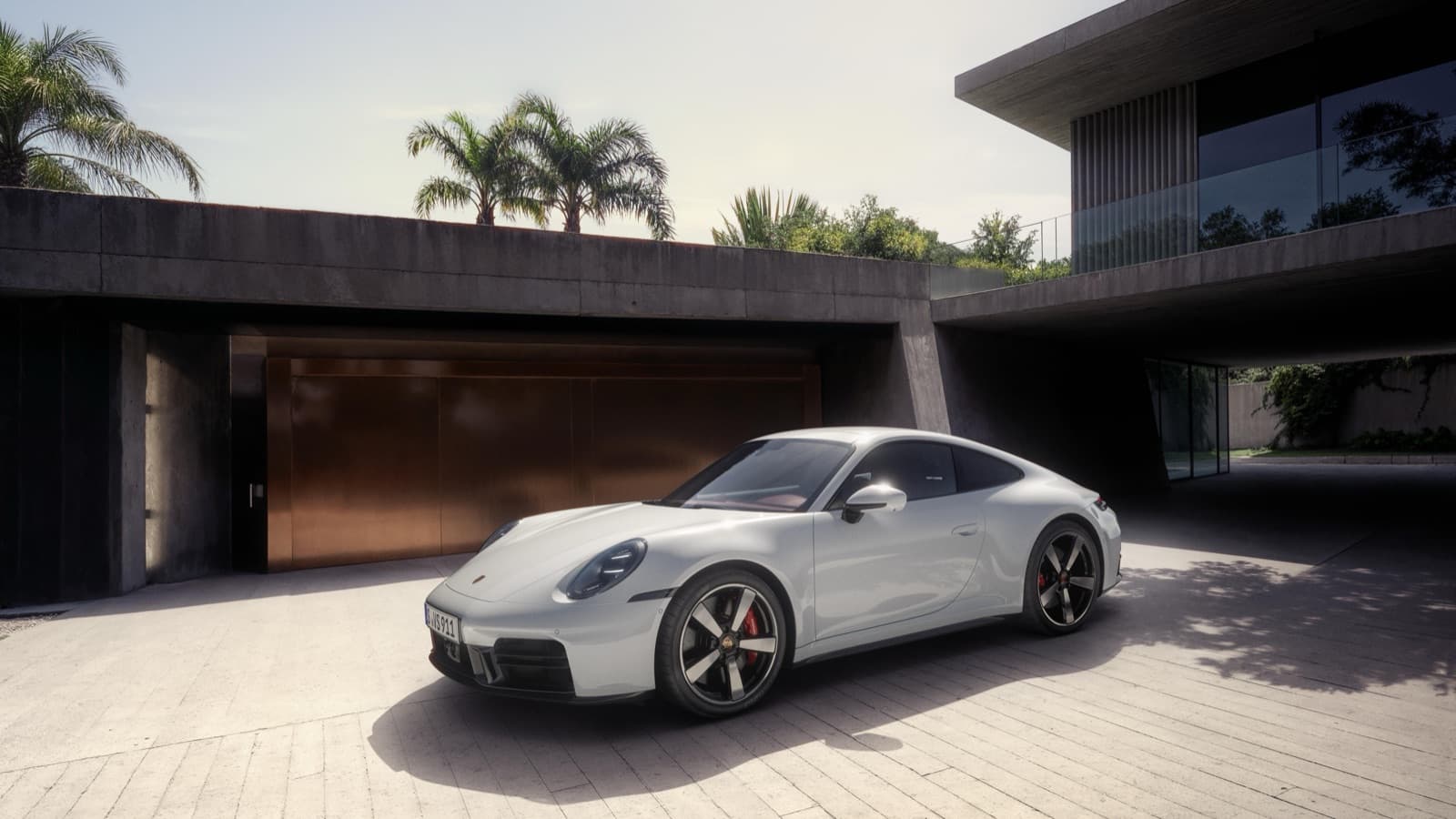
NEW2026 Porsche 911 Carrera Review
The 992.2 is still the sports-car benchmark, but the 2026 buying math changed: prices are up roughly 13% in two years of tariff-era hikes, the Carrera 4S is back, and the hybrid GTS has a year of real-world proof behind it.
Published June 1, 2026 / Updated June 4, 2026
Expert verdict
The 2026 Porsche 911 Carrera remains the rare sports car that commutes, road-trips, and out-corners nearly everything tested at any price — Car and Driver measured 1.09 g from the base car. The honest 2026 story is cost: three price increases in 24 months, a $2,350 destination fee, and an options sheet that punishes inattention. Buy the Carrera S as the default, the T for the manual, the GTS for the technology.
HIGHS
- Tested performance now spans 3.1 to 2.5 seconds to 60 across the family, with 1.09 g of grip from the base Carrera
- Carrera S inherits last generation's GTS hardware — and out-accelerates that car in testing
- Second-lowest depreciation of any vehicle in America makes real ownership cost far lower than the sticker suggests
- Factory APR and lease support in June 2026 puts negotiating leverage with buyers for the first time in years
LOWS
- Three tariff-era price increases: the base car costs roughly 13% more than at launch two years ago
- GTS T-Hybrid long-term costs are unproven, and its standard sport suspension is punishing — take the free swap
- The manual transmission survives only in the Carrera T, and the analog tach is gone from every trim
- Options pricing can turn a sensible Carrera into a near-supercar invoice
AT A GLANCE
- Score
- 9.4
- Price
- $135.5K - $189.3K
- Horsepower
- 388 hp
- 0-60
- 3.9s
- Drivetrain
- RWD
- Body
- Coupe
Buyer Verdict
The fast answer before you compare specs.
Built for shoppers who want the recommendation first and the details right after.
Buy it if
- Buy the Carrera S as the cleanest long-term 911 choice — 473 hp on last generation's GTS hardware, tested at 2.7 seconds to 60. Buy the Carrera T only if the manual is the point, and the GTS T-Hybrid if you want the 532-hp technology story with one free fix: take the no-cost standard-suspension swap. Negotiate from sticker down — June 2026 factory APR support means the leverage is yours.
- Best for: One sports car for commuting, road trips, and track days.
- Our trim pick: Carrera S from $156,200.
Skip it if
- Three tariff-era price increases: the base car costs roughly 13% more than at launch two years ago
- GTS T-Hybrid long-term costs are unproven, and its standard sport suspension is punishing — take the free swap
- The manual transmission survives only in the Carrera T, and the analog tach is gone from every trim
Closest rivals
- Chevrolet Corvette Stingray
Value and speed
- BMW M2
Compact rear-drive alternative
- Tesla Model 3 Performance
EV acceleration
Quick take
The 2026 Porsche 911 Carrera lineup runs from the $135,500 Carrera coupe through the $148,000 Carrera T, $156,200 Carrera S, $164,500 Carrera 4S, and $181,000 to $189,300 GTS T-Hybrid pair before the $2,350 delivery fee, with Cabriolet and Targa variants stretching to $203,300. Those numbers are Porsche's current published prices as of June 9, 2026 — which matters, because the base car has climbed roughly $15,800 since the 992.2 launched, and most third-party pricing pages, including the top-ranking review, still show stale figures.
This is a MotorRank research-basis review, not an instrumented MotorRank road test. Every performance figure is attributed to the outlet that measured it — Car and Driver has instrument-tested the Carrera, Carrera T, Carrera S, and GTS T-Hybrid, and MotorTrend has cross-checked two of them. Pricing is from Porsche's US configurator as of June 9, 2026. Where data does not exist yet, such as a published hybrid-battery warranty term, we say so instead of guessing.
Driving impressions
Why the 911 Carrera matters
The 911 matters because it is the yardstick: the sports car every rival is measured against, the second-lowest-depreciating vehicle in America, and now the platform for Porsche's first hybrid Carrera. The 992.2 refresh modernized the formula — fully digital instruments, a 388-hp base engine, a 473-hp S running last generation's GTS hardware, and the 532-hp T-Hybrid GTS — while the 2026 model year adds the returning Carrera 4S, an upgraded infotainment platform with downloadable apps, Dolby Atmos, and built-in Alexa.
What to watch before you buy
Watch four things before ordering: the out-the-door math, because three tariff-era increases mean a 2026 deal should be negotiated, not absorbed; the no-cost choices that matter more than paid options — the free 2+2 rear-seat option on coupes that now ship as two-seaters by default, and the free standard-suspension swap on the GTS that fixes its punishing sport ride; the options sheet, where the right $6,000 beats the wrong $25,000; and the current factory 5.99% APR and lease support, which signals real negotiating room on Carrera-family cars this month.
SERP audit: what the #1 page owns, and what it leaves on the table
Car and Driver's 911 hub holds the top ranking for 2026 911 review searches, and parts of it are unbeatable: a 10/10 score, an Editors' Choice badge, and four instrumented tests across the Carrera family. We cite that test data throughout this page because pretending it does not exist would be dishonest, and because the numbers themselves — 1.09 g of grip from a base Carrera — are the best argument for this car.
What the leading coverage skips is most of the actual 2026 buying decision. Its editorial copy runs about 1,300 words. Its trim-price widget currently lists the Carrera 4S twice at two different prices and shows Cabriolet figures thousands of dollars below Porsche's current sheet. It contains no mention of the three tariff-era price increases that define this year's purchase, no FAQ answering the questions Google shows shoppers asking, no ownership-cost or insurance data, no depreciation analysis, no recall record, and no allocation or negotiation guidance.
This page is built to be the complete version: verified current pricing from Porsche's own configurator, every instrumented number attributed, the price-increase timeline laid out, the ownership economics quantified, the recalls disclosed, and the June 2026 market reality — including the rare appearance of factory finance support on a 911 — explained in plain terms.
What changed for 2026, on top of the 992.2 refresh
The 2026 model year brings three real changes. First, the Carrera 4S returns after skipping the first 992.2 year, in coupe, Cabriolet, and Targa forms: the 473-hp S powertrain with Porsche Traction Management all-wheel drive, the previous GTS's sport exhaust, bigger brakes, and adaptive dampers. Second, the infotainment platform gets faster hardware plus an App Center with native downloadable apps, Dolby Atmos support on both Bose and Burmester systems, and Amazon Alexa built into the voice assistant. Third, the Spirit 70 heritage edition joins as a $256,650 Cabriolet flagship for collectors.
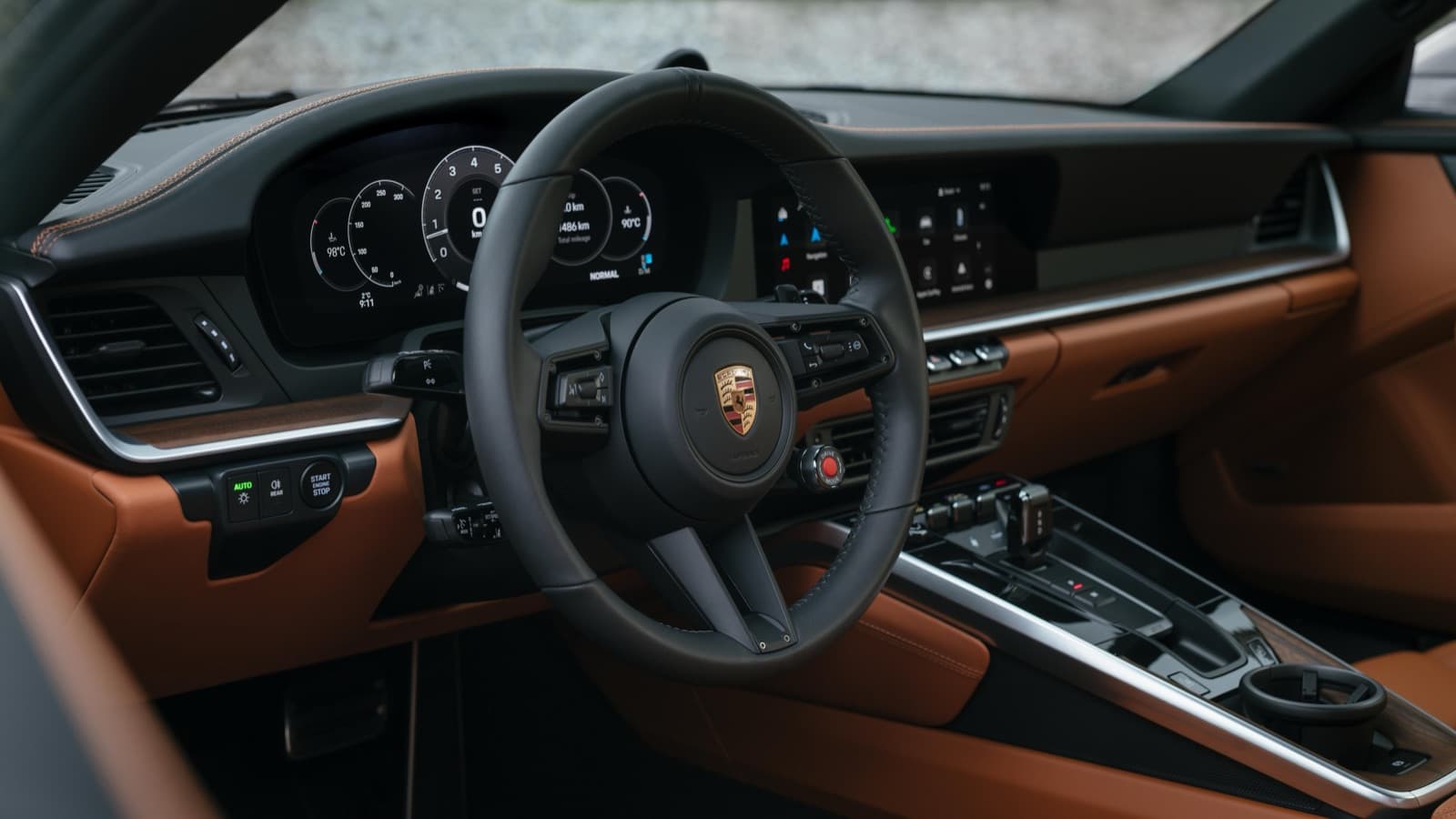
The 992.2 fundamentals carried into 2026 are the bigger story for anyone cross-shopping from an older 911. The instrument cluster is now a fully digital 12.6-inch curved display — the analog central tachometer is gone, a genuine loss for traditionalists that Porsche softens with a configurable classic five-gauge layout. A start button replaces the twist switch. Every Carrera coupe now ships as a two-seater by default, with the 2+2 rear seats a no-cost option you must remember to tick. Matrix LED headlights are standard, the base engine makes 388 horsepower, and the S inherited the old GTS's turbos, intercoolers, brakes, and standard sport exhaust.
The headline engineering remains the GTS T-Hybrid, Porsche's first electrified 911: a new 3.6-liter flat-six with a single electrically assisted turbocharger — no wastegate at all — plus a motor in the PDK gearbox, a 1.9-kWh 400-volt battery in the nose, and 532 combined horsepower. After a full year on sale, the system has produced zero powertrain recalls and near-universal reviewer praise for feeling like a faster 911 rather than a hybrid.
The price story the top-ranked page won't tell you
Here is the timeline that defines buying a 911 in June 2026. At the 992.2 launch for model year 2025, the base Carrera cost $122,095 with destination. In March 2025, Porsche raised 2026 pricing about 7%, to $129,950, and lifted the delivery fee to $2,250. In July 2025 came a second increase of 2.3 to 3.6% lineup-wide, citing market conditions — the industry's polite word for tariffs — and the delivery fee reached $2,350. In January 2026, a third increase added up to 2.9% on most models. Today the base Carrera lists at $135,500, or $137,850 delivered: roughly 13% more than the same car cost 24 months ago.
Porsche's CFO has confirmed tariffs cost the company about $813 million in 2025 and that US increases were the response, so this is structural, not opportunistic. For buyers the practical lessons are two. First, any third-party price you read — including the current #1 review page, whose widget still carries dead June 2025 figures — should be checked against Porsche's configurator before you anchor a negotiation on it. Second, the increases cut both ways at the dealer: with factory APR support now running on Carrera-family cars, the era of paying over sticker for a non-GT 911 appears to be over.
The full current sheet, before the $2,350 delivery fee: Carrera $135,500, Carrera T $148,000, Carrera S $156,200, Carrera 4S $164,500, GTS $181,000, 4 GTS $189,300. Cabriolets add roughly $13,900 to each, the Targa 4S sits at $180,200, and the Targa 4 GTS tops the Carrera family at $203,300. Above them: GT3 at $235,800 and Turbo S at $270,300, different conversations entirely.
Which 911 should you actually buy?
The Carrera S at $156,200 is the MotorRank default recommendation, unchanged from our original review and strengthened by the test data. It now runs the previous GTS's turbochargers and brakes, makes 473 horsepower, and Car and Driver measured it at 2.7 seconds to 60 — quicker than the old 992.1 GTS despite carrying more weight. It delivers ninety percent of the GTS experience with none of the first-generation-hybrid questions, and its standard sport exhaust used to be a $2,950 option.
The case for the base Carrera at $135,500 is stronger than snobbery admits: Car and Driver calls it 'a relative bargain' and 'stupendous,' and its measured 3.1-second 0-60 and 1.09 g of skidpad grip — the highest of any Carrera variant tested — would have embarrassed supercars a decade ago. The Carrera T at $148,000 is the purist's pick for one reason that ends the argument: it is now the only 911 in the entire Carrera family you can buy with a manual transmission, and at 3,355 pounds it is also the lightest.
The GTS T-Hybrid at $181,000 is the version both Car and Driver and MotorTrend now crown — 'the T-Hybrid powertrain is a game changer, so our vote goes to the GTS' is C&D's literal buying advice, and MotorTrend calls it 'the most capable, complete, and best Carrera model.' The tested numbers justify the hype: 2.5 seconds to 60, which ties the 700-hp GT2 RS, and braking and grip to match. Our reservation is unchanged and simply honest: it is a first-generation powertrain whose long-term costs have no track record, which is why the S keeps our default badge while the GTS takes the technology crown.
The 4S at $164,500 answers a specific buyer: S performance plus all-weather traction for mountain and snow-state ownership. And one warning that applies to every trim — the options system is where 911 budgets die. The right strategy is a handful of high-value boxes, not a long list: more on that below.
Performance, instrumented: what the stopwatch actually says
Car and Driver has now tested four 992.2 Carrera variants, and the spread tells the story better than any adjective. Base Carrera: 0-60 in 3.1 seconds, the quarter mile in 11.4 at 121 mph, 70-to-zero braking in 138 feet, 1.09 g of grip, 3,472 pounds. Carrera T manual: 3.7 to 60 — slower because shifting yourself costs time, which is precisely the point — at 3,355 pounds. Carrera S: 2.7 to 60, 10.8 at 128. GTS T-Hybrid: 2.5 to 60, 10.6 at 131, with MotorTrend independently clocking 2.6 and recording a 95-foot stop from 60 mph.
Two context points make those numbers land. First, every one of these cars beats Porsche's own claims by large margins — Porsche says 3.9 for the base car; the stopwatch says 3.1. Porsche sandbagging is real and consistent, so use tested figures when cross-shopping. Second, the GTS's 2.5-second run ties the previous-generation GT2 RS, a 700-horsepower collector car, and it out-brakes it. The everyday Carrera family now occupies performance territory that belonged to halo cars five years ago.
Fuel economy, for those who ask: 21 mpg combined for the Carrera, 20 for the S, 19 for the GTS by EPA reckoning, with Car and Driver observing 22, 19, and 21 respectively in real testing — and a remarkable 29 mpg from the manual T on its 75-mph highway loop. The hybrid system, notably, exists for performance, not economy; it added exactly 1 mpg to the GTS's ratings.
The GTS T-Hybrid, one year in: what we now know
When the T-Hybrid launched, the open question was whether Porsche's first hybrid 911 would feel like a 911. A year of testing has answered it emphatically. Car and Driver: 'It's rare that something feels this well sorted right off the rip... If you were worried about the first hybrid 911, don't be.' MotorTrend: 'The hybrid system is seamless.' The engineering explains why — the electric motor inside the turbocharger spools boost before exhaust gases can, eliminating lag rather than adding complexity to the driving experience, and the whole system adds just 110 pounds versus the old GTS.
The reliability record so far is clean: zero powertrain recalls on the T-Hybrid through June 2026, against two minor software recalls (headlight settings and a rearview-camera display bug) on early 992.2 builds generally, both fixed with free updates. The honest open items: long-term hybrid-component durability has no multi-year data because it cannot yet, and Porsche has not published a distinct hybrid-battery warranty term beyond the standard 4-year/50,000-mile coverage — a question worth asking your dealer in writing.
One practical GTS warning from the people who lived with it: the standard sport suspension, lowered four tenths of an inch, is genuinely punishing — Car and Driver's tester invoked the nickname 'SPASM' and recommends the no-cost standard-suspension swap, which we second. The wide rear tires also generate real road noise. The GTS is the performance pick, not the comfort pick; spec it knowing that.
The manual question, settled
The 992.2 generation quietly ended a tradition: the Carrera S no longer offers a manual transmission, and Porsche says one is not in the works. That leaves the Carrera T as the only manual 911 below the GT3 — six speeds, 388 horsepower, standard Sport Chrono and rear-axle steering, and the lightest curb weight in the family. Car and Driver's verdict on it reads like a eulogy for the breed: 'Fine driving, like fine dining, costs. And the 911 T is as fine a driving experience as there is.'
The buyer logic is now binary. If three pedals are the point of the car, the T is your 911 by default, and its 3.7-second 0-60 — half a second behind the PDK base car — is the price of involvement, gladly paid. If you are indifferent, the PDK is objectively better at everything measurable, and Car and Driver's praise of its 'clairvoyant cog swaps' is earned. What you should not do is buy the T expecting S pace, or buy the S expecting a manual to appear later. Porsche has drawn the map clearly.
Daily livability: the two free choices that matter most
The 911's claim to being the usable sports car survives the 992.2 changes, with two configuration traps to avoid. First: every Carrera coupe now arrives as a two-seater unless you select the no-cost 2+2 rear-seat option. Those jump seats are child-sized, but they are also the difference between a car that can do school pickup or carry an extra passenger in a pinch and one that cannot — and they cost nothing. Forgetting that box is the most expensive free mistake in the configurator.
Second, on the GTS specifically: the no-cost standard-suspension swap discussed above. Between those two free choices, a buyer shapes the car's daily character more than most paid options do. Beyond them, the practical realities are familiar 911: a usable front trunk, excellent outward visibility by sports-car standards, a cabin that genuinely works for commuting, and a ride on standard-suspension cars that Car and Driver consistently rates as livable in a way rivals are not.
The interior modernization cuts both ways. The 12.6-inch digital cluster is crisp and configurable, the 10.9-inch touchscreen now runs an app store, CarPlay can take over the cluster display, and the 2026 Dolby Atmos and Alexa additions are real upgrades. But the analog central tach is gone, some switchgear went digital, and Car and Driver's lows list says it plainly: the digital dash 'eliminates analog charm.' Traditionalists should sit in one before assuming they will not care.
Options strategy: the right $6,000 beats the wrong $25,000
Car and Driver's test cars document the danger: a base Carrera optioned to $148,515, an S to $178,755. The configurator will happily add $40,000 to any trim. The disciplined list, with verified current option prices: the front-axle lift at $3,090 — the single most ownership-improving option on a car this low, and one C&D explicitly recommends; the extended-range 22.1-gallon fuel tank at $230, the cheapest meaningful option on the sheet; and Sport Chrono at $2,490 if you want launch control and the drive-mode dial.
The judgment calls: the Premium package at $5,420 bundles Bose audio, ventilated seats, adaptive cruise, lane-change assist, and a 360 camera — strong value if you commute in the car, skippable if it is a weekend machine. The 18-way adaptive sport seats at $3,600 divide owners; try the standard seats first. Rear-axle steering at $2,170 is wonderful but standard on the T and GTS anyway. Paint-to-sample and interior leather programs are where five-figure sums vanish; that is collector territory, not buyer advice.
The principle: options barely return at resale on Carrera-family cars, so spend on what changes ownership — the lift, the tank, the seats that fit you — and let the spec sheet stay short. A clean $145,000 Carrera with the right four boxes is a smarter car than a $165,000 one with every box ticked.
Ownership math: why the world's benchmark sports car is secretly cheap to own
The number that reframes everything: the Porsche 911 is the second-lowest-depreciating vehicle in America, losing about 11.1% of its value over five years against an industry average of 41.8%, per iSeeCars' March 2026 study. On a $150,000 car, that is roughly $16,500 of five-year depreciation — less, in absolute dollars, than many $60,000 SUVs surrender. Depreciation is the largest real cost of owning any new car, and the 911 nearly opts out of it.
The running costs are real but bounded. Insurance for a 911 averages roughly $3,300 to $3,600 per year for full coverage depending on the study. Porsche-brand maintenance and repairs average about $1,192 annually per RepairPal's data — well above mainstream brands, unremarkable for the segment — and the first scheduled service visit is free. Warranty coverage is 4 years or 50,000 miles, bumper-to-bumper and powertrain alike, which trails a Corvette's powertrain term and is worth knowing before comparing.
Reliability context, honestly stated: the 992 generation carries none of the old IMS-bearing baggage of 1990s and 2000s 911s, J.D. Power has previously ranked the 911 the most dependable model in the industry, and the current generation's only recalls are the two software items already noted, both on 2025 builds, both free fixes — 2026 cars have zero recalls to date. Confirm both campaigns are closed on any 2025-built car you consider. The result is a total-cost picture that genuinely supports the cliché: bought thoughtfully, a 911 is the cheapest expensive car in the world.
June 2026 market reality: leverage has quietly shifted to buyers
Something unusual is happening in 911 retail: factory support. Porsche Financial Services is currently running 5.99% APR financing up to 72 months and a national lease program on the 911 through June 30 — support that historically appears only when supply outruns demand. Combined with reports of Carrera-family allocations being readily available and brokers openly noting that Carreras 'aren't moving right now,' the signal is clear: on non-GT cars, June 2026 is a negotiating market, not a waiting-list market.
The practical play: configure the car you want, get written out-the-door quotes from more than one dealer, and treat any added market adjustment on a Carrera, T, S, 4S, or GTS as a reason to walk — the leverage is yours this month. The Costco Auto Program has also been reported as a markup-avoidance route into Porsche stores this season, an option worth knowing exists. None of this applies to GT3s and Turbo S allocations, which remain a different economy of waitlists and dealer relationships.
Timing context for hesitant buyers: Porsche leadership has signaled that further tariff-driven increases remain possible, and the pattern so far has been an increase roughly every six months. Waiting for a better sticker price has been a losing strategy for two straight years; negotiating the current one in a soft month is the rational counter.
What could move this score up or down
The 9.4 holds because the fundamentals are untouched: benchmark steering, tested grip and braking at the top of the class, the broadest trim range in the segment, and resale strength no rival approaches. It would climb toward 9.6 if the T-Hybrid completes a second clean year and used-market data confirms the 992.2 holds value like its predecessors, and if Porsche's pricing stabilizes enough that the value score stops eroding.
It slides if the price escalation continues into 2027 — at some point a $145,000 base 911 is a different value proposition than a $122,000 one, and we are watching that line — or if the GTS hybrid develops out-of-warranty cost patterns as the first cars age past four years. The digital-cabin direction is a taste question we track in owner sentiment rather than score on directly.
For now, 9.4 reflects what the evidence supports: the best all-around sports car on sale, priced with less mercy than ever, and still — by the depreciation math — one of the most financially rational ways to own something extraordinary.
The verdict: where the 2026 911 fits
The 2026 Porsche 911 Carrera remains the answer to the oldest question in this segment: which sports car can you actually live with and never feel shortchanged by. The tested numbers now read like exotica — 2.5 to 3.1 seconds to sixty across the family, over 1 g of grip from the base car — while the daily manners, the warranty-backed reliability record, and the near-immunity to depreciation remain the quiet half of the argument.
Buy the Carrera S as the strongest all-around choice, the base Carrera as the honest bargain it genuinely is, the T if the manual is the point, the 4S for all-weather duty, and the GTS T-Hybrid if you want the technology event of the current generation with one free suspension swap. Order the no-cost rear seats, the front lift, and the big tank. Negotiate — this is the rare June where Porsche dealers need you more than the reverse.
Sixty-two years in, the 911's trick is unchanged: it adapts to every era without surrendering what it is. The 992.2 digitized the dials, electrified the GTS, and raised the price of entry — and on the road, at the test track, and on the resale ledger, it is still the one the rest are measured against.
Specs Snapshot
The numbers shoppers compare first.
Key numbers to compare against alternatives before you commit.
| Base price | $135.5K - $189.3K |
|---|---|
| Horsepower | 388 hp |
| 0-60 mph | 3.9 sec |
| Top speed | 183 mph |
| Drivetrain | RWD |
| Transmission | Automatic |
| Fuel type | Gas |
| Combined MPG/MPGe | 21 |
| 5-year cost | $58,500 |
Media Proof
Exterior and interior visuals with source receipts.
Every asset shown here links back to its source and license so the page can gain trust without borrowing competitor media.
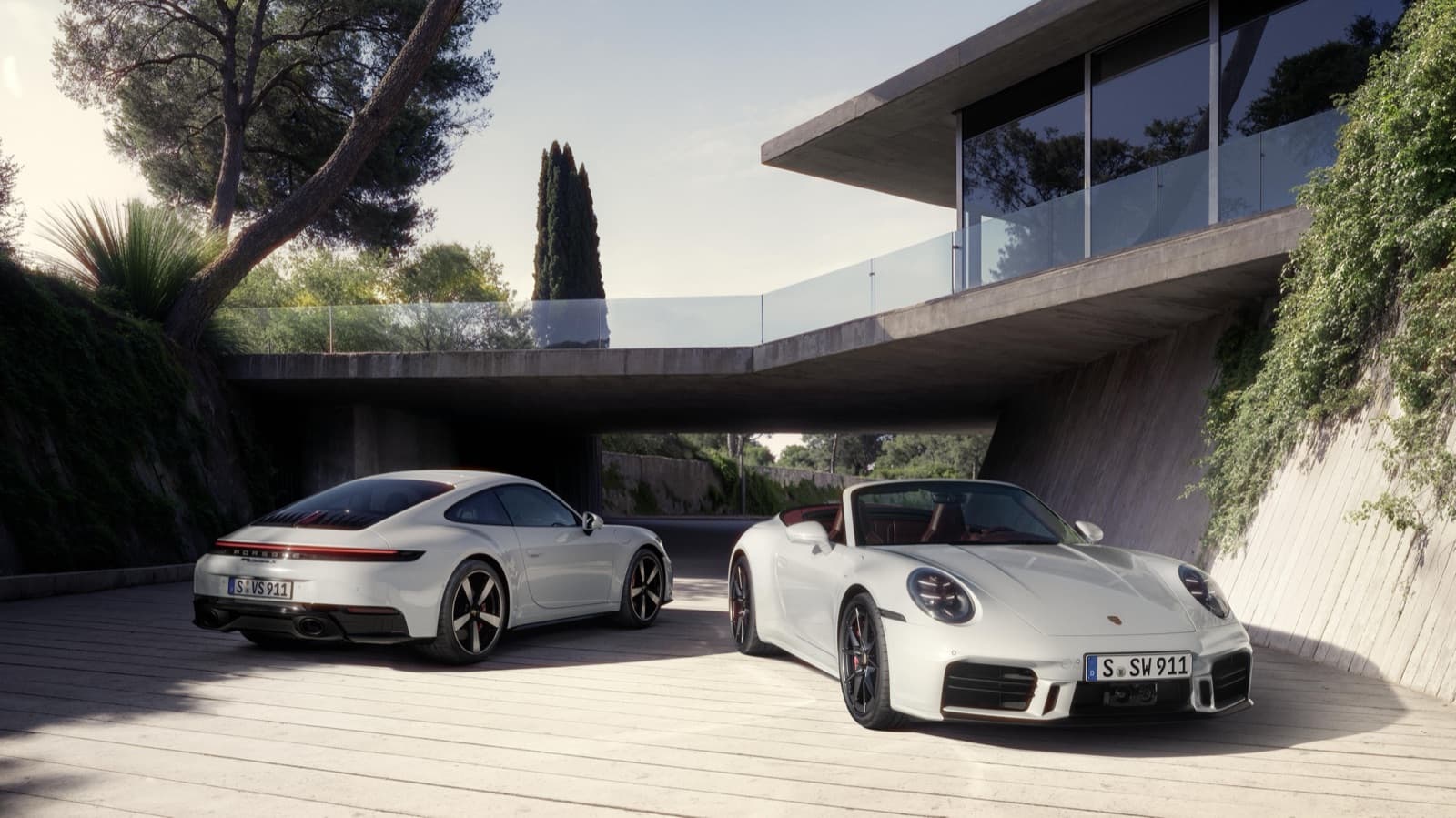
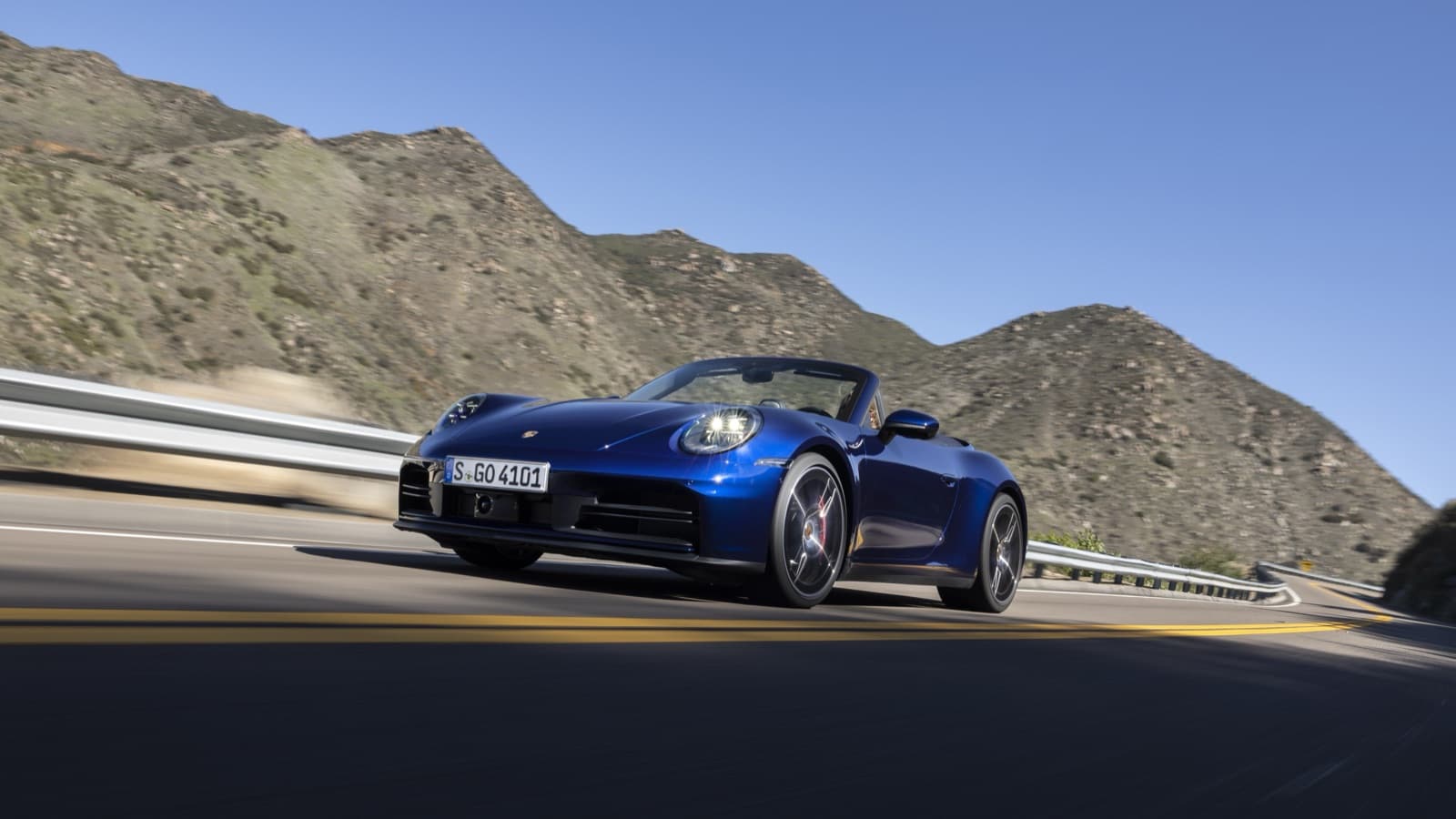
Source Receipts
Source pages, creator credits, and reuse licenses are visible for editorial trust and legal hygiene.
Related Video
The world premiere of the new Porsche 911
Porsche
Embedded from Porsche's official YouTube channel: the 992.2 world-premiere film covering the updated Carrera and the first-ever 911 Carrera GTS T-Hybrid. Manufacturer reference media, not a MotorRank road test.
Interior
Cabin views before you choose a trim.
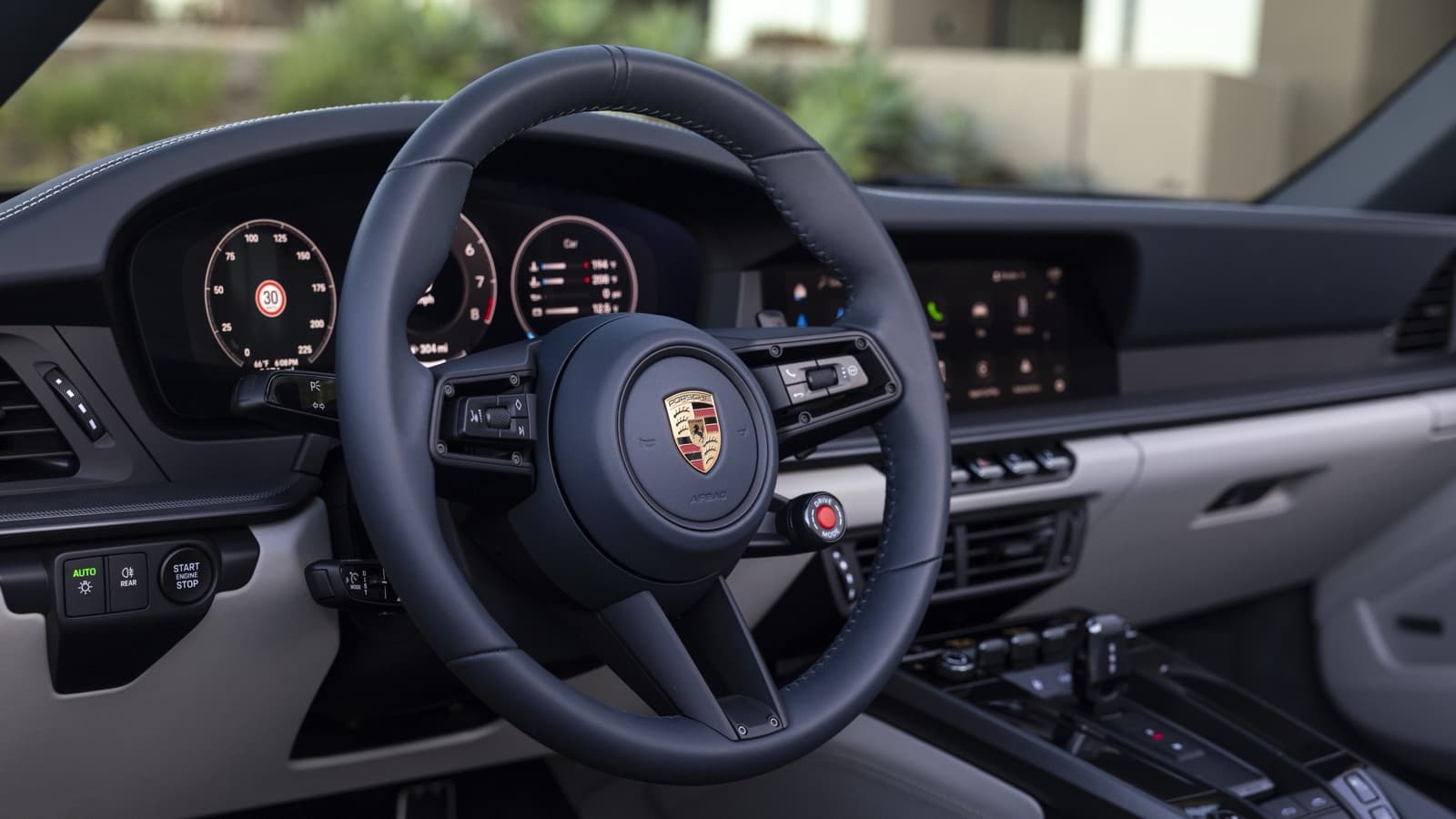
The 992.2 cabin is the generation's biggest break with tradition: a fully digital 12.6-inch curved cluster replaces the analog tach, a start button replaces the twist switch, and every coupe now ships as a two-seater unless you tick the no-cost 2+2 rear-seat option. For 2026, the infotainment adds an App Center, Dolby Atmos, and built-in Alexa. These are Porsche's official current-generation cabin images — not older-generation reference shots.
Interior Source Receipts
Research basis
Updated June 9, 2026
Compiled from Porsche USA's current configurator pricing (retrieved June 9, 2026), Porsche Newsroom technical material, Car and Driver's four instrumented 992.2 tests (Carrera, Carrera T, Carrera S, Carrera GTS T-Hybrid), MotorTrend's GTS and Carrera S tests, the documented 2024-2026 price-increase record from Road & Track and Motor1, NHTSA's recall database queried directly, iSeeCars' March 2026 depreciation study, and current Porsche Financial Services June offers.
All MSRPs are Porsche's published prices before the $2,350 delivery, processing and handling fee unless stated otherwise. Acceleration, grip, and braking figures are attributed to the outlet that measured them; Porsche's own claims are labeled as claims. The GTS hybrid-battery warranty term beyond the standard 4-year/50,000-mile coverage is unpublished and flagged as unverified.
Update when MY2027 pricing lands (a fourth tariff-era increase remains possible), when long-term GTS T-Hybrid ownership data accumulates, and when MotorRank gets direct seat time for original testing.
Which 2026 PORSCHE 911 CARRERA to Buy
Which trim is right for you?
Carrera
$135,500
The cleanest entry point, with rear-wheel drive, PDK, 388 hp, and the lowest 992.2 starting price.
Carrera T
$148,000
The enthusiast pick if manual-transmission involvement matters more than raw horsepower.
Carrera S
$156,200
Our default pick: 473 hp with less long-term complexity than the GTS T-Hybrid.
Our pick
Carrera 4S
$164,500
The S formula with all-wheel-drive traction for bad weather, rain, and easier launches.
Carrera GTS
$181,000
The new T-Hybrid performance story, with 532 hp and a 2.9-second Porsche 0-60 claim.
Carrera 4 GTS
$189,300
The quickest Carrera-family choice here, pairing T-Hybrid output with all-wheel drive.
Performance
- Horsepower
- 388hp
- 0–60 mph
- 3.9s
- Top Speed
- 183mph
Scorecard
- Performance9.6
- Comfort8.7
- Value7.8
- Ownership8.4
- Technology8.5
- Safety8.8
- Reliability8.6
- Interior9.1
5-Year Ownership Costs
| Fuel | $14,000 |
|---|---|
| Insurance | $17,000 |
| Maintenance | $6,000 |
| Repairs | $5,000 |
| Depreciation | $16,500 |
| 5-Year Total | $58,500 |
Shopping Tools
Next steps for 2026 Porsche 911 Carrera shoppers.
Research tools to help you move from browsing to buying.
Compare rivals
Line up the closest alternatives before you commit.
Check deal signals
Review pricing pressure, incentives, and value angles.
Read owner signal
Balance the expert take with ownership patterns.
Open vehicle hub
Keep specs, reliability, rankings, and review links together.
Compare Against
Cross-shop before you commit.
The closest alternatives in this price range, with our read on each.
Value and speed
Chevrolet Corvette Stingray
More performance per dollar, less 911 polish and resale discipline.
Compact rear-drive alternative
BMW M2
Cheaper and rowdier, but not as refined or special.
EV acceleration
Tesla Model 3 Performance
Faster from a stop, but not a substitute for 911 steering feel.
Grand-touring luxury rival
Mercedes-AMG GT
Bigger, more luxurious, and $29K cheaper at the base — but less precise and weaker on resale.
Buyer FAQ
2026 Porsche 911 Carrera buyer questions, answered.
49
buyer answers
Question Map
Decision
Should you buy this 911?
Start here if you are deciding whether a 911 fits your life, not just your dream garage.
Is the 2026 Porsche 911 Carrera worth it?
Yes, if you want one sports car that can be used every week.+
The 911 Carrera is worth it when you care about steering feel, everyday visibility, resale strength, and a cabin that does not punish normal driving. It is not the best answer if your main goal is the cheapest speed per dollar; the Corvette and BMW M2 make stronger value arguments.
Is this a good first Porsche 911?
Yes, but the Carrera S is the cleaner first-911 pick.+
A first-time 911 buyer should usually start with the Carrera S, not the most extreme trim. It has enough power to feel special, avoids some of the new hybrid complexity of the GTS, and keeps the daily-driver character that makes the 911 easier to live with than many sports cars.
Can a 911 Carrera be a daily driver?
Yes, especially as a coupe with sensible wheel and tire choices.+
The 911 is one of the rare sports cars that can commute, handle highway trips, and still feel serious on a back road. The biggest daily compromises are low ride height, expensive tires, tight rear seats, and the way options can turn a practical Carrera into a very expensive build.
Is a 911 too much car for normal roads?
The base Carrera and Carrera S are usable; GT cars are the ones that can feel excessive.+
A Carrera or Carrera S still works at normal speeds because the steering, compact size, and seating position are part of the appeal. A GT3, Turbo S, or very aggressive tire setup can feel more like a track tool than a relaxed daily car.
Why is the Porsche 911 so expensive?
Engineering depth, low volume, resale discipline, and an options list that rewards restraint.+
The 911 is expensive because Porsche invests in a flat-six architecture, rear-engine packaging, and a chassis refined for six decades. Low production volume relative to mass-market brands keeps unit costs high. The options catalog can add $30,000-$60,000 to a build, which is how a $135,500 Carrera becomes a $180,000 car. The tradeoff is resale: iSeeCars data shows 911 coupe models depreciate only about 7.8% over five years, among the lowest of any vehicle. That means the real cost of ownership is often lower than cheaper sports cars that lose 40-50% in the same period.
Is a base Carrera enough car?
Yes, for most drivers the base Carrera is more than enough performance.+
The base Carrera makes 388 horsepower and reaches 60 mph in 3.9 seconds per Porsche. That is faster than a 2015 911 Turbo. Buyers who do not track the car or need the extra 85 hp of the S may find the base Carrera is the best value in the range because it gets the same chassis, steering feel, and daily usability at the lowest entry point. The Carrera T adds manual-transmission character but costs $12,500 more. The real question is whether the S or GTS power justifies the price jump for your actual driving, not whether the base car is slow.
2026 Changes
What changed for 2026?
These are the year-specific questions that separate a real 2026 911 review from a generic 911 overview.
What changed for the 2026 Porsche 911?
The 992.2 update brings the GTS T-Hybrid story, refreshed tech, and sharper trim separation.+
The important 2026 shopper change is not just more power. Porsche's current 911 range separates the familiar gas Carrera, Carrera T, Carrera S, and Carrera 4S from the GTS T-Hybrid models. That means the decision is now partly about classic 911 simplicity versus newer hybrid performance hardware.
Which 2026 Porsche 911 trims are hybrid?
The GTS is the hybrid headline; Carrera, T, S, and 4S are the cleaner gas choices.+
The Carrera GTS and Carrera 4 GTS use Porsche's T-Hybrid system, which pairs a 3.6-liter twin-turbo flat-six with an electric motor integrated into the eight-speed PDK transmission and an electrically driven turbocharger compressor. The system produces 532 hp combined and a Porsche-claimed 0-60 of 2.9 seconds. The Carrera, Carrera T, Carrera S, and Carrera 4S stay on the traditional 3.0-liter twin-turbo flat-six with no electric assist. That is why the S-versus-GTS decision is really a simplicity-versus-new-tech decision: more power and faster response from the GTS, or proven long-term simplicity from the S.
992.1 vs 992.2: which 911 should you buy?
992.2 is newer; 992.1 may be the better value if you want less complexity.+
Buy 992.2 if you want the latest cabin, updated styling, warranty runway, and newest GTS performance story. Shop a late 992.1 if you want a familiar ownership profile, possible savings, and less concern about first-wave hybrid questions.
Should you buy now or wait?
Buy now for a clean Carrera S or T; wait if you are unsure about hybrid GTS ownership.+
If you want a Carrera S or Carrera T and can get the right build at a fair written price, there is no obvious reason to wait. If the GTS hybrid is the only trim you want and you keep cars long term, waiting for more owner data may be rational.
Real Cost
What will it really cost?
The 911 buying decision is often won or lost in the options list, insurance quote, and long-term resale math.
What does a 2026 Porsche 911 really cost after options?
Base prices jumped roughly $15,400 from the 2025 model year, and options can add $30,000-$60,000 more.+
The 2026 911 Carrera starts at $135,500, up from $120,100 for the 2025 model — a $15,400 increase that reflects the 992.2 generational update. The full trim walk: Carrera T $148,000, Carrera S $156,200, Carrera 4S $164,500, Carrera GTS $181,000, Carrera 4 GTS $189,300. All figures are before destination, taxes, title, registration, dealer charges, and possible tariffs. Paint, wheels, leather, axle lift, premium audio, seats, driver assists, and performance options regularly add $30,000-$60,000, so a Carrera S configured the way most enthusiasts want it lands closer to $185,000-$195,000 out the door. Set a build ceiling before opening the configurator.
Which 911 options are worth getting?
Prioritize Sport Chrono, seats, axle lift, lighting, and usable comfort features.+
The best options are the ones that improve use every time you drive: the right seats, Sport Chrono if you care about response, front axle lift if your roads or driveway need it, better headlights, and interior materials you will enjoy daily. Skip cosmetic options that push the car close to GTS money without changing how it drives.
What should you know about dealer allocation and markup?
The right allocation can matter as much as the right spec.+
Popular 911 trims can involve waitlists, preferred-client treatment, deposits, or markup pressure depending on the dealer and market. Ask for written out-the-door pricing, allocation timing, deposit refund terms, and whether the dealer will commit to MSRP before you spec the car.
Should you lease, finance, or pay cash for a 911?
Finance or cash usually makes more sense for a keeper; lease only if the numbers are unusually strong.+
A 911 can hold value well, which makes ownership more attractive than leasing for buyers who keep cars. Leasing can still work for business use or short ownership windows, but the right answer depends on money factor, residual, tax treatment, and how heavily the car is optioned.
Are there lease deals or incentives on a Porsche 911?
Do not shop a 911 like a mass-market lease special.+
Lease and incentive support on a 911 is usually less straightforward than on mainstream cars. Compare money factor, residual, fees, mileage limits, total drive-off, and total cost, not only the monthly payment. A strong resale case can make financing or cash ownership more compelling than a tempting lease quote.
How much does a fully loaded 911 cost?
A heavily optioned Carrera S can reach $200,000; a loaded GTS can exceed $220,000.+
Porsche's configurator makes it easy to add $40,000-$60,000 in options to any 911 trim. A Carrera S that starts at $156,200 can reach $195,000-$210,000 with Sport Chrono, adaptive sport seats, premium audio, ceramic brakes, sport exhaust, axle lift, paint-to-sample, and full leather. A Carrera 4 GTS starting at $189,300 can exceed $230,000 with similar options. The highest-value approach is to prioritize options that affect daily use — seats, Sport Chrono, axle lift, headlights — and skip cosmetics that push the car into the next trim's territory without adding performance.
Is the 911 expensive to insure?
Full-coverage quotes typically run $3,700-$4,800 per year depending on driver profile and trim.+
Insurance comparison data from The Zebra and Insuranceopedia shows full-coverage Porsche 911 premiums typically range from about $3,700 to $4,800 per year, though the cheapest quotes from regional carriers can come in under $2,000. The exact premium depends on driver age, history, location, trim, and coverage level. A Carrera, GTS, Cabriolet, and Turbo can price very differently, so get quotes on the exact build before placing a deposit. Budget insurance cost as a real line item alongside the monthly payment, not an afterthought.
Will a 911 depreciate hard?
911 coupes lose only about 7.8% over five years per iSeeCars — among the lowest of any vehicle.+
iSeeCars data shows 911 coupe models depreciate about 7.8% over five years, making the 911 one of the strongest-holding vehicles on the market. Convertible models depreciate more — roughly 19.3% over the same period. Heavily optioned builds, early hybrid uncertainty, soft colors, unusual interiors, or buying during a markup cycle can hurt the real-world resale case. But in general, the 911's depreciation discipline means the gap between purchase price and resale value is often narrower than cheaper sports cars that lose 40-50% in five years.
Trim
Which 911 should you buy?
The best 911 is not the fastest one. It is the trim that fits your use case and avoids paying for hardware you do not need.
Carrera vs Carrera S: which is better?
Carrera S is the sweet spot if budget allows.+
The base Carrera is fast enough and keeps the price lower. The Carrera S is the better long-term choice for most enthusiasts because it adds power and desirability without jumping to the cost and complexity of the GTS.
Carrera T vs Carrera S: which should an enthusiast buy?
Buy the T for manual involvement; buy the S for all-around performance.+
The Carrera T is about feel, simplicity, and the manual-transmission experience. The Carrera S is the better all-around performance pick if you want more power, broader appeal, and easier resale.
Carrera S vs GTS: is the hybrid GTS worth it?
Worth it for buyers who want the newest tech; S is safer for long-term simplicity.+
The GTS is the technology story with stronger acceleration and hybrid hardware. The Carrera S is the cleaner pick for buyers who want classic 911 behavior, lower complexity, and less concern about first-generation hybrid ownership questions.
Manual vs PDK: which 911 transmission is better?
PDK is faster and easier; manual is more emotional.+
PDK is the better daily and performance tool because it is quick, smooth, and easy in traffic. Manual is the better memory-maker if engagement matters more than speed. Availability depends on trim, so transmission preference may decide the trim before price does.
Coupe, Cabriolet, or Targa?
Coupe is the cleanest driver's car; Cabriolet and Targa are lifestyle choices.+
The coupe is lighter, quieter, and more focused. The Cabriolet gives open-air driving with more compromise. The Targa is the style choice, usually heavier and pricier, but desirable for buyers who care about the look and roof experience.
RWD or AWD?
RWD for feel, AWD for weather and launch traction.+
Rear-wheel drive keeps the classic 911 balance and usually costs less. All-wheel drive makes sense if you see cold weather, rain, steep roads, or want the easiest launch traction. With proper winter tires, either can work, but AWD gives more margin.
Daily Use
Can you live with it?
A 911 wins because it feels special without becoming useless. These are the practical questions shoppers actually ask.
Can tall drivers fit in a Porsche 911?
Usually yes, but seat choice matters.+
The 911 is surprisingly accommodating for a sports car. Tall drivers should test the exact seat type, steering-wheel position, helmet clearance if tracking, and roof style before ordering because buckets, sunroofs, and cabriolets can change the fit.
Are the rear seats usable?
Mostly for kids, bags, or short emergency trips.+
The rear seats are one reason the 911 is easier to justify than a two-seat sports car, but they are not adult-friendly. They are best treated as extra storage, child seating, or short-distance flexibility.
Can a 911 handle winter?
Yes with the right tires; AWD helps but tires matter most.+
A 911 can work in cold weather if it has proper winter tires and enough ground clearance for your roads. AWD is useful, but summer tires in cold temperatures are the bigger problem. Front axle lift can also matter if snow piles or steep driveways are part of your life.
How much cargo space does a 911 have?
Enough for soft bags and weekend use, not SUV expectations.+
A 911 gives you a front trunk plus useful rear-seat shelf space, which is why it works better than many two-seat sports cars. Test-fit golf clubs, child gear, camera cases, or hard luggage before ordering because the shape matters more than the raw number.
Is the 911 comfortable on long trips?
Yes, if you avoid overly aggressive seats and wheel/tire choices.+
The 911 can be an excellent road-trip car because the seating position, visibility, and ride quality are better than most serious sports cars. The wrong seat, loud tire, or oversized wheel can make it feel much less relaxed.
What MPG should a 911 shopper expect?
Treat fuel economy as a trim-by-trim cost input, not the reason to buy the car.+
A 911 is not bought for fuel economy, but MPG still matters if you commute or road-trip. Compare the exact EPA window sticker for the trim, drivetrain, roof style, and wheel/tire package because Carrera, S, 4S, GTS, Cabriolet, and Targa configurations can differ.
Does the 911 have enough driver-assistance tech?
Yes if you option it correctly; Porsche makes you choose and pay for some conveniences.+
Daily drivers should check adaptive cruise, lane assistance, blind-spot monitoring, parking cameras, front axle lift, headlight upgrades, and seat comfort on the exact build. A lightly optioned driver's 911 can be great for weekends and still miss features you expect every day.
Is it too flashy for daily use?
Color and trim decide how much attention it gets.+
A subtle Carrera coupe in a restrained color can fly under the radar more than most exotic cars. Bright paint, aero packages, loud exhaust, Cabriolet/Targa rooflines, and GTS/GT trims bring more attention.
Ownership
What can go wrong?
The 911 has a strong reputation, but the ownership plan still needs tires, brakes, maintenance, warranty, and hybrid-risk thinking.
Is the 2026 Porsche 911 reliable?
RepairPal rates the 911 at $1,072 per year in average repair costs — below many luxury rivals.+
RepairPal data shows the Porsche 911 averages about $1,072 per year in repair and maintenance costs across all model years. That is below several luxury and performance competitors and reflects the 911's engineering maturity. The safest long-term ownership path is a well-kept Carrera or Carrera S with documented service, sensible options, and warranty coverage. The GTS T-Hybrid adds new hardware that has no long-term reliability track record yet, so buyers who keep cars past warranty should weigh that against the simpler Carrera and S drivetrains.
Should buyers worry about the hybrid GTS long term?
Not panic, but price the uncertainty into the decision.+
The GTS hybrid system is part of what makes the newest 911 interesting, but it also adds a new long-term question. Buyers who keep cars beyond warranty should compare the thrill and performance gain against the simplicity of a Carrera S.
What warranty does a new Porsche 911 have?
The U.S. new-vehicle warranty is listed as 4 years or 50,000 miles.+
Porsche's U.S. warranty page lists a 4-year/50,000-mile New Vehicle Warranty, with the period beginning when the car is first delivered to the first retail purchaser or first used as a demonstrator, lease, or company car. For GTS hybrid shoppers, ask the dealer to walk through any hybrid and high-voltage battery coverage in the model-year warranty booklet before you sign.
Is Porsche Approved CPO worth it?
Usually yes if you want used-911 value without giving up warranty confidence.+
CPO is worth pricing when the car is expensive, complex, or close enough to new pricing that warranty matters. A cheaper non-CPO 911 can still be the right buy, but only with a strong pre-purchase inspection, full service history, and budget for immediate maintenance.
How much should you budget for tires and brakes?
More than a normal luxury car, especially if you drive hard.+
Performance tires and brakes are wear items on a 911. Budget depends on wheel size, tire type, track use, alignment, and driving style. If you plan back-road or track use, treat tires and brakes as a recurring part of the car's real cost.
Dealer service or independent Porsche shop?
Dealer during warranty; trusted independent after warranty can make sense.+
Dealer service is the cleanest path during warranty and for newer hybrid or electronics-heavy trims. A reputable independent Porsche specialist can be a strong ownership advantage later, especially for routine service and older non-hybrid cars.
New, used, or certified pre-owned?
New for exact spec; CPO for value and warranty confidence.+
New makes sense if the exact color, trim, and options matter. CPO makes sense if you want warranty coverage and someone else to absorb the first depreciation hit. Used without warranty can be smart only with a strong inspection and service history.
How should you check recalls or open campaigns?
Use the exact VIN before purchase, especially on used or early-build cars.+
Before a deposit or pre-purchase inspection, run the exact VIN through Porsche's recall tool, NHTSA's recall lookup, and the servicing dealer. Ask for proof that open campaigns are complete, because a clean listing photo does not prove the car is fully updated.
How much does Porsche 911 maintenance cost per year?
Budget roughly $1,000-$1,900 per year depending on trim and driving style.+
RepairPal estimates about $1,072 per year in average repair costs for the 911. Edmunds True Cost to Own data for recent model years shows roughly $5,380 over five years, or about $1,076 per year, for scheduled maintenance on non-GT trims. GT3 and Turbo models run higher — closer to $1,900 per year — because of more frequent fluid changes, brake inspections, and tire wear from stickier compounds. Add tires ($1,200-$2,500 per set depending on size and brand) and brakes ($800-$2,000 per axle at dealer rates) as separate recurring line items if you drive hard or track the car.
How many miles will a Porsche 911 last?
150,000-200,000 miles is typical with proper maintenance; many exceed 300,000.+
The 911's flat-six engine is known for longevity when maintained on schedule. CoPilot and enthusiast owner data suggest 150,000-200,000 miles is a normal lifespan with documented service, and examples above 300,000 miles on original engines are well documented in the Porsche community. The IMS bearing concern applies to some 996 and early 997 models, not the current 992 generation. For a new 2026 buyer, engine longevity is unlikely to be the limiting factor — electronics, interior wear, and suspension components are more likely to drive major service decisions at high mileage.
Swap
What should you compare it against?
A 911 buyer rarely has only one option. These are the swaps that can change the decision.
Porsche 911 or Corvette Stingray?
Corvette for value and drama; 911 for polish and resale discipline.+
The Corvette gives more performance theater for the money and feels more exotic from the driver's seat. The 911 is more compact, easier to see out of, stronger as a daily driver, and usually better at holding the premium-sports-car middle ground.
Porsche 911 or BMW M2?
M2 for budget; 911 for the complete sports-car experience.+
The M2 is cheaper, powerful, practical enough, and still available with enthusiast appeal. The 911 feels more special, more precise, and more expensive in every direction. If the money matters, the M2 is the smarter buy; if the experience matters, the 911 is the target.
Porsche 911 or Cayman GTS?
Cayman for mid-engine purity; 911 for usability and status.+
The Cayman GTS can feel more naturally balanced because of its mid-engine layout. The 911 counters with rear seats, stronger status, broader trim depth, and the unique rear-engine character buyers often want specifically.
Porsche 911 or used 911 Turbo?
Used Turbo for speed; new Carrera S for warranty and exact spec.+
A used Turbo can make a new Carrera S look slow on paper, but it also brings higher running costs, older tech, and used-car risk. A new Carrera S gives warranty confidence, fresh equipment, and the build you actually want.
Porsche 911 or used GT3?
GT3 for track emotion; Carrera/S for real life.+
A GT3 is the special one if track sound, revs, and collector energy matter. A Carrera or Carrera S is easier to use, easier to justify, less intense, and better for the buyer who wants one car instead of an occasion-only car.
Porsche 911 or Tesla Model 3 Performance?
Tesla for acceleration value; 911 for steering, feel, and longevity of appeal.+
The Tesla is much cheaper speed and easier to run if you can charge at home. The 911 is the choice when you care about steering feel, mechanical character, resale culture, and the emotional side of ownership.
Porsche 911 or Mercedes-AMG GT?
AMG GT for grand-touring luxury; 911 for driver precision and resale confidence.+
The 2026 Mercedes-AMG GT Coupe starts at $106,500 for the GT 43, making it about $29,000 cheaper than the Carrera at the base level. The AMG GT is bigger, more grand-touring in character, and emphasizes interior luxury and highway comfort. The 911 is more compact, more precise in steering and chassis response, lighter, and historically stronger on resale. If you want a long-distance GT that can also perform, the AMG GT is compelling. If you want the tighter, more focused sports-car experience with decades of 911 refinement behind it, the Porsche is still the benchmark.
Ready to buy?
Configure your 2026 Porsche 911 Carrera.
Get matched with a Porsche dealer or build your spec sheet from scratch.