
REVIEWS / Hybrid SUVs
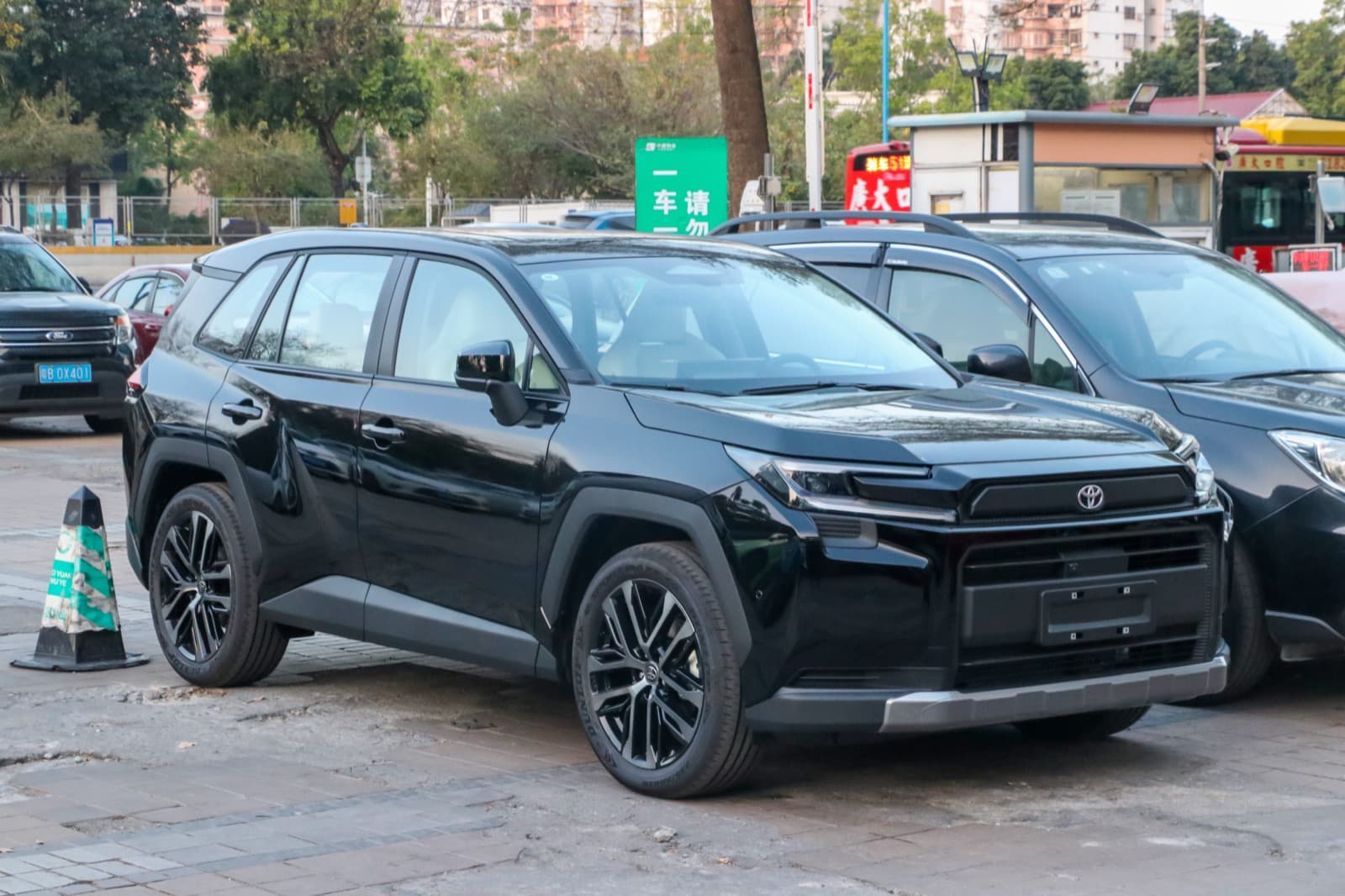
NEW2026 Toyota RAV4 Review
Toyota's best-selling SUV goes fully electrified for 2026, and the real buyer decision is now middle hybrid trim versus pricier plug-in swagger.
Published June 1, 2026 / Updated June 4, 2026
Expert verdict
The 2026 Toyota RAV4 is still the safest compact-SUV answer because Toyota made every version electrified, kept pricing disciplined by segment standards, and preserved the dealer-network and resale advantages buyers actually feel after the test drive. The sweet spot is the middle hybrid range, not the most expensive plug-in trim.
HIGHS
- Fully electrified lineup removes the bad gas-engine trim from the decision tree
- Toyota resale strength and broad dealer support still anchor the ownership case
- Hybrid trims remain easy to justify even for buyers who cannot charge at home
- Plug-in trims add real electric range and meaningful performance, not token numbers
LOWS
- Some rivals ride smoother and feel more upscale inside
- Dealer markups and accessory packs can erase Toyota's value advantage
- Plug-in trims only make sense if you will consistently use the electric range
- First-model-year redesign risk is lower than average for Toyota, but it is still a redesign
AT A GLANCE
- Score
- 8.5
- Price
- $31.9K - $48.5K
- Horsepower
- 226 hp
- 0-60
- 7.1s
- Drivetrain
- FWD
- Body
- SUV
Buyer Verdict
The fast answer before you compare specs.
Built for shoppers who want the recommendation first and the details right after.
Buy it if
- The 2026 Toyota RAV4 is still the safest compact-SUV bet for shoppers who want hybrid efficiency without EV complexity, but the smart buy is the middle hybrid range, not the loaded plug-in. Buy a regular hybrid if you want the cleanest ownership case. Buy the plug-in only if you will consistently charge at home and use the electric miles.
- Best for: Compact-SUV shoppers who want the lowest-risk hybrid family vehicle.
- Our trim pick: XLE Premium Hybrid AWD from $36,100.
Skip it if
- Some rivals ride smoother and feel more upscale inside
- Dealer markups and accessory packs can erase Toyota's value advantage
- Plug-in trims only make sense if you will consistently use the electric range
Closest rivals
- Honda CR-V Hybrid
Comfort and refinement rival
- Hyundai Tucson Hybrid
Warranty and feature value
- Mazda CX-50 Hybrid
More premium road feel
Quick take
The 2026 Toyota RAV4 is a bigger deal than a normal redesign because Toyota changed the default answer. Instead of asking shoppers whether they want the gas RAV4 or the hybrid, Toyota made the whole lineup electrified. Regular hybrid versions now start at $31,900 MSRP before destination, and the plug-in hybrids start at $41,500. That move resets the compact-SUV conversation around fuel cost, resale confidence, and trim discipline.
This is a research-basis buyer review built from Toyota's official 2026 RAV4 and RAV4 Plug-in Hybrid product pages, Toyota's published pricing release, Toyota warranty language, current competitor coverage from Edmunds, Consumer Reports, MotorTrend, and Car and Driver, plus current dealer-market context. MotorRank has not yet published its own instrumented road test, long-term owner survey, or measured real-world fuel-economy loop for the 2026 RAV4, so those sections are labeled accordingly.
Driving impressions
Why the RAV4 matters
The RAV4 matters because it turns hybrid efficiency into the default mainstream family choice without forcing shoppers into full EV habits. Toyota still owns one of the cleanest ownership stories in the segment: broad dealer coverage, easy parts access, strong resale reputation, and hybrid familiarity. When the market gets noisy, that matters.
What to watch before you buy
Watch three things before you put down a deposit: dealer add-ons, whether you genuinely need AWD, and whether you will actually plug in a PHEV at home. Cross-shop the Honda CR-V Hybrid for ride comfort, the Hyundai Tucson Hybrid for warranty-and-feature value, the Mazda CX-50 Hybrid for cabin feel, and the Mitsubishi Outlander Plug-in Hybrid if you think the RAV4 PHEV is the only rational plug-in family SUV.
SERP audit: who Toyota has to beat right now
The 2026 Toyota RAV4 review query is already controlled by exactly the outlets you would expect: Edmunds, Car and Driver, MotorTrend, and Consumer Reports. The gap those pages leave is not a lack of specifications. It is a lack of honest buyer triage. Most competitor pages tell you the RAV4 is better than before, quote the hybrid-only move, and move on. MotorRank has to do more. We need to answer the real buyer questions: which trim makes sense once dealer fees hit, when the plug-in upgrade is worth it, what the FWD-versus-AWD MPG penalty really means, and when a CR-V Hybrid or Tucson Hybrid is the smarter purchase.
Edmunds is strong on trim guidance, real pricing context, and broad small-SUV comparisons. Car and Driver is strong on the enthusiast read, the plug-in's quickness, and the way Toyota has made the RAV4 more modern without turning it into a science project. Consumer Reports matters because it carries a different kind of authority with normal family buyers: ride quality, road noise, controls, and owner-value framing. MotorTrend sits in the middle with useful trim-and-performance context. To beat that field, MotorRank needs to be the clearest buyer-decision page, not just another spec rewrite.
Official pricing and what the MSRP actually means
Toyota's current official pricing puts the 2026 RAV4 Hybrid LE at $31,900 MSRP before destination, the SE at $34,700, the XLE Premium at $36,100, the Woodland at $39,900, the XSE at $41,300, and the Limited at $43,300. For the plug-in lineup, Toyota lists the SE at $41,500, Woodland at $45,300, XSE at $47,200, and GR Sport at $48,500. Those are manufacturer MSRPs, not out-the-door numbers, and they do not include Toyota's destination charge, taxes, title, registration, or dealer-installed accessories.
That distinction matters because the RAV4 is the kind of vehicle dealers know they can load with extras. Paint protection, wheel locks, nitrogen fills, VIN etching, interior packages, and service bundles can turn a sensible $36,100 XLE Premium into a deal sheet that looks suspiciously close to a nicer SUV. A buyer who shops only by advertised MSRP will miss the real transaction. Ask for an itemized out-the-door quote, including destination and every dealer add-on, before you decide whether the Toyota premium is still reasonable.
The good news is that Toyota did not price the new hybrid like a luxury experiment. Base hybrid pricing remains competitive enough that the RAV4 still lands in the same conversation as CR-V Hybrid, Tucson Hybrid, Sportage Hybrid, and CX-50 Hybrid. The bad news is that the plug-in grades quickly climb into price territory where you must compare not just other plug-ins, but also heavily incentivized EV leases and two-row premium crossovers.
What's actually new for 2026
The headline change is simple: every 2026 RAV4 is electrified. Regular hybrids and plug-in hybrids replace the old mix of gas, hybrid, and Prime logic. Toyota also split the lineup into clearer personalities. Core versions are the practical family trims. The Woodland carries the rugged cue cards. Sport variants, including the first U.S. GR Sport RAV4, are there for buyers who want something sharper-looking and, in plug-in form, materially quicker.
Toyota also moved the RAV4 onto its latest software and safety stack. The 2026 model introduces Toyota Safety Sense 4.0 and updated Audio Multimedia hardware. On paper that sounds like brochure filler, but it matters because the outgoing RAV4's interior and tech stack felt older than the best versions of the CR-V, Tucson, and CX-50. The new one needed that catch-up. It also needed a better explanation of trim spread, because Toyota now asks one nameplate to cover commuter hybrids, rugged-image shoppers, and quasi-performance plug-in buyers.
The important point is that Toyota did not reinvent the RAV4 into something risky. This is a conservative but meaningful redesign. That is exactly what most RAV4 buyers want. If you were hoping for a radically softer, quieter, premium-feeling compact SUV, you may still like the CR-V Hybrid more. If you wanted Toyota to modernize the formula without blowing up the ownership story, the 2026 changes make sense.
Hybrid powertrain, horsepower, and real MPG expectations
Toyota says the standard hybrid setup delivers 226 net combined horsepower in front-wheel-drive form and 236 net combined horsepower in all-wheel-drive grades, depending on trim. That is enough to make the RAV4 feel more alert than the old base gas model ever did, and it keeps the regular hybrid as the default recommendation for most buyers. This is not a performance SUV, but it should feel strong enough for family duty, commuting, and highway merges without asking the owner to babysit charge state or learn an EV routine.
Current third-party coverage points to the most efficient front-drive trims delivering about 47 mpg city, 40 mpg highway, and 43 mpg combined. That matters because the 2026 RAV4 now makes front-wheel drive a real economy choice in a way the previous hybrid lineup did not. If you live in a mild climate, stay on pavement, and just want the best fuel-cost math, the FWD hybrid trims finally give you an efficient default without dragging AWD hardware you do not need.
Real-world economy will still vary with temperature, speed, terrain, tires, and traffic. MotorRank has not yet published its own measured loop for the 2026 RAV4, so treat EPA-style and manufacturer-quoted figures as the starting point, not a promise. Cold weather and aggressive highway use will reduce efficiency. What matters more than the exact headline number is that the hybrid story is strong enough that most buyers do not need to climb into the plug-in model just to feel like they bought the modern version.
FWD versus AWD: the decision most buyers will gloss over
Toyota quietly made one of the most important buyer changes in the whole redesign by giving some hybrid trims front-wheel drive. That creates a real split in the lineup. The most efficient trims are no longer carrying the extra weight and drag of AWD, while the middle and upper trims continue to offer or require all-wheel drive depending on grade. Buyers in snow states will reflexively choose AWD. Many buyers in warm climates should slow down before doing the same.
The AWD question is not ideological. It is practical. If your life includes steep driveways, regular snow, muddy camp roads, or poor-weather highway travel, the AWD penalty is worth paying. If your life is suburban commuting, Costco runs, rain, and paved road trips, front-wheel drive will usually do the job while protecting fuel economy and purchase price. Toyota's big advantage here is that you no longer have to leave the RAV4 hybrid story altogether to get that choice.
The real buyer mistake is paying an AWD premium because it feels like the smarter, safer spec on paper, then living in Florida, Arizona, or Southern California and never using it. Buy AWD because your roads justify it, not because the badge sounds responsible. Toyota gave you a choice. Use it.
Which 2026 RAV4 trim should you actually buy?
The best trim for most shoppers is the XLE Premium Hybrid AWD. It sits close enough to the middle of the lineup to feel like the mature adult decision. You are not sacrificing everything to stay cheap, but you are also not drifting into the dangerous territory where the RAV4 stops being a rational Toyota and starts pretending to be a premium car. The XLE Premium should deliver the equipment most families care about, the resale story buyers expect from a Toyota, and the all-weather confidence a lot of shoppers will still want.
If pure fuel math leads your list, the LE Hybrid FWD and SE Hybrid FWD are the smarter plays. They preserve the best MPG path, keep the entry price under control, and avoid the loaded-trim trap. The Woodland Hybrid matters only if you will use its outdoorsy hardware or styling. Do not buy it because it looks cool in pictures if your life is school pickup and parking garages.
At the top, the Limited Hybrid and the plug-in trims are the ones that need defending. The Limited is easy to admire but harder to justify once the price sheet gets into the low-$40,000s before destination and dealer math. The plug-in trims can be right, but they demand a home-charging habit. The GR Sport Plug-in Hybrid is the most exciting RAV4 on paper, and likely the most overbought RAV4 in real life.
Plug-in hybrid math: when the RAV4 PHEV is worth it
Toyota says the 2026 RAV4 Plug-in Hybrid now reaches a manufacturer-estimated 52 miles of electric range. That is enough to cover a meaningful number of daily commutes, school loops, errands, and office runs without touching gasoline, assuming you can charge at home. It also gives the RAV4 PHEV a genuine dual personality: EV-like weekday use, then hybrid road-trip flexibility. That is why plug-in hybrids still make sense for a certain buyer even as pure EVs get better.
The trap is paying plug-in money without plug-in behavior. If you live in an apartment without dependable charging, park on the street, or know from experience that you will not plug in consistently, the extra purchase price is harder to recover. In that case the regular hybrid is the better RAV4. It keeps the easier ownership story, still returns strong fuel economy, and avoids asking you to bankroll a feature you rarely use.
Cross-shop the RAV4 PHEV against the Mitsubishi Outlander Plug-in Hybrid before you sign. The Outlander remains the obvious plug-in rival because it offers family practicality, a third-row-in-theory packaging angle, and a long-standing PHEV identity. Also compare the PHEV against real EV lease offers in your ZIP code. Once monthly payment is similar, your choice becomes less about technology and more about whether you want zero-tailpipe commuting with charging dependence or gasoline backup without road-trip planning.
Interior, cargo, and daily-family usability
The RAV4 has never won buyers because its dashboard was magical. It wins because the package works. The seating position is easy, the cargo area is useful, the controls are generally straightforward, and the whole vehicle feels like it was designed by people who know owners will spill things in it, load sports gear into it, and ask it to disappear into daily life. The 2026 update needed to keep that while making the cabin feel less dated.
On first-read competitor coverage, Toyota did enough. The bigger screens, digital cluster, and revised interior presentation move the RAV4 closer to segment expectations. That does not mean it automatically becomes the most comfortable or richest-feeling cabin in the class. Consumer Reports still points buyers toward a more nuanced comfort conversation, and Edmunds continues to note that some rivals are smoother and roomier. That is an important reminder: the RAV4 is still the best all-arounder, not necessarily the class champion in every single comfort metric.
For daily use, the layout still matters more than the showroom wow factor. Family buyers should test rear-seat access, child-seat fit, cargo floor height, and how easy it is to live with the hatch opening in a garage. Enthusiast forums are full of buyers arguing about horsepower, but the real RAV4 owner question is often simpler: does this thing make daily life easier? Usually, yes.
Ride quality, road noise, and driving feel
The RAV4 has improved, but it still does not own the segment's smoothest ride or quietest cabin reputation. Competitor coverage keeps repeating the same theme for a reason: the CR-V Hybrid and some newer rivals feel more polished in the way they isolate bumps and noise. If you prioritize calmness, seat comfort, and low fatigue above all else, Toyota's practicality may not automatically win you over.
That does not make the RAV4 a penalty box. It means the RAV4 remains an honest mainstream compact SUV rather than an upscale near-luxury one. Steering should be responsive enough, the hybrid power should feel adequate to strong depending on trim, and the basic driving experience should stay easy to recommend. But if you come out of a Mazda CX-50 Hybrid thinking the Toyota feels less premium, or out of a CR-V Hybrid thinking the Honda feels gentler, you are not imagining it.
For most buyers, the answer is simple: test-drive the RAV4 and the CR-V Hybrid back to back on bad pavement, not just around the block. Drive them at highway speed. Drive them over patched roads. Listen to tire and wind noise. The RAV4 often wins the ownership spreadsheet. That does not mean it always wins the first ten minutes behind the wheel.
Warranty, ToyotaCare, and the ownership-confidence argument
Toyota's standard new-vehicle warranty remains the familiar 36-month/36,000-mile basic coverage and 60-month/60,000-mile powertrain coverage. The more important ownership line for hybrid buyers is the battery coverage. Toyota says the hybrid battery is covered for 10 years or 150,000 miles, whichever comes first, and that coverage is transferable. Toyota also includes ToyotaCare scheduled maintenance for 2 years or 25,000 miles and 2 years of roadside assistance on the standard schedule referenced in its RAV4 materials.
That warranty stack is not the longest in the class in every category, but it is part of a much larger confidence story. Toyota has sold hybrids at scale for a long time. Owners know the dealer network understands them. Independent shops increasingly understand them too. That makes the RAV4 hybrid less intimidating than a first-time buyer's fear might suggest.
The honest limit is that warranty is not resale. Warranty protects against covered failures. Resale depends on market demand, supply, and reputation. Toyota tends to do well there, but do not confuse the two. The RAV4's real strength is that it usually combines both better than most segment rivals.
Reliability and resale: what we can say honestly
MotorRank will not invent reliability percentages, five-year repair estimates, or magic depreciation curves just to make the page look complete. The 2026 RAV4 is a new generation, so long-term owner data for this exact redesign is not mature yet. What we can say is that Toyota's hybrid track record and resale reputation remain stronger than most mainstream rivals in the eyes of normal buyers, dealers, and the used market. That reputation is part of why the RAV4 keeps selling even when other compact SUVs look nicer inside.
The honest counterweight is first-model-year caution. Toyota usually executes redesigns more conservatively than many brands, which lowers the drama level, but a redesign is still a redesign. New software, updated safety hardware, revised interior electronics, and changes in trim structure can still create small glitches or service campaigns. If you are extremely risk-averse and do not urgently need the new design, waiting for early owner reports and the first TSB pattern is still reasonable.
For most buyers, though, the RAV4 is one of the few redesigns that still feels lower-risk than average. That matters. A lot. Especially if you keep vehicles for eight or more years.
How it compares with the CR-V Hybrid, Tucson Hybrid, CX-50 Hybrid, and Outlander PHEV
The Honda CR-V Hybrid remains the cleanest alternative for buyers who prioritize ride comfort, cabin polish, and a calmer driving experience. If you drive long highway stretches or care about the soft edges of daily life more than the hard edges of resale and dealer reach, the Honda deserves a serious look. The Toyota counters with stronger hybrid-brand equity, a plug-in branch of the lineup, and a tighter sense of low-risk ownership.
The Hyundai Tucson Hybrid and Kia Sportage Hybrid both attack Toyota from the value side. They often give you more visible equipment per dollar and, in Kia's case, a much longer headline warranty. But they do not carry the same resale comfort and hybrid-era buyer trust Toyota does. The Mazda CX-50 Hybrid is the style-and-feel move. It gives you a more premium-leaning cabin and a different kind of road presence, but it does not erase the Toyota's logic.
Then there is the Mitsubishi Outlander Plug-in Hybrid. If you are serious about a plug-in family SUV, you should compare it directly with the RAV4 PHEV. The Outlander lets you sanity-check Toyota's higher-trim plug-in pricing against another brand that has leaned into PHEV identity much harder. For some households the Toyota still wins. For others, the Mitsubishi exposes how expensive the top RAV4 plug-in grades can get.
Dealer reality: availability, deposits, and add-ons
One of the weird truths about popular Toyotas is that buyers sometimes end up defending a car they have barely driven because inventory stays tight and dealers know it. The 2026 RAV4 is exactly the kind of vehicle that can attract deposits, waiting lists, accessory padding, and 'market adjustment' behavior in some ZIP codes. That does not mean every dealer is predatory. It means the RAV4 is successful enough that disciplined shopping matters.
Ask three questions early. First: can you show me the full out-the-door price with destination, doc fee, and accessories? Second: if I reserve an incoming unit, is the deposit refundable? Third: what accessories are already installed and can any be removed? You are not being difficult. You are avoiding the most common modern new-car mistake: talking yourself into junk fees because the car itself has a strong reputation.
This dealer reality is one reason the middle RAV4 trims stay attractive. The higher you climb the trim ladder, the easier it is for a dealer to bury margin in extra products and for a buyer to rationalize it because 'it is still a Toyota.' That is how normal people end up paying premium-brand money for a mainstream compact SUV.
Commute, school-run, road-trip, and winter-buyer scenarios
The easiest way to choose the right RAV4 is to stop thinking in trims for a minute and think in routines. If your vehicle's life is weekday commuting, errands, and occasional family hauling in a warm or moderate climate, the regular hybrid makes the most sense and a front-wheel-drive trim may be enough. You get the strong MPG story, lower starting price, and less complexity than a plug-in. For a lot of buyers, that is the whole answer. The car is efficient, easy to service, easy to resell, and never asks you to change your life.
If your household lives in a snow state, regularly drives through mountain weather, or has a steep driveway and poor-road reality, the AWD hybrids become easier to justify. In that use case, it makes sense to give back some fuel economy for traction confidence. The key is being honest about your roads. Buyers in Chicago, Denver, Buffalo, Vermont, or rural Pennsylvania have a stronger AWD case than buyers in Dallas, Orlando, or San Diego who just want the emotional comfort of saying the SUV has four driven wheels.
For school runs and family cargo duty, the RAV4's strength is still its no-drama utility. You sit upright, the hatch is usable, the footprint is still manageable in parking lots, and the interior is designed for normal people instead of brochure fantasies. That matters when the vehicle's real mission is backpacks, groceries, sports bags, and grandparents rather than canyon-road heroics. The 2026 update keeps that identity intact, which is one reason Toyota did not need to reinvent the nameplate to improve it.
Road-trip buyers should look at two separate questions: highway comfort and fueling simplicity. The regular hybrid is the easier long-distance tool because it behaves like a normal vehicle, just with better MPG. The PHEV still works on long drives because it falls back to hybrid operation, but its value is mostly in weekday charging, not road-trip magic. If your life is mostly 400-mile highway runs and hotel parking lots, the regular hybrid often gives you the cleaner answer.
Cold-weather buyers need to be realistic about all electrified vehicles. Hybrid efficiency drops when the heater is working hard, the battery is cold, and road conditions are poor. A plug-in hybrid's electric range also falls in winter. That does not make the RAV4 a bad cold-weather choice; in fact, Toyota hybrids are often among the more sensible winter-friendly electrified vehicles because they still preserve gasoline backup and easy refueling. It simply means you should not treat summer electric-range claims or ideal MPG figures as universal promises.
Insurance, maintenance, and the total-cost picture
Too many buyers stop at MSRP and fuel economy, then get blindsided by the rest of the ownership equation. Insurance can change the math more than a small MPG difference, especially when you move from a mid-grade hybrid to a loaded plug-in or a GR Sport model with more expensive body parts, wheels, tires, and electronics. Before you choose between trims, get insurance quotes on the exact trim codes you are considering. The payment difference between a sensible hybrid trim and a flashy plug-in can be bigger than buyers expect.
Maintenance on the regular RAV4 Hybrid should stay familiar for Toyota owners. The point of the vehicle is not that it is exotic. It is that it uses electrification to reduce fuel cost without making the ownership plan strange. That means routine maintenance, tires, brakes, and service intervals still matter more than internet fear about the battery. Toyota's hybrid battery coverage exists for a reason: the company expects mainstream buyers to need confidence, not a technical education.
The plug-in model adds a second layer of cost thinking. If you buy the PHEV, your fuel savings depend on your charging behavior, your electricity rate, your local gasoline price, and how often the vehicle spends time in hybrid mode after the battery is depleted. A buyer who charges nightly and drives 20 to 40 miles a day can make excellent use of the plug-in. A buyer who drives 90 highway miles daily or never plugs in will not. Those are two very different ownership stories wearing the same badge.
Resale should also be thought of in holding-period terms. If you trade every three years, Toyota's broad market demand can matter more than the last one or two MPG. If you keep a vehicle for eight or ten years, the regular hybrid becomes even easier to defend because it keeps the strongest mix of efficiency, lower purchase price, and simpler use. The PHEV can still make sense long term, but only if the electric-range benefit is real in your life and not just theoretical at the time of purchase.
This is why the RAV4 works so well as a buyer page. There is no single magic answer for everyone. There is a best answer for the way you actually drive, charge, pay, insure, and keep vehicles. Toyota's real strength is that the lineup gives several rational answers without becoming confusing enough to scare normal people away.
What buyers should verify before signing anything
Before you sign for any 2026 RAV4, verify the exact trim, drive layout, and option packages on the buyer's order. That sounds obvious, but it is easy to talk about a 'RAV4 Hybrid' when the actual decision is between a front-drive LE, an AWD XLE Premium, a Woodland, a regular plug-in SE, or a GR Sport PHEV. Those are not small variations. They change fuel economy, price, wheel and tire cost, insurance exposure, and in some cases the entire value story.
Next, verify the full out-the-door number in writing. Not a texted monthly payment. Not a half-complete quote. Ask for MSRP, destination, dealer fee, tax estimate, title and registration, accessories, and any protection products listed separately. A disciplined buyer should be able to point to every dollar on the sheet. If a dealer cannot or will not do that, leave. There are too many Toyota dealers in the market to reward a store for being vague.
Third, verify your real use case. If you are considering the plug-in hybrid, answer three honest questions before the deposit is nonrefundable: where will you charge, how often will you charge, and how many of your weekly miles fit inside the electric range? If those answers are fuzzy, you probably want the regular hybrid. The same logic applies to AWD. If your need is emotional rather than practical, you may be paying for traction you will never use.
Finally, verify what you are cross-shopping. The RAV4 is at its strongest when compared against the right rivals. Against a CR-V Hybrid, it wins on Toyota ownership confidence and lineup breadth. Against a Tucson or Sportage Hybrid, it wins on resale comfort. Against an Outlander PHEV, it forces a harder plug-in value debate. Against a subsidized EV lease, it may lose the payment war. You cannot make a good RAV4 decision in a vacuum. You make it by putting the right alternatives next to it and then choosing what matters most in your actual life.
Should you buy now, wait, or shop something else?
Buy now if your current vehicle is aging out, you want a mainstream compact SUV with as little ownership drama as possible, and you are comfortable paying a fair but not bargain price for Toyota's blend of efficiency, resale, and dealer support. The 2026 RAV4 earns that kind of buyer confidence better than almost anything else in the class.
Wait if you are mainly interested in the plug-in hybrid but do not yet know your real charging routine, or if you are the type of buyer who loses sleep over first-year redesign quirks. Waiting also makes sense if inventory is thin in your area and dealers are playing games with deposits and add-ons. A great car with a bad transaction is still a bad deal.
Shop something else if your priorities are clear and Toyota does not fit them. If you want the smoothest, calmest daily ride, drive the CR-V Hybrid. If you want feature content and warranty flash, drive the Tucson or Sportage Hybrid. If you want the premium-adjacent feel, drive the CX-50 Hybrid. If you want a plug-in and need a different family-value equation, check the Outlander PHEV.
The final buyer verdict
The 2026 Toyota RAV4 remains the compact-SUV answer most shoppers can defend after the excitement wears off. It is not the prettiest cabin, not the softest ride, not the cheapest deal once dealers get involved, and not the only smart hybrid in the segment. But when you line up the things normal people actually live with for years - fuel cost, resale confidence, dealer access, battery-warranty peace of mind, usable trims, and broad competence - the RAV4 keeps ending up near the top.
The smartest RAV4 is not the one with the most badges. It is the trim that fits your climate, your budget, and your charging reality. For most households that means a middle hybrid trim. For a smaller group it means a plug-in. For almost nobody does it mean blindly checking every option box and pretending Toyota's practical crossover is a luxury bargain.
That is the real reason the RAV4 still matters. It is not exciting because it promises a revolution. It is valuable because Toyota keeps refining the car people actually buy when they cannot afford a mistake.
Specs Snapshot
The numbers shoppers compare first.
Key numbers to compare against alternatives before you commit.
| Base price | $31.9K - $48.5K |
|---|---|
| Horsepower | 226 hp |
| 0-60 mph | 7.1 sec |
| Drivetrain | FWD |
| Transmission | CVT |
| Fuel type | Hybrid |
| Combined MPG/MPGe | 43 |
Media Proof
Exterior and interior visuals with source receipts.
Every asset shown here links back to its source and license so the page can gain trust without borrowing competitor media.
Source Receipts
Source pages, creator credits, and reuse licenses are visible for editorial trust and legal hygiene.
Research basis
Updated June 1, 2026
Research-basis review built from Toyota's published 2026 RAV4 and RAV4 Plug-in Hybrid model pages, Toyota's pricing release and warranty language, plus current Edmunds, Consumer Reports, MotorTrend, and Car and Driver competitor coverage.
This is a preview and buyer-research review, not a MotorRank instrumented road test. Published specifications and early third-party coverage are labeled as preview data until production test results and owner data are available.
Update after MotorRank runs its own instrumented road test, dealer-market checks in multiple ZIP codes, and measured real-world MPG sampling.
Which 2026 TOYOTA RAV4 to Buy
Which trim is right for you?
LE Hybrid FWD
$31,900
The lowest-price entry and one of the two highest-efficiency FWD trims.
SE Hybrid FWD
$34,700
The sport-styled hybrid that still keeps the strongest FWD fuel-economy math.
XLE Premium Hybrid AWD
$36,100
The likely volume trim once shoppers want the nicer cabin and AWD security.
Our pick
Woodland Hybrid
$39,900
The rugged-look hybrid with standard AWD for buyers who actually camp, snow-drive, or carry gear.
GR Sport Plug-in Hybrid
$48,500
The most aggressive plug-in RAV4 with standard AWD, the quickest pace, and the highest price.
Performance
- Horsepower
- 226hp
- 0–60 mph
- 7.1s
Scorecard
- Performance7.8
- Comfort8.3
- Value8.8
- Ownership8.8
- Technology8
- Safety8.5
- Reliability8.5
- Interior8
Shopping Tools
Next steps for 2026 Toyota RAV4 shoppers.
Research tools to help you move from browsing to buying.
Compare rivals
Line up the closest alternatives before you commit.
Check deal signals
Review pricing pressure, incentives, and value angles.
Read owner signal
Balance the expert take with ownership patterns.
Open vehicle hub
Keep specs, reliability, rankings, and review links together.
Compare Against
Cross-shop before you commit.
The closest alternatives in this price range, with our read on each.
Comfort and refinement rival
Honda CR-V Hybrid
The CR-V Hybrid is the calmer daily driver and often the cabin-comfort choice. The RAV4 counters with Toyota resale strength, broader trim spread, and a plug-in path Honda does not match in the same way.
Warranty and feature value
Hyundai Tucson Hybrid
The Tucson Hybrid often wins on features per dollar and showroom flash. The RAV4 still owns the lower-risk resale and dealer-support story most buyers care about after year three.
More premium road feel
Mazda CX-50 Hybrid
The CX-50 Hybrid is the style-and-cabin move for buyers who want the Toyota hybrid hardware with a richer-feeling environment. The RAV4 answers with stronger everyday logic and lower-risk resale confidence.
Direct plug-in family rival
Mitsubishi Outlander Plug-in Hybrid
If you are serious about a family plug-in SUV, the Outlander PHEV is the required cross-shop. It keeps the RAV4 PHEV honest on value by forcing buyers to justify Toyota's higher trims instead of assuming the badge is enough.
Buyer FAQ
2026 Toyota RAV4 buyer questions, answered.
3
buyer answers
Question Map
Decision
Should you buy the 2026 Toyota RAV4?
The 2026 RAV4 decision starts with whether a regular hybrid already does everything you need.
Is the 2026 Toyota RAV4 worth waiting for?
Yes for most compact-SUV shoppers, especially if hybrid efficiency and resale confidence are both high priorities.+
The 2026 redesign makes the RAV4 more compelling because electrification is now the default answer, not a niche trim choice. If your current vehicle can wait and dealers in your area are not stacking markups, the new RAV4 is the better ownership bet than overpaying for an outgoing model.
Which 2026 RAV4 trim should you buy?
A middle hybrid trim is the smart buy; the plug-in is a narrower use-case car.+
For most buyers, the XLE Premium-style middle hybrid trim is the strongest blend of equipment, price discipline, and all-weather usefulness. The plug-in hybrid makes sense only if you can charge at home and genuinely use the 52-mile electric range instead of paying extra for a cool spec sheet.
Is the 2026 RAV4 better than a Honda CR-V Hybrid?
RAV4 wins on Toyota resale and lineup breadth; CR-V may still win on ride and calmness.+
The RAV4's advantage is Toyota's easier ownership story, hybrid credibility, and the plug-in branch of the lineup. The CR-V Hybrid is still the rival to drive if ride comfort, cabin polish, and a smoother personality matter more than Toyota's lower-risk resale reputation.
Ready to buy?
Configure your 2026 Toyota RAV4.
Get matched with a Toyota dealer or build your spec sheet from scratch.