
REVIEWS / Sports Cars
NEW2027 Porsche 911 GT4 R Review
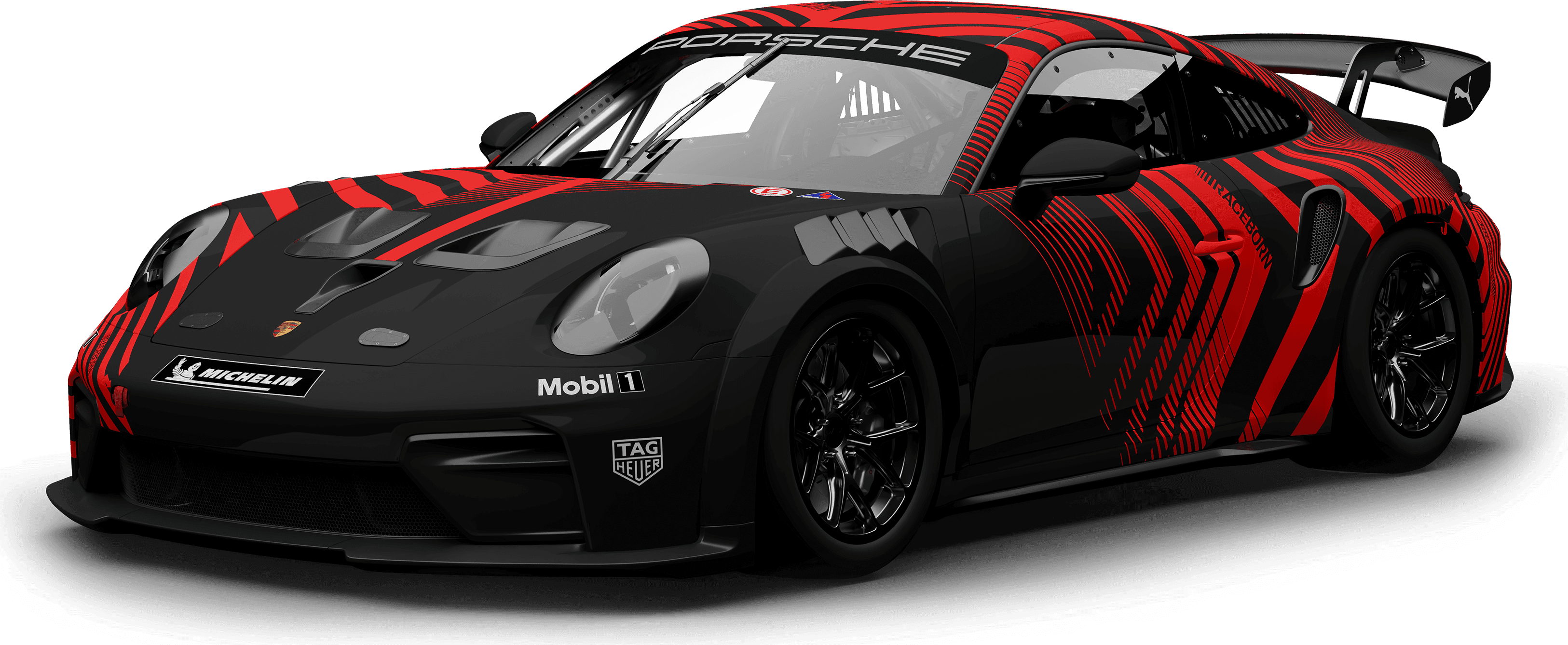
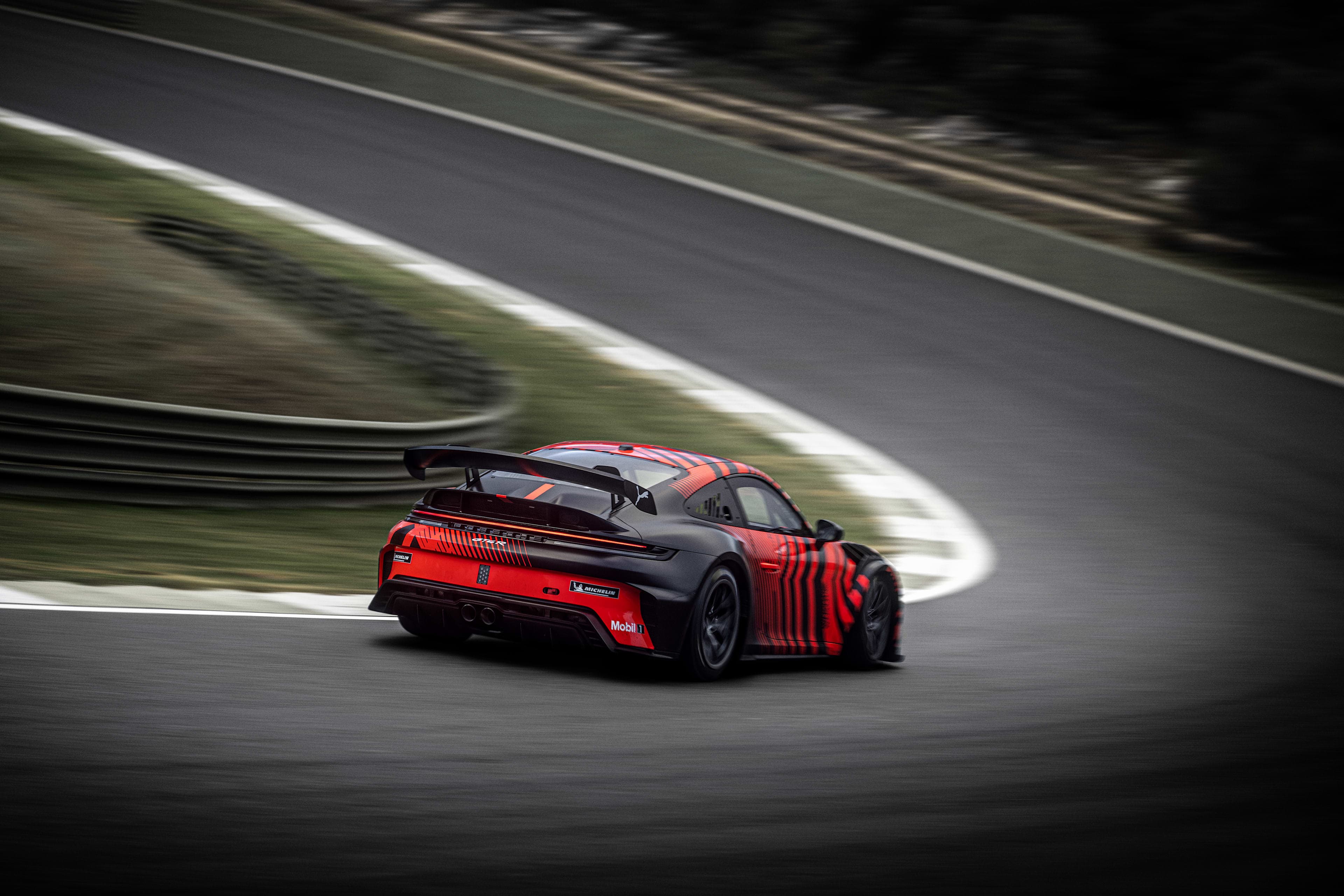
Porsche's new 911 GT4 R is the first global GT4 customer race car built on the 911 platform. It is fast, serious, and not a street car, so the real review is whether teams should move from the 718 Cayman GT4 RS Clubsport into this new rear-engine program.
Published June 30, 2026
Expert verdict
The 911 GT4 R is the most important Porsche GT4 customer car since the Cayman Clubsport arrived. The official spec is strong: 4.0-liter flat-six, 382 kW / 520 PS, sequential six-speed, rear drive, about 3,340 pounds, and SRO GT4 homologation. The business case is narrower than the hype: buy it if you are building a 2027 GT4 race program with Porsche support, not if you want a track-day toy with plates.
HIGHS
- First global GT4 customer race car built on the 911 platform
- Official 4.0-liter flat-six with up to 382 kW / 520 PS and a sequential six-speed gearbox
- SRO GT4 homologation, IMSA/SRO North America context, and Porsche customer-racing support path
- Factory cockpit, safety, data, aero, and chassis hardware built for real race use
LOWS
- Not street legal and not a normal dealer-owned weekend car
- $375,500 U.S. figure is only the start of a much larger racing program budget
- First-year 911 GT4 platform has no customer race reliability, tire-life, or resale record yet
- Balance of Performance can reduce the headline output and decide how competitive it feels
AT A GLANCE
- Score
- 8.3
- Price
- $375.5K US / EUR265K plus VAT
- Horsepower
- 520 hp
- Drivetrain
- RWD
- Body
- Coupe
- Fuel
- Gas
Buyer Verdict
The fast answer before you compare specs.
Built for shoppers who want the recommendation first and the details right after.
Buy it if
- The 2027 Porsche 911 GT4 R is a race-program buy, not a street-car splurge. Porsche has confirmed a 4.0-liter six-cylinder boxer engine with up to 382 kW / 520 PS, 470 Nm of torque, rear-wheel drive, a six-speed sequential dog-type gearbox, about 3,340 pounds, SRO GT4 homologation, and a 2027 race debut. The U.S. coverage points to about $375,500 including import and delivery and late-2026 availability, while Porsche's European release lists EUR265,000 plus VAT. Buy it if you can name the series, shop, driver, spares plan, and budget; wait if you just want the newest Porsche shape.
- Best for: Teams, coaches, and serious track buyers planning a 2027 GT4 program with Porsche Motorsport support, not street-car shoppers.
- Our trim pick: 911 GT4 R SRO GT4 homologation from $375,500.
Skip it if
- Not street legal and not a normal dealer-owned weekend car
- $375,500 U.S. figure is only the start of a much larger racing program budget
- First-year 911 GT4 platform has no customer race reliability, tire-life, or resale record yet
Closest rivals
- BMW M4 GT4 EVO
Current GT4 benchmark alternative
- Mercedes-AMG GT4
AMG customer-racing support
- Ford Mustang GT4
V8 GT4 alternative
Quick take
The 2027 Porsche 911 GT4 R is not another expensive 911 trim. Porsche Motorsport revealed it on June 25, 2026 as a customer motorsport car for the 2027 season, with U.S. first-look coverage pointing to late-2026 availability for teams preparing next year's programs. The important first line is the one most casual coverage buries: the official brochure says the vehicle cannot be registered for public road use. This is a race car for GT4 competition, private track programs, and teams stepping into Porsche's customer racing ladder.
This is a MotorRank research-basis review, not a MotorRank instrumented race test. The facts below are built from Porsche Newsroom, Porsche Motorsport's official 911 GT4 R page, the Porsche Motorsport North America brochure, and current first-look coverage from Car and Driver, Autoweek, Racer, and MotorTrend. We do not claim lap times, tire life, brake wear, Balance of Performance outcomes, resale values, or reliability proof that no one has measured yet.
Driving impressions
Why the 911 GT4 R matters
The GT4 R matters because Porsche is moving its global GT4 entry from the mid-engine 718 Cayman GT4 RS Clubsport to the 911 platform for the first time. That changes weight distribution, driver habits, setup logic, spares planning, and how teams present the car to sponsors and paying drivers. It also gives Porsche a cleaner customer ladder: 911 GT4 R for GT4, 911 GT3 Cup for one-make and Cup-based programs, and 911 GT3 R for GT3.
What to watch before you buy
Watch five things before you send a deposit: whether your series will actually accept the car in the class you want, what your Porsche Motorsport distributor can commit on delivery timing, how the SRO or IMSA Balance of Performance table treats the 520-PS engine, what spares and support cost beyond the $375,500 U.S. figure, and whether your drivers are prepared to move from a Cayman-style GT4 car to a rear-engine 911.
SERP audit: what the first-look field answers and what it skips
The current search field is fast and useful but thin. A June 30, 2026 U.S. buyer-intent SERP for 2027 Porsche 911 GT4 R review, price, specs, and street legality put MotorTrend at number one, with Motor1, Robb Report, Car and Driver, and other first-look pages close behind. Porsche's own pages own the source truth, Car and Driver and MotorTrend frame the headline as the first 911-based GT4 race car, Autoweek surfaces the $375,500 U.S. price and SRO/IMSA context, and Racer adds the clearest motorsport-series angle. For a launch-day shopper, that is enough to know the car exists, what it roughly costs, and why the 911 badge matters.
The gap is the decision. Most first-look stories repeat the same spec block: 4.0-liter flat-six, 520 hp, six-speed sequential gearbox, rear drive, 2027 debut, and the outgoing 718 Cayman GT4 RS Clubsport replacement story. What they do not give a buyer is a team worksheet: who should order one, who should wait for homologation and BoP data, what extra budget sits behind the invoice, and why a non-street-legal Porsche needs different buying logic than a 911 GT3 RS.
That is where this review is aimed. The MotorRank job is not to pretend we tested a factory race car we have not driven. It is to separate official Porsche facts from early coverage, explain the business and series context, and turn the release into a practical order-or-wait recommendation for teams, coaches, club racers, and serious track buyers.
Official specs: what Porsche has actually confirmed
The official baseline starts with Porsche, not the comment section. Porsche Newsroom lists the 911 GT4 R as a global customer motorsport car based on the 911 platform, powered by a 4.0-liter six-cylinder boxer engine delivering up to 382 kW, or 520 PS. Porsche Motorsport's dedicated page lists the same displacement family, an 8,750-rpm capability, a Porsche six-speed sequential dog-type transmission, rear-wheel drive, and an approximate weight of 1,515 kg, or 3,340 pounds.
The Porsche Motorsport North America brochure adds the usable spec table: 3,996 cc displacement, 382 kW / 520 hp at 8,400 rpm subject to SRO Balance of Performance, 470 Nm of torque at 6,150 rpm, which is about 347 lb-ft, a mechanical limited-slip differential, two-way adjustable dampers, forged control arms and top mounts, 380 mm ventilated steel brake discs on aluminum bells, and single-piece forged 18-inch wheels measuring 11J front and 12J rear.
That torque conversion matters because early first-look spec blocks can disagree while coverage is still fresh. Until Porsche publishes a revised sheet, use Porsche's 470 Nm technical baseline as the controlling figure and treat rounded U.S. lb-ft conversions as context.
The dimensions matter because they explain why this is not a Cayman with a new badge. The brochure lists 4,599 mm of length, 1,920 mm of front-axle width, 1,902 mm of rear-axle width, and a 2,468 mm wheelbase. That is a 911 Cup-based footprint adapted down into GT4 use, not the outgoing 718 package stretched into another season.
Not street legal, not a GT3 RS alternative
The most important buyer filter is legal use. Porsche's brochure says customers are responsible for compliance and that the vehicle cannot be registered for public road use. That means no plates, no Sunday canyon-drive rationalization, no emissions workaround, and no normal dealer service relationship. This is a race car that needs a trailer, storage, crew support, consumables, and a plan for the series or track environment where it will live.
That sounds obvious, but it matters because the 911 GT4 R will show up in search results beside road cars like the 911 GT3, 911 GT3 RS, Cayman GT4 RS, and used Cup cars. The GT4 R is not the cheaper way into a GT3 RS. It is the more expensive way into regulated racing, where safety equipment, eligibility, spares, and Balance of Performance are part of the product.
If the intended use is open lapping, a used GT3 Cup, Cayman GT4 Clubsport, or a street-legal GT3 may make more sense depending on the track, support network, and resale goal. If the intended use is GT4 competition with Porsche factory parts and a current homologation path, the 911 GT4 R belongs on the list immediately.
MSRP, destination, VAT, and the real order price
Porsche Newsroom gives the European price as EUR265,000 plus country-specific VAT. Autoweek, Car and Driver, Racer, and MotorTrend all point U.S. readers to roughly $375,000 to $375,500, with Autoweek specifying $375,500 including import and delivery into the United States. Treat that as the race-car equivalent of MSRP plus destination, not an out-the-door program budget.
The reason is simple: a GT4 R invoice is only the entry fee. A real 2027 program needs spare wheels, rain tires, slicks, brake rotors and pads, bodywork, alignment equipment, data work, radios, fuel handling, transport, storage, crew, entry fees, test days, crash budget, and driver coaching. A buyer who can afford the car but not the first season around it should not buy the car yet.
Ask Porsche Motorsport or the authorized distributor for a written order quote that separates base vehicle price, import or delivery charges, required options, spares packages, support packages, taxes, and delivery timing. The public timing target is late 2026 for cars meant to run in the 2027 season, but an actual buyer should confirm allocation, build slot, transport, and support availability in writing. Then ask your race shop for a one-season operating estimate before the deposit leaves the account. That is the difference between buying a Porsche and funding a racing program.
What it replaces: the Cayman GT4 RS Clubsport era
The outgoing reference point is the 718 Cayman GT4 RS Clubsport, the car that carried Porsche's GT4 customer program through the last cycle. It worked because the mid-engine Cayman platform was stable, familiar, and approachable for amateur and semi-pro drivers. That history is exactly why the 911 switch is not cosmetic. Teams have to consider setup knowledge, driver adaptation, spares inventory, and how much old Cayman data still transfers.
The 911 GT4 R builds from the technical foundation of the current 911 Cup, which itself is based on the 992.2-generation road-legal 911 GT3. Porsche positions the car as a step up in the upper performance bracket, with a more powerful engine and Cup-derived electronics, while still keeping it inside GT4 cost and eligibility logic rather than GT3 budgets.
The buyer question is not whether Porsche can build a race car. It can. The question is whether the new rear-engine platform gives your drivers more consistency, more confidence, and better series fit than a proven Cayman package. Until teams have race weekends and BoP tables in hand, the honest answer is that the 911 GT4 R is promising but not yet proven in customer hands.
Who should order one early
The best early buyer is a team already running Porsche customer racing equipment, already planning a 2027 GT4 program, and already connected to the Porsche Motorsport parts and support network. That buyer can absorb the learning curve because the rest of the operating system is in place: crew, driver coaching, alignment workflow, data review, logistics, and a series calendar.
The second good buyer is a serious private track owner who wants a current factory car and is comfortable treating it like equipment rather than a collectible. That person should still have a shop lined up before ordering. A car like this rewards maintenance discipline and punishes casual ownership. Tires, brakes, fluids, belts, fire-system service, seat and harness dates, and gearbox work are not optional background noise.
The buyer who should wait is the prestige shopper who mainly wants the newest Porsche. There will be better ways to spend the money if the car is not going into a class, a coaching program, or a serious track schedule. The GT4 R is exciting because it is focused. That also makes it a bad fit for anyone who wants a flexible street-and-track halo car.
Which GT4 R spec should you actually buy?
There is no consumer trim ladder here, so the MotorRank pick is the SRO/IMSA-ready base car ordered around the exact series rulebook you intend to enter. In normal car-review language, that sounds unsatisfying. In race-car language, it is the whole point. The right GT4 R is the one whose homologation, data, safety equipment, spares, and support plan match the calendar, not the one with the most vanity add-ons.
Before signing, identify the series first: SRO GT4 America, IMSA Michelin Pilot Challenge GS, a regional GT4 championship, private testing, or club-level track use. Then ask the distributor what changes for that use case: transponder, radio, data package, fire-system certification, seat size, cool-suit hardware, passenger or coach-seat rules, tire supplier, and spares availability. A small mismatch can turn a beautiful car into a paperwork problem.
The spec to avoid is the undefined one. Do not order a $375,500 race car because the launch photos are strong and then decide later where it will run. The correct order path starts with the rulebook, then the shop, then the driver, then the spares, then the car.
The deposit checklist before Porsche takes your order
A normal review can tell a shopper to test-drive two trims and get three quotes. A GT4 R buyer needs a harder checklist. Before the deposit, the buyer should have written confirmation of target series eligibility, expected delivery window, required options, support contact, recommended spares package, import or delivery assumptions, tax treatment, and what happens if homologation or Balance of Performance timing moves the car into a different first-event window.
The race shop should sign off before the buyer does. That means the shop has reviewed the brochure, confirmed lift and storage needs, checked trailer fit, estimated first-season consumables, and decided whether its current tools, scales, alignment gear, data workflow, radios, and crew training match the car. The cheapest mistake to fix is the one found before the transporter arrives.
Driver fit belongs on the same checklist. Seat size, pedal position, steering-wheel controls, visibility, radio comfort, cool-suit routing, and emergency-exit practice can decide whether a driver actually uses the car well. The GT4 R may be factory-built, but it still has to fit the person who will drive it under pressure for an hour at a time.
Performance expectations and the Balance of Performance caveat
Porsche's headline output is up to 382 kW / 520 PS, and the brochure lists 520 hp at 8,400 rpm with 470 Nm of torque at 6,150 rpm, or about 347 lb-ft. That is the number everyone will quote, and it is legitimate as an official technical figure. It is also not necessarily the number the car will race with in every series, because GT4 racing uses Balance of Performance to equalize cars through restrictors, weight, ride-height windows, and other adjustments.
Porsche Newsroom already makes that caveat visible by noting output with airflow restrictors can be 316 kW / 430 PS. That does not make the car weaker; it makes the class work. A team should judge the GT4 R by drivability, tire use, braking stability, serviceability, setup range, and support, not by treating peak launch horsepower as the race-weekend answer.
There are no honest public lap-time conclusions yet. The car has not built a 2027 customer race record, and MotorRank has not tested it. Until teams run it under real BoP, the correct performance expectation is this: a Cup-derived 911 GT4 platform with serious factory engineering, likely strong pace, and unknown class balance in its first season.
The first-season operating plan
The first season should be treated as a launch program, not a normal arrive-and-drive. Schedule a private shakedown before the first sanctioned event, keep the first day focused on systems rather than lap time, and build a baseline notebook for ride height, alignment, tire pressures, damper clicks, brake bias, driver comments, fuel use, radio quality, and fault messages. That notebook becomes more valuable than any launch article after the first weekend.
Consumables should be tracked from session one. Log tire heat cycles, rotor and pad thickness, hub checks, fluid temperatures, gearbox behavior, bodywork damage, and every off-track event. A GT4 car is manageable when the team knows what is wearing; it becomes expensive when parts are replaced by panic instead of life tracking. Porsche's parts network helps most when the team knows what to ask for before it fails.
The first-season success metric is not just podiums. It is green-flag mileage, clean driver feedback, predictable setup changes, fast service between sessions, and no missed events for parts or compliance. If the 911 GT4 R gives teams that foundation in 2027, the platform switch from Cayman to 911 will look justified even before the headline results arrive.
This is also where amateur-driver confidence gets built. A car can be fast and still be the wrong tool if the driver returns after every session saying the rear steps out without warning, the ABS feels inconsistent, or the cockpit information is too busy under stress. The first program should reserve time for driver language, not just lap timing, because that feedback is how a race shop turns a new factory car into a repeatable weekend machine.
Chassis, aero, brakes, and why the 911 switch matters
The GT4 R uses a 911 Cup-based foundation, but it is tuned for GT4 rather than simply copied from Cup. Racer notes narrower wheels and production wheel mountings relative to Cup specification, and Porsche's own material emphasizes drivability, stability, and GT4 category fit. The point is not to make the wildest 911 possible; it is to make a 911 that amateur and semi-pro GT4 drivers can exploit consistently.
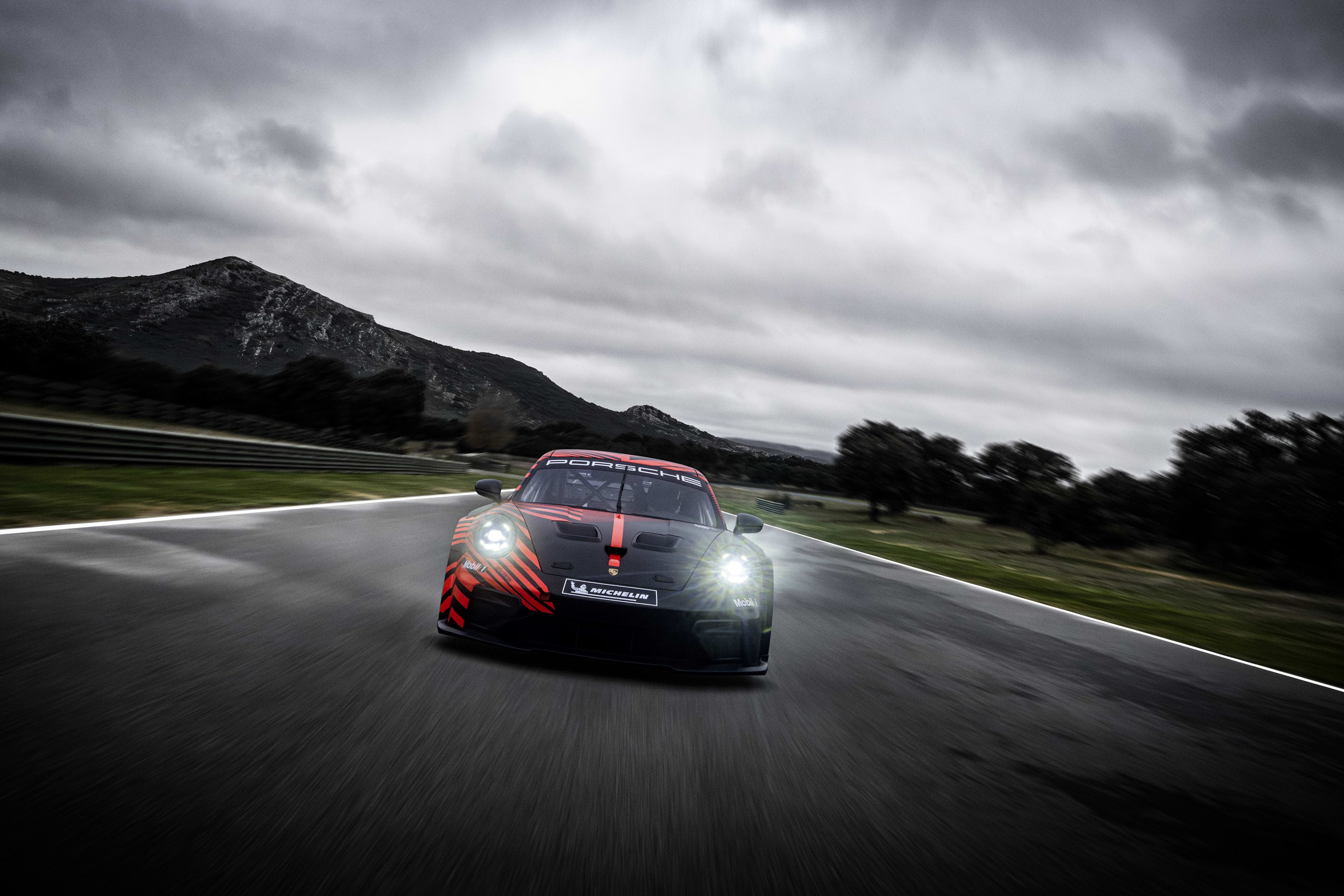
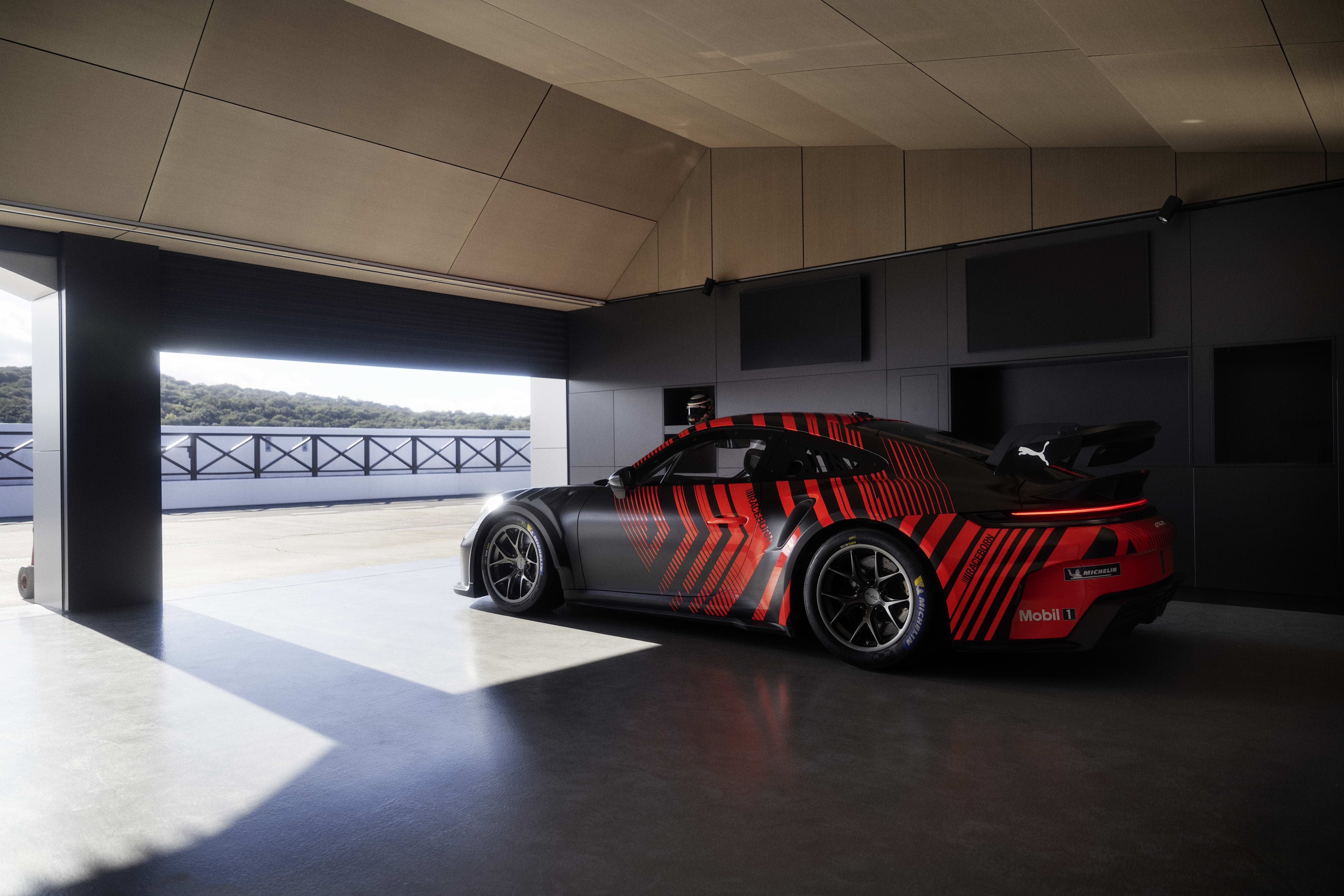
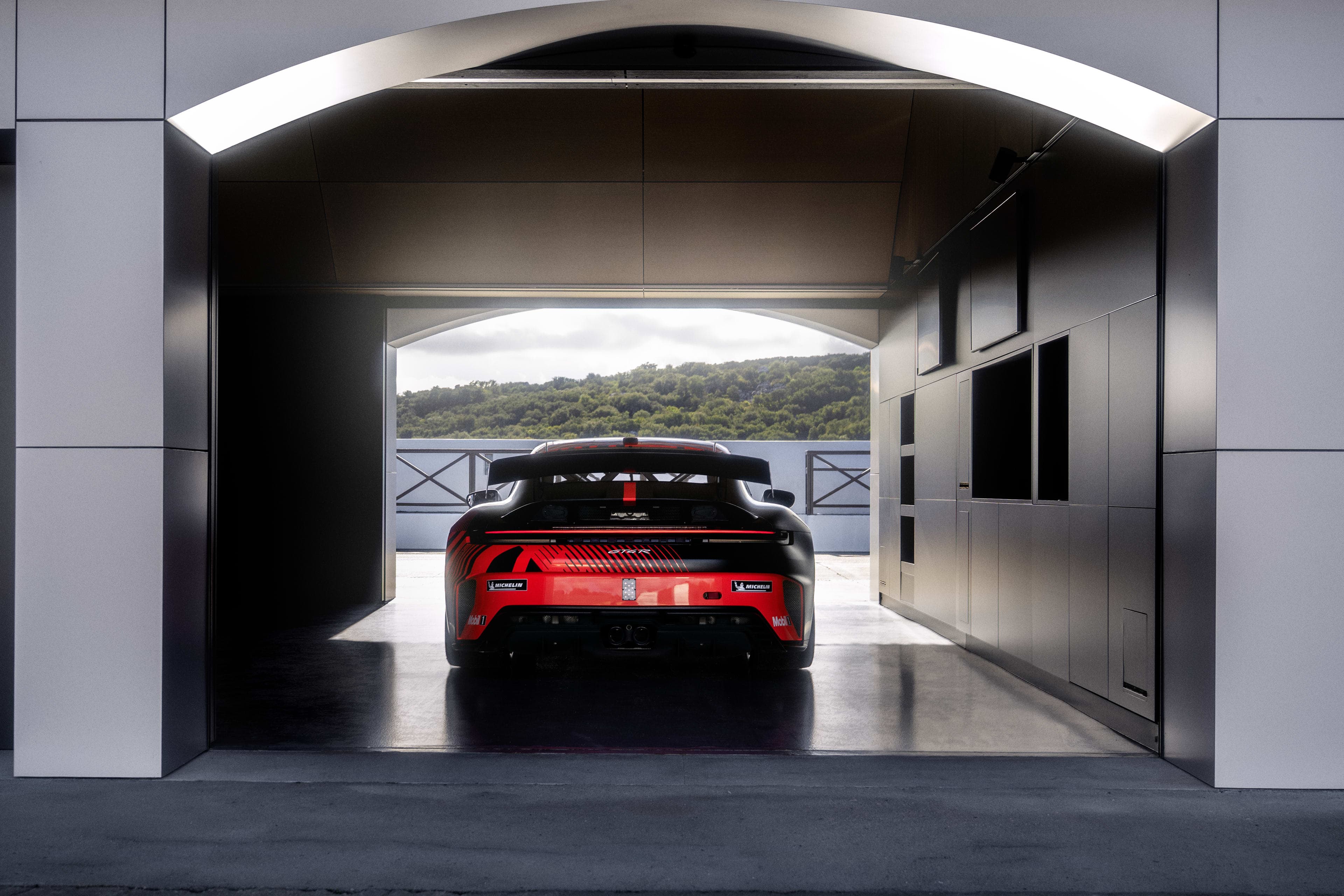
The aero and bodywork choices also tell the story. Porsche Newsroom highlights natural-fiber-reinforced plastic for exterior components and an adjustable rear wing with eleven positions. That matters for weight, sustainability messaging, serviceability, and setup flexibility. Teams should ask how quickly major panels can be replaced, how much wing adjustment range is useful under the rulebook, and which spares are available at trackside support events.
The brake and suspension hardware is appropriately serious: 380 mm ventilated steel rotors on aluminum bells, adjustable dampers, forged control arms and top mounts, and forged 18-inch wheels. None of that guarantees low running cost. It gives the team the tools to tune the car. The cost comes later, in how often the driver asks those parts to save mistakes.
Cockpit, safety, and data: what the driver actually lives with
The cockpit is the clearest separation from any street Porsche. Porsche lists a multifunction carbon-fiber-reinforced-plastic motorsport steering wheel, a 10.3-inch color display, integrated data logging, precise GPS, a FIA-standard racing bucket seat, a six-point harness, and an FT3 safety fuel cell of about 110 liters. Those are not lifestyle features. They are the operating interface for a driver and engineer.
That data layer is important because a GT4 buyer is usually buying repeatability, not just speed. The driver needs usable steering controls, clean warnings, predictable pedal feel, and data that the engineer can turn into coaching. A team moving from a Cayman should plan shakedown time around driver sightlines, rear traction behavior, ABS/TC settings, brake bias, and how the driver interprets the 911's rotation phase.
Safety compliance is not a one-time checkbox. Seats, harnesses, fire systems, fuel cells, nets, and series-specific equipment all have dates and rulebook language. The best thing about a current factory car is that the starting point should be clean. The worst way to own one is to assume factory-built means forever-compliant.
Warranty, support, and reliability reality
Warranty is not the same conversation here as it is on a street 911. Porsche's public material does not create a normal bumper-to-bumper consumer warranty promise for a race car, and the brochure makes clear that specifications can change and customers are responsible for regulations. Before ordering, get support, parts, and any warranty or defect-coverage language in writing from Porsche Motorsport or the selling distributor.
Reliability should also be framed honestly. Porsche customer cars have a strong reputation, and the 911 Cup-based foundation is a good starting point, but this specific 911 GT4 R has no multi-season customer record yet. There are no real public failure-rate patterns, no useful resale curve, and no broad owner survey. The honest reliability case is factory engineering plus support access, not proven field data.
The smart owner protects the program with spares and procedure: pre-event nut-and-bolt checks, fluid schedules, gearbox inspection windows, crack checks, brake and hub life tracking, damage logs, and a budget for the first off-track event. That is not pessimism. That is how a race car stays available on the weekend when the entry fee has already been paid.
Rivals: the GT4 grid, not the street-car showroom
The real cross-shop set is the current GT4 field: BMW M4 GT4 EVO, Mercedes-AMG GT4, Ford Mustang GT4, Toyota GR Supra GT4 EVO2, Aston Martin Vantage GT4, McLaren Artura GT4, and the outgoing Porsche 718 Cayman GT4 RS Clubsport. A street 911 GT3, GT3 RS, or Cayman GT4 RS can be relevant for private track use, but it is not the same purchase if the buyer needs homologation and series eligibility.
The Porsche advantage is obvious: brand gravity, deep motorsport parts culture, a clean 911 ladder, and sponsor appeal. The risk is also obvious: a first-year platform transition in a class where BoP can make or break the business case. A team that already knows BMW or Mercedes-AMG GT4 support may not switch on launch photos alone, and it should not.
The right comparison is not peak horsepower. It is total program confidence: parts at the track, support response time, crash-repair speed, tire behavior, driver adaptation, engineer familiarity, resale, and how often the car finishes without expensive drama. That is where the 911 GT4 R has to prove itself in 2027.
What could move this score up or down
The 8.3 score is intentionally restrained. The spec is strong, the official support story is credible, and the 911 platform gives Porsche a powerful new GT4 identity. It moves up if early 2027 teams report clean reliability, predictable tire wear, quick parts supply, strong BoP treatment, and a driver adaptation curve that is easier than the rear-engine concern suggests.
It moves down if the first BoP windows blunt the engine advantage, if teams struggle to set the car up for amateur drivers, if operating cost jumps materially over the 718 Cayman program, or if delivery timing and spares supply lag demand. None of those are proven problems today. They are the exact first-year risks a serious buyer should underwrite before ordering.
That is why the recommendation is not a blanket buy. It is a qualified buy for teams with a 2027 GT4 plan and support structure, and a wait for buyers who only have curiosity, collection instincts, or track-day intent without a shop and series plan.
The verdict: where the 911 GT4 R fits
The 2027 Porsche 911 GT4 R is the right kind of reveal: specific enough to be useful, serious enough to change the GT4 conversation, and honest enough in Porsche's own documentation to show the limits. It is not street legal. It is not an everyday 911 with a big wing. It is a customer race car built to bring the 911 platform into global GT4 competition.
For the correct buyer, that is exciting. The car brings a 4.0-liter flat-six, a sequential dog gearbox, rear drive, about 3,340 pounds, proper safety equipment, integrated data, SRO GT4 homologation, and Porsche's customer racing ecosystem. It also brings a six-figure operating commitment that starts after the $375,500 U.S. figure, not before.
Buy it if you can name the series, the shop, the driver, the support path, and the first-season budget. Wait if the appeal is mainly that it is new, rare, and Porsche-shaped. The 911 GT4 R deserves attention because it is a real race-car answer. It also deserves the discipline race cars demand.
Specs Snapshot
The numbers shoppers compare first.
Key numbers to compare against alternatives before you commit.
| Base price | $375.5K US / EUR265K plus VAT |
|---|---|
| Horsepower | 520 hp |
| Top speed | 180 mph |
| Drivetrain | RWD |
| Transmission | Manual |
| Fuel type | Gas |
Media Proof
Exterior and interior visuals with source receipts.
Every asset shown here links back to its source and license so the page can gain trust without borrowing competitor media.
Source Receipts
Source pages, creator credits, and reuse licenses are visible for editorial trust and legal hygiene.
Related Video
The new 911 GT4 R | The next chapter begins
Porsche
Official Porsche launch video used for visual context only; MotorRank has not instrument-tested the car.
Interior
Cabin views before you choose a trim.
The cockpit is race equipment, not luxury trim: a carbon-fiber-reinforced motorsport wheel, 10.3-inch display, data logging, GPS, FIA-standard bucket seat, six-point harness, and FT3 fuel cell are the buyer-relevant features.
Interior Source Receipts
Research basis
Updated June 30, 2026
Official Porsche Newsroom release, Porsche Motorsport 911 GT4 R product page, Porsche Motorsport North America brochure, and current first-look coverage from Car and Driver, Autoweek, Racer, and MotorTrend.
This is a first-look race-buyer review, not a MotorRank track test. Output, price, weight, dimensions, homologation, and non-road-use restrictions are attributed to Porsche or named first-look outlets. Lap times, tire life, repair cost, BoP treatment, and long-term reliability remain untested.
Update after first 2027 customer race weekends, SRO/IMSA BoP tables, delivery reports, and team operating-cost feedback publish.
Which 2027 PORSCHE 911 GT4 R to Buy
Which trim is right for you?
911 GT4 R SRO GT4 homologation
$375,500
The right order if the car is going into SRO GT4 America or another GT4-regulated program and the buyer wants Porsche factory support from day one.
Our pick
911 GT4 R IMSA GS program
$375,500
The same base car, planned around IMSA Michelin Pilot Challenge GS rules, spares, crew training, endurance prep, and series-specific Balance of Performance.
Private track-day build
$375,500
Only for buyers who already understand that this is not street legal and that operating budget, support, storage, tires, brakes, and transport matter more than the invoice.
Performance
- Horsepower
- 520hp
- Top Speed
- 180mph
Scorecard
- Performance8.8
- Comfort3.2
- Value7.4
- Ownership6.8
- Technology8.1
- Safety8.7
- Reliability7.5
- Interior7.2
Shopping Tools
Next steps for 2027 Porsche 911 GT4 R shoppers.
Research tools to help you move from browsing to buying.
Compare rivals
Line up the closest alternatives before you commit.
Check deal signals
Review pricing pressure, incentives, and value angles.
Read owner signal
Balance the expert take with ownership patterns.
Official brochure
Official technical PDF with dimensions, weight, gearbox, suspension, brakes, safety equipment, and the non-road-registration warning.
Open vehicle hub
Keep specs, reliability, rankings, and review links together.
Compare Against
Cross-shop before you commit.
The closest alternatives in this price range, with our read on each.
Current GT4 benchmark alternative
BMW M4 GT4 EVO
A serious rival with current-field familiarity for BMW teams and drivers who want an established front-engine GT4 package.
AMG customer-racing support
Mercedes-AMG GT4
The support-network choice for teams already in AMG's customer racing ecosystem.
V8 GT4 alternative
Ford Mustang GT4
A very different character and brand story, useful where Mustang support and series knowledge are already strong.
Proven Supra GT4 route
Toyota GR Supra GT4 EVO2
A known GT4 customer car with a different balance of platform familiarity, cost, and support.
Outgoing Porsche GT4 reference
Porsche 718 Cayman GT4 RS Clubsport
The known Porsche package; compare spares, data, and driver confidence before moving to the 911.
Buyer FAQ
2027 Porsche 911 GT4 R buyer questions, answered.
18
buyer answers
Question Map
Decision
Should you order the 911 GT4 R?
Only if the car already has a race-program job. This is not a casual street-car upgrade.
Is the Porsche 911 GT4 R street legal?
No. Porsche's brochure says it cannot be registered for public road use.+
No. The official Porsche Motorsport North America brochure states that the vehicle cannot be registered for public road use. Treat it as race equipment that needs transport, storage, safety compliance, crew support, and a legal place to run.
Who is the right buyer?
A team or serious track buyer with a 2027 GT4 plan, shop, driver, and spares budget.+
The strongest buyer is already planning SRO GT4, IMSA GS, or a serious private testing program and has Porsche Motorsport support lined up. If the intended use is occasional track-day fun, a street-legal GT3, used Cup car, or older Clubsport may be cleaner business.
Should a Cayman GT4 RS Clubsport team switch immediately?
Not automatically. The 911 platform is promising but still needs first-season proof.+
The new 911-based platform changes driver feel, setup habits, parts planning, and BoP exposure. A Porsche-aligned team may want early delivery; a budget-sensitive team should compare support, spares, and early race results before replacing a known Cayman package.
Official Specs
What Porsche has confirmed
The hard numbers come from Porsche Newsroom, the Motorsport page, and the official brochure.
What engine does the 911 GT4 R use?
A 4.0-liter six-cylinder boxer engine rated up to 382 kW / 520 PS and 470 Nm, about 347 lb-ft.+
Porsche lists a 4.0-liter six-cylinder boxer engine with up to 382 kW / 520 PS. The PMNA brochure lists 3,996 cc, 520 hp at 8,400 rpm, and 470 Nm at 6,150 rpm, about 347 lb-ft, subject to SRO Balance of Performance classification.
What gearbox and drivetrain does it have?
Rear-wheel drive with a Porsche six-speed sequential dog-type gearbox.+
The car is rear-wheel drive and uses Porsche's six-speed sequential dog-type gearbox with a mechanical limited-slip differential. The site UI labels it as manual because the platform type list does not have a sequential race gearbox option.
How heavy and large is it?
About 1,515 kg / 3,340 lb, 181.06 inches long, and a 97.17-inch wheelbase.+
The official brochure lists about 1,515 kg / 3,340 lb, 4,599 mm / 181.06 inches of length, 1,920 mm of front-axle width, 1,902 mm of rear-axle width, and a 2,468 mm / 97.17-inch wheelbase.
Real Cost
What it really costs to run
The invoice is only the start; the first season decides whether the order makes sense.
What is the price?
Porsche lists EUR265,000 plus VAT; U.S. coverage cites about $375,500 with import and delivery.+
Porsche Newsroom lists EUR265,000 plus country-specific VAT. U.S. first-look coverage from Autoweek, Car and Driver, Racer, and MotorTrend cites roughly $375,000 to $375,500, with Autoweek saying $375,500 including import and delivery into the United States.
What costs are missing from that price?
Spares, tires, brakes, transport, crew, entry fees, data work, repairs, and storage.+
A real GT4 program needs wheels, slicks, wets, rotors, pads, bodywork, fluids, radios, data support, setup time, transport, storage, crew, entry fees, test days, and crash budget. The car price is not the program price.
Does it have a normal warranty?
Do not assume a street-car warranty. Get Motorsport support and coverage terms in writing.+
Porsche's public launch material does not create a normal consumer bumper-to-bumper warranty for race use. Ask the selling distributor for written support, defect, parts, and warranty language before ordering.
Race Use
Where it fits on the grid
The GT4 R is for homologated GT4 use first, with private track use as a secondary case.
What series is it built for?
SRO GT4 homologation, with North American context around GT4 America and IMSA Michelin Pilot Challenge GS.+
Porsche calls it a global GT4 customer motorsport car. The PMNA brochure lists SRO GT4 homologation, and U.S. coverage points to Pirelli GT4 America and IMSA Michelin Pilot Challenge GS as relevant North American destinations.
What does Balance of Performance change?
It can reduce or reshape the headline output, so do not buy from peak horsepower alone.+
GT4 racing uses BoP to keep cars close. Porsche's release notes a lower output with airflow restrictors, and the brochure marks power and torque as subject to SRO BoP classification. Pace depends on the final rulebook, not just launch specs.
Is it a good private track-day car?
Only if you already operate race cars. Otherwise it is too specialized.+
It can make sense for a private owner with transport, shop support, consumables budget, and a serious schedule. It is a poor fit for someone who wants a flexible street/track Porsche or occasional lapping without race-car logistics.
Compare
What to cross-shop
Compare against current GT4 customer cars, not normal 911 street trims.
What are the closest rivals?
BMW M4 GT4 EVO, Mercedes-AMG GT4, Mustang GT4, Toyota GR Supra GT4 EVO2, Aston Martin Vantage GT4, and the outgoing Cayman Clubsport.+
The 2026 GT4 field includes brands such as BMW, Mercedes-AMG, Ford, Toyota, Aston Martin, McLaren, Alpine, Ginetta, Lotus, and Porsche. For this buyer, the most practical cross-shops are the cars your series and support network already understand.
Is the BMW M4 GT4 EVO a serious alternative?
Yes. BMW's current EVO package has been racing since 2025 and may have more known field data.+
Yes. The BMW M4 GT4 EVO is a current GT4 platform and a serious alternative for teams that already know BMW support. Porsche's appeal is the 911 identity and Motorsport ecosystem; BMW's appeal is continuity and field familiarity.
Should you compare it to a 911 GT3 RS?
Only for private track use. For racing, compare homologated GT4 cars.+
A GT3 RS may be a better answer for an owner who wants a street-legal Porsche with track ability. It is not the same buying decision if the goal is SRO or IMSA GT4 competition, where homologation, safety, and support drive the choice.
Wait Or Buy
What proof is still missing
The specs are official; race-weekend proof is still ahead.
What proof is missing before the first season?
BoP treatment, race results, tire life, brake wear, repair costs, and team feedback.+
The missing proof is not launch excitement. It is field data: first race results, BoP tables, reliability notes, service speed, tire wear, brake life, crash repair cost, and how quickly drivers adapt to the rear-engine GT4 platform.
What would make the score go up?
Clean early reliability, strong BoP, quick parts supply, and easy driver adaptation.+
The score rises if teams report clean first-season reliability, predictable tire and brake life, strong parts support, fair BoP, and a driver-learning curve that is easier than the Cayman-to-911 transition suggests.
What would make MotorRank wait?
Unclear support, no series plan, uncertain delivery, or a budget that stops at the car price.+
Wait if the distributor cannot give delivery/support clarity, if you do not know the target series, if your shop is not ready for the platform, or if the budget only covers the car and not the first season around it.
Ready to buy?
Configure your 2027 Porsche 911 GT4 R.
Get matched with a Porsche dealer or build your spec sheet from scratch.