
REVIEWS / Hybrid SUVs
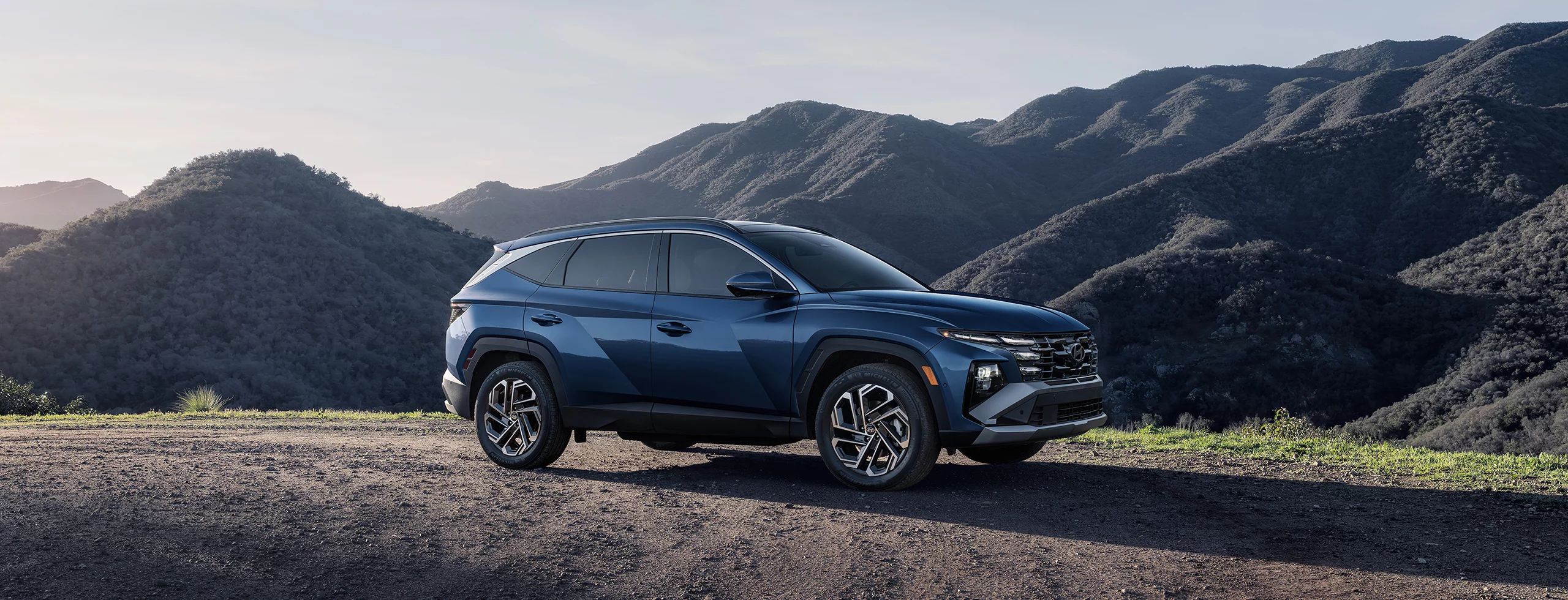
NEW2026 Hyundai Tucson Hybrid Review
The Tucson Hybrid is the compact SUV value play: standard AWD, up to 38 mpg combined, huge cargo space, and Hyundai's long warranty.
Published June 1, 2026 / Updated June 4, 2026
Expert verdict
The 2026 Hyundai Tucson Hybrid is one of the easiest compact hybrid SUVs to recommend if you want AWD, space, warranty coverage, and a sane price. Buy the SEL or SEL Convenience before the Limited pushes the deal into bigger-SUV territory.
HIGHS
- Standard HTRAC AWD on the hybrid lineup
- Blue SE reaches 38 mpg combined while staying in the low-$30K range before fees
- SEL and SEL Convenience are strong value trims
- Hyundai warranty coverage is longer than most direct rivals
- 38.7/74.5 cu ft cargo figures are genuinely useful
LOWS
- Limited trim can get expensive enough to cross-shop larger hybrids
- Toyota and Honda still have stronger hybrid reputation with many shoppers
- Regular hybrid does not deliver plug-in electric driving
- Dealer add-ons can quickly weaken the value story
AT A GLANCE
- Score
- 8.3
- Price
- $32.5K - $42.1K
- Horsepower
- 231 hp
- Drivetrain
- AWD
- Body
- SUV
- Fuel
- Hybrid
Buyer Verdict
The fast answer before you compare specs.
Built for shoppers who want the recommendation first and the details right after.
Buy it if
- Buy the 2026 Hyundai Tucson Hybrid if you want a compact SUV that solves the normal Tucson's biggest weakness: power. The hybrid's 231-hp system, standard HTRAC all-wheel drive, official starting price of $32,450 before freight, and up to 38 mpg combined in Blue SE form make it the Tucson to choose before you look at the gas model. The SEL is the recommendation because it keeps the price near the low-$30,000s while avoiding the bare-base feel. The Limited is comfortable and well equipped, but at $42,075 before freight it starts competing with larger and more premium SUVs. The kill shot against the current ranking pages is simple: the Tucson Hybrid is not just a greener Tucson; it is the Tucson with the right powertrain.
- Best for: Compact SUV shoppers who want standard AWD, hybrid MPG, real cargo space, and long warranty coverage without moving into a larger SUV.
- Our trim pick: SEL from $33,900.
Skip it if
- Limited trim can get expensive enough to cross-shop larger hybrids
- Toyota and Honda still have stronger hybrid reputation with many shoppers
- Regular hybrid does not deliver plug-in electric driving
Closest rivals
- Toyota RAV4 Hybrid
Resale and reputation benchmark
- Kia Sportage Hybrid
Corporate cousin
- Hyundai Palisade Hybrid
Three-row step-up
Quick take
The 2026 Hyundai Tucson Hybrid sits in the exact spot many shoppers actually want: compact SUV size, standard HTRAC all-wheel drive, hybrid fuel economy, a useful cargo hold, and warranty coverage that beats most Japanese rivals on paper. Hyundai's official specs list Blue SE from $32,450, SEL from $33,900, SEL Convenience from $34,900, and Limited from $42,075 before freight, tax, title, license, and dealer pricing.
This is a MotorRank research-basis review, not a MotorRank instrumented road test. Hyundai official pages supply the trim, price, warranty, cargo, and fuel-economy data. Edmunds is the current #1 visible review competitor for the 2026 Tucson Hybrid query, and Car and Driver is the second major editorial benchmark. We use them as competitor context, not as copy.
Driving impressions
Why the Tucson Hybrid matters
The Tucson Hybrid matters because it is the compact hybrid SUV for buyers who want value without feeling like they bought the smallest or plainest thing on the lot. It has more warranty runway than RAV4 or CR-V, standard AWD, a broad trim ladder, up to 74.5 cubic feet of cargo space with the rear seats folded, and enough hybrid power to feel normal in family use.
What to watch before you buy
Watch the trim walk and the quote. The Blue SE is the efficient price anchor, the SEL is the practical daily trim, SEL Convenience is the feature sweet spot, and Limited is attractive but expensive. Also decide whether you actually need the plug-in hybrid, because the regular Tucson Hybrid is the simpler, cheaper, easier recommendation for most shoppers who cannot charge at home.
SERP audit: why the #1 Tucson Hybrid page can be beaten
The current #1 visible result for 2026 Hyundai Tucson Hybrid review is Edmunds. It is useful because it gives shoppers a mainstream review surface with pricing, broad pros and cons, and a clear sense that the Tucson Hybrid is comfortable, spacious, and efficient. Car and Driver follows with another strong model page. The problem is not that those pages are weak; the problem is that they are general.
A Tucson Hybrid shopper needs a more specific answer. Blue SE, SEL, SEL Convenience, or Limited? Regular hybrid or plug-in hybrid? Tucson Hybrid or Sportage Hybrid? Tucson Hybrid or RAV4 and CR-V? Is Hyundai's warranty enough to offset Toyota and Honda reputation? How much does standard AWD change the value equation? Those questions decide the purchase more than another paragraph saying the SUV is well rounded.
This page is built to deliver that answer. It combines Hyundai's official MSRP, MPG, warranty, cargo, and trim data with a competitor gap map, a clear trim recommendation, a regular-hybrid-versus-PHEV decision, and practical buying advice for quote comparison. The goal is to be the page a shopper can bring to the dealer.
Official pricing: the SEL is the first trim to price
Hyundai's official spec page lists Blue SE at $32,450, SEL at $33,900, SEL Convenience at $34,900, and Limited at $42,075. Those prices exclude freight, tax, title, license, and dealer charges, so they are not out-the-door numbers. Still, the ladder is favorable. The spread from Blue SE to SEL Convenience is only $2,450, while the jump to Limited is much larger.
Blue SE is the efficiency anchor and may be the best pure value if you like the equipment. SEL is the trim most shoppers should price first because it keeps the cost close to the base but adds the comfort and convenience features many buyers expect. SEL Convenience is the feature sweet spot if blind-spot camera tech, wireless charging, and the panoramic roof matter to you.
Limited is the caution trim. It makes the Tucson feel more premium, but at $42,075 before freight and taxes, it starts to overlap bigger vehicles, discounted luxury compacts, and used larger hybrids. Buy Limited if the features are the reason you want the car. Do not buy it because it was the only Tucson Hybrid available on the lot.
MSRP, freight, incentives, and dealer add-ons
Hyundai is explicit that MSRP excludes freight charges, tax, title, and license fees, and that dealer prices may vary. That matters because a Tucson Hybrid can look like a bargain on the trim page and become average once accessories and fees are added. Ask for the full buyer's order, not just a monthly payment.
Separate every line: base MSRP, factory options, freight, dealer discount, rebates, documentation fee, registration, taxes, protection products, accessories, and financing assumptions. This is especially important on SEL Convenience and Limited, where a small add-on stack can push the deal into a different class.
The Tucson Hybrid is strongest when the quote stays simple. A fair SEL or SEL Convenience quote with normal fees is a strong compact-SUV buy. A Limited quote with unavoidable dealer add-ons should be compared against RAV4 Hybrid, CR-V Hybrid, Sportage Hybrid, Santa Fe Hybrid, and used Lexus NX Hybrid before you sign.
Hybrid, plug-in hybrid, or gas Tucson
The regular Tucson Hybrid is the default MotorRank answer. It gives you electric assist, standard AWD, strong warranty coverage, and no charging requirement. That makes it easy for apartment dwellers, commuters, small families, and buyers who do not want to plan around plugs. If you just want lower fuel bills and a better Tucson, start here.
The Tucson Plug-in Hybrid makes sense only if you can charge at home or at work most days. Without regular charging, you are carrying extra hardware and paying extra money for benefits you are not using. If your daily commute fits the electric range and you have reliable charging, the PHEV deserves a separate quote. If not, the normal hybrid is the cleaner buy.
The gas Tucson remains the lowest-complexity choice, but the hybrid is the model that fixes the compact SUV's biggest daily weakness: fuel cost without sacrificing space. For most buyers cross-shopping RAV4 Hybrid, CR-V Hybrid, Sportage Hybrid, and Corolla Cross Hybrid, the Tucson Hybrid is the version that belongs in the comparison.
MPG, AWD, and why the Blue SE number matters
Hyundai lists the Tucson Hybrid Blue SE at 38 mpg city, 38 highway, and 38 combined. The other hybrid trims are listed at 36 city, 37 highway, and 36 combined. That split is normal: higher trims tend to carry more equipment, different wheels, and more weight. The important point is that AWD is standard across the hybrid lineup, so you are not paying an extra MPG penalty just to get winter traction.
Real-world MPG will depend on speed, weather, tires, terrain, and driving style. A Tucson Hybrid on a cold, fast highway trip will not behave like the EPA city cycle. But the structure is right: hybrid assist helps in traffic, standard AWD helps in weather, and the regular hybrid avoids the plug-in question for buyers who cannot charge.
If fuel economy is your top priority, price Blue SE and SEL first. If comfort matters just as much, SEL Convenience may be worth the slight MPG trade. Limited shoppers should accept that they are buying features and cabin richness, not the best fuel-economy deal in the Tucson family.
Cargo, cabin, and family usability
Hyundai's official cargo figure is one of the Tucson Hybrid's biggest strengths: 38.7 cubic feet behind the rear seats and 74.5 cubic feet with the rear seats folded. That is real compact-SUV utility. It is the reason this vehicle belongs in the same conversation as RAV4, CR-V, and Sportage rather than smaller subcompact hybrids.
The cabin is practical rather than delicate. Hyundai's current interior images show a broad, screen-forward dashboard, easy cargo access, and trim-dependent materials. The Tucson does not need to feel like a luxury SUV to win; it needs to make school bags, groceries, dogs, strollers, hardware-store runs, and weekend luggage easier than a compact car.
Bring your real cargo to the test drive if this is a family vehicle. Fold the rear seats, check the load floor, install a child seat, sit behind your own driving position, and try the infotainment while parked. The Tucson Hybrid wins on paper, but the cabin has to match your week.
Warranty and ownership: Hyundai's biggest paper advantage
Hyundai's warranty is a major reason to keep the Tucson Hybrid on the list. The official spec page lists 5 years or 60,000 miles new-vehicle limited coverage, 10 years or 100,000 miles powertrain coverage, 10 years or 100,000 miles hybrid/electric battery coverage, 7 years/unlimited miles anti-perforation coverage, and 5 years/unlimited miles roadside assistance.
That does not automatically make it more reliable than a Toyota or Honda. Warranty is coverage, not proof that nothing will break. But for a buyer keeping the vehicle long term, the written coverage does reduce some risk around the hybrid hardware and powertrain. It is a real ownership advantage, especially against rivals with shorter basic and powertrain terms.
We do not publish invented repair-cost or resale percentages. The honest ownership frame is this: Tucson Hybrid gives you strong warranty coverage, useful fuel economy, and practical size; Toyota and Honda counter with deeper hybrid reputation and resale confidence. Your quote, local dealer quality, and intended ownership length should decide how much that warranty matters.
Rivals: RAV4 Hybrid, CR-V Hybrid, Sportage Hybrid, and Corolla Cross
Toyota RAV4 Hybrid is the reputation rival. It has the Toyota hybrid trust story and strong resale expectations, but the Tucson Hybrid counters with standard AWD value, warranty coverage, and a competitive cargo/cabin package. If the prices are close, drive both. If the Toyota dealer adds markup or accessories, the Hyundai becomes easier to justify.
Honda CR-V Hybrid is the comfort and refinement rival. It is roomy, easy to drive, and strong overall. The Tucson counters with warranty length, feature value, and standard AWD in the hybrid lineup. If you want the calmer driving feel, Honda may win. If you want equipment per dollar and warranty, Hyundai has the better pitch.
Kia Sportage Hybrid is the platform-family rival. It shares much of the logic but wears a different design and value ladder. Corolla Cross Hybrid is smaller and cheaper, but less roomy. The Tucson Hybrid is the middle answer: more useful than the small Toyota, less reputation-heavy than RAV4/CR-V, and often more feature-rich for the money.
Lease, finance, or cash: the Tucson needs a full worksheet
The Tucson Hybrid can be leased, financed, or bought with cash, but every path needs a full worksheet because trim creep changes the story. A fair SEL finance quote can be a strong family-SUV deal. A Limited lease with a high money factor, large due-at-signing amount, and dealer accessories can look comfortable monthly while costing too much in total.
For a lease, compare residual value, money factor, acquisition fee, mileage allowance, disposition fee, and total payments. Do not compare only the monthly number against a RAV4 Hybrid or CR-V Hybrid. A lower monthly payment with more due at signing may not be the cheaper deal. Ask each dealer for the same structure so the quotes can be compared cleanly.
For financing or cash, separate the SUV from the add-ons. Hyundai's official MSRP already excludes freight, taxes, title, license, registration, and optional equipment. A buyer should also identify documentation fees, accessories, protection products, service contracts, and rate markups. The Tucson Hybrid earns a recommendation when the final price stays aligned with the trim's purpose.
Buyer scenarios: which Tucson Hybrid fits your week
The budget-minded commuter should start with Blue SE. It has the best MPG rating in the lineup, standard AWD, and the lowest starting price. This buyer accepts fewer luxuries because the point is a new hybrid SUV with warranty coverage and low fuel use, not a premium-cabin feel.
The family buyer should start with SEL or SEL Convenience. SEL keeps the price sane, while SEL Convenience adds features that many families will use every week. This is the lane where the Tucson Hybrid is most dangerous to RAV4 and CR-V: enough equipment to feel modern, enough cargo space to work, and enough warranty to calm long-term concerns.
The comfort buyer can buy Limited, but the reason has to be honest. Limited is for shoppers who want the best cabin, audio, camera, and driver-assist experience Tucson offers. It should not be the default just because the dealer has one. At Limited money, bigger hybrids and used premium SUVs deserve a quote too.
Safety, driver assistance, and family trust
Family-SUV shoppers should treat safety technology as an exact-build question. Hyundai offers a broad driver-assistance suite across the Tucson range, but features and camera systems vary by trim. Before signing, confirm the exact vehicle has the blind-spot, lane, adaptive cruise, parking, and camera functions you expect. Do not assume the feature is present because it appeared in an ad or on a different trim.
The test drive should include the roads your family actually uses: highway merge, school pickup traffic, parking garage, rough pavement, and a tight driveway or grocery lot. The Tucson Hybrid's standard AWD and hybrid torque are useful, but visibility, seat comfort, steering effort, brake feel, and child-seat access decide whether it becomes an easy daily tool.
Also check tire specification and replacement cost. Higher trims can bring larger wheels that look better but may ride firmer and cost more to replace. On a compact family SUV, the best setup is the one that keeps the ride calm, replacement costs reasonable, and winter tire choices available.
When the Tucson Hybrid is the wrong answer
The Tucson Hybrid is not the right vehicle if you need three rows. Hyundai has the Palisade Hybrid for that job, and other midsize hybrids may fit larger families better. Trying to make a compact SUV serve as a three-row vehicle usually creates frustration around cargo space, passenger comfort, and road-trip packing.
It is also not the right answer if you can reliably charge and your daily driving is mostly short trips. In that case, the Tucson Plug-in Hybrid may reduce fuel use more dramatically. The regular hybrid is simpler and cheaper, but a plug-in can win when the buyer has the home setup and routine to use it properly.
Finally, the Tucson Hybrid loses some appeal if the deal becomes too expensive. At a high Limited transaction price with mandatory accessories, the buyer should pause and compare RAV4 Hybrid, CR-V Hybrid, Sportage Hybrid, Santa Fe Hybrid, and used premium compact SUVs. The Tucson is a strong value SUV when bought like one.
Dealer checklist: freight, destination, and the real Tucson number
Hyundai's trim page uses freight language, but a shopper should still ask the dealer to identify the destination or freight charge as a separate line. The word matters less than the math: base MSRP, freight or destination, factory options, port accessories, dealer accessories, documentation fee, title, license, registration, taxes, rebates, and financing products should all be visible before the buyer compares Tucson against RAV4, CR-V, or Sportage.
The Tucson Hybrid is popular enough that some stores may stock higher trims and present the Limited as the easy answer. That can be fine for a comfort buyer, but it is not the value path. Ask for a quote on Blue SE, SEL, and SEL Convenience, even if the dealer has to locate one. If the store cannot show the mid-trim numbers, it is guiding the buyer toward available inventory rather than the strongest purchase.
A strong Tucson Hybrid quote should survive a rival comparison. Put a RAV4 Hybrid, CR-V Hybrid, Sportage Hybrid, and Corolla Cross Hybrid quote in the same spreadsheet with the same down payment, term, mileage assumption, tax rate, and fees. The Tucson does not have to be the cheapest to win; it has to justify its price with AWD, warranty, cargo space, features, and a clean transaction.
Real owner use: commute, family, winter, and road trips
For a commuter, the Tucson Hybrid makes sense when traffic, weather, and parking are part of the routine. Hybrid assist helps in stop-and-go driving, standard AWD adds confidence on wet or snowy roads, and the compact footprint keeps it easier than a three-row SUV. Blue SE and SEL are the commuter trims because they protect fuel economy and price.
For a family, the Tucson Hybrid's cargo shape and rear-seat usefulness are the headline. The official 38.7 cubic feet behind the rear seats means the vehicle can handle real weekly cargo without folding seats every time. Parents should test child-seat installation, rear-door opening angle, stroller loading, and whether a front passenger can sit comfortably ahead of a rear-facing seat.
For winter, AWD is helpful but not magic. The Tucson Hybrid still needs the right tires, correct pressures, and realistic expectations. For road trips, seat comfort, driver-assist calibration, road noise, cargo organization, and highway fuel economy matter more than the brochure. A good Tucson Hybrid test drive should mimic all four jobs, not just a ten-minute loop near the dealer.
Incentives, timing, and inventory strategy
A Tucson Hybrid shopper should not assume the best deal is on the vehicle sitting closest to the showroom door. Inventory mix can push buyers toward Limited trims, unpopular colors, or dealer-added packages. If SEL or SEL Convenience is the right trim, ask the dealer to search incoming allocation and nearby stores before accepting a higher trim.
Incentives can also change the answer. Hyundai may support certain trims, finance terms, loyalty offers, or regional programs differently from Toyota and Honda. Compare current incentives on the same day and ask whether the quote changes if you bring outside financing. A lower selling price with a worse rate may not beat a slightly higher price with a better APR.
Timing matters most when the buyer can wait. End-of-month pressure, incoming model-year inventory, and regional stock levels can all shift pricing. The Tucson Hybrid is strong enough to buy now at a fair price, but not so rare that a buyer should accept an inflated Limited just to avoid waiting a few weeks for the right SEL.
The verdict: buy the Tucson Hybrid before the Limited gets expensive
The 2026 Hyundai Tucson Hybrid is one of the strongest compact hybrid SUV buys because it does not force one headline at the expense of the rest. It has useful cargo space, standard AWD, strong warranty coverage, good fuel economy, and a trim ladder that stays rational through SEL Convenience.
Our first quote would be SEL. Our feature quote would be SEL Convenience. Blue SE is the efficiency-and-price pick, and Limited is the premium-cabin pick with a weaker value case. The Tucson Hybrid is at its best before it tries to become a luxury vehicle.
The simple rule is to buy the Tucson Hybrid for the powertrain and warranty, not for the highest possible trim badge. The hybrid system makes the Tucson feel more complete than the gas version, and the warranty makes the ownership risk easier to accept. Those advantages are strongest when the final transaction stays near the SEL or SEL Convenience lane.
A buyer choosing between Tucson Hybrid and RAV4 Hybrid should treat Toyota's reputation as real, but not automatic. If the Toyota quote is clean and close, the RAV4 is hard to dismiss. If the Toyota dealer adds markup or the Hyundai quote brings stronger equipment, standard AWD, and the longer warranty at a better out-the-door number, the Tucson Hybrid has the better business case.
A buyer choosing between Tucson Hybrid and CR-V Hybrid should decide whether refinement or warranty matters more. Honda still has the smoother, more familiar family-SUV image for many shoppers. Hyundai counters with equipment, warranty coverage, and a trim ladder that can be priced aggressively. The right answer is the vehicle that fits the family and the worksheet.
Final recommendation: quote Blue SE only if efficiency and price lead, SEL as the default, SEL Convenience as the best feature balance, and Limited only when the cabin upgrades are worth giving up the value edge. The #1 competitor page says Tucson Hybrid is a good compact SUV. This page turns that into a trim, deal, and cross-shop plan.
The final test is whether the Tucson still looks smart after every fee is on the page. If the quote preserves the hybrid's standard AWD, warranty, cargo, and equipment advantage, it is a strong buy. If the quote is swollen with accessories, high-rate financing, or Limited-only inventory pressure, the buyer should slow down and re-shop the segment. The vehicle is good enough to recommend, but only the right transaction makes it the right business decision.
The highest-confidence Tucson Hybrid buyer leaves the store with three things: a trim that matches the week, a written quote that separates freight or destination from dealer profit, and at least two rival quotes checked the same way. If the SEL or SEL Convenience still looks right after that, the Tucson Hybrid has earned the sale rather than winning by availability.
That is the difference between another SUV overview and a useful review. The shopper needs a trim recommendation, a fee check, a warranty explanation, and a rival quote discipline before the Tucson Hybrid can become the right answer.
The Tucson Hybrid earns the nod only when those checks survive the written quote.
That is the standard for a real family-SUV recommendation.
If you can charge at home, also test the plug-in hybrid. If you cannot, do not overcomplicate the decision. Buy the regular Tucson Hybrid, keep the quote clean, and compare it directly against RAV4 Hybrid, CR-V Hybrid, and Sportage Hybrid. The #1 competitor page says the Tucson is well rounded. This page tells you which one to buy.
Specs Snapshot
The numbers shoppers compare first.
Key numbers to compare against alternatives before you commit.
| Base price | $32.5K - $42.1K |
|---|---|
| Horsepower | 231 hp |
| Drivetrain | AWD |
| Transmission | Automatic |
| Fuel type | Hybrid |
| Combined MPG/MPGe | 38 |
Media Proof
Exterior and interior visuals with source receipts.
Every asset shown here links back to its source and license so the page can gain trust without borrowing competitor media.

Source Receipts
Source pages, creator credits, and reuse licenses are visible for editorial trust and legal hygiene.
Related Video
2026 Hyundai Tucson Hybrid Review
YouTube
Embedded as third-party video context so shoppers can see the updated exterior, cabin, and driving impressions while the MotorRank review handles the trim and cost decision.
Interior
Cabin views before you choose a trim.
The Tucson Hybrid cabin is the reason to compare trims carefully: SEL keeps the cost disciplined, SEL Convenience adds the comfort bundle many families want, and Limited moves the SUV into near-luxury pricing.

Interior Source Receipts
Research basis
Updated June 18, 2026
Built from Hyundai's official 2026 Tucson Hybrid specifications and compare-trims pages, current SERP checks for the query '2026 Hyundai Tucson Hybrid review', and page-one competitor coverage from Edmunds, Car and Driver, and video results. Hyundai official data supplies the trim pricing, AWD configuration, cargo figures, warranty, and MPG references.
This is a MotorRank buyer-research review, not a MotorRank instrumented road test. Official manufacturer specifications and warranty terms are used for the purchase table; third-party review rankings are used only to identify the current page-one standard to beat.
Refresh after Hyundai posts any freight-price changes, EPA certification changes, incentive updates, or when MotorRank obtains instrumented test and owner-cost data.
Which 2026 HYUNDAI TUCSON HYBRID to Buy
Which trim is right for you?
Blue SE
$32,450
The efficiency pick: standard HTRAC AWD, 231 combined hp, and 38/38/38 mpg EPA positioning at the lowest hybrid price.
SEL
$33,900
The practical step-up if the Blue SE feels too basic and you want more daily comfort without making the Tucson expensive.
Our pick
SEL Convenience
$34,900
The feature sweet spot for shoppers who want blind-spot camera tech, wireless charging, and a panoramic roof without Limited money.
Limited
$42,075
The luxury-lite Tucson with leather, Bose audio, and more tech, but it costs enough to cross-shop larger hybrids.
Performance
- Horsepower
- 231hp
Scorecard
- Performance7.6
- Comfort8.4
- Value8.5
- Ownership8.6
- Technology8.5
- Safety8.7
- Reliability7.9
- Interior8.3
Shopping Tools
Next steps for 2026 Hyundai Tucson Hybrid shoppers.
Research tools to help you move from browsing to buying.
Compare rivals
Line up the closest alternatives before you commit.
Check deal signals
Review pricing pressure, incentives, and value angles.
Read owner signal
Balance the expert take with ownership patterns.
Open vehicle hub
Keep specs, reliability, rankings, and review links together.
Compare Against
Cross-shop before you commit.
The closest alternatives in this price range, with our read on each.
Resale and reputation benchmark
Toyota RAV4 Hybrid
The safer long-term nameplate, but the Tucson Hybrid can beat it on warranty and equipment value.
Corporate cousin
Kia Sportage Hybrid
Similar value logic with different styling and dealer dynamics. Shop both quotes.
Three-row step-up
Hyundai Palisade Hybrid
The Hyundai to buy if two rows are not enough, but it costs more and uses more fuel.
Lower, cheaper hybrid alternative
Honda Civic Hybrid
Better MPG and lower cost if you do not need SUV height or AWD.
Buyer FAQ
2026 Hyundai Tucson Hybrid buyer questions, answered.
18
buyer answers
Question Map
Decision
Should you buy the Tucson Hybrid?
The Tucson Hybrid is the Tucson to buy unless you are chasing the lowest sticker or specifically need plug-in electric range.
Is the 2026 Hyundai Tucson Hybrid worth buying?
Yes - it fixes the gas Tucson's power and MPG tradeoff.+
Yes. The hybrid gives the Tucson stronger response, better efficiency, and standard AWD. At $32,450 before freight for Blue SE and $33,900 for SEL, the price jump is easy to justify if you drive daily, carry passengers, or live where traction matters. It is the default Tucson recommendation.
Who should skip the Tucson Hybrid?
Skip it if you need three rows, plug-in range, or the cheapest possible payment.+
The Tucson Hybrid is a compact two-row SUV. If you need a third row, look at Palisade or another midsize SUV. If you can charge at home and want electric commuting, price the Tucson Plug-in Hybrid. If budget is tight, a gas Tucson or used compact SUV may still win.
Is it better than the regular gas Tucson?
For most buyers, yes - the hybrid is the more complete SUV.+
The gas Tucson can cost less, but the hybrid's power, AWD, and MPG make it feel like the version Hyundai should lead with. Unless the deal on a gas Tucson is substantially better, the hybrid is the stronger ownership and resale bet.
Price
What will it really cost?
Hyundai prices the 2026 Tucson Hybrid from $32,450 before freight, taxes, title, license, options, and dealer charges. The value story is strongest before Limited money.
How much is the 2026 Hyundai Tucson Hybrid?
Blue SE starts at $32,450; SEL starts at $33,900; Limited starts at $42,075 before freight.+
Hyundai's official comparison sheet lists Blue SE at $32,450, SEL at $33,900, SEL Convenience at $34,900, and Limited at $42,075 before freight and local fees. Ask for a written out-the-door number because dealer accessories, taxes, registration, and financing products can change the deal quickly.
Which Tucson Hybrid trim should you buy?
SEL is the default recommendation; SEL Convenience is the comfort stretch.+
Buy SEL if you want the smart value lane. It gives the Tucson Hybrid's core powertrain and AWD without the Limited price. Move to SEL Convenience if the added comfort and tech features are things you will use every day. Buy Limited only if you want the luxury-feel cabin and accept the price jump.
Is the Limited trim worth it?
Only if you want near-luxury equipment more than value.+
Limited is well equipped, but $42,075 before freight puts it near larger SUVs and premium-brand used options. It can be worth it for drivers who keep cars long term and want the comfort package. For most shoppers, SEL or SEL Convenience keeps the Tucson Hybrid's value case intact.
MPG
How efficient is the hybrid AWD system?
The Blue SE has the headline number at 38 mpg combined. Other trims are rated lower but still beat the gas Tucson while keeping AWD standard.
What MPG does the Tucson Hybrid get?
Blue SE is listed at 38 mpg combined; SEL, SEL Convenience, and Limited at 36 combined.+
Hyundai lists Blue SE at 38 city / 38 highway / 38 combined mpg. SEL, SEL Convenience, and Limited are listed at 36 city / 37 highway / 36 combined. Those are official estimates, not MotorRank test numbers. Tires, temperature, speed, and cargo load will decide the real outcome.
Does the Tucson Hybrid have AWD?
Yes - HTRAC all-wheel drive is standard.+
The Tucson Hybrid's standard HTRAC AWD is a major reason to choose it over cheaper front-drive compact SUVs. It gives the Hyundai a stronger all-weather case without forcing a separate AWD option package. You still need proper tires for winter.
Is the plug-in hybrid better?
Only if you can charge and use electric miles daily.+
The Tucson Plug-in Hybrid can be the better answer for a home-charging commuter who can use electric range most days. The regular hybrid is easier for renters, apartment dwellers, road-trippers, and anyone who does not want charging logistics. Pick the plug-in for routine electric miles; pick the hybrid for simplicity.
Daily Use
Can it handle family duty?
The Tucson Hybrid is a two-row family SUV with real cargo space, easy city size, and enough rear-seat usefulness for daily life.
How much cargo space does the Tucson Hybrid have?
Hyundai lists 38.7 cubic feet behind the rear seats and 74.5 with them folded.+
Hyundai lists 38.7 cubic feet of cargo room behind the second row and 74.5 cubic feet with the rear seats folded. That is enough for grocery runs, luggage, sports bags, and most family errands without stepping into a larger SUV.
Is the Tucson Hybrid comfortable for road trips?
Yes, especially in SEL Convenience or Limited form.+
The Tucson Hybrid's extra torque, quiet hybrid operation, and compact-SUV seating position make it a good road-trip choice. SEL Convenience and Limited add the comfort features that matter on long drives. The main thing to watch is price creep into larger-SUV territory.
Is it easy to park?
Yes - it is easier than midsize SUVs while still feeling roomy.+
The Tucson is compact enough for city parking, garages, and tight school lots, while still offering a useful second row and cargo area. That is the reason compact hybrid SUVs exist: most families do not need three rows every day.
Ownership
What should you know before keeping it?
Hyundai's warranty is a real business advantage here, especially for shoppers nervous about hybrid ownership.
What warranty does the Tucson Hybrid have?
Hyundai lists 5 years / 60,000 miles basic and 10 years / 100,000 miles powertrain.+
Hyundai's official warranty page lists 5-year/60,000-mile new-vehicle coverage, 10-year/100,000-mile powertrain coverage, 7-year/unlimited anti-perforation coverage, 5-year/unlimited roadside assistance, and 10-year/100,000-mile hybrid/electric battery coverage. Confirm the exact booklet for your state and ownership type.
Will the Tucson Hybrid hold value?
It should do better than the gas Tucson if fuel prices and hybrid demand stay strong.+
Hybrid compact SUVs tend to have broader resale appeal than thirsty gas versions, but Hyundai resale depends on incentives, supply, condition, and trim. The safest resale lane is a mid-trim SEL or SEL Convenience with desirable colors and no inflated dealer add-ons.
Is Hyundai hybrid reliability good enough?
The warranty reduces risk, but you should still keep service records.+
Hyundai has sold hybrid systems across several models, and the warranty provides meaningful protection. Long-term confidence still depends on maintenance, software updates, battery warranty terms, and dealer service quality. Keep records and avoid heavily modified or neglected used examples.
Compare
What should you compare it against?
The Tucson Hybrid's biggest threats are the Toyota RAV4 Hybrid, Honda CR-V Hybrid, Kia Sportage Hybrid, and Hyundai's own Palisade Hybrid if you need more room.
Tucson Hybrid or Toyota RAV4 Hybrid?
RAV4 for Toyota resale; Tucson for warranty, cabin feel, and value.+
The RAV4 Hybrid is the resale and reputation threat. The Tucson Hybrid fights back with a long warranty, strong equipment, and a more modern-feeling cabin. If you keep cars forever and prioritize resale, RAV4 is hard to ignore. If the Hyundai deal is strong, Tucson deserves the test drive.
Tucson Hybrid or Honda CR-V Hybrid?
CR-V for refined family use; Tucson for standard AWD value and warranty.+
The CR-V Hybrid is one of the smoothest daily compact SUVs. The Tucson Hybrid counters with standard AWD and Hyundai warranty confidence. Compare out-the-door prices and exact equipment because trim packaging can flip the value answer.
Tucson Hybrid or Kia Sportage Hybrid?
They are close relatives; buy the better deal and cabin you prefer.+
The Kia Sportage Hybrid shares the broad value story but has different styling, packaging, and dealer pricing. If one dealer is discounting and the other is adding accessories, the better transaction may decide the answer more than the badge.
Ready to buy?
Configure your 2026 Hyundai Tucson Hybrid.
Get matched with a Hyundai dealer or build your spec sheet from scratch.