
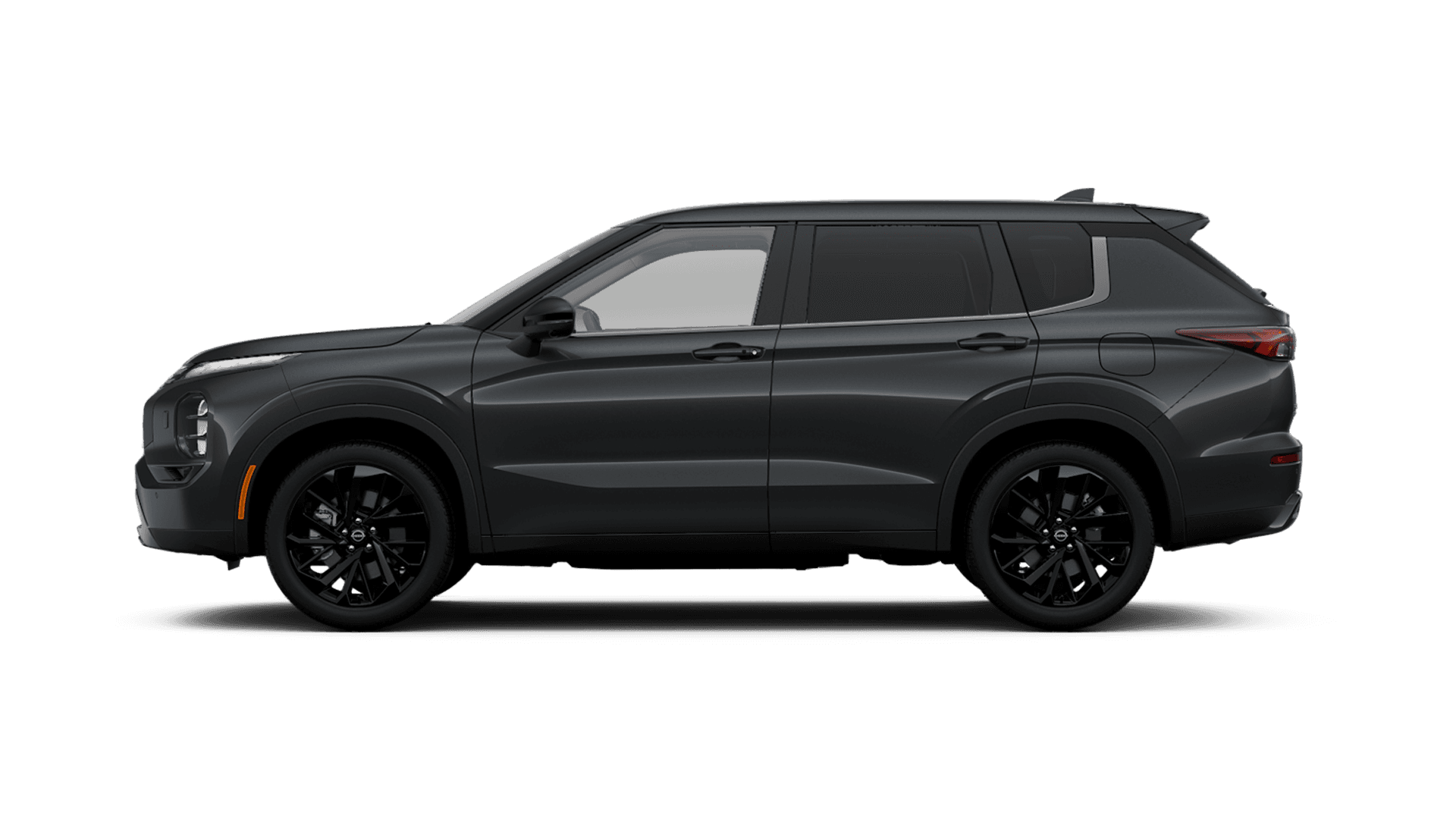
REVIEWS / Hybrid SUVs
NEW2026 Nissan Rogue Plug-in Hybrid Review
Nissan's first U.S. Rogue plug-in hybrid brings 38 miles of electric range, seven-seat packaging, and a high price that forces a hard value check against RAV4 and CR-V shoppers.
Published June 1, 2026 / Updated June 4, 2026
Expert verdict
The Rogue Plug-in Hybrid makes sense if you need short-trip EV driving, occasional three-row flexibility, and Nissan dealer access. It is not the cheap hybrid answer; at this price, the buyer has to use the plug-in range often.
HIGHS
- 38 miles of official electric range
- 420-mile total range estimate
- Unusual seven-seat PHEV packaging
- Useful bridge before Rogue e-POWER arrives
LOWS
- High starting price for a Rogue
- Not MotorRank road-tested yet
- Value depends heavily on regular charging
- First-year U.S. plug-in support needs watching
AT A GLANCE
- Score
- 7.7
- Price
- $45,990 - $49,990
- Horsepower
- 248 hp
- Drivetrain
- AWD
- Body
- SUV
- Fuel
- Plug-in Hybrid
Buyer Verdict
The fast answer before you compare specs.
Built for shoppers who want the recommendation first and the details right after.
Buy it if
- Should you buy the 2026 Nissan Rogue Plug-in Hybrid? Only if you can charge regularly and will use the official 38-mile electric range most weekdays. Nissan's first U.S. Rogue PHEV starts at $45,990 before destination, so the value case depends on electric-mile usage, not just wanting a hybrid badge.
- Best for: Households with home charging, short daily trips, occasional three-row needs, and a willingness to pay more for EV-like weekday driving.
- Our trim pick: SL from $45,990.
Skip it if
- High starting price for a Rogue
- Not MotorRank road-tested yet
- Value depends heavily on regular charging
Closest rivals
- Toyota RAV4 Plug-in Hybrid
The resale/reliability benchmark if you want a plug-in compact SUV with stronger Toyota ownership gravity.
- Honda CR-V Hybrid
The simpler no-plug family hybrid for buyers who want fuel savings without charging discipline.
- Mitsubishi Outlander Plug-in Hybrid
The closest seven-seat PHEV packaging rival and the obvious mechanical-context cross-shop.
Quick take
The 2026 Nissan Rogue Plug-in Hybrid is not a normal Rogue with a small hybrid battery. Nissan's official press kit describes a plug-in setup with a 20-kWh lithium-ion battery pack, two electric motors, a 2.4-liter gasoline engine, an EPA-estimated 38 miles of all-electric driving range, and about 420 miles of total range.
This is a MotorRank research-basis preview, not an instrumented road test. Nissan has published pricing, range, packaging, and powertrain details, but MotorRank has not measured acceleration, charging speed, real-world electric range, cabin noise, third-row comfort, or long-trip fuel economy.
Driving impressions
Why the Rogue Plug-in Hybrid matters
The Rogue PHEV matters because it gives Nissan a bridge before the 2027 Rogue Hybrid e-POWER arrives. For buyers, that creates a timing problem: choose the more expensive plug-in hybrid now for electric commuting and occasional seven-seat utility, wait for the e-POWER hybrid if you want simpler no-plug ownership, or buy a rival that already has a deeper reliability and resale track record.
What to watch before you buy
Watch three things before signing: the real out-the-door price after destination and dealer fees, whether your daily route is short enough to use the 38-mile EV range, and whether the third row is truly useful for your family. If you cannot charge at home or work, the expensive plug-in hardware becomes much harder to justify.
SERP audit: what the top pages already answer
The current search result for a 2026 Nissan Rogue Plug-in Hybrid review is stronger than a normal thin preview page. Car and Driver and Motor1 both frame the Rogue PHEV as an Outlander-related stopgap. U.S. News adds a first-drive angle with interior and driving impressions. Consumer Reports answers the broad buyer question with outside, inside, powertrain, and safety sections. Edmunds is the bigger structural threat because it stacks pricing, trims, buying tips, competitors, features, specs, reliability, safety, and FAQ content on one page.
That means MotorRank cannot win this topic with a short rewrite of Nissan's press release. The page has to answer the questions those pages already cover, then go further where shoppers still need help: whether the plug-in math works at $45,990 to $49,990 before destination, whether the third row is meaningful, whether the 2027 Rogue e-POWER is the smarter wait, how the SL and Platinum trims change the value case, and what a buyer should verify before trusting first-year U.S. plug-in support.
What Nissan officially announced
Nissan's official U.S. pricing release lists two grades: Rogue Plug-in Hybrid SL AWD at $45,990 and Rogue Plug-in Hybrid Platinum AWD at $49,990, both before the $1,545 destination charge, taxes, title, registration, dealer pricing, and accessories. Nissan says the model reaches dealerships in February and is built around standard Intelligent All-Wheel Drive, a 2.4-liter gas engine, a plug-in hybrid system, and a 20-kWh battery pack.
The official numbers are the reason this page exists: 248 system horsepower, 332 lb-ft of system torque on Nissan's specs page, 38 miles of EPA-estimated all-electric range, 420 miles of EPA total range, 64 MPGe, and 26 MPG combined after the battery is depleted. Nissan also lists three-row seating for seven, 12.8 cubic feet of cargo volume behind the third row, 41.7 inches of front legroom, 38.1 inches of second-row legroom, and only 19.1 inches of third-row legroom. Those numbers make the Rogue PHEV a plug-in commuter first and a seven-seat SUV only in a limited-use sense.
Price and value: the plug-in math has to be personal
At $45,990 for the SL and $49,990 for the Platinum before destination, the Rogue PHEV is not fighting the ordinary Rogue buyer who only wants a lower payment. It is fighting shoppers who are willing to pay near-premium money for a compact plug-in hybrid SUV. That moves the cross-shop set toward Toyota RAV4 Plug-in Hybrid, Mitsubishi Outlander PHEV, Hyundai Tucson Plug-in Hybrid, Kia Sportage Plug-in Hybrid, Honda CR-V Hybrid, and even discounted EV leases if home charging is easy.
The smartest way to shop it is to calculate your own electric miles. If your daily driving is 20 to 35 miles, and you can charge at home every night, the official 38-mile EV range can cover most weekday use. If your week is mostly highway, cold-weather, or apartment parking, the 26 MPG hybrid-mode number matters more than the MPGe headline. A buyer who rarely plugs in is carrying the battery cost and weight while getting worse gas-only economy than many simpler hybrids.
Do not compare the Rogue PHEV to rivals using only MSRP. Compare destination-included price, taxes and fees, insurance quote, home charging cost, lease money factor if leasing, any dealer markup, and the value of the exact equipment you get. The Rogue's price only makes sense when the plug-in range replaces meaningful gasoline miles. If it becomes just a loaded compact SUV with occasional charging, the CR-V Hybrid or RAV4 Hybrid logic gets much stronger.
SL vs Platinum: which trim should you buy?
The SL is the MotorRank pick because it gets the plug-in hardware, the standard all-wheel-drive system, the official 38-mile EV range, and the seven-seat layout without pushing the Rogue over the $50,000 MSRP line before destination. When a plug-in hybrid's value depends on operating-cost payback, keeping the purchase price contained matters. Every extra dollar added above the SL lengthens the time it takes for electric commuting to feel financially useful.
The Platinum is the comfort and convenience play, not the value play. Nissan's press-kit feature list includes equipment such as a 9-inch touchscreen, wireless Apple CarPlay, wired Android Auto, a 12.3-inch driver display, Bose nine-speaker audio, tri-zone automatic climate control, and available camera/driver-assistance upgrades. The loaded trim makes sense if those cabin and tech features are exactly why you are buying the Rogue, but it also moves the price close enough to premium-brand and EV lease territory that the buyer should slow down.
The trim rule is simple: buy the SL if your reason for choosing this vehicle is the plug-in system. Buy the Platinum only if you were already going to pay for the nicer cabin, audio, camera, and convenience package. Do not buy the Platinum because it sounds like the safest choice. In this price band, overbuying the trim is the easiest way to make the Rogue PHEV's value math worse.
Rogue PHEV vs Rogue Hybrid e-POWER
Nissan is creating two very different hybrid stories. The 2026 Rogue Plug-in Hybrid is the one with a charge port, a large battery, and a real electric-only range claim. The 2027 Rogue Hybrid e-POWER, previewed by Nissan for the U.S. and Canada, uses the gasoline engine as a generator and drives the wheels electrically. In plain English: the PHEV rewards charging discipline, while e-POWER is aimed at buyers who want an EV-like feel without ever plugging in.
If you own a house, have a garage or driveway outlet plan, and drive local routes most weekdays, the PHEV is the one that can replace gasoline miles. If you street park, rent, live in a building without charging, or take mostly longer highway trips, waiting for e-POWER may be smarter. The expensive mistake is buying the plug-in version because it sounds more advanced, then using it like a normal hybrid. That turns the battery into a cost penalty instead of a fuel-saving tool.
There is also a timing risk. The PHEV gives Nissan dealers an electrified Rogue now, but e-POWER is the more Nissan-specific technology story. If you want the freshest Nissan hybrid identity, wait. If you need a vehicle now and have a real charging routine, the PHEV is the actionable choice. MotorRank's position is not that one system is universally better; it is that each system fits a different owner.
Driving, performance, and charging expectations
On paper, the Rogue PHEV should feel stronger than a normal compact SUV because Nissan lists 248 system horsepower and 332 lb-ft of system torque. The immediate electric-motor response should help around town, and standard all-wheel drive should make the launch feel secure. But MotorRank has not driven or instrument-tested this vehicle, so acceleration, braking, ride quality, steering feel, and cabin noise remain preview-basis judgments until measured.
The official efficiency split is what matters more to most shoppers: 64 MPGe when using electricity and gasoline together, 26 MPG combined once the battery is depleted, 38 miles of all-electric range, and 420 miles of total range. That makes the first 38 miles the reason to buy the car. On a short commute, the Rogue can behave like an EV most days. On a long highway trip after the battery is low, it becomes a 26-MPG three-row plug-in hybrid SUV, which is not the same value story.
Nissan's feature page and connected-services material also make charging behavior part of the ownership experience. Buyers should ask the dealer about charge time on the equipment they plan to use, whether a Level 2 charger is worth installing, what app functions are included after any trial period, and how cold weather affects EV range. Until MotorRank can test charging and winter performance, those questions belong in the buying process, not after delivery.
Interior, cargo, and third-row reality
Nissan's official interior story sounds family-friendly: seven seats, three rows, tri-zone climate control, available premium audio, a digital driver display, and modern smartphone integration. That is a real advantage in a compact plug-in hybrid conversation because the RAV4 Plug-in Hybrid and CR-V Hybrid do not give you a third row. For a household that occasionally carries extra kids, grandparents, or school-run passengers, that flexibility can matter.
The numbers also show the limit. Nissan lists 19.1 inches of third-row legroom and 12.8 cubic feet of cargo volume behind the third row. That makes the third row an occasional-use seat, not a substitute for a true three-row family SUV. If you regularly carry six or seven people, test the exact seating position, child-seat access, luggage space, and third-row exit before you treat the Rogue PHEV as a minivan replacement.
The better way to view the cabin is as a two-row compact SUV that can handle emergency or occasional third-row duty. Fold the third row when cargo matters. Use the second row for normal family life. Treat the third row as a useful bonus, not the central reason to buy. If the third row is central to your use case, compare it against a larger three-row hybrid or plug-in option before signing.
Warranty, ownership, and first-year support
Nissan's specs page lists a 36-month/36,000-mile basic warranty, 60-month/60,000-mile powertrain warranty, 96-month/100,000-mile battery warranty, 60-month/60,000-mile electrical-components coverage, corrosion perforation coverage for 60 months with unlimited mileage, and 36-month/36,000-mile roadside assistance. That battery warranty is the number plug-in shoppers should confirm in writing on the exact vehicle paperwork.
The ownership question is not whether plug-in hybrids are automatically risky. It is whether this specific Rogue PHEV has enough U.S. dealer familiarity, parts support, software-update maturity, and buyer history to justify buying early. The model is closely related in concept to the Mitsubishi Outlander PHEV, but it is still a new U.S. Nissan showroom proposition. Early adopters should be more careful about service support than late adopters.
Before delivery, ask the dealer three practical questions: how many technicians are certified to service the plug-in system, what warranty booklet applies to the high-voltage battery and electrical components, and whether any open campaigns, software updates, or technical service bulletins apply to the VIN. Do not rely on a salesperson saying 'it is covered.' Get the warranty terms, charging equipment details, and service contact in writing.
How it compares with RAV4, Outlander, CR-V, Tucson, and Sportage
The Toyota RAV4 Plug-in Hybrid is the safer ownership reputation play. Toyota has the stronger hybrid brand equity, stronger resale gravity, and a clearer long-term reliability story. The Rogue fights back with seven-seat packaging and Nissan dealer access, not with a proven resale advantage. If you plan to keep the vehicle long term and resale confidence matters most, Toyota deserves the first test drive.
The Mitsubishi Outlander PHEV is the obvious mechanical-context rival because it has been selling the seven-seat plug-in SUV idea longer. That makes it the must-drive comparison if you are serious about the Rogue. The Nissan may have the dealer, styling, or feature mix you prefer, but the Outlander gives you market history and a clear reference point for how this kind of plug-in family SUV behaves.
The Honda CR-V Hybrid, Hyundai Tucson Plug-in Hybrid, and Kia Sportage Plug-in Hybrid create the value pressure. The CR-V is simpler and easier to recommend to families that do not need charging. The Tucson and Sportage PHEV options are closer plug-in cross-shops, depending on trim availability and deals in your ZIP code. The Rogue's strongest reason to survive that comparison is not raw efficiency; it is the combination of EV range, standard AWD, occasional third-row flexibility, and timing before e-POWER arrives.
The test-drive checklist before you leave a deposit
Do not test-drive the Rogue PHEV like a normal compact SUV. Start by asking the salesperson to show the battery state of charge, EV mode behavior, hybrid mode, regenerative braking settings, charge port location, included charging cable, and the app screen used to monitor charging. If the salesperson cannot explain those basics, that is not an automatic dealbreaker, but it tells you how much follow-up you will need from the service department.
Drive the vehicle in three conditions if the route allows it: low-speed neighborhood driving, a steady highway stretch, and a stop-and-go section where the gas engine has a reason to switch on and off. Listen for how smoothly the system blends engine and electric power. Pay attention to brake-pedal feel, because plug-in hybrids can feel different from normal gas vehicles when regenerative braking and friction brakes blend. MotorRank has not measured this yet, so your own drive matters.
Bring the people and cargo that define your use case. If the third row is part of the reason you are interested, put the real passengers back there, not just yourself leaning in at the dealership. Check whether the second row can stay comfortable with the third row occupied, whether child seats make access difficult, and whether you still have enough cargo room with the rear seats up. The brochure number is useful; the real family load is better.
Before you leave, ask for a written out-the-door quote on both SL and Platinum. The quote should show MSRP, destination, dealer-installed accessories, documentation fee, taxes, registration, any markup, any discount, finance or lease terms, and the exact VIN. The Rogue PHEV is too expensive to shop casually. A clean quote protects the value case and makes rival comparisons honest.
The shopping order we would use
First, decide whether you are truly a plug-in buyer. If home or workplace charging is not realistic, move the Rogue e-POWER watchlist, CR-V Hybrid, RAV4 Hybrid, and other no-plug hybrids above the Rogue PHEV. That single decision prevents the most expensive mistake in this segment: paying for a large battery and then using the vehicle like a normal hybrid.
Second, test the Outlander PHEV before you decide the Nissan is the answer. The Outlander gives you the closest seven-seat plug-in SUV comparison and a longer market history. If the Outlander feels better, prices better, or has stronger local service support, the Rogue needs a clear reason to win. If the Nissan dealer relationship, styling, or equipment fits you better, then the Rogue has a defensible case.
Third, price the Toyota RAV4 Plug-in Hybrid and the Hyundai/Kia PHEV alternatives in your ZIP code. These vehicles can change ranking based on inventory, incentives, trim availability, and dealer behavior. A Rogue PHEV at clean MSRP can be compelling for the right buyer. A Rogue PHEV with markup or unwanted accessories is much harder to justify against Toyota, Hyundai, Kia, or Mitsubishi.
Finally, compare the Rogue against one full EV lease if you can charge at home. This may sound like a different category, but the monthly-payment and operating-cost math can overlap. If a full EV lease gives you lower payment, lower running cost, and enough range, it may beat the Rogue. If you need gasoline backup and do not want charging stops on long trips, the Rogue PHEV remains the compromise.
Dealer quote, inventory, and timing strategy
The Rogue PHEV is the kind of vehicle where the dealer experience can change the recommendation. A clean SL AWD at MSRP is a very different purchase from a Platinum with dealer-installed accessories, markup, a high documentation fee, and a vague explanation of charging support. Because Nissan is launching the model with only two trims, shoppers may not have many local units to compare at first. That scarcity can create pressure, but it does not make a bad quote better.
Start by asking for the out-the-door number by email before you visit. The quote should show MSRP, destination, discount or markup, accessories, protection products, documentation fee, taxes, registration, and the exact VIN. If the dealer refuses to separate those lines, move slower. A plug-in hybrid value case depends on clear math, and unclear math usually favors the seller. Bring that quote to a Toyota, Mitsubishi, Hyundai, Kia, and Honda dealer so the Rogue is competing against real local numbers, not national starting prices.
Inventory timing also matters. Early units can be appealing because they get you the vehicle first, but early buyers carry more uncertainty around first-year service support, accessory pricing, and dealer familiarity with charging questions. If your current vehicle is working and you do not need the Rogue immediately, waiting for a second wave of inventory may produce better discounts, better salesperson knowledge, and more owner feedback. If you need a car now, make the service department part of the shopping process instead of treating it as an afterthought.
For leases, ask for the money factor, residual value, mileage allowance, acquisition fee, due-at-signing amount, and whether any plug-in or captive-finance incentives are being applied. For financing, compare the APR, total interest, and loan term against a no-plug hybrid with a lower purchase price. For cash buyers, compare the price premium against your expected gasoline savings over the first three years. The Rogue PHEV should win because the ownership pattern fits, not because the payment was stretched long enough to hide the premium.
The strongest negotiation posture is simple: know your charging situation, know your realistic annual mileage, know the rival quotes, and know whether the third row is genuinely useful. If those four points are clear, the Nissan dealer has to sell the Rogue on substance. If they are unclear, it is easy to get pulled into feature talk and monthly-payment framing. MotorRank's recommendation is to slow the purchase down until the numbers and use case both make sense.
What would make us raise or lower the score later
MotorRank would raise the Rogue PHEV's score if real-world EV range lands close to the official 38-mile claim in normal mixed driving, if depleted-battery MPG is easy to manage, if the transition between electric and gas power feels polished, and if Nissan dealers show strong plug-in support. A clean SL transaction price with no markup would also help because value is the biggest pressure point.
The score would fall if the third row proves too compromised for the buyers Nissan is targeting, if charge times or app behavior frustrate owners, if the gas engine feels rough once the battery is depleted, or if dealer service support looks thin. Early recalls, software campaigns, or parts delays would matter more here than on a regular Rogue because first-year electrified ownership depends heavily on dealer competence.
The current 7.7 score is intentionally cautious. It credits the official EV range, standard AWD, unusual seating flexibility, and useful Nissan dealer access, but it holds back because price, first-year support, and untested real-world behavior are still open questions. That is the honest preview position: promising for the right owner, not proven enough to treat as a default compact SUV recommendation.
The verdict: who should sign and who should keep shopping
Sign for the Rogue Plug-in Hybrid if you can charge at home, your weekday mileage fits inside the official 38-mile EV window, you want standard all-wheel drive, and the occasional third row solves a real family problem. In that scenario, the SL trim is the smart target because it preserves the plug-in value case while avoiding the loaded-trim price trap.
Keep shopping if you cannot charge regularly, if your daily drive is mostly highway, if you need a third row every day, or if you are mainly looking for the cheapest hybrid SUV payment. In those cases, a CR-V Hybrid, RAV4 Hybrid, RAV4 Plug-in Hybrid, Outlander PHEV, Tucson PHEV, Sportage PHEV, or the future Rogue e-POWER may fit better.
The Rogue PHEV is interesting because it is unusual, not because it is the universal answer. Nissan finally has a U.S. plug-in hybrid Rogue, and the official numbers give it a real buyer case. But the buyer has to be honest about charging, passenger use, and price discipline. Without those three conditions, this becomes an expensive compact SUV with a spec-sheet advantage you may not actually use.
Specs Snapshot
The numbers shoppers compare first.
Key numbers to compare against alternatives before you commit.
| Base price | $45,990 - $49,990 |
|---|---|
| Horsepower | 248 hp |
| Drivetrain | AWD |
| Transmission | Automatic |
| Fuel type | Plug-in Hybrid |
| Combined MPG/MPGe | 26 |
Media Proof
Exterior and interior visuals with source receipts.
Every asset shown here links back to its source and license so the page can gain trust without borrowing competitor media.
Source Receipts
Source pages, creator credits, and reuse licenses are visible for editorial trust and legal hygiene.
Interior
Cabin views before you choose a trim.
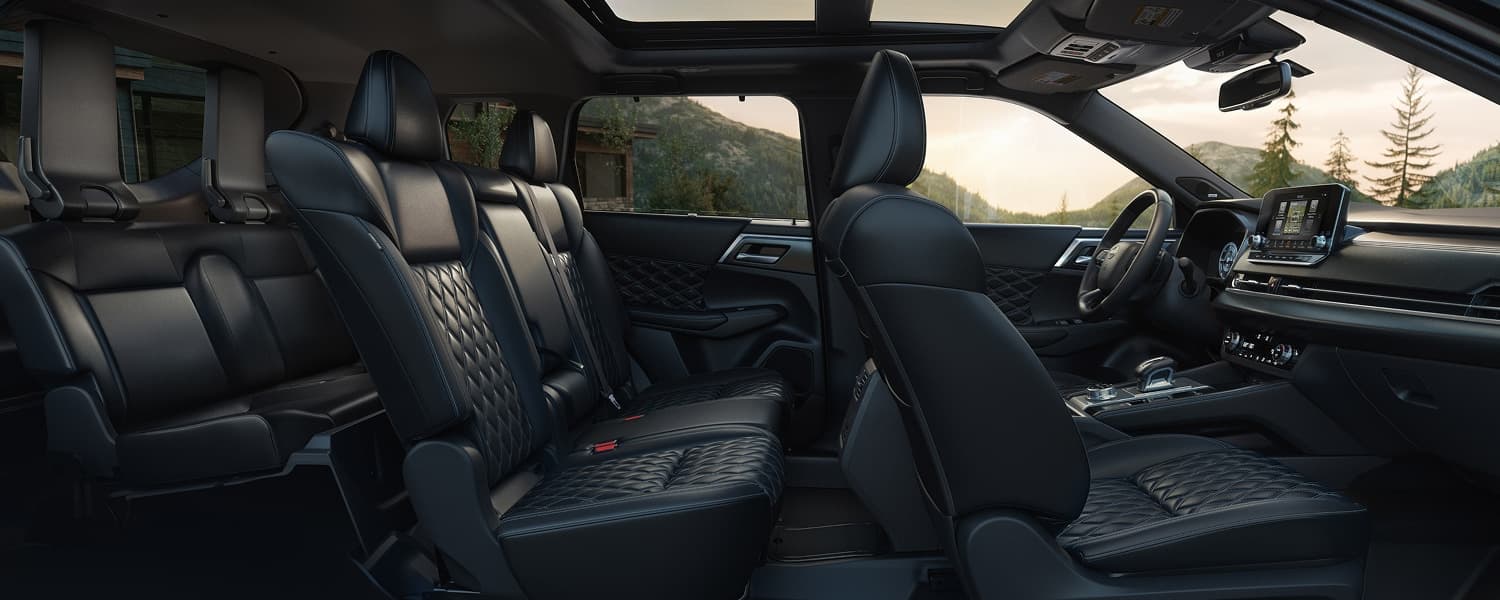
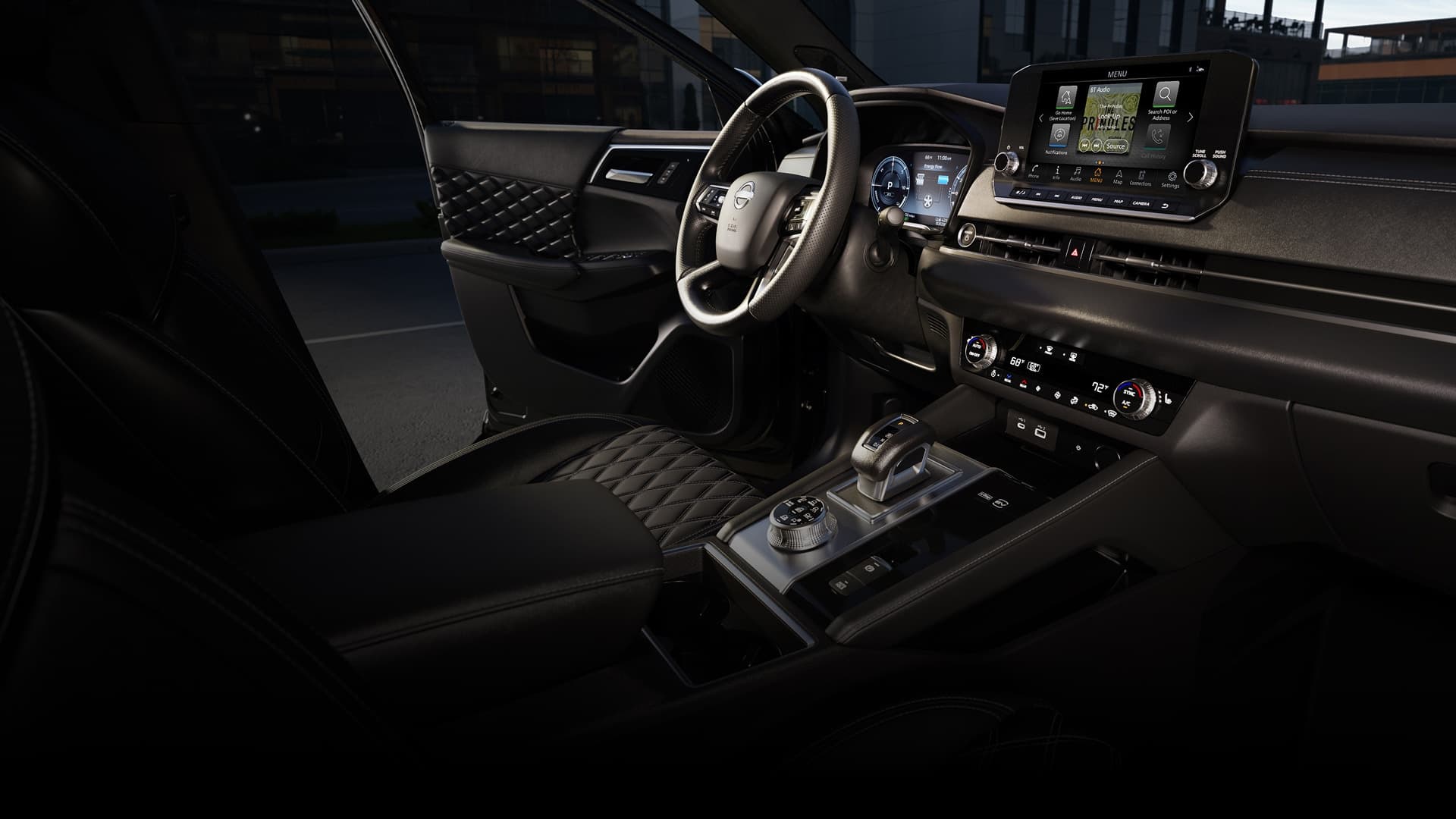
Nissan's official gallery confirms the Rogue PHEV's three-row cabin, dashboard layout, and 12.3-inch display context; the third row should still be treated as occasional-use seating until tested in person.
Interior Source Receipts
Research basis
Updated June 4, 2026
Compiled from Nissan USA Newsroom pricing, Nissan's official Rogue Plug-in Hybrid specs/trims page, the 2026 Rogue PHEV press kit, Nissan's 2027 Rogue Hybrid e-POWER explanation, and current buyer SERP competitors including Edmunds, Car and Driver, Motor1, U.S. News, Consumer Reports, and Kelley Blue Book.
Pricing starts at Nissan's published $45,990 MSRP before the $1,545 destination charge, taxes, fees, and dealer pricing. Range, MPG, battery warranty, third-row, cargo, and dimensions claims come from Nissan's official materials. MotorRank has not road-tested the model yet.
Update after MotorRank can verify charge time, real EV range, depleted-battery MPG, third-row usability, cargo measurements, cabin noise, ride quality, and dealer service support.
Which 2026 NISSAN ROGUE PLUG-IN HYBRID to Buy
Which trim is right for you?
SL
$45,990
The value pick if you want the plug-in hardware without chasing the most expensive feature bundle.
Our pick
Platinum
$49,990
The nicer cabin and equipment play, but it pushes the Rogue PHEV into luxury-brand-adjacent money.
Performance
- Horsepower
- 248hp
Scorecard
- Performance7.8
- Comfort8.1
- Value7.2
- Ownership7.4
- Technology8
- Safety8
- Reliability7.3
- Interior7.9
Shopping Tools
Next steps for 2026 Nissan Rogue Plug-in Hybrid shoppers.
Research tools to help you move from browsing to buying.
Compare rivals
Line up the closest alternatives before you commit.
Check deal signals
Review pricing pressure, incentives, and value angles.
Read owner signal
Balance the expert take with ownership patterns.
Related buyer coverage
A news-side buyer breakdown of Nissan's first U.S. plug-in hybrid, the official range numbers, pricing, and whether shoppers should wait for e-POWER.
Open vehicle hub
Keep specs, reliability, rankings, and review links together.
Compare Against
Cross-shop before you commit.
The closest alternatives in this price range, with our read on each.
The resale/reliability benchmark if you want a plug-in compact SUV with stronger Toyota ownership gravity.
Toyota RAV4 Plug-in Hybrid
Shop Toyota first if hybrid reputation and resale confidence matter more than Nissan's seven-seat packaging.
The simpler no-plug family hybrid for buyers who want fuel savings without charging discipline.
Honda CR-V Hybrid
The easier daily answer if you want lower complexity and do not need electric-only commuting.
The closest seven-seat PHEV packaging rival and the obvious mechanical-context cross-shop.
Mitsubishi Outlander Plug-in Hybrid
The necessary cross-shop because it gives similar plug-in family-SUV logic with a longer market history.
The value-and-warranty PHEV cross-shop when local Hyundai inventory and incentives are stronger.
Hyundai Tucson Plug-in Hybrid
Compare transaction prices and warranty confidence if the Rogue's third row is not essential.
The related Hyundai/Kia-family plug-in alternative with a stronger warranty/value pitch in many ZIP codes.
Kia Sportage Plug-in Hybrid
Shop it if price, warranty, and normal two-row compact SUV use matter more than Rogue's occasional third row.
The wait-and-see Nissan alternative for buyers who want electric-feeling drive without a charge port.
2027 Nissan Rogue Hybrid e-POWER
Wait if home charging is the issue and you want Nissan's simpler no-plug hybrid answer.
Buyer FAQ
2026 Nissan Rogue Plug-in Hybrid buyer questions, answered.
33
buyer answers
Question Map
Decision
Should you buy the 2026 Nissan Rogue Plug-in Hybrid?
Start with charging reality, not the badge. The Rogue PHEV is a good idea only when the plug-in range fits your routine.
Is the 2026 Rogue Plug-in Hybrid worth buying?
Yes for frequent chargers; no for shoppers who only want better mpg.+
The Rogue PHEV is worth buying if you can charge at home or work and use the official 38-mile EV range most weekdays. That is the ownership pattern that turns the high MSRP into a real fuel-savings tool. If you cannot plug in regularly, the 26 MPG depleted-battery rating matters more than the 64 MPGe headline, and simpler hybrids become easier to justify.
Who is the ideal Rogue PHEV buyer?
A home charger with short daily trips and occasional third-row needs.+
The ideal buyer has a garage, driveway, or reliable workplace charging, drives fewer than about 38 local miles on many days, wants standard all-wheel drive, and occasionally needs a third row for kids or short extra-passenger trips. That buyer can use the Rogue as an EV for routine errands while keeping gasoline range for weekend travel.
Who should skip it?
Apartment parkers, highway-heavy drivers, and buyers chasing the cheapest hybrid payment.+
Skip it if you street park, cannot install charging, drive mostly long highway routes, or need a real three-row SUV every week. In those cases you pay for plug-in hardware without using the best part of it. A CR-V Hybrid, RAV4 Hybrid, Outlander PHEV, or larger family SUV may be a cleaner answer.
Should you buy now or wait?
Buy now only if charging makes the PHEV useful; otherwise wait for e-POWER.+
Buy now if you need a vehicle soon and the plug-in range fits your life. Wait if you only want a normal hybrid experience, because Nissan has already previewed a Rogue Hybrid e-POWER for the U.S. and Canada. Waiting gives you a no-plug Nissan hybrid option, but it also means accepting launch timing and first-year questions for a different technology path.
2026 Changes
What is new and why does it matter?
The year-specific story is not a facelift. It is Nissan adding its first U.S. Rogue plug-in hybrid with official price, range, and warranty support.
What is new for the 2026 Rogue Plug-in Hybrid?
A new U.S. plug-in Rogue with two trims, standard AWD, and three-row seating.+
For 2026, Nissan adds a Rogue Plug-in Hybrid to the U.S. lineup with SL AWD and Platinum AWD grades. Nissan lists official pricing from $45,990 to $49,990 before destination, 38 miles of EV range, 420 miles of total range, standard Intelligent All-Wheel Drive, and seven-passenger seating. That is enough to make it a distinct buyer decision, not just another Rogue trim.
How much power does it make?
Nissan lists 248 hp and 332 lb-ft on its official specs page.+
Nissan's official specs page lists the Rogue PHEV at 248 horsepower and 332 lb-ft of system torque. That should give it stronger low-speed response than a typical gas compact SUV, especially because electric motors deliver immediate torque. MotorRank has not measured acceleration yet, so use the output as an official spec, not a verified performance test.
Is the third row new for Rogue shoppers?
Yes, and it is useful, but the dimensions say occasional use.+
The third row is one of the Rogue PHEV's biggest differentiators because most compact hybrid rivals are two-row vehicles. Nissan lists 19.1 inches of third-row legroom, which makes the back row best for children or short-distance flexibility. It is a real advantage for occasional use, not a replacement for a minivan or true three-row crossover.
Does the Rogue PHEV replace the regular Rogue?
No. It is a specialized plug-in option with a much higher price.+
The Rogue PHEV does not replace the ordinary Rogue for normal compact SUV buyers. It is a much more expensive plug-in model for shoppers who can use electric miles. If you only want a comfortable, lower-cost Nissan crossover, the regular Rogue remains the simpler path. The PHEV is for buyers trying to replace gasoline miles without leaving Nissan.
Real Cost
What will the Rogue PHEV really cost?
MSRP is only the first line. The real price includes destination, charging setup, insurance, incentives, and how often you use EV mode.
How much is the 2026 Nissan Rogue Plug-in Hybrid?
SL AWD is $45,990; Platinum AWD is $49,990, before destination.+
Nissan lists the 2026 Rogue Plug-in Hybrid SL AWD at $45,990 and the Platinum AWD at $49,990. The official destination charge is $1,545, so the window-sticker starting point is higher before taxes, registration, dealer fees, accessories, and any market adjustment. Always compare destination-included prices when cross-shopping.
Which trim is the better value?
SL is the smarter buy unless the Platinum equipment is the reason you want the car.+
The SL is the value pick because it gets the plug-in system and standard AWD while keeping MSRP below $46,000 before destination. The Platinum makes sense if the nicer cabin, audio, camera, and convenience features are must-haves. If your main reason for buying is EV commuting, start with SL and avoid adding cost that the fuel savings may not recover.
Does the 38-mile electric range save enough money?
Only if you use it most days.+
The range can save real fuel money when your daily driving fits inside the 38-mile EV window and you charge regularly. If you use the full charge five or six days per week, the plug-in system earns its keep. If you charge occasionally or mostly drive beyond the battery range, you are left with a 26 MPG hybrid-mode SUV and a much weaker value case.
Should you lease, finance, or buy it?
Compare total cost, not just the monthly payment.+
A lease can make sense if residual values and incentives are strong, especially for a first-year plug-in model. Financing or buying makes more sense if you plan to keep the vehicle long enough to benefit from the battery warranty and electric-mile savings. Compare money factor, APR, residual, fees, mileage limits, insurance, charging setup, and the total amount paid, not just the advertised monthly number.
Is a home charger required?
Not technically, but home charging is what makes the purchase logical.+
You can own a plug-in hybrid without a Level 2 home charger, but the Rogue PHEV's value improves dramatically when charging is convenient. If plugging in is a chore, you will do it less. Before buying, price any outlet or Level 2 installation, confirm your electrical setup, and estimate your local electricity rate against gasoline cost.
Drivetrain
Range, MPG, AWD, and charging questions
The Rogue PHEV has attractive EV-range numbers, but the depleted-battery MPG and charging routine decide whether they matter.
How far can the Rogue PHEV drive on electricity?
Nissan lists 38 miles of EPA-estimated electric range.+
Nissan lists 38 miles of all-electric range. That is enough for many commutes, school runs, errands, and local trips if you start with a full battery. It is not enough to treat the Rogue like a full EV. The buyer should think in daily loops: how many normal days can happen inside 38 miles before the gas engine becomes necessary?
What MPG does it get after the battery is depleted?
Nissan lists 26 MPG combined in hybrid mode.+
Nissan's specs page lists 25 MPG city, 27 MPG highway, and 26 MPG combined after the battery is depleted. That is the number that matters for long trips and for owners who do not charge. It also explains why the Rogue PHEV is not the best choice for buyers who only want a no-plug fuel-economy improvement.
Is all-wheel drive standard?
Yes, both SL and Platinum are AWD.+
Both official trims are listed as all-wheel drive. That simplifies the trim decision because there is no cheaper front-drive PHEV to chase. It also means shoppers in snowy or wet climates get traction confidence without climbing trims, but shoppers in mild climates cannot save money or fuel with a front-drive version.
Is it fast?
Official output is strong, but MotorRank has not tested it.+
The 248-hp, 332-lb-ft official output should feel strong for a compact SUV, and electric torque should help in low-speed driving. But acceleration claims from competitors and first-drive impressions are not MotorRank test results. Until MotorRank measures it, treat performance as promising on paper rather than proven by our stopwatch.
How should you test charging before buying?
Do the boring charger math before the exciting test drive.+
Ask how long the battery takes to charge on the equipment you will actually use, whether the included charging hardware meets your needs, what a Level 2 installation costs, and how NissanConnect charging features work after any trial period. A plug-in hybrid is only convenient if the charging routine is easy enough that you will use it.
Daily Use
Interior, cargo, family, and commute fit
The Rogue PHEV's cabin is useful, but the third row and cargo numbers need realistic expectations.
Is the third row actually useful?
Useful occasionally; not a real three-row family-SUV substitute.+
Nissan lists 19.1 inches of third-row legroom, which is tight. The third row is best for children, short rides, or emergency flexibility. If you regularly carry six or seven people, test the third row with the exact passengers and car seats you use. The Rogue PHEV is better viewed as a two-row SUV with bonus seating.
How much cargo space does it have?
Nissan lists 12.8 cubic feet behind the third row.+
The official 12.8-cubic-foot cargo number behind the third row is small, which is normal for compact three-row packaging. Fold the third row and the Rogue becomes much more practical. If you need luggage space while all seats are up, bring the stroller, sports bag, or suitcase to the dealer and test it before trusting the brochure.
Is the cabin tech good enough?
Official equipment looks competitive; trim-specific details still matter.+
Nissan's press kit lists a 9-inch touchscreen, wireless Apple CarPlay, wired Android Auto, a 12.3-inch driver display, available Bose nine-speaker audio, tri-zone climate control, and camera/driver-assistance features. That is competitive on paper. The shopper still needs to confirm which features are standard on SL versus Platinum and whether the interface feels right in person.
Can this replace a full EV?
No. It can replace gasoline miles, not the full EV ownership experience.+
The Rogue PHEV can behave like an EV for local driving when charged, then use gasoline for longer trips. It will not match a full EV's electric range, charging strategy, or smoothness once the battery is depleted. Buy it if you want a bridge between EV commuting and gas flexibility, not if you want the full EV experience.
Ownership
Warranty, reliability, resale, and first-year risk
This is where buyers need honest caveats. Do not invent reliability proof for a new U.S. plug-in model.
What warranty does the Rogue PHEV have?
Nissan lists 3/36 basic, 5/60 powertrain, and 8/100 battery coverage.+
Nissan's specs page lists a 36-month/36,000-mile basic warranty, 60-month/60,000-mile powertrain warranty, 96-month/100,000-mile battery warranty, and 60-month/60,000-mile electrical-components coverage. Verify the exact warranty booklet for the VIN you buy, especially if state emissions rules or dealer paperwork add details.
Is the Rogue PHEV reliable?
Too early for a MotorRank reliability verdict.+
Do not trust a made-up reliability score. The Rogue PHEV is new to Nissan's U.S. lineup, and MotorRank has not verified owner repair history for this model. The safer approach is to evaluate warranty coverage, dealer plug-in service readiness, early recall/campaign status, and the related Outlander PHEV market history without pretending they prove long-term Nissan reliability.
Will it hold value?
Unknown; Toyota has the stronger resale reputation.+
The Rogue PHEV's resale story is unproven. Toyota's RAV4 Plug-in Hybrid has stronger hybrid-brand gravity, and Honda's CR-V Hybrid benefits from mainstream simplicity. Nissan's counter is packaging and price discipline. If resale is your top priority, get trade-in projections and compare against Toyota before assuming the Rogue will hold value similarly.
What should you ask the dealer before signing?
Ask about service certification, software updates, warranty, and charging.+
Ask how many technicians are certified to service the plug-in system, whether any open campaigns apply to the VIN, what charging equipment is included, whether the battery warranty is clearly documented, and how long parts support usually takes. Those questions matter more on a first-year plug-in model than on a normal gas crossover.
Is the first model year risky?
It can be, mostly because software and dealer support need time to mature.+
First-year electrified models often need software updates, calibration tweaks, and dealer learning. That does not mean the Rogue PHEV is a bad buy, but early owners should be comfortable returning for updates and keeping documentation. Buyers who hate first-year uncertainty should wait for owner history or choose a more established rival.
Rivals
What should you compare it against?
The Rogue PHEV crosses several lanes: plug-in SUV, no-plug hybrid, compact family SUV, and discounted EV alternative.
Rogue PHEV or Toyota RAV4 Plug-in Hybrid?
Toyota for reputation; Nissan for third-row flexibility and dealer preference.+
The RAV4 Plug-in Hybrid is the safer reputation and resale play. The Rogue counters with seven-seat flexibility and Nissan-specific packaging. If you want proven Toyota hybrid ownership, start with RAV4. If occasional third-row use changes your life, the Rogue earns a closer look.
Rogue PHEV or Mitsubishi Outlander PHEV?
Drive both; the Outlander is the necessary mechanical-context rival.+
The Outlander PHEV is the closest conceptual rival because it has sold the three-row plug-in SUV idea longer. The Nissan may win on dealer relationship, styling, trim content, or brand preference. The Mitsubishi may win on market history and pricing. No serious Rogue PHEV shopper should skip this test drive.
Rogue PHEV or Honda CR-V Hybrid?
CR-V for simplicity; Rogue for EV miles and occasional third-row use.+
The CR-V Hybrid has no charge port and no EV commute range, but it is simpler, efficient, and easier to recommend to most families. The Rogue PHEV only beats it if you use the electric range often or truly benefit from the third-row flexibility. Otherwise the Honda is the cleaner ownership answer.
Rogue PHEV or Hyundai Tucson/Kia Sportage PHEV?
Compare real transaction price, warranty, range, and cabin use.+
The Tucson and Sportage PHEV options are strong value and warranty cross-shops, depending on local inventory. The Rogue's differentiator is its three-row packaging and Nissan timing. The Hyundai/Kia side may win if pricing and warranty confidence are stronger. Compare out-the-door quotes, not brand impressions.
Rogue PHEV or a discounted EV lease?
EV lease if you can live electric-only; Rogue if you need gasoline backup.+
If home charging is easy and your road trips are manageable, a discounted EV lease can deliver lower operating cost and a smoother electric experience. The Rogue PHEV is better if you want electric local driving but still need gasoline range without planning charging stops. This is a lifestyle decision as much as a spec comparison.
Ready to buy?
Configure your 2026 Nissan Rogue Plug-in Hybrid.
Get matched with a Nissan dealer or build your spec sheet from scratch.