
REVIEWS / Full-Size Trucks
NEW2026 Ram 1500 Review
The HEMI V8 is back for 2026 — but the twin-turbo Hurricane six is faster, more efficient, and tows more, so this review settles which one you should actually order.
Published June 1, 2026 / Updated June 4, 2026
Expert verdict
Buy the 2026 Ram 1500 for the best-riding, best-looking cabin in the full-size class — and order it with the 420-hp 3.0L Hurricane Standard Output six, not the returning 5.7L HEMI V8. The Hurricane is quicker (about 5.2 seconds to 60 versus the V8's roughly 6.9), more efficient (21 mpg combined versus 18-19), and tows more (up to 11,610 pounds versus the HEMI's 11,320), while the V8's only real edge is sound. The smart buy is the Big Horn / Lone Star at about $46,830 plus the $2,595 destination fee, which unlocks the Hurricane SO and the big touchscreen without Laramie's luxury premium. The HEMI makes sense only as the no-charge option on Limited and Longhorn, where you are paying for the cabin anyway and the V8 costs nothing extra. The honest caveat: the 2026 Ram no longer leads the class on towing or payload (Ford and Chevy out-haul it), it carries three open NHTSA recalls as of June 2026, and IIHS has flagged a weak moderate-overlap front result — so verify the recall remedies and your exact configuration's ratings before you sign.
HIGHS
- Best interior in the full-size class — material quality and quietness that embarrass pricier trucks
- Coil-spring (available air) rear suspension makes it the smoothest-riding half-ton you can buy
- Real engine choice: the returning 395-hp HEMI V8 alongside the 420-hp / 540-hp Hurricane twin-turbo sixes
- The Hurricane SO is quicker (about 5.2 sec to 60, Edmunds), more efficient (21 mpg), and tows more than the V8
- HEMI V8 is a no-charge option on Limited and Limited Longhorn
- Deep tech and a full active-safety suite across the range
LOWS
- No longer the capability leader: 11,610-lb max tow trails the F-150 (~13,500) and Silverado (~13,300)
- Three open NHTSA recalls as of June 2026 (two cluster-software, one trailer-tow) — verify the VIN's remedies
- No federal crash stars yet and an IIHS moderate-overlap weakness — not a confirmed Top Safety Pick
- Starts higher than rivals and carries a steep $2,595 destination fee (up from $2,095)
- No hybrid or plug-in 1500 — the thirstiest trims are genuinely expensive to feed
- The headline 10-year powertrain warranty is original-owner-only and non-transferable
AT A GLANCE
- Score
- 7.6
- Price
- $41.6K - $88.4K
- Horsepower
- 420 hp
- 0-60
- 5.2s
- Drivetrain
- 4WD
- Body
- Truck
Buyer Verdict
The fast answer before you compare specs.
Built for shoppers who want the recommendation first and the details right after.
Buy it if
- Buy the 2026 Ram 1500 for the best cabin and ride in the full-size class, and order it with the 420-hp 3.0L Hurricane Standard Output six rather than the returning 5.7L HEMI V8 — the Hurricane is quicker (about 5.2 seconds to 60 vs ~6.9), more efficient (21 vs 18-19 mpg combined), and tows more (up to 11,610 vs 11,320 pounds). The smart buy is a Big Horn / Lone Star around $46,830 plus the $2,595 destination fee; take the HEMI only where it is the no-charge option on Limited and Longhorn. The one pre-purchase check that is non-negotiable: run your VIN against the three open NHTSA recalls and confirm the remedies before delivery.
- Best for: Buyers who want the best interior and the smoothest ride in the full-size half-ton class, and who want a real choice between a charismatic V8 and a more capable twin-turbo six — and who do not need to out-tow the Ford F-150 or Chevy Silverado.
- Our trim pick: Big Horn / Lone Star from $46,830.
Skip it if
- No longer the capability leader: 11,610-lb max tow trails the F-150 (~13,500) and Silverado (~13,300)
- Three open NHTSA recalls as of June 2026 (two cluster-software, one trailer-tow) — verify the VIN's remedies
- No federal crash stars yet and an IIHS moderate-overlap weakness — not a confirmed Top Safety Pick
Closest rivals
- Ford F-150
The capability and breadth leader
- Chevrolet Silverado 1500
The towing and value rival
- GMC Sierra 1500
The luxury-Chevy alternative
Quick take
You searched '2026 Ram 1500 review' and got a wall that does not actually answer your question. The top result is Car and Driver's evergreen model hub — useful, but it is not a dedicated 2026 buyer's verdict. Below it sit a Hemi-specific road test from The Drive, a Reddit thread, a YouTube clip, MotorTrend's thin hub, and an Edmunds first-drive news post. Every one of them touches a piece of the truck; none of them puts the whole decision in front of you. And for 2026 there is exactly one decision that matters: the 5.7L HEMI V8 is back after Ram dropped it, sitting alongside the 3.0L Hurricane twin-turbo inline-six. So the real question is not 'is the Ram good' — it is 'Hemi V8 or Hurricane six, and what do I give up either way?' This review answers that with the numbers side by side: horsepower, 0-60, towing, real EPA mileage, and the price-by-trim logic — including which trims hand you the V8 for free.
Research basis. This is a sourced buyer's guide, not a MotorRank instrumented road test. We have not yet strapped our own gear to a 2026 Ram 1500, run our own quarter-mile, or sampled real-world fuel economy over a fixed loop. What you are reading is built from primary sources — Ram's official pricing and specifications on ramtrucks.com, Stellantis North America's press materials, the EPA's published ratings on fueleconomy.gov, and the NHTSA recalls database — combined with the attributed test data and impressions of named outlets: The Drive, Edmunds, Car and Driver, MotorTrend, New Atlas, PickupTruckTalk, MoparInsiders, CarBuzz, and KBB's owner reviews. Where a number was measured by one of those outlets, we say so and name them. Ride quality, refinement, and real-world mileage impressions are preview basis until MotorRank runs its own test. Nothing here is invented; every figure traces to a cited source.
Driving impressions
Why the 1500 matters
The Ram 1500 matters because it has spent this generation as the truck that out-comforts everything in its class. While Ford chases capability headlines and Chevy chases value, Ram built the half-ton that drives like a luxury SUV — coil-spring (and available air) rear suspension instead of leaf springs, the quietest cabin in the segment, and an interior that genuinely shames trucks costing more. For 2026 it matters for a second reason: the HEMI V8's return is a direct answer to the buyers who revolted when Ram tried to go all-turbo. Stellantis publicly admitted it heard the complaints and brought the 395-hp 5.7L back with eTorque across nearly the whole lineup. That makes the 2026 Ram the only full-size truck letting you choose between a charismatic old-school V8 and a genuinely more capable modern twin-turbo six — for many trims at little or no price difference. That choice is the whole story.
What to watch before you buy
Three things to watch before you buy. First, capability is no longer the Ram's trophy. Its 11,610-pound max tow and 2,360-pound max payload trail the Ford F-150 (around 13,500 lb) and Chevy Silverado (around 13,300 lb); New Atlas bluntly wrote the 2026 Ram 'no longer out-trucks the other pickups.' If you tow near the ceiling, the Ram is no longer the obvious pick. Second, the recalls. As of June 2026, NHTSA lists three open recalls on the 2026 1500 — two for instrument-cluster software that can blank the gauges, one for a trailer-tow module that can kill trailer lights and brakes. All three matter; the trailer one matters most if you tow. Third, safety ratings are incomplete and mixed: NHTSA has not issued federal stars yet, and IIHS has flagged a weak moderate-overlap front result, so this is not a confirmed Top Safety Pick. Verify all three against your exact build.
SERP audit: who the 2026 Ram 1500 has to beat right now
Run the SERP audit for '2026 Ram 1500 review' and the picture is a field of partial answers. Leading the results is Car and Driver's model hub at caranddriver.com/ram/1500 — an authoritative, evergreen page whose own summary praises the smooth ride, the optional twin-turbo inline-six, and the premium cabin, while flagging that towing capacity is lower than key rivals. But it is a hub, not a 2026-specific buyer verdict, and it never resolves the Hemi-versus-Hurricane order question. Right behind it sit The Drive's Hemi V8 road test, a Reddit r/ram_trucks thread, a YouTube walkaround, MotorTrend's equally generic hub at motortrend.com/cars/ram/1500/2026, and Edmunds' Hemi V8 first-drive news post.
Here is the gap. The single most decision-relevant fact anywhere in the top results — Edmunds' measured 0-60 of 6.9 seconds for the V8 versus 5.2 for the turbo-six — is buried inside a first-drive news item, not a buyer's guide, and it sits nowhere near the towing, payload, MPG, or price-by-trim data a shopper needs to actually choose. The Drive frames the engine as philosophy; MotorTrend's hub is a stub; the rest are trim-specific or social. No single top page connects all three axes — power and acceleration, capability and fuel economy, and price-by-trim — into one clean recommendation.
That is the page we built. This review states the Hemi-versus-Hurricane tradeoff in one place: 395 hp / 410 lb-ft / about 6.9 seconds / 11,320 lb tow / 18 mpg for the V8 against 420 hp (540 high-output) / 469 lb-ft / about 5.2 seconds / up to 11,610 lb / 21 mpg for the six — then adds the price logic the others skip (the HEMI is a $2,895 step over the V6, about $1,200 over the Hurricane SO, and $0 on Limited and Longhorn) and the honest safety picture (three open recalls, no federal stars yet, an IIHS moderate-overlap weakness). That is the gap, and it is wide open.
The bottom line up front: is the 2026 Ram 1500 worth buying?
Yes — if you value how a truck lives day to day over how much it can drag up a grade. The 2026 Ram 1500 is the best-riding, quietest, nicest-inside full-size half-ton you can buy, and that has not changed. What has changed is that Ram quietly stepped back from the capability arms race: it tows and hauls less than the Ford and Chevy, and it costs more to start. So the truck is worth buying when comfort, interior quality, and powertrain choice lead your list, and it is the wrong buy when maximum towing or lowest price lead it.
On the engine question that defines 2026, our answer is direct: order the Hurricane Standard Output six, not the HEMI V8, for any trim where the V8 costs money. The Hurricane is quicker, more efficient, and tows more. Buy the HEMI only where it is the no-charge option (Limited, Longhorn) or where the sound and character genuinely matter more to you than the numbers — that is a legitimate reason, just an emotional one, and you should know that is what you are paying for. The recommended configuration is a Big Horn / Lone Star with the Hurricane SO: it is the cheapest path to the right engine and the good screen.
Official pricing: every 2026 Ram 1500 trim, plus the $2,595 destination fee
Ram's official 2026 1500 lineup runs ten trims, and the MSRP ladder is long. Base prices (excluding destination): Tradesman about $41,575; Express $43,700; Big Horn / Lone Star $46,830; Warlock $52,415; Laramie $61,030; Rebel $64,995; RHO $73,045; Limited $75,955; Limited Longhorn $76,450; and Tungsten $88,350. Every one of those figures is a base MSRP and excludes the $2,595 Destination/Delivery charge Ram adds to every 1500 — so the real entry point is roughly $44,170 delivered, and a Tungsten lands near $90,945 before tax, title, and any dealer add-ons. Note the destination fee jumped for 2026, from $2,095 in 2025 to $2,595, one of the higher delivery charges in the segment.
A pricing honesty note: there has been modest mid-year drift. At launch the Tradesman opened around $40,275; the current ramtrucks.com and Cars.com figures sit a few hundred dollars higher, and base prices also shift with cab and bed (the Quad Cab and Crew Cab carry different starting points). Treat the numbers above as the current published base MSRPs, and confirm your exact cab, box, and drivetrain on Ram's Build & Price before you sign — the destination fee, however, is fixed at $2,595 regardless of trim.
The takeaway for your wallet: the Ram's MSRP ladder starts higher than the Ford and Chevy, so its value case rests entirely on the cabin and ride, not the sticker. If you are cross-shopping on price alone, the Ram will usually lose; if you are cross-shopping on how the truck feels, it usually wins.
HEMI V8 vs Hurricane I6: the 2026 engine decision, resolved
This is the section the whole internet is missing, so here it is in one place. The returning 5.7L HEMI V8 with eTorque makes 395 horsepower and 410 lb-ft (official, Stellantis North America). The standard 3.0L Hurricane twin-turbo inline-six makes 420 hp and 469 lb-ft; the High Output Hurricane (RHO, Limited, Longhorn, Tungsten) makes 540 hp and 521 lb-ft. So on paper, the 'lesser' turbo-six already out-muscles the V8 — and the measured track data agrees. Edmunds clocked the V8 at 6.9 seconds to 60 versus 5.2 for the turbo-six; CarBuzz measured the Hurricane SO at 5.2, the HO Tungsten at about 4.6, and the HEMI Limited at 6.39. Whichever outlet you trust, the order is the same: both Hurricanes are clearly quicker than the V8.
Efficiency tells the same story. The Hurricane SO rates 18/25/21 mpg (2WD) on the EPA cycle; the HEMI V8 rates 17/22/19 (2WD) and 16/20/18 (4WD). Towing, too: properly equipped, the Hurricane SO reaches the 1500's 11,610-pound maximum, while the HEMI tops out at 11,320 pounds (SAE J2807, official). The Drive said it plainly — less efficient, more expensive, and more obnoxious, the Hemi V8 makes no sense over the turbo-six in reality — and PickupTruckTalk, reviewing a Rebel, reached the same conclusion.
So why buy the HEMI at all? Two honest reasons. Sound and character — the V8 has a presence the turbo-six cannot fake, and for some buyers that is worth real money. And price-by-trim: the HEMI is a $2,895 option over the base V6 on lower trims and about $1,200 over the Hurricane SO on Rebel and Laramie, but it is a no-charge swap versus the Hurricane High Output on Limited and Longhorn. On those two trims, the V8 is free — so if you want the luxury cabin and prefer a V8's manners, take it. Anywhere it costs money, the Hurricane is the smarter order.
Fuel economy and range: what the EPA numbers actually say
Per the EPA (official, fueleconomy.gov), here is the full 2026 Ram 1500 picture, city/highway/combined. The 3.6L Pentastar V6 rates 20/25/22 (2WD) and 19/24/21 (4WD). The 3.0L Hurricane Standard Output six rates 18/25/21 (2WD) and 18/24/20 (4WD) — the efficiency leader among the strong engines, and the reason it is our pick. The 5.7L HEMI V8 rates 17/22/19 (2WD) and 16/20/18 (4WD). The Hurricane High Output drops to 15/21/17 (4WD), and the RHO's performance tune falls to 14/16/15.
Read those numbers against the segment and the conclusion is uncomfortable for Ram. New Atlas summarized it as the Ram getting lower fuel economy than pretty much all of its rivals, and the EPA stickers back that up — no 2026 Ram 1500 gas configuration is a fuel-economy standout, and the thirstiest (RHO at 15 combined) is genuinely expensive to feed. There is no hybrid or plug-in 1500 in this lineup to rescue the average; the eTorque system on the V6 and HEMI is a 48-volt mild-hybrid assist that smooths stop-start and adds low-end torque, not a fuel-economy transformer.
The practical buyer takeaway: if fuel cost is a real factor, the Hurricane SO is the only engine here that posts a 21-combined number, and even that is mid-pack for the class. Anyone prioritizing MPG above all should cross-shop a hybrid F-150 — Ram has no answer to it. For a 2026 Ram specifically, choose the Hurricane SO and accept that you are buying this truck for the cabin, not the gas pump.
Trim walk, part one: the work and value trucks (Tradesman, Express, Big Horn, Warlock)
The bottom four trims are where the volume lives and where the value argument is strongest. The Tradesman (about $41,575) is the honest work truck: 3.6L Pentastar V6 eTorque standard, Quad or Crew Cab, durable surfaces, and — properly equipped — the lineup's headline 2,360-pound max payload, which is genuinely class-competitive on hauling even as towing slips. Express (about $43,700) is the Tradesman in a sport coat: monochromatic or body-color styling, bigger wheels, a cleaner street look for not much more money. Neither needs apology as a basic truck.
Big Horn / Lone Star (about $46,830) is our recommended default, and the reasoning is mechanical, not cosmetic. This is the first trim where the truck stops being a tool and starts being livable: the available 12-inch touchscreen, dual-zone climate, better seats, and crucially the no-cost step up to the 420-hp Hurricane SO — the engine we want — plus the option to add the HEMI V8. It is the cheapest 1500 that lets you order it right. Warlock (about $52,415) layers blacked-out off-road styling on Big Horn bones; it is a look package, not a capability one, so buy it for the aesthetic, not the trail. For most shoppers, the decision in this group is simple: skip the Tradesman and Express unless it is a pure work truck, and start your real configuration at Big Horn.
Trim walk, part two: the premium and performance trucks (Laramie, Rebel, RHO, Limited, Longhorn, Tungsten)
The upper six trims split into luxury and capability. Laramie (about $61,030) is the first genuinely premium rung — leather, the big 12-inch stack, real material upgrades — and our pick for buyers who want comfort without flagship money; the HEMI is about a $1,200 option here, but the Hurricane SO is still the smarter order. Rebel (about $64,995) is the off-roader and a strong all-rounder: a 1-inch lift, Bilstein shocks, 33-inch Goodyear all-terrains, a 3.92 rear axle with an electronic locker, skid plates, and available air suspension, with the Hurricane SO standard. PickupTruckTalk's verdict on the Rebel — that the Hurricane outperforms the optional HEMI even in this trim — matches ours.
At the top, RHO (about $73,045) is the desert-running performance truck: the 540-hp Hurricane High Output, widened track, remote-reservoir Bilsteins, and 35-inch tires — Ram's Raptor/TRX answer, and Hurricane-only. Limited (about $75,955) and Limited Longhorn (about $76,450) are the luxury flagships, where the cabin justifies the price and the HEMI V8 becomes a no-charge option — the one place we would actively consider the V8, because it costs nothing and you are buying the truck for character anyway. Tungsten (about $88,350) is the ultra-premium halo: 540-hp HO standard, 23-speaker Klipsch audio, massaging quilted leather — magnificent, and priced like a luxury SUV. Buy up this ladder for the cabin; none of it makes the truck more capable than a well-equipped Rebel.
Trim verdict by buyer type
Here is the matrix, because the right Ram depends entirely on who you are. The value buyer who just needs a truck: Tradesman or Express with the V6 — honest, capable, cheapest. The smart-money mainstream buyer (most people): Big Horn / Lone Star with the Hurricane SO, around $46,830 plus destination — the right engine and the good screen for the least money. The comfort buyer: Laramie with the Hurricane SO; you get most of the luxury for a Limited discount. The off-road and outdoors buyer: Rebel — the only trim with real trail hardware at a sane price, Hurricane SO standard.
The performance buyer: RHO, for the 540-hp High Output and desert suspension, or Tungsten if you want that engine wrapped in luxury rather than body cladding. The luxury buyer who loves a V8: Limited or Limited Longhorn with the no-charge HEMI — the single configuration where we would take the V8 without hesitation, because it is free and the cabin is the point. The maximum-tow buyer: honestly, cross-shop a Ford F-150 or Chevy Silverado first — the Ram no longer leads on capability, and if towing near the ceiling is your daily reality, the Ram's comfort advantage may not outweigh its capability deficit. Match yourself to one of those rows and the trim choice makes itself; the engine, in nine cases out of ten, is the Hurricane SO.
Drivetrain and capability: towing, payload, and the 4x4 hardware
Mechanically the 2026 Ram 1500 is offered in rear-drive (4x2) and four-wheel-drive (4x4) across the line, all engines paired to the proven ZF 8-speed automatic. The capability headline, official from ramtrucks.com: up to 11,610 pounds of towing (Hurricane SO, properly equipped) and up to 2,360 pounds of payload (V6, Tradesman/Express configuration). The HEMI V8 is rated to 11,320 pounds tow and 1,650 pounds payload (SAE J2807, official Stellantis). Those are strong numbers in isolation — but the context is the story for 2026.
The context: the Ram has lost the capability crown. Ford's F-150 tows up to roughly 13,500 pounds and Chevy's Silverado around 13,300 — both meaningfully ahead. New Atlas's headline ('no longer out-trucks the other pickups') and PickupTruckTalk's reporting on how heavily-optioned 2026 examples can fall to surprisingly low payload (a loaded demo measured under 900 pounds) both point the same direction: as configured for comfort and content, the Ram gives back capability. The maximum ratings are real, but they apply to specific lighter configurations, not the loaded luxury trucks most buyers actually order.
For 4x4 hardware, the Rebel is the off-road pick — a 1-inch lift, Bilstein shocks, 33-inch all-terrains, a 3.92 axle with rear locker, skid plates, and available air suspension that adds clearance on demand — and the RHO is the high-speed desert weapon with the 540-hp HO and 35s. For most buyers, a 4x4 Big Horn handles snow, ramps, and worksites without paying for hardware they will never use. Buy the capability you actually need, and if your need is to tow a heavy trailer to the limit every week, put the Ford and Chevy on your list first.
Interior, tech, and safety: the best cabin in the class
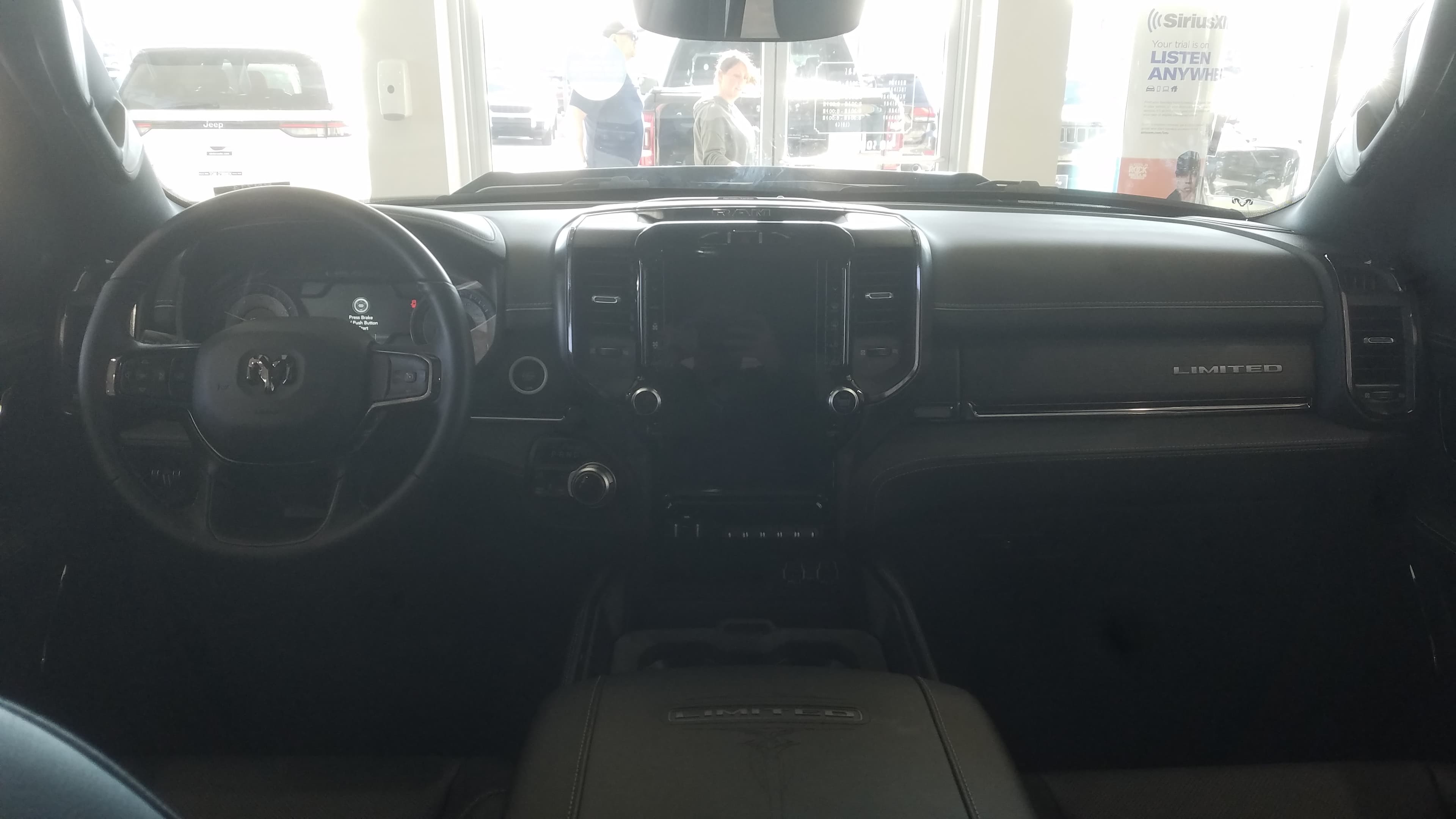
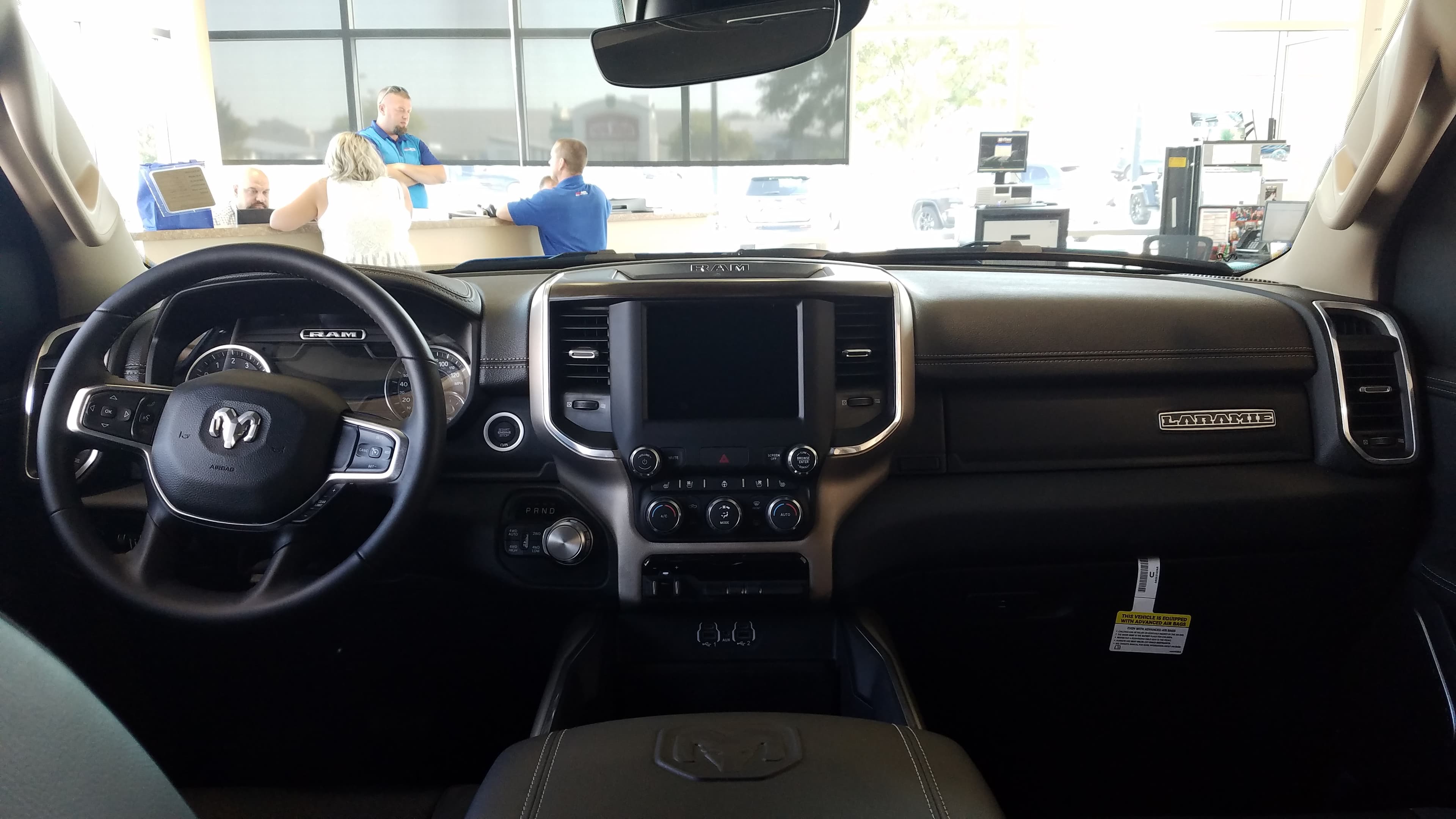
This is where the Ram earns its money. The 2026 1500 has, by broad consensus including Car and Driver's, the best interior in the full-size class — material quality, design, and quietness that genuinely embarrass trucks costing more, topped by the available portrait 12-inch (and larger, on upper trims) touchscreen and, on flagships, a 23-speaker Klipsch or Harman Kardon audio system. The ride backs it up: coil-spring rear suspension (with available air) instead of the leaf springs most rivals still use, which is why every outlet leads with the 'rides like a luxury SUV' line. If interior and refinement top your list, the Ram wins the segment outright.
The tech is modern and deep: wireless Apple CarPlay and Android Auto, a configurable digital cluster, an available head-up display, surround-view cameras, and a full active-safety menu (adaptive cruise, lane keeping, blind-spot monitoring, automatic emergency braking) available across the range, standard higher up. As reference media, Ram's own configurator and press galleries show the cabin well; the interior images in this review are current-generation (fifth-generation DT) shots that match the 2026 layout.
The honest safety caveat belongs here, not buried. NHTSA has not issued federal crash stars for the 2026 1500 yet — we assert no star rating. IIHS results on the current platform are mixed: good in small-overlap and side tests, but flagged with a weak moderate-overlap front result and only marginal front-crash-prevention and seat-belt-reminder scores, which keep it off the Top Safety Pick list. And there are three open NHTSA recalls (covered in Ownership below). A gorgeous cabin does not excuse those; verify the ratings and recall remedies for your exact build.
Ownership, warranty, reliability, and resale
Warranty is a genuine Ram strength, with one asterisk. The standard coverage is 3 years / 36,000 miles bumper-to-bumper and 5 years / 60,000 miles powertrain (transferable), plus 5 years / 100,000 miles corrosion/rust-through (official Ram/Mopar terms). The headline is Ram's 10-year / 100,000-mile Powertrain Limited Warranty on select 2026 trucks — but read the fine print MotorRank verified on ramtrucks.com: it is original-owner-only and non-transferable, so for the second owner the powertrain reverts to 5/60. If you buy new and keep the truck a decade, that is real peace of mind; if you buy used or trade early, it is not yours.
On reliability, we will not invent a score. We have no MotorRank long-term data on the 2026 truck and will not fabricate one. What we can report honestly: KBB owner reviews skew positive (a majority recommend the truck and rate reliability above average), while the same owners flag electronics — sensors, navigation, and screen glitches — as the most common gripe, which is consistent with the two instrument-cluster software recalls on this year's truck. The Hurricane and eTorque hardware is now several model years into production and maturing, but the HEMI's eTorque integration in this exact application is fresh for 2026. Treat long-term reliability as an open buyer question, not a settled number.
On resale, same discipline: we will not publish a depreciation percentage we did not measure. Full-size half-tons generally hold value well, and Ram's interior reputation helps, but the 2026 capability step-back and the higher starting price are mild headwinds. The smart move is to check current residual data for your exact trim at purchase rather than trust a generic figure. The ownership bottom line: strong warranty (for the first owner), a beautiful cabin to live with, and a recall list plus newer-powertrain caveats that make the pre-purchase check non-optional.
The recall and safety check you must do before buying
Because this is load-bearing, it gets its own section. As of June 2026, NHTSA lists three open recalls on the 2026 Ram 1500 (verified directly against the NHTSA recalls database): 25V826000 — an instrument-cluster software error that can blank the gauge display; 26V059000 — an improperly designed trailer-tow module that can prevent trailer lights from illuminating and trailer brakes from engaging; and 26V225000 — a second instrument-cluster software fault that can cause the display to fail. Two are cluster-software issues, fixable with a software update; the trailer-tow recall is the one that should stop a tow-focused buyer until it is remedied.
This is not a reason to walk away — recalls are common on first-year-of-a-change trucks and the remedies are typically free dealer fixes — but it is a reason to act. Before you take delivery, give your dealer the VIN and confirm in writing which recalls apply to that specific truck and whether the remedies have been performed. Run the VIN yourself at nhtsa.gov/recalls. And because NHTSA crash stars are not published yet and IIHS flags a moderate-overlap weakness, do not assume this truck is a safety standout just because the cabin feels premium. Verify recalls remedied, verify the ratings that exist, and only then sign.
Same-brand and platform cross-shop: where else your money could go
Before you commit to a 1500, two same-family alternatives deserve a look depending on what you are really buying. If your loads ride inside more often than in a bed, and you want Ram-style comfort in a more rugged, trail-focused package, the Jeep Recon is the platform-adjacent Stellantis play — an electric off-road SUV that trades the truck bed for enclosed cargo and serious off-road intent. It answers a different question than the Ram, but it is the same buyer's 'do I actually need a bed?' gut-check, which is worth doing before you spend $45K-plus on a half-ton.
If you are drawn to the Ram for the off-road Rebel but suspect a full-size truck is more truck than your life needs, drop a size and cross-shop the Toyota Tacoma. A midsize Tacoma costs less, parks easier, and still tows and trails competently — and for a lot of buyers who think they want a 1500, a well-equipped midsize is the truck they actually use. The honest framing: the Ram 1500 is the right answer when you need full-size capability and want a luxury cabin, but if either of those is not a hard requirement, the same money buys a different, sometimes better-fitting tool inside and adjacent to the family. Decide the body style and the size before you fall in love with the cabin.
Cross-shop: Ford F-150, Chevy Silverado, GMC Sierra, Toyota Tundra — and who should wait
In the full-size class itself, the Ram's rivals expose exactly where it is strong and where it is not. The Ford F-150 is the capability and breadth leader — it out-tows the Ram (up to around 13,500 lb), offers a genuine hybrid the Ram cannot match, and has the deepest configuration menu in trucks. If towing maximum or fuel economy lead your list, the F-150 wins. The Chevy Silverado 1500 and its richer GMC Sierra twin also out-tow the Ram (around 13,300 lb) and undercut it on price, though neither matches the Ram's cabin; the Sierra's high trims chase the same luxury buyer with the slick MultiPro tailgate as a party trick. The Toyota Tundra counters with Toyota's ownership reputation and a standard hybrid option, trading some interior polish for long-term peace of mind.
So who should buy the Ram, and who should wait? Buy the Ram if interior quality, ride comfort, and the V8-or-six engine choice top your priorities — nothing in the class lives better day to day. Wait, or cross-shop hard, if you tow near the limit (F-150/Silverado), if MPG is decisive (hybrid F-150 or Tundra), or if lowest price wins (Silverado). And if you specifically want the HEMI V8 experience without overpaying, wait for a Limited or Longhorn deal where the V8 is the no-charge option — that is the value sweet spot for the V8 buyer, and it does not exist on the cheaper trims where the engine costs $2,895.
How to buy, and the final verdict
Here is the buying playbook. Step one: pick the body and size honestly — Quad Cab versus Crew Cab, the 5-foot-7 versus 6-foot-4 bed, and whether you even need full-size. Step two: choose the engine by trim — Hurricane SO everywhere it is a paid choice; HEMI V8 only on Limited/Longhorn where it is free, or anywhere if the V8's sound is genuinely worth $2,895 to you. Step three: choose the trim by buyer type — Big Horn for smart-money mainstream, Laramie for comfort, Rebel for off-road, RHO/Tungsten for performance. Step four: do the safety check — VIN against the three open recalls before delivery, confirm remedies, verify the ratings that exist.
The final verdict: the 2026 Ram 1500 is the segment's comfort-and-cabin champion and a legitimately desirable truck, scored 7.6 out of 10 on our research basis — held back from higher only by its capability step-back, higher pricing, the open recalls, and the incomplete safety picture. The single best buy is a Big Horn / Lone Star with the 420-hp Hurricane Standard Output six, around $46,830 plus the $2,595 destination fee. Take the HEMI V8 only on Limited or Longhorn where it costs nothing, or where you have decided the sound is worth real money — and know that is an emotional purchase, not a rational one. The one pre-purchase check that is non-negotiable: run the VIN against those three recalls and confirm the remedies before you drive off.
Specs Snapshot
The numbers shoppers compare first.
Key numbers to compare against alternatives before you commit.
| Base price | $41.6K - $88.4K |
|---|---|
| Horsepower | 420 hp |
| 0-60 mph | 5.2 sec |
| Drivetrain | 4WD |
| Transmission | Automatic |
| Fuel type | Gas |
| Combined MPG/MPGe | 21 |
Media Proof
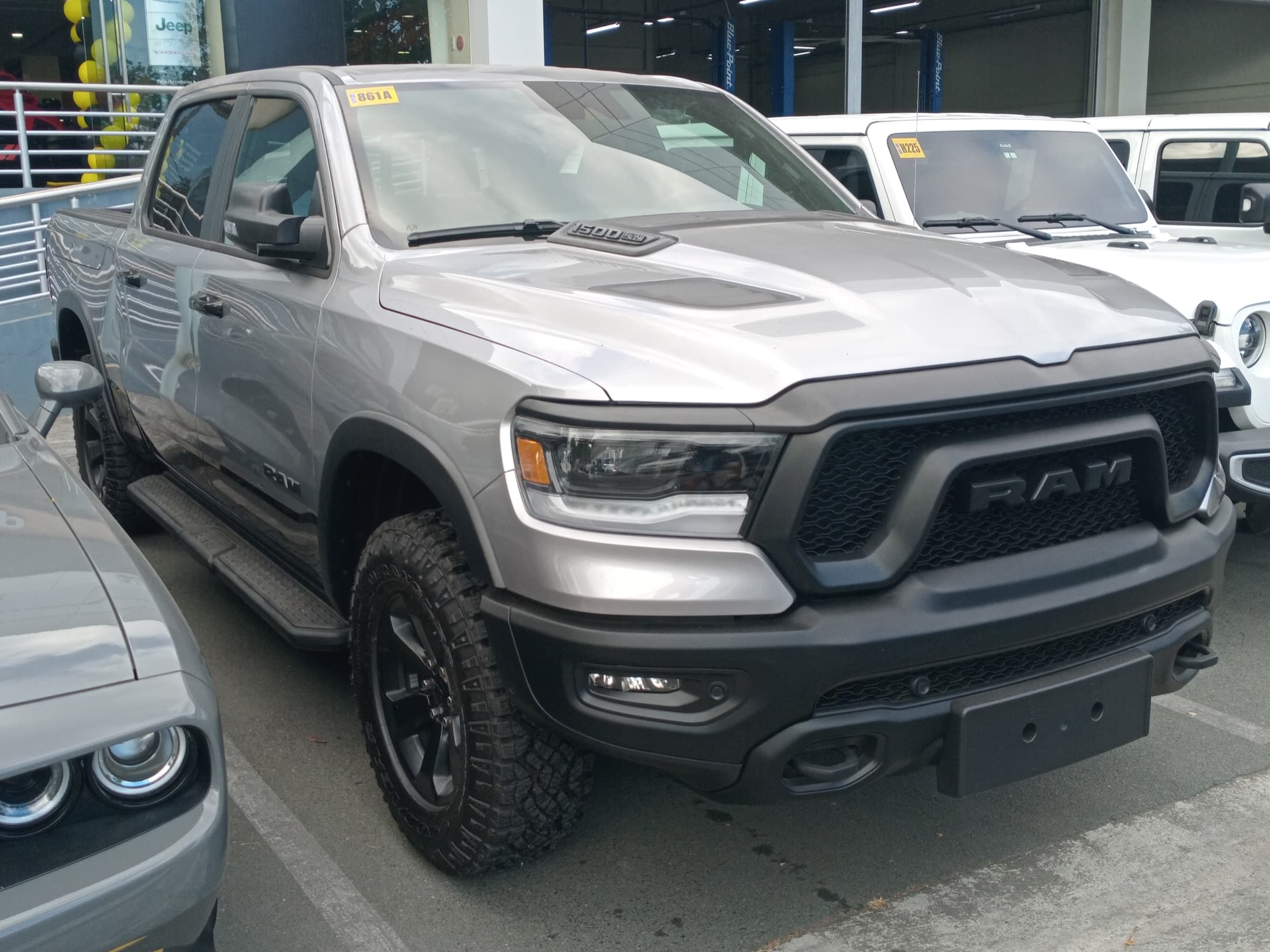
Exterior and interior visuals with source receipts.
Every asset shown here links back to its source and license so the page can gain trust without borrowing competitor media.
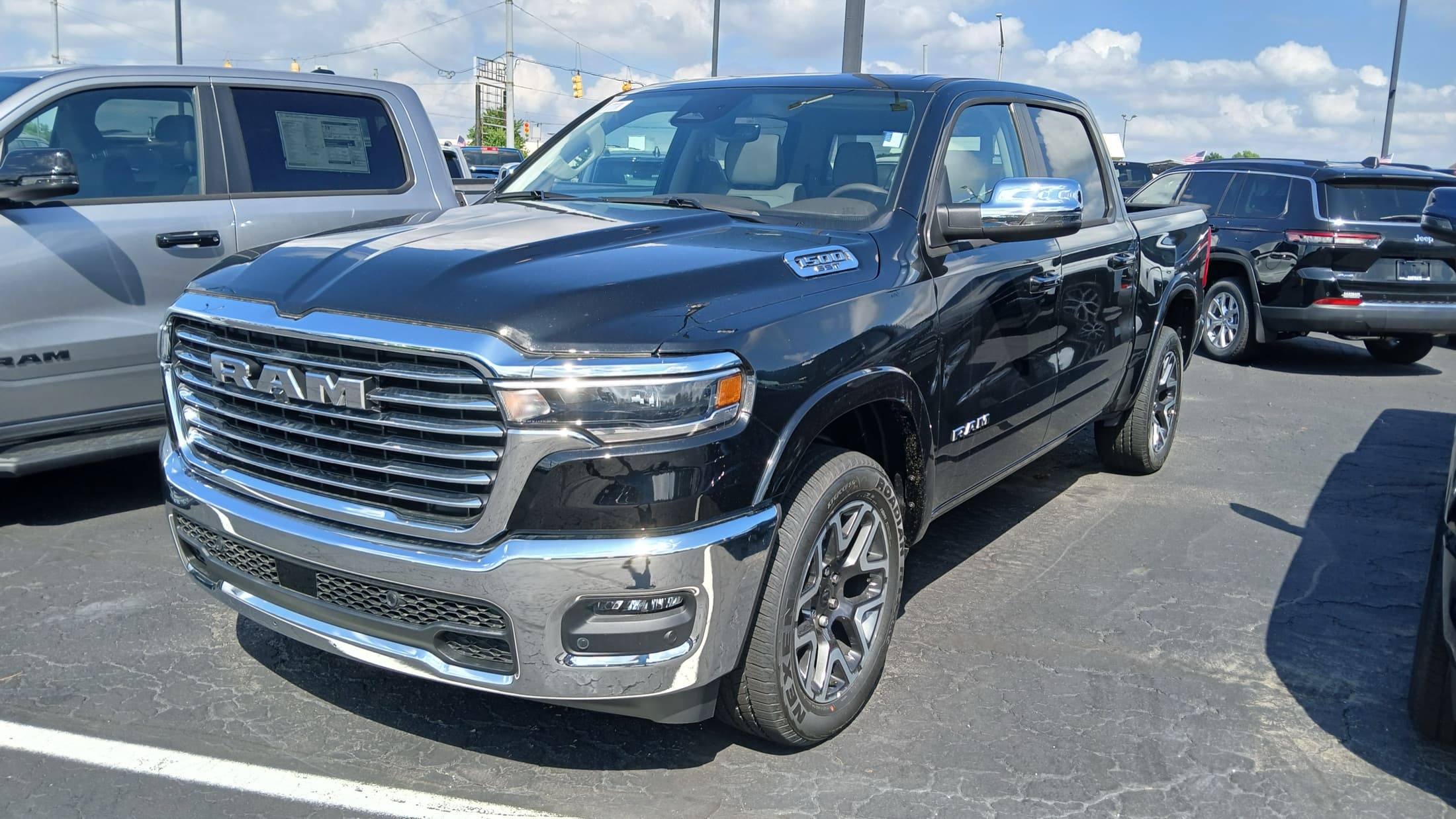
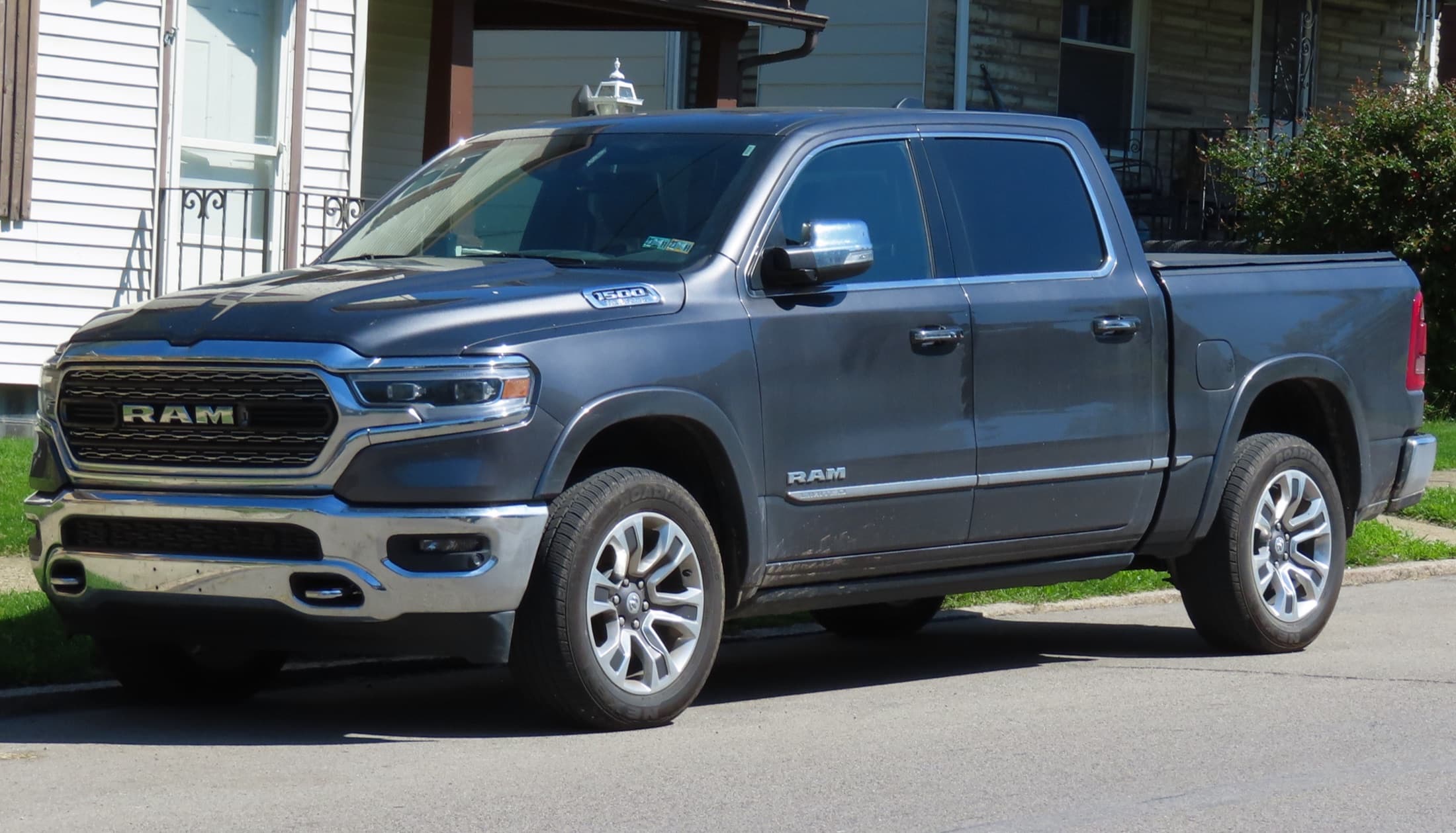
Source Receipts
Source pages, creator credits, and reuse licenses are visible for editorial trust and legal hygiene.
Related Video
2026 RAM 1500 HEMI | MotorWeek Quick Spin
MotorWeek
Embedded from MotorWeek's official YouTube channel as third-party reference media on the returning HEMI V8 — MotorWeek's quick spin, not an independent MotorRank road test.
Interior
Cabin views before you choose a trim.
By broad consensus, including Car and Driver's, the 2026 Ram 1500 has the best interior in the full-size class — material quality and quietness that embarrass pricier trucks, topped by the available portrait 12-inch (and larger) touchscreen and, on flagships, a 23-speaker audio system. The honest daily caveat from KBB owners: electronics quirks — sensor, navigation, and screen glitches — are the most common complaint, consistent with this year's two cluster-software recalls.
Interior Source Receipts
Research basis
Updated June 11, 2026
Built from Ram's official 2026 1500 pricing and specifications on ramtrucks.com, Stellantis North America's press materials, the EPA's published fuel-economy ratings on fueleconomy.gov, the NHTSA recalls database, and the attributed test data and impressions of The Drive, Edmunds, Car and Driver, MotorTrend, New Atlas, PickupTruckTalk, MoparInsiders, CarBuzz, and KBB owner reviews. Engine outputs (HEMI 395 hp/410 lb-ft, Hurricane SO 420 hp/469 lb-ft, Hurricane HO 540 hp/521 lb-ft), the $2,595 destination fee, EPA MPG, towing/payload, and the three open recalls were each verified against primary sources on June 11-12, 2026.
MSRP figures are Ram's published base prices and exclude the $2,595 Destination/Delivery charge unless stated otherwise; base prices have drifted modestly since launch and vary by cab/bed, so confirm your exact build on Ram's Build & Price. Acceleration and observed-MPG figures are attributed to the outlet that measured them (Edmunds, CarBuzz). MotorRank has not yet run its own instrumented road test; ride, refinement, real-world fuel economy, reliability, and resale impressions are preview basis, not measured.
Update after MotorRank runs an instrumented road test of both the HEMI V8 and Hurricane engines, samples real-world fuel economy, performs multi-ZIP dealer pricing checks, and once 2026-specific NHTSA crash stars and final IIHS ratings are confirmed and the three open recalls' remedies are released.
Which 2026 RAM 1500 to Buy
Which trim is right for you?
Tradesman
$41,575
The work-truck entry: 3.6L Pentastar V6 eTorque standard, Quad or Crew Cab, vinyl/cloth, and the segment-leading max payload when properly equipped.
Express
$43,700
The blacked-out value trim: Tradesman bones with body-color or monochromatic styling, bigger wheels, and a cleaner street look.
Big Horn / Lone Star
$46,830
Our default pick: the volume sweet spot — available 12-inch touchscreen, dual-zone climate, and the no-cost step up to the 420-hp Hurricane SO or the returning HEMI V8.
Our pick
Warlock
$52,415
The factory-custom look: Big Horn equipment with off-road styling cues, black badging, and available sport appearance packages.
Laramie
$61,030
The first genuinely premium rung: leather, the big 12-inch stack, real chrome or sport appearance, and most comfort and tech available.
Rebel
$64,995
The off-roader: a 1-inch lift, Bilstein shocks, 33-inch Goodyear all-terrains, a 3.92 rear axle with electronic locker, skid plates, and available air suspension; Hurricane SO standard.
RHO
$73,045
The high-performance desert truck: 540-hp Hurricane High Output, widened track, Bilstein remote-reservoir dampers, and 35-inch tires — the Raptor/TRX rival.
Limited
$75,955
The luxury flagship: top-grade leather, available 23-speaker audio, full driver-assist suite; the HEMI V8 is a no-charge option here.
Limited Longhorn
$76,450
Western-themed luxury: filigree leather, real wood, unique trim — the same loaded mechanicals as Limited, with the HEMI V8 also a no-charge option.
Tungsten
$88,350
The ultra-premium halo: 540-hp Hurricane HO standard, 23-speaker Klipsch audio, massaging quilted-leather seats — the most expensive 1500 you can order.
Performance
- Horsepower
- 420hp
- 0–60 mph
- 5.2s
Scorecard
- Performance8.2
- Comfort8.6
- Value6.9
- Ownership7.4
- Technology8.5
- Safety6.8
- Reliability7
- Interior9
Shopping Tools
Next steps for 2026 Ram 1500 shoppers.
Research tools to help you move from browsing to buying.
Compare rivals
Line up the closest alternatives before you commit.
Check deal signals
Review pricing pressure, incentives, and value angles.
Read owner signal
Balance the expert take with ownership patterns.
Cross-shop
Before you spend $45K-plus on a half-ton, run the gut-check: do you actually need a bed? The platform-adjacent Stellantis Jeep Recon trades the truck bed for enclosed cargo and serious off-road intent — a different answer to the same buyer's question.
Open vehicle hub
Keep specs, reliability, rankings, and review links together.
Compare Against
Cross-shop before you commit.
The closest alternatives in this price range, with our read on each.
The capability and breadth leader
Ford F-150
The F-150 out-tows the Ram (up to ~13,500 lb), offers a genuine hybrid the Ram cannot match, and has the deepest configuration menu in trucks. The Ram answers with a far nicer cabin, a smoother ride, and the V8-or-turbo-six choice. If towing maximum or fuel economy lead your list, the Ford wins; if interior and ride lead it, the Ram does.
The towing and value rival
Chevrolet Silverado 1500
The Silverado out-tows the Ram (~13,300 lb) and undercuts it on price, making it the pick for capability-and-value buyers. The Ram counters with a dramatically better interior and a smoother coil-spring ride. Cross-shop the Silverado if sticker and towing decide it; choose the Ram if how the truck feels decides it.
The luxury-Chevy alternative
GMC Sierra 1500
The Sierra is the richer Silverado, chasing the same luxury buyer as the Ram's upper trims with the clever MultiPro tailgate and Denali interiors. It out-tows the Ram but still trails it on overall cabin refinement. If you want GM mechanicals with luxury trim, the Sierra is the cross-shop; the Ram's interior remains the segment benchmark.
The reliability-and-hybrid alternative
Toyota Tundra
The Tundra counters with Toyota's ownership reputation and a standard i-FORCE MAX hybrid option, trading some interior polish for long-term peace of mind. The Ram beats it on cabin quality and ride comfort. Cross-shop the Tundra if reliability reputation and a hybrid option lead your priorities; choose the Ram for the nicer place to sit.
Buyer FAQ
2026 Ram 1500 buyer questions, answered.
24
buyer answers
Question Map
Decision
Should you buy the 2026 Ram 1500?
It owns the best cabin and ride in the class — so the real questions are whether its capability step-back and higher price touch your life.
Is the 2026 Ram 1500 worth buying?
Yes — for the best interior and ride in the full-size class, less so if you need maximum towing or the lowest price.+
The 2026 Ram 1500 is worth buying when comfort, interior quality, and powertrain choice lead your priorities — it has, by broad consensus including Car and Driver's, the best cabin and the most luxury-car-like ride in the full-size segment, thanks to coil-spring (and available air) rear suspension. It is the wrong buy when maximum towing or lowest starting price lead your list: Ford and Chevy out-tow it and undercut it. Our research-basis score is 7.6/10, held back by a 2026 capability step-back, higher pricing, and three open recalls. Order it with the Hurricane Standard Output six.
What's the single best 2026 Ram 1500 to buy?
A Big Horn / Lone Star with the 420-hp Hurricane Standard Output six, around $46,830 plus the $2,595 destination fee.+
For most buyers, the Big Horn / Lone Star is the sweet spot at roughly $46,830 (before the $2,595 destination charge). It is the cheapest trim that unlocks the engine choice that matters — the 420-hp Hurricane Standard Output six standard, with the HEMI V8 available — plus the big touchscreen and dual-zone climate, without paying Laramie-and-up luxury prices. Comfort buyers should step to Laramie; off-road buyers to Rebel; luxury-V8 buyers to a Limited or Longhorn where the HEMI is a no-charge option. The engine answer, on nine trims out of ten, is the Hurricane SO.
Why does the 2026 Ram 1500 matter this year specifically?
The HEMI V8 is back after Ram dropped it — so 2026 is the year you get to choose V8 or turbo-six.+
For 2026 the 5.7L HEMI V8 returns to the Ram 1500 lineup after Ram had moved to an all-turbo strategy and faced a buyer backlash. Stellantis publicly acknowledged the complaints and brought the 395-hp V8 back with eTorque across nearly the whole range, sitting alongside the 3.0L Hurricane twin-turbo inline-six. That makes the 2026 Ram the only full-size truck offering a genuine choice between a charismatic old-school V8 and a more capable modern twin-turbo six — for many trims at little or no price difference. That engine choice is the defining 2026 story and the question this review exists to answer.
Who should NOT buy the 2026 Ram 1500?
Heavy-towing buyers, MPG-first buyers, and lowest-price buyers should cross-shop Ford and Chevy first.+
Skip the Ram, or cross-shop hard, if your needs are capability-first. It tows up to 11,610 pounds versus roughly 13,500 for the F-150 and 13,300 for the Silverado, so heavy-trailer buyers should look at Ford and Chevy. If fuel economy is decisive, the Ram has no hybrid to match the hybrid F-150 or Tundra. And if lowest starting price wins, the Silverado undercuts the Ram. New Atlas put it bluntly: the 2026 Ram 'no longer out-trucks the other pickups.' Buy it for the cabin and ride, not to win a capability or value contest.
Hemi vs Hurricane
HEMI V8 or Hurricane I6? The 2026 engine decision, resolved
The V8 is back — but the turbo-six is quicker, more efficient, and tows more. Here is the whole trade in one place, including which trims hand you the V8 for free.
Should I get the Hemi V8 or the Hurricane six in the 2026 Ram 1500?
The Hurricane six wherever the V8 costs money; the HEMI only where it is the no-charge option on Limited/Longhorn or if the sound is worth it to you.+
Get the Hurricane Standard Output six. It makes 420 hp and 469 lb-ft against the HEMI's 395 hp and 410 lb-ft, hits 60 in about 5.2 seconds versus the V8's roughly 6.9 (Edmunds), rates 21 mpg combined versus 18-19, and tows more (up to 11,610 vs 11,320 pounds). The Drive concluded the HEMI makes no sense over the turbo-six in reality. Buy the V8 only where it is the no-charge option (Limited, Longhorn) or because you genuinely value its sound and character enough to pay the $2,895 premium — a legitimate but emotional reason.
How much horsepower does the 2026 Ram 1500 Hemi V8 have?
395 hp and 410 lb-ft with eTorque — less than the Hurricane six it sits beside.+
The returning 5.7L HEMI V8 with eTorque makes 395 horsepower and 410 lb-ft of torque (official, Stellantis North America). That is notably less than the standard 3.0L Hurricane Standard Output six's 420 hp and 469 lb-ft, and far less than the Hurricane High Output's 540 hp and 521 lb-ft. The eTorque 48-volt mild-hybrid system adds up to 130 lb-ft of momentary assist on tip-in for smoother launches, but it does not change the rated peak. The bottom line: the V8's appeal in 2026 is its sound and character, not its output — on paper it is the weakest of the three strong engines.
Is the Hemi V8 faster than the Hurricane six?
No — the turbo-six is clearly quicker; Edmunds measured 5.2 seconds to 60 for the six versus 6.9 for the V8.+
No. Edmunds measured the Hurricane six at 5.2 seconds to 60 mph and the HEMI V8 at 6.9 — a significant gap. CarBuzz's testing agreed, clocking the Hurricane SO at 5.2, the 540-hp Hurricane HO Tungsten at about 4.6, and the HEMI Limited at 6.39. Whichever outlet you trust, both turbo-sixes are clearly quicker than the returning V8. If straight-line speed matters to you, the Hurricane is the answer — the V8 is the slower, more emotional choice. This is the single fact most top-ranking reviews mention only in passing, and it is the heart of the engine decision.
Which trims get the Hemi V8 for free?
Limited and Limited Longhorn — the HEMI is a no-charge option there; elsewhere it costs about $2,895 over the V6.+
On the Limited and Limited Longhorn, the HEMI V8 is a no-charge swap versus the standard Hurricane High Output six (per MoparInsiders), which is the one place we would actively consider the V8 — it costs nothing extra and you are buying the truck for its luxury cabin anyway. On lower trims the HEMI is roughly a $2,895 option over the base V6 and about $1,200 over the Hurricane SO on trims like Rebel and Laramie. So the V8 value math is simple: free on the two flagships, a real premium everywhere else. Anywhere it costs money, the quicker, more efficient Hurricane is the smarter order.
Real Cost
Price, destination, and what you'll actually pay
Ten trims from about $41,575 to $88,350 — before the $2,595 destination fee every 1500 carries.
How much does the 2026 Ram 1500 cost?
Base MSRPs run about $41,575 (Tradesman) to $88,350 (Tungsten), before the $2,595 destination fee.+
Ram's 2026 1500 base MSRPs run roughly: Tradesman $41,575; Express $43,700; Big Horn/Lone Star $46,830; Warlock $52,415; Laramie $61,030; Rebel $64,995; RHO $73,045; Limited $75,955; Limited Longhorn $76,450; and Tungsten $88,350. Every figure excludes the $2,595 Destination/Delivery charge Ram adds to all 1500s, so the real entry point is about $44,170 delivered and a Tungsten lands near $90,945 before tax and title. Base prices vary by cab and bed and have drifted modestly since launch, so confirm your exact configuration on Ram's Build & Price.
What is the destination fee on the 2026 Ram 1500?
$2,595 — up from $2,095 in 2025, and one of the higher delivery charges in the segment.+
The 2026 Ram 1500 carries a $2,595 Destination/Delivery charge, which every published base MSRP excludes. That is a notable jump from the $2,095 fee in 2025 and is among the higher destination charges in the full-size class. Crucially, MSRP is never out-the-door: the destination fee is mandatory and added to every truck regardless of trim, and tax, title, registration, and any dealer add-ons come on top. When you are comparing the Ram's sticker to a rival's, make sure you are comparing destination-inclusive prices — the Ram already starts higher than the Ford and Chevy before this fee.
What's the cheapest 2026 Ram 1500?
The Tradesman, around $41,575 base — a genuine work truck, but personal buyers should step to Big Horn.+
The cheapest 2026 Ram 1500 is the Tradesman at about $41,575 base (plus the $2,595 destination fee). It is an honest work truck — 3.6L Pentastar V6 eTorque, durable surfaces, and class-competitive max payload when properly equipped — but it skips the comfort and tech most personal buyers want, and its base engine is not the Hurricane. For a daily-driver or family truck, we would step up to the Big Horn / Lone Star at about $46,830, which adds the available big touchscreen, dual-zone climate, and the standard 420-hp Hurricane SO. The Tradesman is the right buy only if it is a pure tool.
Why is the Ram 1500 more expensive than the Ford and Chevy?
You're paying for the cabin and ride — the Ram's value case rests on how it feels, not its sticker or capability.+
The Ram 1500's MSRP ladder starts higher than the F-150 and Silverado, and its destination fee ($2,595) is among the highest in the class, so on price alone it usually loses. What you are paying for is the segment's best interior — material quality and quietness that embarrass pricier trucks — and a coil-spring (available air) rear suspension that rides like a luxury SUV rather than a work truck. If you cross-shop on sticker or maximum capability, the Chevy and Ford win. If you cross-shop on how the truck feels to live with day to day, the Ram justifies its premium. Decide which axis you are actually buying on.
Drivetrain & MPG
Fuel economy, towing, and the 4x4 hardware
Every EPA number by engine, the real towing and payload picture, and which trims have genuine off-road hardware.
What's the gas mileage on the 2026 Ram 1500?
EPA: V6 up to 22 combined, Hurricane SO up to 21, HEMI V8 18-19, Hurricane HO 17, RHO 15.+
Per the EPA (fueleconomy.gov): the 3.6L V6 rates 20/25/22 (2WD) and 19/24/21 (4WD); the 3.0L Hurricane Standard Output six rates 18/25/21 (2WD) and 18/24/20 (4WD); the 5.7L HEMI V8 rates 17/22/19 (2WD) and 16/20/18 (4WD); the Hurricane High Output drops to 15/21/17 (4WD); and the RHO performance tune falls to 14/16/15. The Hurricane SO is the only strong engine posting a 21-combined figure, and even that is mid-pack for the class. There is no hybrid or plug-in 1500, so if MPG is decisive, cross-shop a hybrid F-150.
How much can the 2026 Ram 1500 tow?
Up to 11,610 pounds (Hurricane SO, properly equipped); the HEMI V8 tops out at 11,320 — both behind Ford and Chevy.+
Properly equipped, the 2026 Ram 1500 tows up to 11,610 pounds with the Hurricane Standard Output six and up to 11,320 pounds with the HEMI V8 (SAE J2807, official). Max payload reaches 2,360 pounds (V6 Tradesman/Express configuration). Those maximums apply to specific lighter configurations, not loaded luxury trucks. The context for 2026: the Ram has lost the capability crown — the Ford F-150 tows up to roughly 13,500 pounds and the Silverado around 13,300. If you tow near the ceiling regularly, cross-shop Ford and Chevy first; the Ram's edge is comfort, not capacity.
Does the eTorque system make the Ram 1500 a hybrid?
No — eTorque is a 48-volt mild-hybrid assist, not a full hybrid; it smooths stop-start and adds low-end torque, not big MPG.+
No. The eTorque system on the V6 and HEMI is a 48-volt mild-hybrid setup using a belt-driven motor-generator and a small battery. It enables smoother stop-start, adds up to 130 lb-ft of momentary torque assist on launch, and slightly aids efficiency — but it is not a full hybrid like the F-150 PowerBoost, and there is no electric-only driving. That is why eTorque trucks do not post dramatically better EPA numbers and why there is no separate hybrid-battery warranty: eTorque is covered under the standard powertrain warranty. If you want a real hybrid half-ton, the Ram lineup does not offer one for 2026.
Which 2026 Ram 1500 is best for off-road?
The Rebel for trail capability at a sane price; the RHO for high-speed desert running with 540 hp.+
For off-road, the Rebel is the value pick: a 1-inch lift, Bilstein shocks, 33-inch Goodyear all-terrains, a 3.92 rear axle with an electronic locker, skid plates, and available air suspension, with the Hurricane SO standard — PickupTruckTalk found it plenty capable and preferred its Hurricane to the optional HEMI. For serious high-speed desert running, the RHO steps up to the 540-hp Hurricane High Output, a widened track, remote-reservoir Bilsteins, and 35-inch tires — Ram's Raptor/TRX rival. For most buyers, a 4x4 Big Horn handles snow and worksites fine; buy the Rebel or RHO only if you will actually use the hardware.
Daily Use
Interior, tech, comfort, and living with it
The cabin is the Ram's trump card — here is what makes it the best in the class and where the daily compromises hide.
Does the 2026 Ram 1500 have the best interior in its class?
Yes — material quality, quietness, and the big touchscreen make it the segment benchmark for cabins.+
By broad consensus, including Car and Driver's, the 2026 Ram 1500 has the best interior in the full-size class. Material quality, design, and cabin quietness genuinely embarrass trucks costing more, topped by an available portrait 12-inch (and larger) touchscreen and, on flagships, a 23-speaker Klipsch audio system. The coil-spring (available air) rear suspension makes it ride like a luxury SUV rather than a work truck — the reason every outlet leads with the luxury-SUV comparison. If interior quality and refinement top your list, the Ram wins the segment outright; this is the single strongest reason to buy one.
What tech and driver-assist features does the 2026 Ram 1500 have?
Wireless CarPlay/Android Auto, big touchscreen, digital cluster, available head-up display, and a full active-safety suite.+
The 2026 Ram 1500 offers wireless Apple CarPlay and Android Auto, a large portrait touchscreen, a configurable digital gauge cluster, an available head-up display, surround-view cameras, and a complete active-safety menu — adaptive cruise control, lane keeping, blind-spot monitoring, and automatic emergency braking — available across the range and standard on upper trims. The flagship trims add premium audio (23-speaker Klipsch or Harman Kardon). It is a modern, deep tech package that matches or beats rivals. The honest daily caveat: KBB owners most commonly flag electronics — sensor, navigation, and screen glitches — which lines up with the two instrument-cluster software recalls on this year's truck.
What cab and bed configurations does the 2026 Ram 1500 offer?
Quad Cab (long bed only) or the roomier Crew Cab (short or long bed); seating for 5-6.+
The 2026 Ram 1500 comes as a four-door Quad Cab, which pairs only with the 6-foot-4 long bed, or the roomier Crew Cab, which offers either the 5-foot-7 short bed or the 6-foot-4 long bed. Seating is five standard, with a six-passenger front-bench option on some trims via a 40/20/40 split. The Crew Cab is the family and comfort choice with the most rear-seat room; the Quad Cab trades back-seat space for the longer standard bed. Match the configuration to whether you carry people or cargo more often — and confirm the exact cab/bed pricing on Ram's Build & Price, since base prices shift with the choice.
How does the 2026 Ram 1500 ride and drive day to day?
Like a luxury SUV — the coil-spring/air rear suspension makes it the smoothest-riding truck in the class.+
Day to day, the Ram 1500's defining trait is its ride. While most rivals still use leaf-spring rear suspension, the Ram uses coil springs (with an available air-suspension upgrade), which is why every outlet — and our research basis — calls it the smoothest, quietest full-size truck to live with. Combine that with the best cabin in the class and the Ram is genuinely easy to commute in, not just to work in. The compromises are the ones any full-size truck carries — size in parking lots, fuel cost, and the higher seating position — plus Ram-specific notes on electronics quirks. As a daily driver, it is the most car-like half-ton you can buy.
Ownership
Warranty, recalls, reliability, and resale
Strong warranty for the first owner, three open recalls to clear, and honest open-question territory on reliability and resale.
What is the 2026 Ram 1500 warranty?
3yr/36k basic, 5yr/60k powertrain, plus a headline 10yr/100k powertrain warranty that's original-owner-only.+
Ram's official coverage is 3 years / 36,000 miles bumper-to-bumper, 5 years / 60,000 miles powertrain (transferable), and 5 years / 100,000 miles corrosion/rust-through. The headline is the 10-year / 100,000-mile Powertrain Limited Warranty on select 2026 trucks — but read the fine print MotorRank verified on ramtrucks.com: it is original-owner-only and non-transferable, so for a second owner the powertrain reverts to 5/60. If you buy new and keep the truck a decade, that is real peace of mind; if you buy used or trade early, it is not yours. The eTorque system is covered under the standard powertrain warranty, not a separate hybrid-battery warranty.
Does the 2026 Ram 1500 have any recalls?
Yes — three open NHTSA recalls as of June 2026: two instrument-cluster software faults and one trailer-tow module issue.+
As of June 2026, NHTSA lists three open recalls on the 2026 Ram 1500 (verified directly against the NHTSA recalls database): 25V826000, an instrument-cluster software error that can blank the gauges; 26V059000, a trailer-tow module fault that can prevent trailer lights and brakes from working; and 26V225000, a second cluster-software fault that can fail the display. Two are software fixes; the trailer-tow recall is the one a tow-focused buyer should clear before towing. None is a dealbreaker — first-year-of-a-change trucks often have recalls — but before delivery, give your dealer the VIN and confirm in writing which apply and whether they are remedied.
Is the 2026 Ram 1500 reliable?
Open buyer question — owner reviews skew positive but flag electronics; we won't invent a reliability score.+
We have no MotorRank long-term data on the 2026 truck and will not fabricate a reliability score. Honestly, what we can report: KBB owner reviews skew positive, with a majority recommending the truck and rating reliability above average, while the same owners flag electronics — sensors, navigation, and screen glitches — as the most common complaint, consistent with this year's two cluster-software recalls. The Hurricane and eTorque hardware is maturing across several model years, but the HEMI's eTorque integration is fresh for 2026 and long-term data on it does not exist yet. Treat 2026 reliability as an open buyer question, not a settled number — and budget for the pre-purchase recall check.
Does the 2026 Ram 1500 hold its value?
Open question — full-size trucks generally hold value well, but we won't publish a depreciation figure we didn't measure.+
We will not quote a resale or depreciation percentage we did not measure. Honestly: full-size half-ton trucks generally hold value well, and Ram's class-best interior reputation helps support residuals. But the 2026 capability step-back versus rivals and the higher starting price are mild headwinds, and resale varies a lot by trim, engine, and region. The smart move is to check current residual data for your exact trim and engine at the time you buy, rather than trust any generic figure — including ours. As a category, this truck should depreciate in line with the class; as a specific 2026 configuration, verify before you assume.
Ready to buy?
Configure your 2026 Ram 1500.
Get matched with a Ram dealer or build your spec sheet from scratch.