
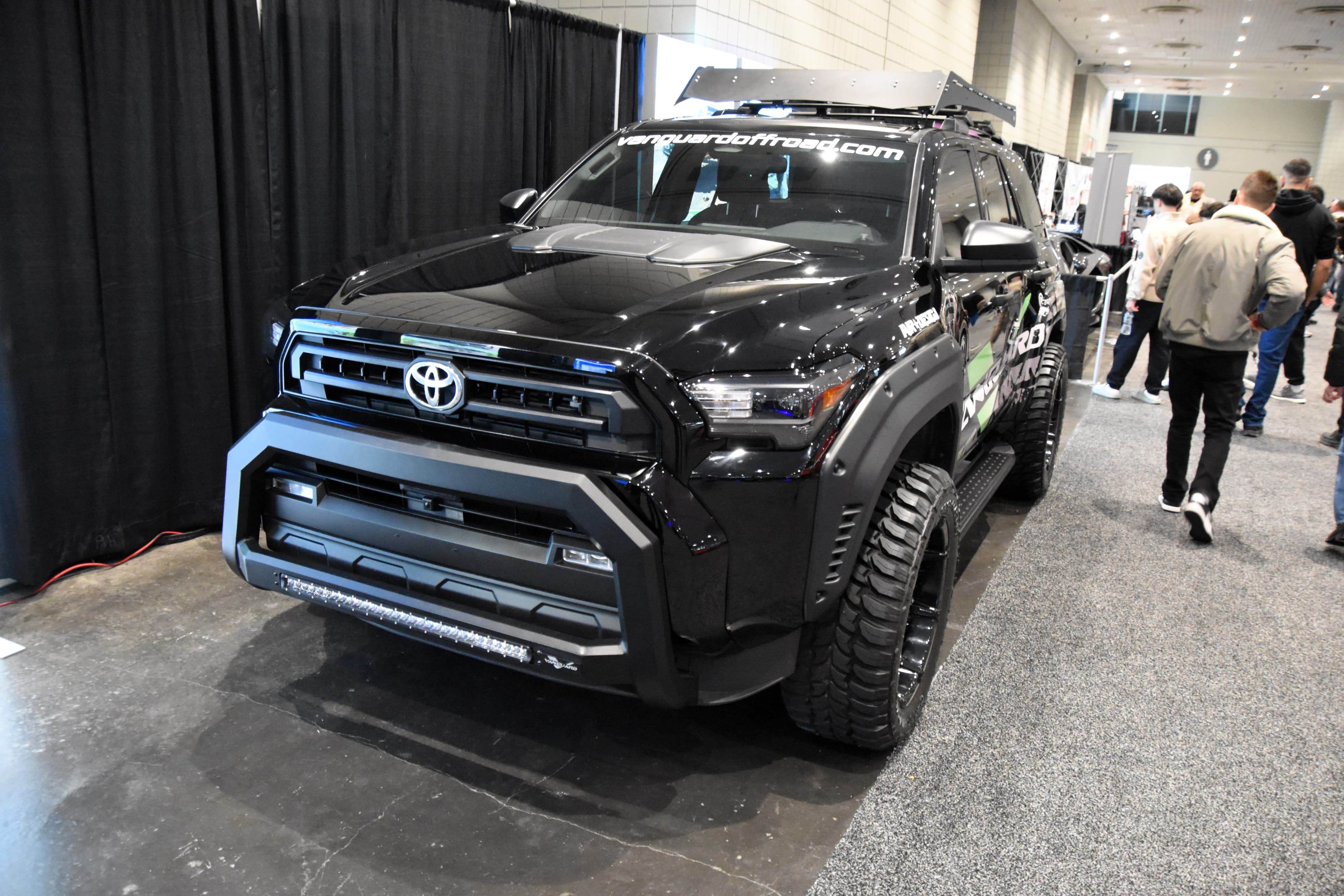
REVIEWS / SUVs
NEW2026 Toyota 4Runner Review
The redesigned body-on-frame icon is more capable and more livable than ever, but the 2026 buying decision is really two decisions: which trim, and whether to pay for the 326-horsepower i-FORCE MAX hybrid.
Published June 1, 2026 / Updated June 4, 2026
Expert verdict
The 2026 Toyota 4Runner is the rare modern SUV that still does the hard stuff — genuine low-range 4WD, locking differentials, and trail hardware on a stiff TNGA-F frame — while finally adding modern tech and a 326-horsepower hybrid option. Toyota's official base pricing runs from $42,070 for the SR5 to $68,400 for the TRD Pro, before the $1,450 Delivery, Processing and Handling fee. For most buyers the smart money is the 4WD TRD Off-Road; the single decision that trips people up is the gas i-FORCE versus the i-FORCE MAX hybrid, and we resolve it below instead of sending you to a second page.
HIGHS
- Genuine off-road hardware: locking rear diff, low-range 4WD, disconnecting sway bar, up to 10.1 in. clearance
- Strong 326-hp i-FORCE MAX hybrid option with 465 lb-ft and standard 4WD
- Best resale and reliability reputation in the segment; CR rates predicted reliability well above average (CR's result)
- 6,000-lb tow rating and Toyota Safety Sense 3.0 standard across the lineup
- Wide lineup from a $42,070 SR5 to a Trailhunter overlander and TRD Pro flagship
LOWS
- Trucklike ride and steering; busy over rough pavement (attributed, preview basis)
- Modest hybrid fuel-economy gain — 23 combined vs 21-22 gas
- Tight back seat and occasional-use-only optional third row
- Basic and powertrain warranties trail Kia and Hyundai terms
- TRD Pro and Trailhunter reach ~$68K before fees and risk dealer markups
AT A GLANCE
- Score
- 8.0
- Price
- $42.1K - $68.4K
- Horsepower
- 278 hp
- Drivetrain
- 4WD
- Body
- SUV
- Fuel
- Gas
Buyer Verdict
The fast answer before you compare specs.
Built for shoppers who want the recommendation first and the details right after.
Buy it if
- The 2026 Toyota 4Runner is the best body-on-frame choice for buyers who genuinely value off-road capability, durability, and Toyota resale, and the smart buy is specific: the 4WD TRD Off-Road at $50,490. Step up to the $53,290 TRD Off-Road i-FORCE MAX only if you want the stronger 326-horsepower hybrid for its torque and towing, not to save on fuel. If you never leave pavement, a unibody crossover like the Honda Passport is the honest money-saver.
- Best for: Buyers who genuinely value off-road capability, body-on-frame durability, and Toyota's resale and reliability track record, and who will trade a trucklike ride and a tighter back seat to get them — especially TRD Off-Road shoppers deciding between the gas and hybrid engines.
- Our trim pick: TRD Off-Road from $50,490.
Skip it if
- Trucklike ride and steering; busy over rough pavement (attributed, preview basis)
- Modest hybrid fuel-economy gain — 23 combined vs 21-22 gas
- Tight back seat and occasional-use-only optional third row
Closest rivals
- Ford Bronco
Trail-theater rival
- Jeep Wrangler
Maximum off-road character
- Toyota Land Cruiser
Premium same-platform sibling
Quick take
If you are shopping the 2026 Toyota 4Runner, you have almost certainly opened the Car and Driver, Edmunds, and MotorTrend reviews and come away with the same problem: nobody tells you, on one page, whether to buy the gas engine or the hybrid, which of the nine grades is right for you, and what the thing actually costs to own. This Research Desk review is built to answer all three. The 4Runner is fully redesigned for its sixth generation on Toyota's TNGA-F body-on-frame platform — the architecture under the Tacoma, Tundra, Land Cruiser, and Sequoia — and for 2026 it carries two turbocharged 2.4-liter powertrains, a 6,000-pound tow rating, up to 10.1 inches of ground clearance, and a new Platinum luxury grade. Toyota lists base MSRPs from $42,070 to $68,400.
This is a buyer-research review built from Toyota's official 2026 4Runner specifications, pricing, and warranty language, the EPA's published fuel-economy ratings, and the instrumented test data and on-road impressions of Car and Driver, Edmunds, MotorTrend, and Consumer Reports — each attributed to the outlet that produced it. It is not yet a MotorRank instrumented road test. We have not independently measured acceleration, braking, real-world fuel economy, or cabin noise, and we do not publish reliability scores, repair-cost figures, or resale percentages we cannot source. Where a number is Toyota-official we say so; where it is a third party's measured result we name them; where it is an expectation we have not verified, we label it preview basis.
Driving impressions
Why the 4Runner matters
The 4Runner matters because almost nothing else in its price range still combines a true body-on-frame chassis, real low-range gearing, an available electronic locking rear differential, and genuine off-road durability with everyday family usability and Toyota's ownership track record. Rivals split the difference — the Ford Bronco and Jeep Wrangler chase pure trail theater, the unibody Honda Passport and Subaru Outback chase on-road comfort — but the 4Runner sits in the middle of the Venn diagram, which is exactly why it has a cult following and why Consumer Reports rates its predicted reliability well above average — the most reliable model in Toyota's lineup (CR's result, not ours). The sixth generation keeps that DNA and adds the modern hardware the old truck was missing: a 326-horsepower hybrid, a 14-inch touchscreen, Toyota Safety Sense 3.0, and a Platinum trim that pushes the nameplate into near-luxury territory.
What to watch before you buy
Watch three things before you sign. First, the gas-versus-hybrid premium: the i-FORCE MAX hybrid costs roughly $2,800 more on the grades where both are offered, and the fuel-economy gain is small (23 combined MPG against 21 to 22 for the gas engine), so the case for the hybrid is about torque, towing, and the 2,400-watt power export far more than miles per gallon. Second, the on-road compromise: every outlet that has driven it, ours included by reference, agrees the 4Runner rides and steers like the truck it is, and the back seat and optional third row are tighter than the unibody alternatives. Third, the destination charge and dealer behavior: Toyota's MSRPs exclude the $1,450 fee, and trail-flagship grades like the TRD Pro and Trailhunter are the ones most likely to carry dealer markups.
SERP audit: who the 2026 4Runner has to beat right now
Before writing a word of buyer advice, we audited the live search results for the query buyers actually type — 2026 Toyota 4Runner review. The number-one organic result is Car and Driver's model hub (caranddriver.com/toyota/4runner), a high-authority, professionally tested review carrying an 8.5-out-of-10 rating. Below it the genuine editorial competition is Edmunds (a driven-tested-rated 6.2/10, 6.5 for the hybrid), MotorTrend (an instrumented First Test of the Limited hybrid), Consumer Reports (a scored road-test report), U.S. News (an aggregated scorecard), and a Yahoo/Autoblog first drive. The rest of the first page is Reddit threads, dealer marketing pages, Toyota's own configurator, and a KBB consumer-rating page — strong commercial intent, weak buyer-decision help.
Here is the opening those pages leave. Car and Driver, the page Google trusts most, splits the 4Runner's single most important 2026 decision — the gas i-FORCE versus the i-FORCE MAX hybrid — onto a separate URL, so the #1 result never actually resolves it. Its trim guidance is one sentence (it names the TRD Off-Road and moves on), the Trailhunter and TRD Pro are missing from its pricing ladder entirely, and there is no ownership, resale, or cost-of-ownership math anywhere on the page. Edmunds is the most honest of the set about the cramped back seat and busy ride but reads as a condensed rating summary. MotorTrend has the sharpest gas-versus-hybrid argument but only drove one trim. None of them gives you a clear who-should-buy-which matrix or a straight cross-shop verdict against the Bronco, Wrangler, Land Cruiser, and Passport.
So this review is organized to beat exactly those gaps: one unified gas-or-hybrid verdict, a buyer's pick for every one of the nine grades, real off-road numbers, an ownership and resale section that confronts the question the leaders skip, and head-to-head cross-shop calls that end in a decision rather than a ranking. Every Toyota-official figure below was checked against toyota.com and Toyota's press materials, and every fuel-economy number against the EPA.
The bottom line up front: is the 2026 4Runner worth buying?
Yes, for the specific buyer it is built for: someone who genuinely values off-road capability, body-on-frame toughness, and long-term Toyota ownership confidence, and who is willing to accept a trucklike ride and a tighter back seat to get them. If your real-world use is pavement, carpool, and the occasional gravel road, a unibody crossover will ride better, cost less, and use less fuel — and we say exactly which ones in the cross-shop section. The 4Runner earns its money when capability and durability are the point, not the marketing.
Our research-basis score is 8.0 out of 10. That reflects genuine strengths — class-leading durability reputation, real trail hardware, a strong hybrid option, Toyota Safety Sense 3.0 standard, and the best resale-and-reliability story in the segment — balanced against honest weaknesses every outlet confirms: an on-road ride and steering that feel like the truck it is, a modest fuel-economy gain from the hybrid, a back seat and third row that trail the unibody competition, and trail-flagship pricing that now reaches $68,400 before fees. For most shoppers the buy is a 4WD TRD Off-Road, gas or hybrid depending on the section below; the SR5 is the value play, and the Trailhunter and TRD Pro are specialist tools worth their premium only if you will use them.
Official pricing: every 2026 4Runner trim, and the destination charge nobody quotes
Here is the full, Toyota-official base-MSRP ladder for the 2026 4Runner, verified against toyota.com. SR5 $42,070; TRD Sport $48,550; TRD Off-Road $50,490; TRD Off-Road i-FORCE MAX $53,290; TRD Sport Premium $53,910; TRD Off-Road Premium $56,270; Limited $56,700; TRD Off-Road Premium i-FORCE MAX $59,070; Limited i-FORCE MAX $61,500; Platinum $64,160; Trailhunter $68,200; and TRD Pro $68,400. Toyota describes the lineup as nine grades; the twelve price points above exist because the i-FORCE MAX hybrid versions of the TRD Off-Road, TRD Off-Road Premium, and Limited are sold as their own configurations.
Every one of those numbers is a base MSRP and excludes Toyota's $1,450 Delivery, Processing and Handling fee, which is not optional and not set by the dealer. That single line means the real starting point for an SR5 is about $43,520 before tax, title, and registration, and a TRD Pro lands near $69,850 before a dollar of dealer markup or add-ons. When you compare a 4Runner price you see on a third-party site against Toyota's MSRP, confirm whether the quote already folds in destination — a number that looks higher elsewhere is often just including the fee Toyota lists separately.
Two pricing notes that matter for shoppers. First, Car and Driver's top-ranking page lists destination-inclusive figures (it shows the range starting near $43,665), which is why its numbers look slightly higher than Toyota's base MSRPs — neither is wrong, they are measuring different things, so compare like with like. Second, the cheapest way into the hybrid is the TRD Off-Road i-FORCE MAX at $53,290, which undercuts every other hybrid grade; if the 326-horsepower engine is what you want, that is the price floor to anchor on rather than the $61,500 Limited hybrid or the $64,160 Platinum.
i-FORCE vs i-FORCE MAX: the gas-or-hybrid call the #1 review splits across two pages
This is the decision that defines the 2026 4Runner, and it is the one Car and Driver, Edmunds, and MotorTrend make you work to resolve. Here it is in one place. The standard i-FORCE engine is a 2.4-liter turbocharged four making 278 horsepower and 317 pound-feet of torque through an 8-speed automatic — Toyota-official figures. The i-FORCE MAX adds a hybrid motor-generator (48 horsepower, 184 pound-feet) and a 288-volt nickel-metal-hydride battery to the same engine for a net 326 horsepower and 465 pound-feet, also Toyota-official, with all-wheel drive standard and a 2,400-watt AC power supply built in.
The fuel-economy case for the hybrid is weaker than buyers expect. EPA rates the gas 2WD models at 20 city, 26 highway, 22 combined; gas 4WD at roughly 20/24/21, dropping to 19/25/21 for the off-road grades on all-terrain tires; and the i-FORCE MAX hybrid at 23/24/23. That is a combined-MPG gain of just one to two miles per gallon, and on the highway the lighter gas 2WD models are actually more efficient. MotorTrend ran the math and put the fuel-cost difference at roughly $200 a year, with a payback period for the hybrid premium measured in well over a decade — their calculation, not ours, but it lines up with the EPA numbers.
So why pay the roughly $2,800 hybrid premium? Three real reasons, none of them MPG. Torque: 465 pound-feet versus 317 transforms low-speed response, towing confidence, and the way the truck moves its considerable weight — MotorTrend's instrumented testing of the heavier gas Limited (a 5,074-pound curb weight, 7.9 seconds to 60) led them to argue the hybrid should be the standard engine. Capability: every i-FORCE MAX comes with 4WD standard, and the hybrid is the only way into the Platinum, Trailhunter, and TRD Pro. And utility: the 2,400-watt power export runs tools, a fridge, or a campsite off the truck. Our verdict: buy the gas i-FORCE if you are a budget or value buyer on the SR5, TRD Sport, or a daily-driver TRD Off-Road and you tow lightly; pay for the i-FORCE MAX if you tow near the limit, want the strongest drivetrain, need the power export, or are buying a Platinum, Trailhunter, or TRD Pro where it is the only choice. Do not buy the hybrid expecting to save money on gas — that is not the reason it exists.
Fuel economy: what the turbo four and the hybrid actually return
The 4Runner is a body-on-frame SUV, and the EPA numbers reflect that honestly. The most efficient configuration is the gas 2WD model at 20 city, 26 highway, and 22 combined; add 4WD and you are at about 20/24/21, and the off-road grades on knobby 33-inch all-terrain tires fall to 19/25/21. The i-FORCE MAX hybrid posts 23/24/23 in its best configuration and 22/24/23 on the heavier off-road hybrid grades. All of these are official EPA ratings, and all powertrains run on regular gasoline with a 19-gallon tank.
Two things follow for a real shopper. The hybrid's advantage is almost entirely in the city, where its electric assist does the most work — on a steady highway run the gas 2WD model's 26-mpg rating is the best in the lineup, which matters if your miles are mostly interstate. And whichever engine you choose, this is a 21-to-23-mpg vehicle in EPA terms, not a 30-mpg one; if fuel economy is high on your list, the cross-shop section points you to the unibody alternatives that clear 30 combined. Car and Driver, for the record, observed about 21 mpg on its real-world 75-mph highway test and 18 mpg overall in mixed driving — useful third-party context for what to expect beyond the sticker.
Choosing a trim, part 1: SR5, TRD Sport, and TRD Off-Road
The SR5 at $42,070 is the value anchor and a genuinely good truck. It comes with the 278-horsepower turbo four, an 8-inch touchscreen with wireless Apple CarPlay and Android Auto, LED lighting, the signature power rear window, Toyota Safety Sense 3.0, and an available third row. Two-wheel drive is standard; add part-time 4WD if you need it. Buy the SR5 if you want a capable, durable 4Runner at the lowest sensible price and can live without the leather, the big screen, and the dedicated trail hardware.
The TRD Sport ($48,550) and TRD Sport Premium ($53,910) are the on-road-flavored grades: sport-tuned suspension, 20-inch wheels, and a more aggressive look, but no locking rear differential or low-range-specific tuning. They are for buyers who want the TRD appearance and street manners rather than trail ability. If you are never leaving pavement and want the styling, the TRD Sport makes sense; if you are even occasionally going off-road, skip it for the TRD Off-Road, which costs less than the Sport Premium and adds real capability.
The TRD Off-Road at $50,490 is our default recommendation and, not coincidentally, the trim Car and Driver also names as the value pick. For roughly the price of a TRD Sport it adds the hardware that defines a capable 4Runner: an electronic locking rear differential, Multi-Terrain Select with CRAWL Control, Bilstein monotube shocks, high-strength underbody protection, and 18-inch wheels wearing 33-inch-capable all-terrain rubber. It is the lowest-priced 4Runner that can genuinely do the off-road job the nameplate is bought for, and it remains civil enough to daily-drive. If you want the stronger engine, the TRD Off-Road i-FORCE MAX at $53,290 is the cheapest hybrid in the entire lineup and our pick for the buyer who can stretch.
Choosing a trim, part 2: Limited, Platinum, Trailhunter, and TRD Pro
The Limited ($56,700, or $61,500 as a hybrid) is the on-road luxury 4Runner: leather-trimmed heated and ventilated seats, a 14-inch touchscreen, JBL premium audio, adaptive variable suspension, an available power moonroof, and available power-extending running boards. It is the trim for buyers who want the 4Runner's durability and image in a plusher, quieter-trimmed package and who are not planning serious trail use — and the hybrid Limited adds available full-time 4WD with a locking center differential for all-weather security.
The Platinum ($64,160) is new for this generation and sits at the top of the on-road hierarchy. It makes the 326-horsepower hybrid and full-time 4WD standard and adds a head-up display, heated second-row outboard seats, premium leather, a standard tow-tech package, and rain-sensing wipers. Think of it as the Limited's luxury taken a step further for buyers who want the strongest drivetrain and the longest equipment list without the hardcore off-road suspensions.
The Trailhunter ($68,200) and TRD Pro ($68,400) are the specialist flagships, both hybrid-only and both worth their price only to the buyer who will actually use them. The Trailhunter is the factory overlander: Old Man Emu 2.5-inch forged shocks, an onboard air compressor, a low-profile high-mount air intake, an ARB roof rack, RIGID LED lighting, and a standard disconnecting front sway bar for articulation. The TRD Pro is the high-speed off-road weapon: FOX QS3 internal-bypass adjustable shocks with rear remote reservoirs, a TRD intake and exhaust, the disconnecting sway bar, and matte-black 18-inch wheels on 33-inch tires. Neither offers the third row, both ride firmly on-road, and both are the trims most likely to carry dealer markups — buy them for the hardware, not the badge.
The trim verdict, by buyer type
Because Car and Driver gives you one sentence here and Edmunds gives you a geo-bound price list, here is the matrix neither provides. Best value: the SR5, the only 4Runner in the low $40,000s, if you can forgo trail hardware and luxury. Best all-around buy for most shoppers: the 4WD TRD Off-Road gas at $50,490 — the cheapest genuinely capable grade. Best buy if you can stretch for the engine: the TRD Off-Road i-FORCE MAX at $53,290, the lowest-priced hybrid. Best daily-driver luxury: the Limited, gas if you stay on pavement, hybrid if you want all-weather full-time 4WD.
Best for a family that needs the third row: the SR5 or Limited, the grades that offer it (the Platinum, Trailhunter, and TRD Pro do not). Best for serious overlanding: the Trailhunter, for its air compressor, OME suspension, and roof rack. Best for high-speed desert and technical trail running: the TRD Pro, for its FOX shocks. Best to skip for most buyers: the TRD Sport and TRD Sport Premium, which charge for appearance and street tuning while giving up the off-road hardware that justifies a body-on-frame SUV in the first place — if you want pavement manners above all, the cross-shop section has better answers than a Sport-trim 4Runner.
Off-road capability: clearance, angles, lockers, and the disconnecting sway bar
This is where the 4Runner earns its reputation, and where the top-ranking reviews go shallow. The official Toyota numbers: ground clearance runs from 8.1 inches on the SR5 to 8.8 on the Limited to a full 10.1 inches on the TRD Pro. Approach and departure angles climb from 18 and 22 degrees on the SR5 and Limited to an aggressive 33 and 24 degrees on the TRD Pro, which also widens its track by nearly two inches with its overfenders. Toyota does not publish a breakover angle for these grades, so we will not invent one.
The hardware behind the numbers is genuine. An electronically controlled locking rear differential is standard on the TRD Off-Road, Trailhunter, and TRD Pro. Part-time 4WD grades get a two-speed transfer case with a 2.57:1 low-range ratio and Active Traction Control; the Limited hybrid and Platinum offer full-time 4WD with a Torsen locking center differential. Multi-Terrain Select works in both 4WD-High and 4WD-Low, CRAWL Control acts as low-speed off-road cruise, and a Multi-Terrain Monitor gives camera views of obstacles. The headline piece is the Stabilizer Disconnect Mechanism — standard on the Trailhunter and TRD Pro and newly optional on the i-FORCE MAX TRD Off-Road Premium — which electronically disconnects the front sway bar at the push of a button for dramatically more wheel travel.
Suspension is grade-specific and meaningful: Bilstein monotube remote-reservoir shocks on the TRD Off-Road, FOX QS3 2.5-inch internal-bypass adjustable shocks on the TRD Pro, and Old Man Emu forged monotube shocks plus an onboard air compressor and ARB roof rack on the Trailhunter. Both flagships wear 33-inch Toyo all-terrain tires on 18-inch wheels and carry skid protection and recovery points. The plain-English verdict: if you want maximum technical and high-speed capability, the TRD Pro; if you want self-sufficient overlanding range, the Trailhunter; if you want 90 percent of the ability for $18,000 less, the TRD Off-Road; and if a trim has TRD Sport in its name, treat it as a styling package, not a trail tool.
On-road manners: the part the spec sheet hides (preview basis)
A body-on-frame SUV drives like one, and buyers deserve to hear that before the test drive rather than discover it after. We have not yet run our own instrumented road test, so the following is preview-basis and attributed: across Car and Driver, Edmunds, and MotorTrend, the consistent finding is that the 2026 4Runner is more refined than the truck it replaces but still rides and steers like the ladder-frame vehicle it is — busy over broken pavement, ponderous in quick direction changes, and noticeably heavy. MotorTrend measured a gas Limited at 5,074 pounds and 7.9 seconds to 60 mph; Car and Driver measured a 4WD model at 7.5 seconds with 170 feet of braking from 70 mph and about 0.74 g on the skidpad. Those are competitive truck numbers, not crossover numbers.
The honest weak points the leaders soft-pedal: Edmunds is direct that the back seat is short on space and the cushions are firm, the turbo four can sound coarse under load, and the 8-speed automatic can feel hesitant from a stop. The optional third row is tight enough that most outlets call it occasional-use-only and best for children. Cargo load-in height is tall, and the hybrid raises the load floor slightly because of the battery. None of this disqualifies the 4Runner — it is the price of admission for the capability and durability — but if a quiet, car-like daily driver is what you actually want, you should know these traits are baked in, and our cross-shop section names the alternatives that fix them. We will replace these attributed impressions with our own measured results once the 4Runner completes a full MotorRank road test.
Towing and payload: the 6,000-pound number in context
Toyota rates the 2026 4Runner to tow up to 6,000 pounds on the SR5 and Limited, with the TRD Pro at 5,800 pounds — official figures. That is a useful, real-world capability that comfortably beats a four-door Jeep Wrangler and matches or edges much of the mid-size SUV field, and it is one of the clearest arguments for the hybrid: 465 pound-feet of torque makes pulling near the limit far more relaxed than the gas engine's 317. Available trailer technology includes an integrated trailer brake controller, a Trailer Backup Guide with Straight Path Assist and a 360-degree top-down camera view, and a Blind Spot Monitor that extends its detection zone to cover a trailer.
Two caveats keep the number honest. Toyota publishes GVWR (6,005 to 6,505 pounds depending on trim) and curb weights (about 4,455 pounds for the SR5 up to roughly 5,455 for a TRD Pro hybrid) but does not state a single payload figure per trim, so if you carry heavy loads plus passengers and a trailer tongue, work the weights with a dealer rather than assuming the 6,000-pound tow rating tells the whole story. And the trail-flagship grades, with their softer long-travel suspensions and lower tow ratings, are not the ones to choose if heavy, frequent towing is your priority — an SR5 or Limited is the better tow rig.
Interior, cargo, and the third-row question
The sixth-generation cabin is a clear step up, sharing its architecture with the Tacoma. The standard screen is an 8-inch touchscreen; a 14-inch unit is available on higher grades, paired with a 12.3-inch digital gauge cluster on hybrids, an available 14-speaker JBL premium system with a removable JBL FLEX portable speaker, wireless Apple CarPlay and Android Auto, USB-C ports, available Qi wireless charging, a Smart Key with push-button start, and an available smartphone Digital Key. The signature power rear window returns, and a hands-free power liftgate is available.
On space, Toyota's official numbers: 41.8 inches of front legroom, and cargo volume of 90.2 cubic feet behind the front seats and 48.4 behind the second row in five-seat models. Order the available third row and the figures become 84.4, 44.8, and 12.1 cubic feet behind the first, second, and third rows. That third row is the catch — it is genuinely tight for adults, every outlet that has sat in it agrees, and it is not offered on the TRD Pro, Trailhunter, or Platinum. If you need to seat seven regularly, the 4Runner can do it occasionally for children, but a three-row crossover or the related Toyota Grand Highlander will do it far better; buy the 4Runner's third row as an emergency option, not a daily one.
Technology and safety
Every 2026 4Runner includes Toyota Safety Sense 3.0 as standard equipment: Pre-Collision braking with pedestrian, bicyclist, and now motorcyclist detection; Lane Departure Alert with Steering Assist; Full-Speed Range Dynamic Radar Cruise Control; Lane Tracing Assist; Road Sign Assist; Automatic High Beams; and the newer Proactive Driving Assist, plus an Emergency Driving Stop System. Blind Spot Monitor and Rear Cross-Traffic Alert are available. Making the full active-safety suite standard across the lineup, including the $42,070 SR5, is a genuine value point and one we weight in the safety score.
On crash ratings, we attribute rather than assert: Car and Driver reports a 4-out-of-5-star overall NHTSA rating, and full IIHS results for the 2026 model were not published as of this writing. We do not assign our own crash score in place of the agencies, and we will update this section when complete IIHS and NHTSA ratings are available. For technology, the practical buyer notes are that the 14-inch screen and JBL audio require climbing to the Premium grades or higher, native connected navigation typically runs on a trial-then-subscription basis, and the available wireless charger has drawn the usual complaints about phone retention on rough roads — confirm the exact equipment on the specific trim you configure.
Warranty: what Toyota actually covers, and the hybrid math
Toyota's official warranty on the 2026 4Runner is a 36-month/36,000-mile basic limited warranty and a 60-month/60,000-mile powertrain warranty, with 60 months of corrosion-perforation coverage and no mileage limit on it. ToyotaCare adds two years or 25,000 miles of complimentary scheduled maintenance and two years of unlimited-mileage roadside assistance. Those basic and powertrain terms are shorter than what Kia and Hyundai publish on their own vehicles — those brands' long-standing 5-year/60,000-mile basic and 10-year/100,000-mile powertrain coverage — a real gap if a long written warranty is your priority.
Where Toyota's coverage gets genuinely strong is the hybrid. The i-FORCE MAX hybrid components carry an 8-year/100,000-mile warranty, and the hybrid battery is covered for 10 years or 150,000 miles and is transferable across ownership. The battery is the single most expensive component to replace if it ever fails outside coverage, so a decade and 150,000 miles of protection is concrete financial security for a buyer planning to keep the truck a long time — and it materially de-risks the hybrid premium we discussed earlier. Confirm the exact current terms in the warranty booklet for your specific vehicle, since coverage and transfer provisions can change by model year.
Ownership, reliability, and resale: the question every rival skips
This is the section the top-ranking pages omit entirely, and for a 4Runner it may be the most important one — because the nameplate's whole value proposition is what happens after year three. We will be careful here: we do not publish reliability scores, repair-cost dollar figures, or resale percentages we cannot source, and we have not independently surveyed 2026 owners. What we can say with attribution is that Consumer Reports rates the 4Runner well above average for predicted reliability — the most reliable model in Toyota's own lineup (CR's result) — and the body-on-frame 4Runner has one of the strongest reputations in the industry for both long-term durability and resale value retention. Those are the genuine, repeatable reasons buyers pay a premium for one. The reliability mark on our scorecard reflects that reputation and track record; it is MotorRank's editorial judgment, not a measured owner-survey score.
The honest counterweights for the sixth generation: it is a redesigned vehicle with a new turbocharged hybrid powertrain, and a clean-sheet design carries more first-years-of-production uncertainty than a decade-old carryover did. The old 4Runner's legendary reliability was partly the dividend of an extremely mature, simple drivetrain; the new turbo four and hybrid system are more complex, and they have not yet accumulated the long-term owner data the previous generation earned. We treat that as an open question rather than a strike — the hardware is shared with the Tacoma and backed by Toyota's hybrid warranty — but it is the reason a cautious buyer might wait a year for owner data, and we would rather tell you that than pretend the new truck has already proven what the old one did.
On cost of ownership, the structural picture without invented numbers: fuel is a 21-to-23-mpg story on regular gas; the hybrid saves roughly $200 a year over the gas engine by MotorTrend's calculation; maintenance beyond the two-year ToyotaCare window is conventional for a Toyota truck; and the resale strength means a larger share of your purchase price comes back at trade-in than almost anything else in the segment. If you keep vehicles a long time and value a low-risk ownership experience, the 4Runner's ownership case is its single strongest argument — and it is exactly what the reviews ranking above us never tell you.
Cross-shop: 4Runner vs Bronco, Wrangler, Land Cruiser, GX 550, and Passport
Choose the 4Runner over the Ford Bronco if long-term reliability, resale, and a usable everyday cabin matter more than the Bronco's removable roof and sharper trail toys; choose the Bronco if maximum off-road theater and configurability lead your list. Choose the 4Runner over the Jeep Wrangler four-door if you want a quieter, more comfortable daily driver that still tows 6,000 pounds; choose the Wrangler if open-air driving and the deepest aftermarket are non-negotiable. The 4Runner out-tows and out-civilizes the Wrangler; the Wrangler out-articulates and out-characters the 4Runner.
Against its own family, the Toyota Land Cruiser shares the TNGA-F platform and comes standard with the i-FORCE MAX hybrid; it is the move if you want a more premium, more retro take on the same hardware and will pay for it, while the 4Runner spans a much wider price range from a far lower entry point. The Lexus GX 550 is the luxury-and-V6-power answer for buyers who want a plusher cabin and a stronger standard engine and have a bigger budget. And the unibody Honda Passport TrailSport is the pointed cross-shop for the buyer who is not sure they need body-on-frame at all: it rides better, is quieter, and is easier to live with day to day, and it covers the rugged-family mission for many people who think they want a 4Runner. If you will actually use low range, lockers, and the disconnecting sway bar, the 4Runner is worth its compromises; if you will not, the Passport is the honest money-saver, and we say so in our Passport review.
How to buy: out-the-door pricing, incentives, and timing
Toyota's MSRPs are the starting line, not the contract. On top of the base price you will pay the $1,450 Delivery, Processing and Handling fee, plus state and local sales tax, title, and registration, none of which the dealer sets. Most dealers add a documentation fee — capped in some states, uncapped in others — so ask for it in writing. Get a complete, itemized out-the-door figure rather than a monthly payment, and compare that number across dealers; a low monthly quote can hide a longer term or pre-loaded add-ons.
Watch the add-on stack and the markup risk. Dealers frequently pre-load window stickers with paint protection, fabric guard, wheel locks, and tracking systems; these are usually negotiable or declinable, so ask to see the vehicle price without them. The trims most exposed to over-MSRP markups are the TRD Pro and Trailhunter, because demand outruns supply on the flagships — if a dealer is asking thousands over sticker on one, another store or a short wait will usually do better. Incentives on the 4Runner change frequently and vary by region; Car and Driver's page has shown dated APR and lease offers expiring at month-end, which is exactly why you should check Toyota's current national and regional incentives on the same day you receive a quote, since an offer from a different week or market may not apply to your deal.
The verdict: which 4Runner to buy, and who should look elsewhere
The 2026 Toyota 4Runner is the segment's most complete blend of genuine off-road capability, body-on-frame durability, and Toyota ownership confidence, modernized at last with a 326-horsepower hybrid, a real tech cabin, and standard active safety. It is not the SUV to buy if your priority is a smooth, quiet, fuel-efficient daily driver — it rides like the truck it is, its back seat and third row trail the unibody field, and 21-to-23 mpg is the reality. Buy it because you value what it uniquely does, not as a default crossover.
Our buying advice in one breath: most shoppers should buy the 4WD TRD Off-Road at $50,490, stepping up to the $53,290 TRD Off-Road i-FORCE MAX if they want the stronger hybrid drivetrain. Value buyers should take the SR5; on-road luxury buyers the Limited; serious overlanders the Trailhunter; and high-speed off-roaders the TRD Pro. Pay for the i-FORCE MAX hybrid for its torque, towing ease, power export, and access to the top grades — not to save on fuel, where the gain is small. And if you read this far and realized you never actually leave the pavement, do the honest thing and price a Honda Passport TrailSport before you sign. This is a research-basis review built from official Toyota and EPA data and attributed third-party testing; we will update it with our own instrumented road test, real-world fuel sampling, and multi-ZIP dealer-market checks once the 2026 4Runner completes a full MotorRank evaluation.
Specs Snapshot
The numbers shoppers compare first.
Key numbers to compare against alternatives before you commit.
| Base price | $42.1K - $68.4K |
|---|---|
| Horsepower | 278 hp |
| Drivetrain | 4WD |
| Transmission | Automatic |
| Fuel type | Gas |
| Combined MPG/MPGe | 22 |
Media Proof
Exterior and interior visuals with source receipts.
Every asset shown here links back to its source and license so the page can gain trust without borrowing competitor media.
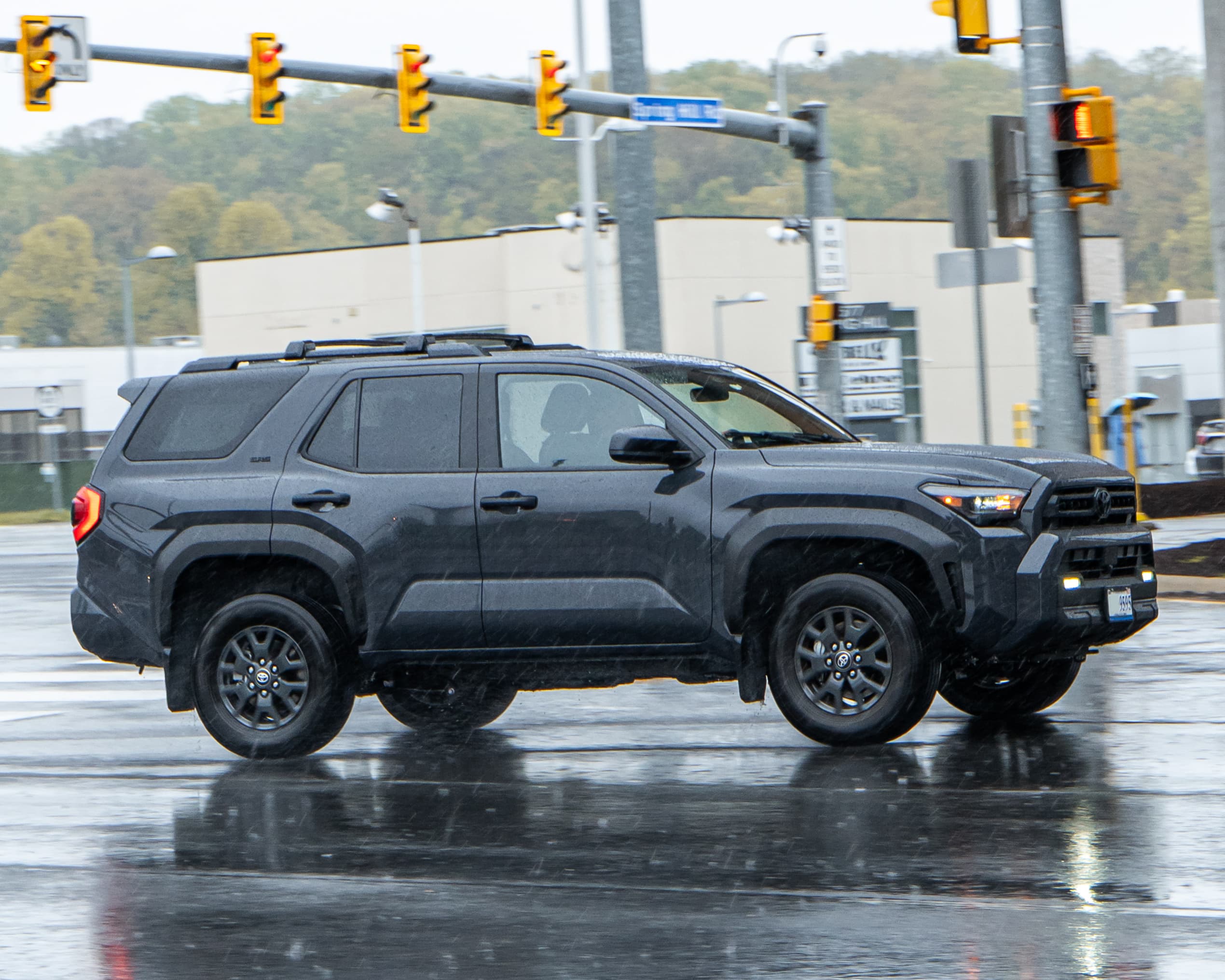
Source Receipts
Source pages, creator credits, and reuse licenses are visible for editorial trust and legal hygiene.
Related Video
2026 Toyota 4Runner Overview | Toyota
Toyota USA
Embedded from Toyota's official Toyota USA YouTube channel as manufacturer reference media for the sixth-generation 4Runner, not an independent MotorRank road test.
Interior
Cabin views before you choose a trim.
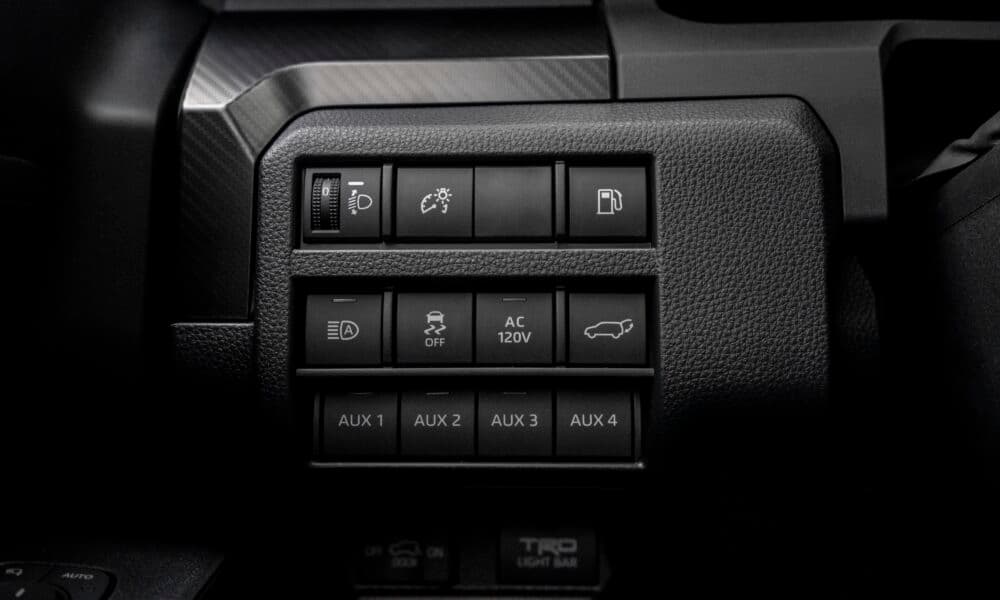
The sixth-generation cabin shares its architecture with the Tacoma and moves up to an available 14-inch touchscreen, a 12.3-inch digital gauge cluster on hybrids, and available 14-speaker JBL audio. The honest catch every reviewer raises: the back seat is tighter than the unibody competition and the optional third row is occasional-use-only.
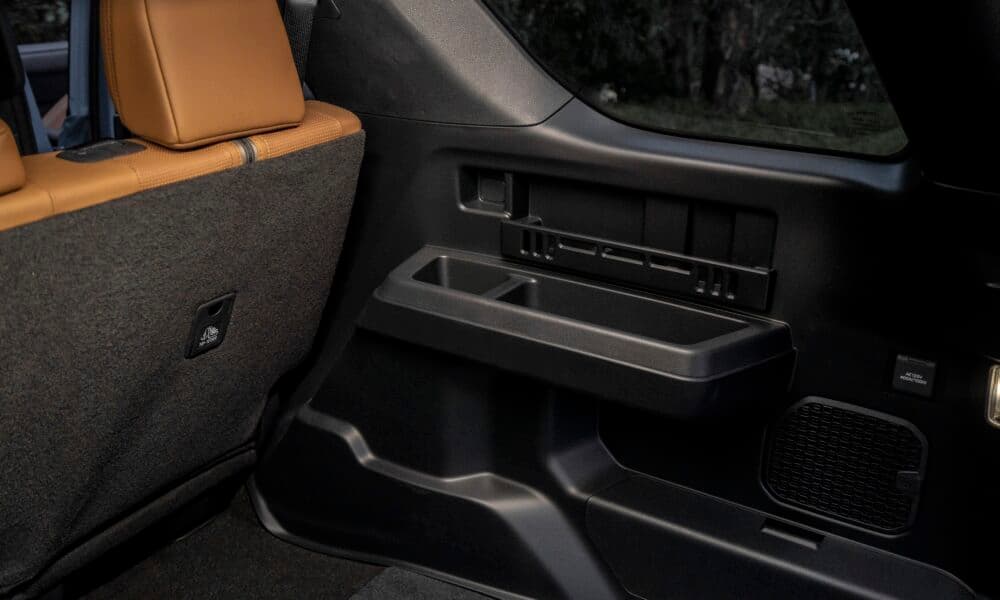
Interior Source Receipts
Research basis
Updated June 9, 2026
Built from Toyota's official 2026 4Runner specifications, trim pricing, and warranty language on toyota.com and Toyota's press materials, the EPA's published fuel-economy ratings on fueleconomy.gov, and the instrumented test data and on-road impressions of Car and Driver, Edmunds, MotorTrend, and Consumer Reports. All twelve base MSRPs were verified against toyota.com.
MSRP figures are Toyota's published base prices and exclude the $1,450 Delivery, Processing and Handling fee unless stated otherwise. Acceleration, braking, skidpad, and observed-MPG figures are attributed to the outlet that measured them. MotorRank has not yet run its own instrumented road test of the 2026 4Runner; on-road ride, comfort, and real-world fuel-economy impressions are preview basis.
Update after MotorRank runs an instrumented road test, multi-ZIP dealer-market pricing checks, real-world fuel sampling for both powertrains, and once IIHS and full NHTSA crash ratings publish.
Which 2026 TOYOTA 4RUNNER to Buy
Which trim is right for you?
SR5
$42,070
The value entry: 278-hp turbo gas, 2WD standard, available third row, and the only way into a 4Runner in the low $40,000s.
TRD Sport
$48,550
Street-tuned suspension and 20-inch wheels for buyers who want the look and on-road manners over trail hardware.
TRD Off-Road
$50,490
Our default pick: locking rear differential, Multi-Terrain Select, CRAWL Control, and 33-inch-capable hardware at the lowest serious-capability price.
Our pick
TRD Off-Road i-FORCE MAX
$53,290
The same trail kit plus the 326-hp hybrid, standard 4WD, and a 2,400-watt power supply — the sweet spot if you want the stronger engine.
TRD Off-Road Premium
$56,270
Adds heated/ventilated SofTex seats, the 14-inch screen, and JBL audio to the off-road grade; hybrid optional.
Limited
$56,700
The on-road luxury trim: leather, adaptive suspension, available third row, and available full-time 4WD on the hybrid.
Platinum
$64,160
New top-luxury grade — standard 326-hp hybrid, full-time 4WD, head-up display, and heated second-row seats.
Trailhunter
$68,200
The factory overlander: Old Man Emu shocks, onboard air compressor, ARB roof rack, and a high-mount air intake — hybrid standard.
TRD Pro
$68,400
The high-speed off-road flagship: FOX QS3 internal-bypass shocks, disconnecting sway bar, and the 326-hp hybrid standard.
Performance
- Horsepower
- 278hp
Scorecard
- Performance7.4
- Comfort7.2
- Value7.6
- Ownership9.2
- Technology7.8
- Safety8.4
- Reliability9.2
- Interior7.6
Shopping Tools
Next steps for 2026 Toyota 4Runner shoppers.
Research tools to help you move from browsing to buying.
Compare rivals
Line up the closest alternatives before you commit.
Check deal signals
Review pricing pressure, incentives, and value angles.
Read owner signal
Balance the expert take with ownership patterns.
Right-size cross-shop
If you are not sure you need body-on-frame capability, the unibody Passport TrailSport covers the rugged-family mission with a better ride and quieter cabin for less money. Read it before you decide the 4Runner is the answer.
Open vehicle hub
Keep specs, reliability, rankings, and review links together.
Compare Against
Cross-shop before you commit.
The closest alternatives in this price range, with our read on each.
Trail-theater rival
Ford Bronco
The Bronco wins on removable-roof fun, configurability, and sharper trail toys. The 4Runner answers with stronger reliability and resale, an easier everyday cabin, and a 6,000-pound tow rating.
Maximum off-road character
Jeep Wrangler
The four-door Wrangler out-articulates the 4Runner and owns the deepest aftermarket and open-air experience. The 4Runner is the quieter, more comfortable daily driver that tows more and holds value better.
Premium same-platform sibling
Toyota Land Cruiser
The Land Cruiser shares the TNGA-F platform with a standard hybrid and a more premium, retro design. The 4Runner spans a much wider, lower price range and offers more trim and capability choices.
Unibody right-size alternative
Honda Passport
The Passport TrailSport rides better, is quieter, and costs less while covering the rugged-family mission. It is the honest pick for buyers who will not actually use the 4Runner's low range and lockers.
Buyer FAQ
2026 Toyota 4Runner buyer questions, answered.
28
buyer answers
Question Map
Decision
Should you buy the 2026 Toyota 4Runner?
The redesign keeps the capability and adds a hybrid, so the real questions are whether you need body-on-frame at all, and which engine.
Is the 2026 Toyota 4Runner any good?
Yes for capability-and-durability buyers — Car and Driver rates it 8.5/10 — but it rides like the truck it is.+
The 2026 4Runner is a genuinely capable, thoroughly modernized body-on-frame SUV, and the major outlets agree on its strengths: real off-road hardware, a strong hybrid option, standard active safety, and the best resale and reliability reputation in the class (Consumer Reports rates its predicted reliability well above average, the most reliable model in Toyota's lineup). Car and Driver scores it 8.5 out of 10; Edmunds is more reserved at 6.2 (6.5 hybrid) and blunt about the cramped back seat and busy ride. Our research-basis score is 8.0. It is a good SUV for the buyer who values what it uniquely does, and the wrong one if you mainly want a smooth, quiet, efficient daily driver.
Who should skip the 2026 4Runner?
Anyone who never leaves pavement, needs a roomy third row, or prioritizes fuel economy and ride comfort.+
If your real-world driving is commuting, carpool, and the occasional gravel road, a unibody crossover will ride better, use far less fuel, and cost less — a Honda Passport, Subaru Outback, or three-row Toyota Grand Highlander covers that life better than a 4Runner. The 4Runner's back seat and optional third row trail those rivals, its EPA economy tops out around 23 mpg combined, and its ride is trucklike by design. Skip it unless you will actually use the low-range 4WD, lockers, and durability you are paying for.
Is the 2026 4Runner different from the 2025?
No — 2025 was the all-new sixth generation, and 2026 is an early carryover, so a leftover 2025 can be a smart value.+
The sixth-generation redesign arrived for the 2025 model year, so the 2026 is essentially a carryover of that all-new truck rather than a fresh change. That is useful to know two ways: the 2026 inherits all the redesign's improvements (the turbo and hybrid powertrains, the TNGA-F frame, the new cabin), and a discounted leftover 2025 is mechanically the same vehicle and can be a smart value if one is still on a lot. Car and Driver makes the same point — consider a lightly-used prior-year example to save money.
Why does the 2026 4Runner matter right now?
It is the modernized version of a cult body-on-frame icon, on sale now, with a hybrid and a new Platinum luxury grade.+
The 4Runner has a famously loyal following, and the sixth generation is the moment it finally got modern hardware: a 326-horsepower i-FORCE MAX hybrid, a 14-inch touchscreen, Toyota Safety Sense 3.0 standard, and a new top-luxury Platinum grade — without giving up the low-range 4WD, locking differential, and body-on-frame toughness that define it. It is the rare new SUV that still does the hard stuff, which is exactly why search interest in the 2026 review is climbing.
Gas vs Hybrid
i-FORCE or i-FORCE MAX? The engine decision, resolved
The single most important 2026 4Runner decision — and the one the top-ranking reviews split across two pages.
Is the 2026 4Runner hybrid worth it?
Worth it for torque, towing, and the power export — not for fuel savings, where the gain is only 1-2 mpg.+
The i-FORCE MAX hybrid makes 326 horsepower and 465 pound-feet against the gas i-FORCE's 278 and 317, comes with standard 4WD, and adds a 2,400-watt power supply. But EPA-rated economy only rises to 23 combined from the gas engine's 21-22, and MotorTrend calculated the fuel-cost difference at roughly $200 a year with a payback period well over a decade. So pay the roughly $2,800 hybrid premium for the dramatically stronger torque, easier towing, the power export, or because you want a Platinum, Trailhunter, or TRD Pro where it is the only engine — not to save money at the pump.
Which 4Runner engine should you buy?
Gas i-FORCE for value and light-duty buyers; i-FORCE MAX hybrid for towing, the strongest drivetrain, or the top grades.+
Buy the gas i-FORCE if you are a value or budget buyer on the SR5, TRD Sport, or a daily-driver TRD Off-Road and you tow lightly — it is $2,800 cheaper and the highway economy is actually slightly better. Buy the i-FORCE MAX if you tow near the 6,000-pound limit, want the strongest engine for moving the truck's weight, need the 2,400-watt power export for tools or camping, or are buying a Platinum, Trailhunter, or TRD Pro, all of which are hybrid-only.
What gas mileage does the 2026 4Runner get?
EPA: 20/26/22 for gas 2WD, around 19-20/24-25/21 for gas 4WD, and 23/24/23 for the hybrid.+
Official EPA ratings: the gas 2WD model returns 20 city, 26 highway, 22 combined; gas 4WD is about 20/24/21, falling to 19/25/21 on the off-road grades with 33-inch all-terrain tires; and the i-FORCE MAX hybrid is 23/24/23. All run on regular gas with a 19-gallon tank. The takeaway is that this is a low-20s-mpg vehicle either way — the hybrid's advantage is mostly in city driving, and on the highway the lighter gas 2WD's 26-mpg rating is the best in the lineup. Car and Driver observed about 21 mpg on its real-world highway test.
What does the hybrid give up?
A slightly higher cargo floor and about $2,800 of up-front cost — but it adds standard 4WD.+
The i-FORCE MAX's battery raises the cargo load floor slightly and adds weight, and it costs roughly $2,800 more than the gas engine on grades where both are offered. In exchange, every hybrid comes with 4WD standard and the 2,400-watt power supply. There is no meaningful capability penalty — Toyota still rates hybrids to tow and built the Trailhunter and TRD Pro flagships exclusively around the hybrid — so the trade is really cost and a marginally higher load floor against a far stronger, more flexible drivetrain.
Real Cost
Price, destination, and what you will actually pay
Twelve configurations from $42,070 to $68,400 before the $1,450 destination fee — and where the real value sits.
How much does the 2026 Toyota 4Runner cost?
Toyota's base MSRPs run $42,070 (SR5) to $68,400 (TRD Pro), before the $1,450 destination fee.+
Toyota's official base prices: SR5 $42,070; TRD Sport $48,550; TRD Off-Road $50,490; TRD Off-Road i-FORCE MAX $53,290; TRD Sport Premium $53,910; TRD Off-Road Premium $56,270; Limited $56,700; TRD Off-Road Premium i-FORCE MAX $59,070; Limited i-FORCE MAX $61,500; Platinum $64,160; Trailhunter $68,200; and TRD Pro $68,400. Every figure excludes the mandatory $1,450 Delivery, Processing and Handling fee, so a real SR5 starts near $43,520 before tax. Third-party sites sometimes show higher numbers because they fold destination in.
What is the cheapest 2026 4Runner SR5, and is it enough?
The SR5 at $42,070 is the value entry and a genuinely good truck for buyers who can skip leather and trail hardware.+
The SR5 starts at $42,070 and includes the 278-horsepower turbo four, an 8-inch touchscreen with wireless Apple CarPlay and Android Auto, LED lighting, the signature power rear window, Toyota Safety Sense 3.0, and an available third row. Two-wheel drive is standard, with part-time 4WD available. It is the right buy if you want a capable, durable 4Runner at the lowest sensible price; step up to the TRD Off-Road only if you need the locking differential and dedicated trail hardware.
What is the cheapest way into the 4Runner hybrid?
The TRD Off-Road i-FORCE MAX at $53,290 — it undercuts every other hybrid grade.+
If you want the 326-horsepower hybrid, the price floor is the TRD Off-Road i-FORCE MAX at $53,290, which is thousands less than the $61,500 Limited hybrid or the $64,160 Platinum. It pairs the hybrid drivetrain and standard 4WD with the genuinely capable TRD Off-Road hardware — locking rear differential, Multi-Terrain Select, Bilstein shocks — which makes it our pick for the buyer who wants the stronger engine without paying luxury-trim money.
Are dealers charging over sticker on the 2026 4Runner?
Mostly on the TRD Pro and Trailhunter flagships; the volume trims are more negotiable.+
Markups concentrate on the hybrid-only flagships — the TRD Pro and Trailhunter — where demand outruns supply; if a dealer wants thousands over MSRP on one, another store or a short wait usually does better. The volume grades like the SR5, TRD Sport, and TRD Off-Road are far more negotiable. Whatever the trim, get a full itemized out-the-door quote, watch for pre-loaded add-ons like paint protection and tracking systems, and check Toyota's current regional incentives the same day you get a dealer quote, since offers change frequently.
Trim
Which 2026 4Runner trim should you buy?
The 4WD TRD Off-Road is the smart default; here is the buyer's pick for every grade.
Which 2026 4Runner trim is the best value?
The 4WD TRD Off-Road at $50,490 — the cheapest grade with real off-road hardware.+
For most buyers the 4WD TRD Off-Road is the value sweet spot, and Car and Driver independently names it the best buy too. For about the price of a style-focused TRD Sport it adds an electronic locking rear differential, Multi-Terrain Select with CRAWL Control, Bilstein shocks, underbody protection, and 33-inch-capable all-terrain tires — the hardware that makes a 4Runner worth buying over a crossover, while staying civil enough to daily-drive. If you can stretch for the stronger engine, the TRD Off-Road i-FORCE MAX at $53,290 is the cheapest hybrid.
Which 2026 4Runner trim should you avoid?
The TRD Sport and TRD Sport Premium — they charge for looks and street tuning while skipping the trail hardware.+
No 4Runner trim is bad, but the TRD Sport ($48,550) and TRD Sport Premium ($53,910) are the easiest to skip: they add sport suspension, 20-inch wheels, and an aggressive look but no locking rear differential or low-range-specific capability. The TRD Off-Road costs less than the Sport Premium and adds the real hardware. If you want pure on-road manners, you are better served by a unibody crossover than by paying 4Runner money for a Sport trim that gives up the off-road ability that justifies the body-on-frame design.
Trailhunter or TRD Pro — which off-road flagship?
Trailhunter for self-sufficient overlanding; TRD Pro for high-speed and technical trail running.+
Both are hybrid-only, both cost about $68,000 before fees, and both are worth it only if you will use them. The Trailhunter is the factory overlander: Old Man Emu forged shocks, an onboard air compressor, a high-mount air intake, and an ARB roof rack for range and self-sufficiency. The TRD Pro is the high-speed weapon: FOX QS3 internal-bypass adjustable shocks, a TRD intake and exhaust, and a disconnecting front sway bar. Neither offers a third row and both ride firmly on pavement. Choose by use case, not badge.
Which 4Runner is best for a family that needs seven seats?
The SR5 or Limited — they offer the third row, which the Platinum, Trailhunter, and TRD Pro do not.+
Only the SR5 and Limited grades offer the available third row; the Platinum, Trailhunter, and TRD Pro are five-seat only. Be realistic about that third row, though — Toyota's cargo numbers (12.1 cubic feet behind it) and every outlet's impressions agree it is tight, best for children and occasional use. If you regularly need to seat seven adults in comfort, a three-row crossover or the Toyota Grand Highlander is the better tool; buy the 4Runner's third row as an emergency option.
Off-Road
How capable is the 2026 4Runner off-road, really?
Real numbers and hardware the top-ranking reviews skip — clearance, angles, lockers, and the disconnecting sway bar.
How much ground clearance and what approach angles does the 4Runner have?
From 8.1 inches (SR5) to 10.1 inches (TRD Pro), with up to 33-degree approach and 24-degree departure angles.+
Toyota's official figures: ground clearance runs 8.1 inches on the SR5, 8.8 on the Limited, and a full 10.1 inches on the TRD Pro. Approach and departure angles climb from 18 and 22 degrees on the SR5 and Limited to an aggressive 33 and 24 degrees on the TRD Pro, which also widens its track. Toyota does not publish a breakover angle for these grades, so we do not cite one. These are real, competitive body-on-frame capability numbers, not crossover figures.
What off-road hardware does the 4Runner have?
Low-range 4WD, an electronic locking rear diff, Multi-Terrain Select, CRAWL Control, and a disconnecting sway bar on the flagships.+
The serious grades get genuine kit: an electronic locking rear differential is standard on the TRD Off-Road, Trailhunter, and TRD Pro; part-time 4WD grades use a two-speed transfer case with a 2.57:1 low range; and the Limited hybrid and Platinum offer full-time 4WD with a Torsen locking center differential. Multi-Terrain Select works in high and low range, CRAWL Control is low-speed off-road cruise, and the Stabilizer Disconnect Mechanism — standard on the Trailhunter and TRD Pro — electronically disconnects the front sway bar for far more wheel articulation. Suspension steps up from Bilstein (TRD Off-Road) to FOX QS3 (TRD Pro) to Old Man Emu (Trailhunter).
Which 4Runner should a real off-roader buy?
TRD Pro for high-speed and technical work, Trailhunter for overlanding, TRD Off-Road for 90% of it at far less money.+
If you want maximum technical and high-speed capability, the TRD Pro's FOX shocks and disconnecting sway bar are the tool. If you want self-sufficient overlanding range, the Trailhunter's air compressor, OME suspension, and roof rack are purpose-built for it. But for most buyers who go off-road occasionally, the TRD Off-Road delivers about 90 percent of the ability — locking diff, low range, Multi-Terrain Select, 33-inch-capable tires — for roughly $18,000 less than the flagships. Anything with TRD Sport in the name is a styling package, not a trail tool.
Daily Use
Living with it: comfort, the back seat, and cargo
What the spec sheet hides — and where the 4Runner asks you to compromise (preview basis).
Is the 2026 4Runner comfortable on-road?
More refined than before, but still trucklike — busy ride, heavy steering, and a coarse engine under load (attributed).+
On preview basis, attributed to the outlets that have driven it: the 2026 4Runner is more civilized than its predecessor but still rides and steers like the body-on-frame vehicle it is. Car and Driver and Edmunds describe a busy ride over rough pavement, heavy responses in quick maneuvers, and a turbo four that can sound coarse under load, with an 8-speed automatic that can feel hesitant from a stop. MotorTrend measured a gas Limited at 5,074 pounds. It is competitive for a truck, not for a crossover. We will replace these attributed impressions with our own measured results after a full MotorRank road test.
Is the 2026 4Runner third row usable?
Only occasionally — it is tight for adults and offered only on the SR5 and Limited.+
The available third row is genuinely tight; Toyota's own numbers show 12.1 cubic feet of cargo behind it, and every outlet that has tried it calls it best for children and short trips. It is offered only on the SR5 and Limited — not the Platinum, Trailhunter, or TRD Pro. If you need to seat seven regularly, the 4Runner can do it in a pinch, but a three-row crossover or the Toyota Grand Highlander does it far better. Treat the 4Runner's third row as an emergency seat, not a daily one.
How much cargo space does the 2026 4Runner have?
90.2 cubic feet max behind the front seats (5-seat), or 84.4 with the third row equipped.+
Toyota's official cargo figures for five-seat models are 90.2 cubic feet behind the front seats and 48.4 behind the second row. Order the third row and it becomes 84.4, 44.8, and 12.1 cubic feet behind the first, second, and third rows. The load-in height is tall, and the hybrid raises the floor slightly because of the battery, so test-load your gear if strollers, dog crates, or bulky equipment are part of your routine. The signature power rear window remains a genuinely useful feature for long or awkward loads.
Ownership
Reliability, resale, warranty, and common problems
The section the top-ranking reviews skip — and the 4Runner's single strongest argument.
Is the 2026 Toyota 4Runner reliable?
The nameplate has the segment's best reputation — CR rates its predicted reliability well above average — but the new turbo-hybrid is unproven long-term.+
We do not publish reliability scores we cannot source, so on attribution: Consumer Reports rates the 4Runner well above average for predicted reliability — the most reliable model in Toyota's lineup — and the body-on-frame 4Runner has one of the strongest durability reputations in the industry. The honest caveat for the sixth generation is that it is a redesign with a new turbocharged hybrid powertrain, which carries more first-years uncertainty than the old, extremely mature drivetrain did. The hardware is shared with the Tacoma and backed by Toyota's hybrid warranty, but a cautious buyer might wait a year for owner data — we would rather flag that than pretend the new truck has already earned the old one's record.
Does the 2026 4Runner hold its value?
Resale is one of the 4Runner's defining strengths, though we do not publish specific percentages we cannot source.+
The 4Runner has long been one of the strongest resale-value vehicles in the segment, which is a real, repeatable reason buyers pay a premium for one — more of your purchase price tends to come back at trade-in than with almost anything else in the class. We will not invent a specific residual percentage for the 2026 model, since we have not sourced verified figures for the new generation, but the structural reasons for strong resale (durability reputation, demand, brand) all carry over. Check current, sourced trade-in or residual values for the exact trims on your list.
What warranty does the 2026 4Runner have, and are there common problems?
3yr/36k basic and 5yr/60k powertrain, with strong hybrid coverage (10yr/150k battery); no widespread 2026 problems are documented yet.+
Toyota's official coverage is 36 months/36,000 miles basic and 60 months/60,000 miles powertrain, plus 8 years/100,000 miles on hybrid components and 10 years/150,000 miles on the hybrid battery (transferable), with two years of ToyotaCare maintenance. The basic and powertrain terms trail Kia and Hyundai. On common problems: because the sixth generation is new, there is no established pattern of widespread 2026 faults documented yet — which is itself a reason a cautious buyer might wait for owner data on the new turbo and hybrid hardware. Confirm current warranty terms with a dealer before purchase.
Compare
What should you cross-shop before signing?
Straight choose-this-if verdicts the #1 review never gives you.
2026 4Runner vs Ford Bronco or Jeep Wrangler?
4Runner for reliability, resale, towing, and daily usability; Bronco or Wrangler for maximum trail character and open-air fun.+
Choose the 4Runner over the Ford Bronco if long-term reliability, resale, a usable everyday cabin, and a 6,000-pound tow rating matter more than the Bronco's removable roof and sharper trail toys. Choose it over the four-door Jeep Wrangler if you want a quieter, more comfortable daily driver that still tows well. Pick the Bronco or Wrangler instead if open-air driving, the deepest aftermarket, and pure off-road theater lead your list — they out-character the 4Runner, while it out-civilizes and out-resells them.
2026 4Runner vs Toyota Land Cruiser or Lexus GX 550?
Land Cruiser for a premium take on the same platform; GX 550 for luxury and V6 power; 4Runner for range and value.+
The Land Cruiser shares the 4Runner's TNGA-F platform and comes standard with the i-FORCE MAX hybrid — the move if you want a more premium, retro take on the same hardware and will pay for it. The Lexus GX 550 is the luxury-and-V6-power answer for a plusher cabin and a stronger standard engine at a higher price. The 4Runner's advantage over both is range and value: it spans from a $42,070 SR5 to a $68,400 TRD Pro, with a far lower entry point and a wider set of capability and luxury choices.
Should you buy a 4Runner or right-size to a Honda Passport?
If you will use low range and lockers, the 4Runner; if you will not, the unibody Passport rides better for less.+
The most expensive 4Runner mistake is buying body-on-frame capability you never use. The unibody Honda Passport TrailSport covers the rugged-family mission with a better ride, a quieter cabin, more usable space, and a lower price. If you will genuinely use the 4Runner's low range, locking differential, and disconnecting sway bar, it is worth its on-road compromises and its fuel bill. If you are honest that you will not, the Passport is the smarter money — and we say so in our Passport review.
Ready to buy?
Configure your 2026 Toyota 4Runner.
Get matched with a Toyota dealer or build your spec sheet from scratch.