
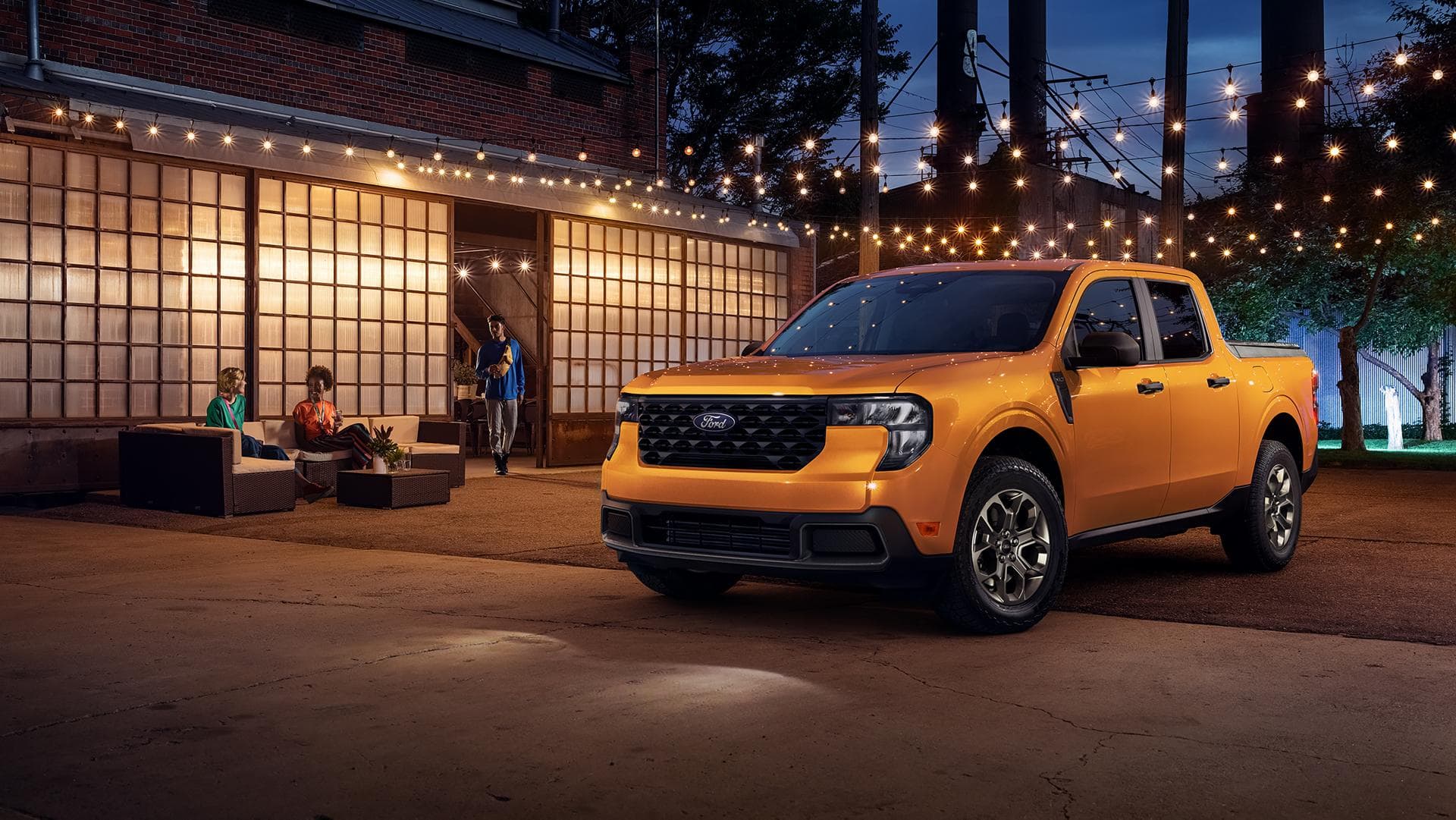
REVIEWS / Midsize Trucks
NEW2026 Ford Maverick Hybrid Review
The Maverick Hybrid is still the compact truck that makes the most sense for real life: 42-mpg-city efficiency, a usable bed, available 4,000-pound towing, and pricing that starts where many crossovers only begin.
Published June 1, 2026 / Updated June 4, 2026
Expert verdict
The 2026 Ford Maverick Hybrid is the small truck to buy if your real needs are commuting, hardware-store runs, bikes, mulch, light towing, and a payment that does not look like an F-150. The XLT Hybrid is the best default trim. The caution is not capability; it is quality-control discipline. NHTSA currently lists six 2026 Maverick recall campaigns, so the truck is a strong buy only after a VIN-level recall check.
HIGHS
- 42-mpg-city hybrid positioning makes truck utility affordable to drive every day
- XLT Hybrid is a genuine value sweet spot around compact-crossover money
- Usable bed solves cargo problems compact SUVs hide inside the cabin
- Available 4,000-pound towing is strong for a small unibody truck when properly equipped
- Compact size makes parking and city driving much easier than midsize trucks
LOWS
- NHTSA currently lists six 2026 Maverick recall campaigns, so a VIN check is mandatory
- Interior materials are useful but clearly budget-focused
- High trims can price too close to larger trucks and better passenger vehicles
- Hybrid is not the performance or off-road trim path; Lobo and Tremor use the turbo engine
AT A GLANCE
- Score
- 8.1
- Price
- $30.0K - $43.3K
- Horsepower
- 191 hp
- 0-60
- 7.7s
- Drivetrain
- FWD
- Body
- Truck
Buyer Verdict
The fast answer before you compare specs.
Built for shoppers who want the recommendation first and the details right after.
Buy it if
- Buy the XLT Hybrid. It keeps the Maverick's best idea intact: a compact pickup with 42-mpg-city efficiency, a useful bed, and a price that still looks like a crossover. Buy XL only if payment is everything. Skip high-trim creep unless Lariat comfort, Lobo street-truck style, or Tremor off-road hardware solves a real need. Before delivery, run the exact VIN through Ford and NHTSA because six current 2026 Maverick recall campaigns are visible in the federal database.
- Best for: Commuters, homeowners, apartment dwellers, and small-business buyers who need a useful open bed, hybrid fuel economy, and a compact footprint more than full-size towing or luxury polish.
- Our trim pick: XLT Hybrid from $30,645.
Skip it if
- NHTSA currently lists six 2026 Maverick recall campaigns, so a VIN check is mandatory
- Interior materials are useful but clearly budget-focused
- High trims can price too close to larger trucks and better passenger vehicles
Closest rivals
- Toyota Tacoma
Bigger real-truck alternative
- Ford Ranger
Internal step-up truck
- Hyundai Santa Cruz
Lifestyle crossover truck
Quick take
The 2026 Ford Maverick Hybrid answers a question most trucks stopped answering: what if you need a bed, not a billboard? It starts at $29,990 destination-inclusive in Car and Driver and Edmunds pricing, while Ford's own 2026 Maverick page still advertises a lower pre-fee starting MSRP and employee-pricing offers that vary by ZIP code. The core spec is the 2.5-liter hybrid rated at 191 horsepower, up to 42 mpg city, and 35 mpg highway, with a compact footprint that parks like a crossover and a bed that makes apartment, homeowner, and small-business life easier.
This is a MotorRank research-basis review. We have not instrumented the 2026 Maverick Hybrid ourselves. Official facts come from Ford.com, Ford's What's New 2026 Maverick update, Ford's hybrid warranty page, and the NHTSA recall API checked June 13, 2026. The live SERP leader for 2026 Ford Maverick Hybrid review is Car and Driver's Maverick review hub; Edmunds also has a full rated review. We use both because those pages currently shape the market, then build a buyer plan around the gaps.
Driving impressions
Why the Maverick Hybrid matters
The Maverick Hybrid matters because it is one of the few new vehicles that still feels engineered around a normal person's life. It is not a lifestyle full-size truck, not an off-road fantasy, and not a luxury lease wearing a pickup bed. It is a compact unibody truck that returns hybrid economy, carries awkward cargo outside the cabin, fits city streets, and can be bought for crossover money. That combination is why search demand stays high even years after launch.
What to watch before you buy
Watch five things before you buy: the exact hybrid versus EcoBoost drivetrain, front- versus all-wheel drive availability, whether the 4K Tow package is on the actual truck, the equipment jump from XL to XLT, the price creep into Lariat/Tremor territory, and the recall status. A Maverick is brilliant at $30K to $34K. It becomes much less obvious near $43K, where larger trucks and better-equipped SUVs start to crowd the decision.
SERP audit: what Car and Driver owns, and where MotorRank can win
The current top result for 2026 Ford Maverick Hybrid review is Car and Driver's Maverick review, pricing, and specs page. It is strong because it owns the broad model query, has a clean verdict, lists the starting price at $29,990, explains the 191-hp hybrid and 250-hp EcoBoost split, and keeps the truck's best case simple: compact size, efficiency, capability, and price. For many shoppers, that is enough to confirm the Maverick stays on the list.
But the #1 page is not built like a purchase memo. It does not force the buyer to decide XLT Hybrid versus Lariat Hybrid versus EcoBoost, it does not make the current NHTSA recall count prominent, and it does not separate 4,000-pound towing from payload, bed size, and daily-driver comfort. Edmunds fills some test-data gaps with a 7.6/10 rating and real-world comments about fuel economy, utility, and interior materials, but it also sits lower in the SERP.
This page is designed to beat both as a decision tool. It keeps the top-ranking strengths, adds official Ford 2026 changes, puts recall campaigns in plain sight, gives a trim answer, explains towing and AWD without sales fog, and tells shoppers when to stop configuring because a small truck has become an expensive one.
Official 2026 changes: more choice, same core formula
Ford's What's New 2026 Maverick update frames the model year as a refinement year, not a redesign. The standard hybrid remains the headline with an EPA-estimated 42 mpg city. Ford reintroduced a 2.0-liter EcoBoost front-wheel-drive configuration for buyers who want turbo power at a lower price, added new colors including Marsh Gray and Orange Fury Metallic Tri-Coat, changed some package content, and made connectivity changes around Ford's subscription package. The result is a broader order sheet, not a different truck.
That matters because used and leftover Mavericks compete directly with new ones. If you are shopping a 2025 and a 2026 side by side, the 2026 case is specific: current incentives, color availability, package changes, any improved production mix, and warranty runway. If a dealer discounts a 2025 hybrid hard enough and the VIN is clean, it can still be a smart buy. Do not pay 2026 money for last year's truck without a real discount.
The core formula remains the same: hybrid for economy, EcoBoost for speed and some capability paths, Lobo for street-truck style, Tremor for off-road hardware, and XLT Hybrid for the buyer who wants the Maverick to stay honest.
Price and trims: the XLT Hybrid is still the answer
The Maverick's official and third-party pricing can look inconsistent because Ford separates pre-fee MSRP, destination-inclusive pricing, employee pricing, local incentives, and payment offers. Car and Driver lists the 2026 range from $29,990 to $43,270 depending on trim and options. Edmunds' trim page lists the XL from $29,990 and the Tremor around $42,490. Ford's own page advertises ZIP-dependent employee-pricing and a lower starting figure before fees. The buyer takeaway: use Ford.com to build your ZIP-specific truck, then compare destination-inclusive out-the-door quotes.
Our trim answer is XLT Hybrid. The XL is tempting because it keeps the price low, but it can feel too bare if this is your only vehicle. XLT gets the Maverick into the usable daily-driver zone without letting the configuration creep into larger-truck money. Lariat makes sense only if comfort and tech are worth the jump and you know you are keeping the truck. Lobo and Tremor are not hybrid-value decisions; they are character trims built around the turbo engine.
The discipline point is simple: the Maverick is best when it costs like a compact crossover and works harder than one. Once the build moves into the low-$40K range, compare a Ranger, Colorado, Tacoma, Ridgeline, and well-equipped compact SUV before assuming the Maverick is still the value play.
MSRP, destination, employee pricing, and the Maverick math
The Maverick is a perfect example of why shoppers need to separate MSRP from delivered price. Ford may advertise a lower starting figure before fees or show employee-pricing offers that depend on ZIP code and timing, while Car and Driver and Edmunds quote destination-inclusive prices starting at $29,990. Those numbers can all be technically true. They are not all the same number. For comparison shopping, use one standard: the total out-the-door quote for your exact VIN or order.
Ask the dealer to separate base MSRP, factory options, the destination charge, dealer discount, rebates, taxes, title, registration, documentation fee, and every add-on. On a low-price truck, a $1,000 accessory package matters more than it would on a $70,000 pickup. A bedliner, tonneau cover, wheel locks, tint, protection package, or service contract can be useful, but it should not be smuggled into the quote as if it were unavoidable.
The Maverick's value depends on the deal staying legible. A clean XLT Hybrid with a fair discount is one of the smartest vehicles on sale. A loaded truck with unclear fees, marked-up accessories, and a payment stretched to hide the price is how the best compact truck turns into a bad financial decision. If the written quote is confusing, the answer is not to negotiate faster; it is to ask for a cleaner sheet.
Ordering traps: hybrid, AWD, 4K Tow, Lobo, and Tremor are not interchangeable
The Maverick order guide is where shoppers make expensive mistakes. Hybrid is the efficiency play. EcoBoost is the speed, specialty-trim, and some-capability play. Lobo and Tremor are not simply nicer hybrids; they are different personalities built around the turbo engine. A buyer who starts with 'I want the hybrid fuel economy' should not drift into Lobo or Tremor because the pictures look better. That is a different truck solving a different problem.
All-wheel-drive availability and towing equipment also need exact confirmation. Do not rely on a listing headline that says Maverick, XLT, tow package, or AWD. Read the window sticker. Confirm the engine, drivetrain, final package content, hitch, wiring, cooling equipment, trailer brake-controller compatibility, and the door-jamb payload sticker. If you tow even occasionally, the correct configuration matters more than the trim badge.
The cleanest buying path is to write down the job before configuring: daily commute, messy cargo, two bikes, home projects, light trailer, occasional snow, or work-site tools. Then build the cheapest Maverick that does those jobs without pretending to be a larger truck. If the job list starts requiring heavy towing, serious off-roading, or regular adult rear-seat comfort on long trips, the Maverick may be the wrong tool no matter how good the price looks.
Hybrid or EcoBoost: decide by use, not by bragging rights
The hybrid makes 191 horsepower and is the right answer for commuters, city drivers, fleet buyers, small-business owners, and anyone whose bed use is frequent but not heavy-duty. Its job is to make a truck useful without punishing every mile. Car and Driver's top-ranking page cites up to 42 mpg city and 35 highway, and Ford's own page leads with that 42-mpg-city claim. In traffic, errands, and mixed suburban driving, that is the Maverick magic.
The 2.0-liter EcoBoost is the performance and specialty-trim path at 250 horsepower. Choose it if you want Lobo or Tremor, if you prioritize acceleration, if your preferred configuration requires it, or if towing and AWD packaging make the hybrid you want unavailable in your market. It is also the engine Car and Driver highlights for quick acceleration, including turbo test results that make the Maverick feel surprisingly lively.
Do not overbuy engine because internet comments told you a truck needs power. A Maverick Hybrid is not pretending to be an F-150. It is supposed to be a cheap-to-run utility vehicle with a bed. If that sentence describes your life, the hybrid is the powertrain that makes the truck special.
Towing, payload, and the bed: useful, not full-size
Ford advertises up to 4,000 pounds of towing on the Maverick when properly equipped with the 4K Tow package, and the compact truck's payload target remains around 1,500 pounds depending on configuration. Those are excellent numbers for a small unibody truck, but they need context. The Maverick is perfect for a small trailer, personal watercraft, light utility trailer, bikes, garden materials, furniture, and dump-run duty. It is not the truck for routinely towing near the limit in mountains with a family and gear aboard.
The bed is the real reason to buy it over a compact SUV. You can carry dirty, wet, tall, or awkward cargo without folding seats or protecting carpet. The bed is short, but Ford's cargo-management ideas make it useful for weekend projects and everyday errands. That is the ownership difference that spec charts miss: a Maverick lets you do messy things without turning the cabin into a work site.
Before buying, confirm the actual truck has the tow hitch, wiring, 4K Tow package where needed, payload sticker, and tire rating that match your use. A website maximum is not your personal truck's capacity. The yellow door-jamb payload label and the window sticker matter more than a brochure number.
Who should buy the Maverick Hybrid, and who should walk away
Buy the Maverick Hybrid if your truck tasks are frequent but modest. Homeowners, renters, small contractors, photographers, cyclists, gardeners, teachers, city drivers, and small-business owners all fit the use case. You need to carry awkward things often enough that an SUV annoys you, but you do not tow a large trailer or need a full-size cab. You care about fuel bills, parking, and monthly payment as much as payload.
Walk away if you are trying to make the Maverick do midsize-truck work every week. If you routinely tow near 4,000 pounds, drive long highway trips with adults in the back seat, need deep off-road durability, or want a luxury cabin, the Ranger, Colorado, Tacoma, Ridgeline, or a well-equipped SUV is the more honest comparison. The Maverick's genius is that it refuses to be oversized. Do not punish it for not being the larger truck you secretly need.
The gray area is the loaded Lariat Hybrid. It can be right for commuters who want efficiency plus comfort, but it needs a stronger deal because the price gets close to vehicles with more passenger space or more capability. If you can explain exactly why the bed, hybrid system, compact length, and Lariat features all matter together, it is a good choice. If you are choosing it because it is the nicest one on the lot, slow down and shop alternatives.
Used, leftover, or new: how to shop the Maverick without overpaying
The Maverick has spent much of its life with demand stronger than supply, which is why used examples sometimes looked absurdly expensive. For 2026 shoppers, the better approach is to compare three lanes at once: a new 2026 with full warranty and current incentives, a leftover 2025 with a real discount, and a lightly used prior-year hybrid with clean recall history. Do not assume used is cheaper once interest rate, warranty runway, tires, and recall work are included.
A leftover can be smart if the discount is real and the configuration matches your use. The discount should compensate for model-year age, warranty clock timing, mileage if it was a demo, and any missing 2026 equipment or color preference. A used Maverick Hybrid needs the same VIN-level recall check as a new one, plus service history, accident history, tire condition, and proof that any software or safety campaigns were completed.
For an ordered truck, keep the build simple and written. Save the order sheet, confirm whether the deposit is refundable, ask how price protection works if Ford changes incentives, and keep a screenshot of the exact configuration. The best Maverick purchase is boring on paper: correct engine, correct packages, clean VIN, fair written price, no surprise accessories, and no pressure to accept a truck that solves the wrong problem.
Test-drive checklist: prove the small truck fits your real week
A Maverick test drive should answer practical questions, not just whether the truck feels easy to drive. Park it in your normal driveway, garage, apartment lot, or work lot if the dealer route allows it. Put the front seat where you actually sit, then check rear-seat knee room with the people who will ride there. The Maverick is compact by design; that is its strength in traffic and parking lots, but it means rear-seat comfort deserves a real check before you treat it like a family SUV.
Use the bed during the visit. Measure the item that made you want a truck in the first place: bike, mower, tool chest, storage tote, stroller, cooler, ladder, mulch bags, or work samples. Check whether you need a bedliner, tie-downs, cover, divider, or extender, and price those pieces before you sign. A Maverick without the accessories that make the bed useful can be cheaper on paper and worse in real life.
Finally, drive the route that exposes the compromise: highway merge, broken pavement, tight parking, and a slow neighborhood loop. The hybrid should feel calm and efficient; it does not need to feel fast. Listen for road noise, check seat comfort, use the infotainment system, and test visibility around the bed corners. If it feels simple, useful, and easy to live with after those boring checks, that is the Maverick doing exactly what it was built to do. If it feels cramped, noisy, or under-equipped before you own it, do not assume accessories or enthusiasm will fix that later after delivery.
Interior and daily comfort: durable, clever, and obviously built to a price
The Maverick interior is honest. It is not luxury, and it should not be graded like a $60,000 truck. The cabin uses durable materials, open storage, useful cubbies, a straightforward driving position, and a newer 13.2-inch center display that makes the 2026 truck feel less budget than early Mavericks. Ford's interior media shows the upright dash and front-seat packaging clearly; the cabin is meant to be used, wiped down, and lived in.
The weakness is material richness. Edmunds' full review praises the Maverick's utility and value but notes the interior does not feel high-end. That is fair. Door panels, plastics, seat materials, and noise levels remind you this is an inexpensive compact truck. If you are coming from a premium SUV, it will feel basic. If you are coming from an older compact, a work vehicle, or a small crossover, it may feel smart rather than cheap.
Daily-driver advice: sit in the exact trim. XL and XLT are value-focused. Lariat softens the experience with better features, but it also raises the price into harder territory. The Maverick's cabin is best when you accept the mission: clever utility first, premium polish second.
Safety, recalls, and why the VIN matters on this truck
This is the section many top-ranking reviews underplay. A direct NHTSA API lookup for 2026 Ford Maverick on June 13, 2026 returned six recall campaigns: 25V863000 for an integrated park-module issue; 25V884000 for an instrument-panel cover issue during airbag deployment; 26V104000 for trailer brake controller systems across multiple Ford vehicles; 26V157000 for moonroof glass bonding; 26V201000 for front passenger occupant classification; and 26V340000 for front lower control-arm ball-joint installation on Bronco Sport and Maverick.
That recall count does not erase the Maverick's value, but it changes the buying process. A buyer should run the exact VIN through NHTSA and Ford's recall lookup before deposit, before financing paperwork, and before delivery. Ask for proof that any open campaign is complete. If a campaign has no remedy yet, decide whether waiting, choosing a different VIN, or negotiating a written service plan makes more sense.
For trucks that will tow, carry kids, or work daily, this is not administrative trivia. It is ownership risk. The Maverick is a strong product, but the strongest version of the buying advice is: buy the right trim and do the recall paperwork before the truck becomes your problem.
Warranty and hybrid ownership: decent coverage, not Hyundai coverage
Ford's hybrid warranty page states that components unique to hybrid and electric vehicles, including the high-voltage battery, are covered for 8 years or 100,000 miles for defects in factory-supplied materials or workmanship. That is the key reassurance for Maverick Hybrid buyers worried about the battery. Ford's broader new-vehicle warranty structure is the familiar mainstream picture: 3 years/36,000 miles bumper-to-bumper and 5 years/60,000 miles powertrain coverage.
The coverage is solid, but it is not Hyundai or Kia length. A buyer comparing Maverick Hybrid against a Hyundai Santa Cruz, compact SUV, or Toyota hybrid should understand the warranty trade: Ford gives you the truck bed and hybrid battery coverage, Toyota gives you hybrid reputation, and Hyundai/Kia usually give longer basic and powertrain terms. The Maverick's ownership argument is price and usefulness, not the longest warranty in the segment.
Reliability should be stated carefully. The Maverick nameplate has real owner enthusiasm and strong demand, but the 2026 recall count is not nothing, and we do not publish invented five-year repair or resale numbers. The safe ownership plan is a clean VIN, documented campaign completion, sensible tire and brake budgeting, and a trim that does not become too expensive for what it is.
Cross-shop: Santa Cruz, Ranger, Tacoma, Ridgeline, and compact SUVs
The Hyundai Santa Cruz is the lifestyle rival: nicer-feeling interior in some trims, more crossover personality, and no true hybrid answer in the same way the Maverick has one. Choose Santa Cruz if cabin feel and styling matter more than fuel economy and low price. Choose Maverick Hybrid if running cost, bed usefulness, and value lead the list.
The Ford Ranger, Chevrolet Colorado, Toyota Tacoma, and Honda Ridgeline all make sense once a Maverick build climbs above $40K. Ranger and Colorado tow more and feel more like real trucks. Tacoma brings resale and off-road culture. Ridgeline is smoother, roomier, and more comfortable, but costs more and drinks more fuel. The Maverick beats them when your real life does not need their size.
Compact SUVs are the most common hidden rival. A CR-V Hybrid, RAV4 Hybrid, Sportage Hybrid, or Tucson Hybrid may be quieter, roomier inside, and better for passengers. None gives you an open bed. The decision is not truck versus SUV in abstract; it is whether your mess belongs inside the cabin or outside it.
The verdict: keep the Maverick cheap, hybrid, and useful
The 2026 Ford Maverick Hybrid remains one of the smartest new vehicles on sale when bought with discipline. It gives normal buyers pickup utility without full-size cost, hybrid efficiency without plug-in planning, and a city-friendly footprint that makes daily use painless. It is not fancy, and it is not supposed to be.
Buy the XLT Hybrid unless the XL's lowest payment is the entire point. Add capability only when you can name the job it solves. Stop before the build becomes a low-$40K truck unless Lariat comfort, Lobo style, or Tremor capability is truly what you want. The Maverick's value is strongest when it stays close to the simple idea that made it popular.
The only hard warning is the recall process. Six NHTSA campaigns on a current model-year truck demand a VIN-level check. If the campaigns are handled and the build stays honest, the Maverick Hybrid is still the compact truck to beat.
Specs Snapshot
The numbers shoppers compare first.
Key numbers to compare against alternatives before you commit.
| Base price | $30.0K - $43.3K |
|---|---|
| Horsepower | 191 hp |
| 0-60 mph | 7.7 sec |
| Drivetrain | FWD |
| Transmission | CVT |
| Fuel type | Hybrid |
| Combined MPG/MPGe | 38 |
| 5-year cost | $19,900 |
Media Proof
Exterior and interior visuals with source receipts.
Every asset shown here links back to its source and license so the page can gain trust without borrowing competitor media.
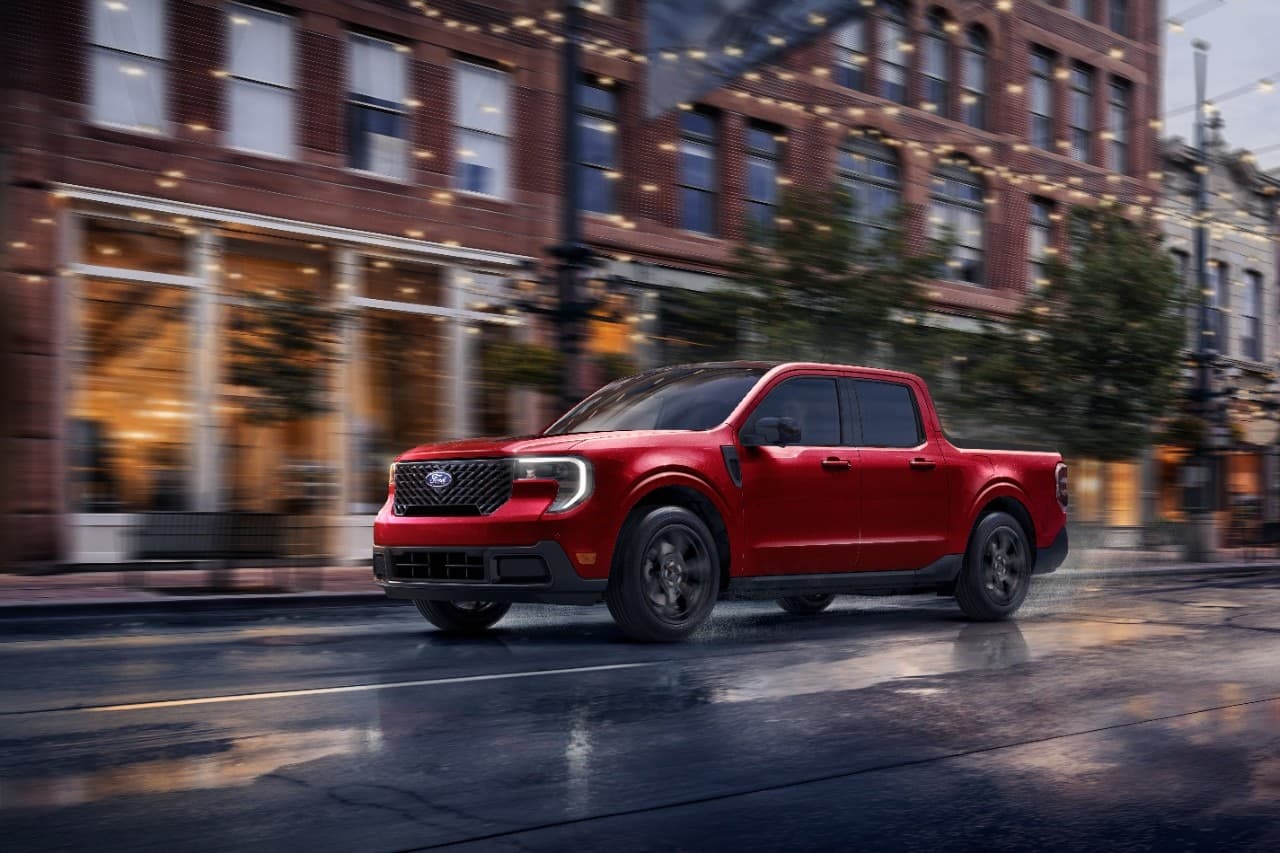
Source Receipts
Source pages, creator credits, and reuse licenses are visible for editorial trust and legal hygiene.
Related Video
2025/2026 Ford Maverick Hybrid Full Review | The Right Sized Giant Killer
Auto Buyers Guide | Alex on Autos
Embedded from the Auto Buyers Guide | Alex on Autos YouTube channel as third-party reference media for the 2025/2026 Maverick Hybrid, not as an independent MotorRank road test.
Interior
Cabin views before you choose a trim.
The Maverick cabin is useful rather than plush. That is not a flaw if the price stays honest. The right expectation is durable materials, clever storage, a modern display, and enough comfort for commuting, not luxury-truck isolation.
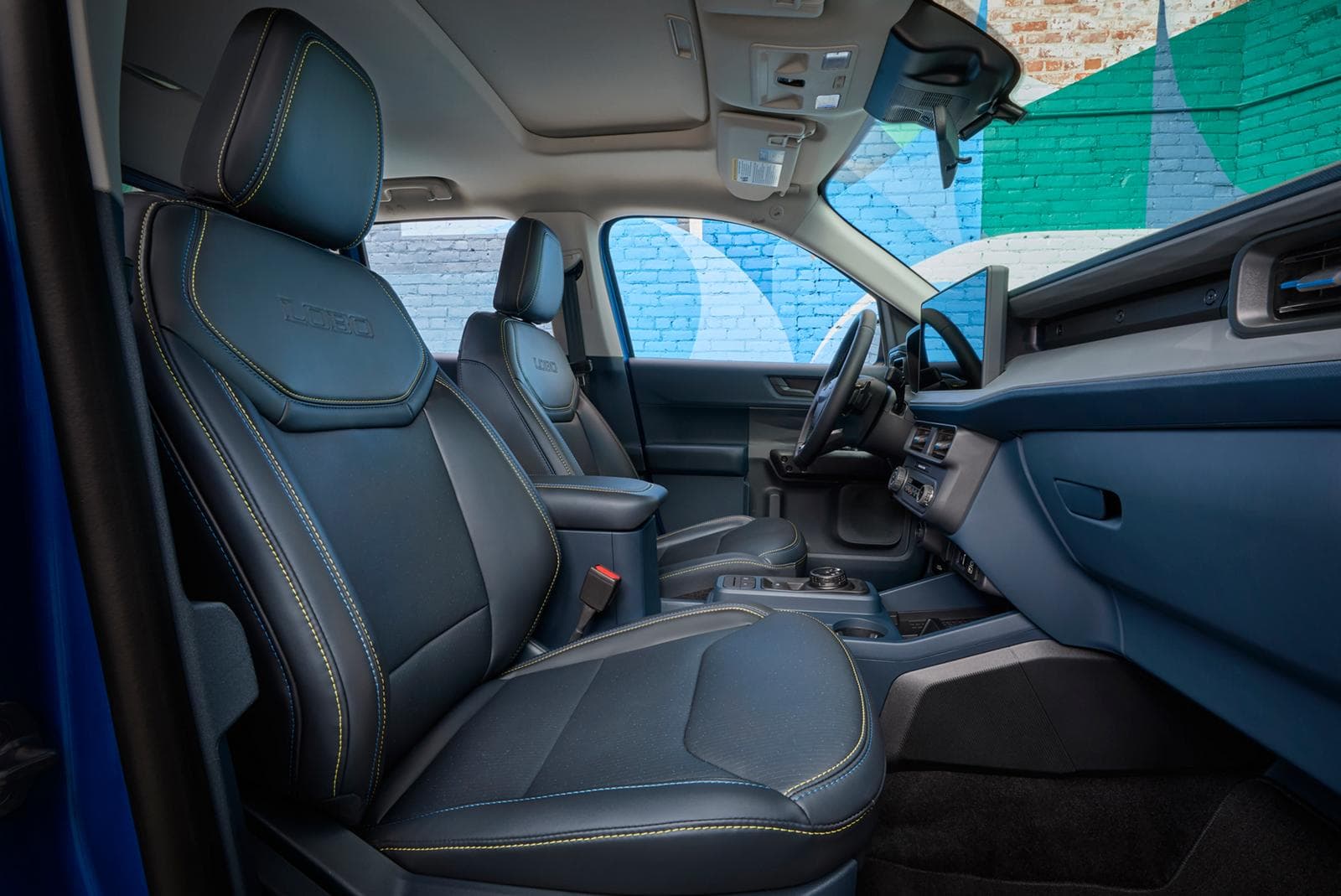
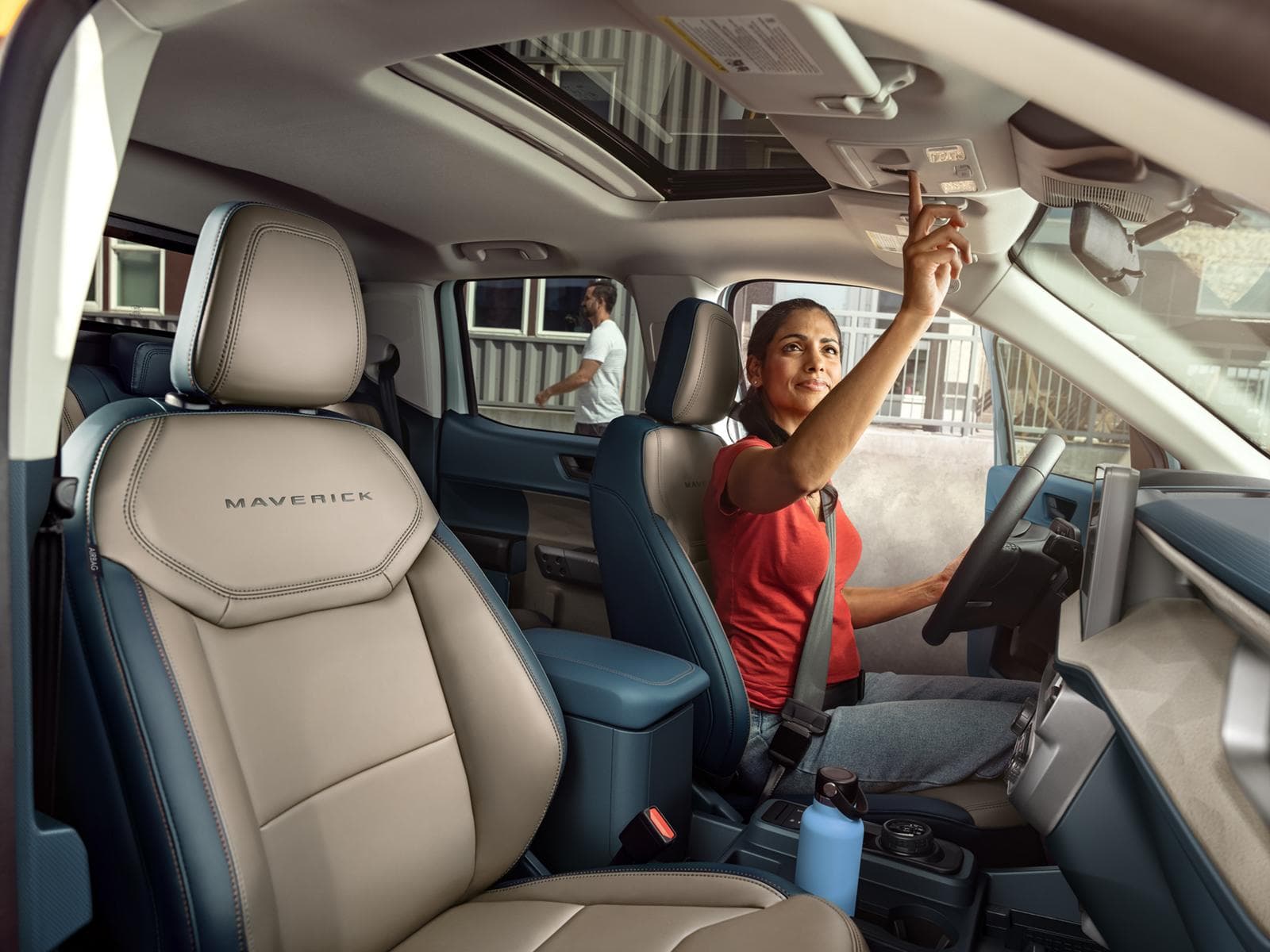
Interior Source Receipts
Research basis
Updated June 13, 2026
Built from Ford.com 2026 Maverick pages, Ford's What's New 2026 Maverick update, Ford's official hybrid warranty support page, Firecrawl SERP evidence showing Car and Driver as the live #1 review result, Edmunds full-review and trim-page summaries, DataForSEO search-volume and intent evidence, and a direct NHTSA recall API lookup run June 13, 2026.
Ford pricing varies by destination, employee pricing, ZIP-level incentives, and dealer add-ons. Performance and observed fuel economy are attributed third-party/research basis until MotorRank instruments a Maverick Hybrid. Recall status is VIN-specific and can change after publication.
Update after Ford changes 2026 incentives, when recall remedies close, when MotorRank runs a measured road test, and when 2027 order-guide pricing appears.
Which 2026 FORD MAVERICK HYBRID to Buy
Which trim is right for you?
XL Hybrid
$29,990
The cheapest useful truck in the lineup: hybrid efficiency, four doors, a bed, and the lowest real payment.
XLT Hybrid
$30,645
The smart buy: enough equipment to avoid work-truck regret, still priced like a compact crossover, and available with the useful packages.
Our pick
Lobo
$35,800
The street-truck style trim with EcoBoost power, not the hybrid efficiency play.
Lariat Hybrid
$39,900
The comfort trim if you drive long miles, but the price can move too close to larger trucks.
Tremor
$42,490
The off-road trim, powered by the turbo engine. Buy it for capability, not hybrid fuel economy.
Performance
- Horsepower
- 191hp
- 0–60 mph
- 7.7s
Scorecard
- Performance7.2
- Comfort7.4
- Value8.8
- Ownership7.6
- Technology8
- Safety7.4
- Reliability7.1
- Interior7.2
5-Year Ownership Costs
| Fuel | $6,800 |
|---|---|
| Insurance | $9,500 |
| Maintenance | $3,600 |
| 5-Year Total(partial estimate) | $19,900 |
Shopping Tools
Next steps for 2026 Ford Maverick Hybrid shoppers.
Research tools to help you move from browsing to buying.
Compare rivals
Line up the closest alternatives before you commit.
Check deal signals
Review pricing pressure, incentives, and value angles.
Read owner signal
Balance the expert take with ownership patterns.
Midsize truck alternative
If a Maverick build climbs into the low-$40K range, compare it against a real midsize truck before assuming the compact truck is still the value play.
Open vehicle hub
Keep specs, reliability, rankings, and review links together.
Compare Against
Cross-shop before you commit.
The closest alternatives in this price range, with our read on each.
Bigger real-truck alternative
Toyota Tacoma
More capability and resale culture, but more money, more size, and less hybrid commuting efficiency.
Internal step-up truck
Ford Ranger
The right Ford if towing and payload matter more than MPG and parking ease.
Lifestyle crossover truck
Hyundai Santa Cruz
More style and crossover feel, but no Maverick Hybrid-style fuel-economy value story.
Compact SUV efficiency rival
Toyota RAV4 Hybrid
Better passenger/cargo enclosure and Toyota hybrid trust; loses the open bed that makes the Maverick special.
Buyer FAQ
2026 Ford Maverick Hybrid buyer questions, answered.
18
buyer answers
Question Map
Decision
Should you buy the 2026 Ford Maverick Hybrid?
The Maverick is best when it stays compact, hybrid, and honest about what jobs it can actually do.
Is the 2026 Ford Maverick Hybrid worth it?
Yes, if you need a bed more than a full-size truck.+
The Maverick Hybrid is worth it for commuters, homeowners, small-business buyers, and apartment dwellers who need open-bed utility but do not need a large truck. It gives you hybrid fuel economy, compact parking, and useful cargo flexibility for crossover money. It is not the answer for heavy towing, luxury comfort, or off-road theater.
Who should skip the Maverick Hybrid?
Heavy towers, luxury-truck shoppers, and high-trim price creepers.+
Skip it if you tow close to 4,000 pounds often, need serious payload every week, want a plush cabin, or keep configuring into the low-$40K range without a clear reason. At that point, compare Ranger, Tacoma, Ridgeline, Colorado, and compact hybrid SUVs.
Is the Maverick better than a compact SUV?
Only if the bed solves real problems.+
A CR-V Hybrid or RAV4 Hybrid may be quieter and better for passengers. The Maverick wins when you carry dirty, tall, wet, or awkward cargo that should not live in the cabin. If you rarely use the bed, buy the SUV. If you use it weekly, the Maverick makes sense.
Trim
Which Maverick Hybrid trim should you buy?
The Maverick's value is fragile. The right trim keeps the truck cheap and useful.
Which 2026 Maverick trim is best?
XLT Hybrid is the MotorRank pick.+
XLT Hybrid is the best default because it avoids the bare-bones feel of XL while preserving the Maverick's value. It is the trim most likely to feel like a real daily driver without turning into an expensive small truck.
Is the Maverick XL Hybrid too basic?
Not if payment is the point, but sit in one first.+
The XL Hybrid is the cheapest way into the idea, and for fleets or simple personal use it can be perfect. Private buyers should sit in one before ordering because comfort, materials, and convenience equipment are where the XL reminds you it is the entry truck.
Is the Maverick Lariat worth it?
Only if comfort matters more than strict value.+
Lariat improves the daily experience, but it can push the Maverick close to bigger, quieter, or more capable alternatives. Buy it if you commute long distances and want the comfort. Do not buy it simply because the monthly payment still looks tolerable.
Hybrid
Hybrid engine, MPG, AWD, and towing
The hybrid is the reason the Maverick is special, but it is not the answer for every build.
What MPG does the 2026 Maverick Hybrid get?
Ford and C/D point to 42 mpg city and 35 highway.+
Ford leads with the EPA-estimated 42 mpg city figure, and Car and Driver lists up to 42 city and 35 highway for the hybrid. Real-world numbers depend on speed, load, weather, tires, and driving style, but the hybrid remains the efficiency reason to buy the Maverick.
How much horsepower does the Maverick Hybrid have?
191 hp combined for the hybrid; 250 hp for EcoBoost.+
The hybrid powertrain is rated at 191 horsepower combined, while the 2.0-liter EcoBoost is rated at 250 hp. The hybrid is the fuel-economy and value choice. The EcoBoost is the acceleration, Lobo, Tremor, and some towing/capability path.
Can the Maverick Hybrid tow 4,000 pounds?
Only when properly equipped; confirm the actual truck.+
Ford advertises up to 4,000 pounds of towing for properly equipped Mavericks. Do not assume every hybrid on the lot has the right package. Check the window sticker, hitch, wiring, payload label, and owner's manual before buying for towing.
Daily Use
Can you live with it every day?
The Maverick's daily win is size. Its daily compromise is budget-truck refinement.
Is the Maverick comfortable for commuting?
Comfortable enough, but not luxury quiet.+
The Maverick works well as a commuter because it is compact, easy to park, efficient in hybrid form, and simple to see out of. It is not as quiet or polished as a premium crossover or larger truck. Long-distance drivers should compare XLT and Lariat seats before deciding.
Is the Maverick interior cheap?
Budget-focused, yes; badly designed, no.+
The interior uses hard and durable materials because the price and mission demand it. The design is clever, with storage and a useful screen, but it does not feel upscale. That is acceptable in an XLT Hybrid; less acceptable if your build climbs near $43K.
How useful is the Maverick bed?
Very useful for real-life cargo, not full-size hauling.+
The bed is excellent for bikes, home projects, dirty gear, gardening supplies, small business tools, and weekend errands. It is short and compact, so full-size truck expectations are wrong. The point is carrying messy cargo outside the cabin.
Ownership
Warranty, recalls, and reliability risk
The Maverick Hybrid is a smart product, but the current recall count makes paperwork part of the buying advice.
Does the 2026 Ford Maverick have recalls?
Yes. NHTSA showed six 2026 Maverick campaigns on June 13, 2026.+
A direct NHTSA lookup returned campaigns for park-module, instrument-panel cover, trailer-brake-control, moonroof bonding, passenger occupant-classification, and front lower ball-joint issues. Status varies by VIN, so check the exact truck before deposit and delivery.
What warranty does the Maverick Hybrid have?
8 years/100,000 miles on hybrid-unique components, per Ford.+
Ford's support page states hybrid/electric unique components, including the high-voltage battery, are covered for 8 years or 100,000 miles for defects in factory-supplied materials or workmanship. The broader Ford new-vehicle terms are the familiar 3-year/36,000-mile basic and 5-year/60,000-mile powertrain coverage.
Is the Maverick Hybrid reliable?
Promising product, but do not ignore recalls or invent a score.+
The Maverick has strong demand and owner enthusiasm, but the 2026 recall count is real and model-year-specific. The safe answer is to buy a clean VIN, keep campaign paperwork, and avoid overpaying for a trim whose value depends on long-term resale assumptions we cannot verify yet.
Rivals
What should you compare it against?
A Maverick buyer may really need a truck, a crossover, or a larger pickup. The bed decides the answer.
Maverick Hybrid or Hyundai Santa Cruz?
Maverick for hybrid value; Santa Cruz for cabin feel and style.+
The Santa Cruz feels more like a lifestyle crossover with a bed and can have a nicer cabin in upper trims. The Maverick Hybrid is the better efficiency and value play. If fuel cost and price lead, Ford wins. If style and comfort lead, drive both.
Maverick or Toyota Tacoma?
Maverick for commuting and cost; Tacoma for truck work and resale culture.+
The Tacoma is more capable, more expensive, and more truck-like. The Maverick is easier to live with and cheaper to run. If your truck work is light, Maverick. If towing, off-road use, payload, and long-term truck resale lead, Tacoma.
Maverick Hybrid or Ford Ranger?
Ranger if you need more truck; Maverick if you need less bill.+
The Ranger tows and hauls more, sits in the next class up, and feels more like a conventional pickup. The Maverick is cheaper, more efficient, and easier in cities. Once a Maverick build climbs high enough, the Ranger becomes the internal Ford cross-shop.
Ready to buy?
Configure your 2026 Ford Maverick Hybrid.
Get matched with a Ford dealer or build your spec sheet from scratch.