
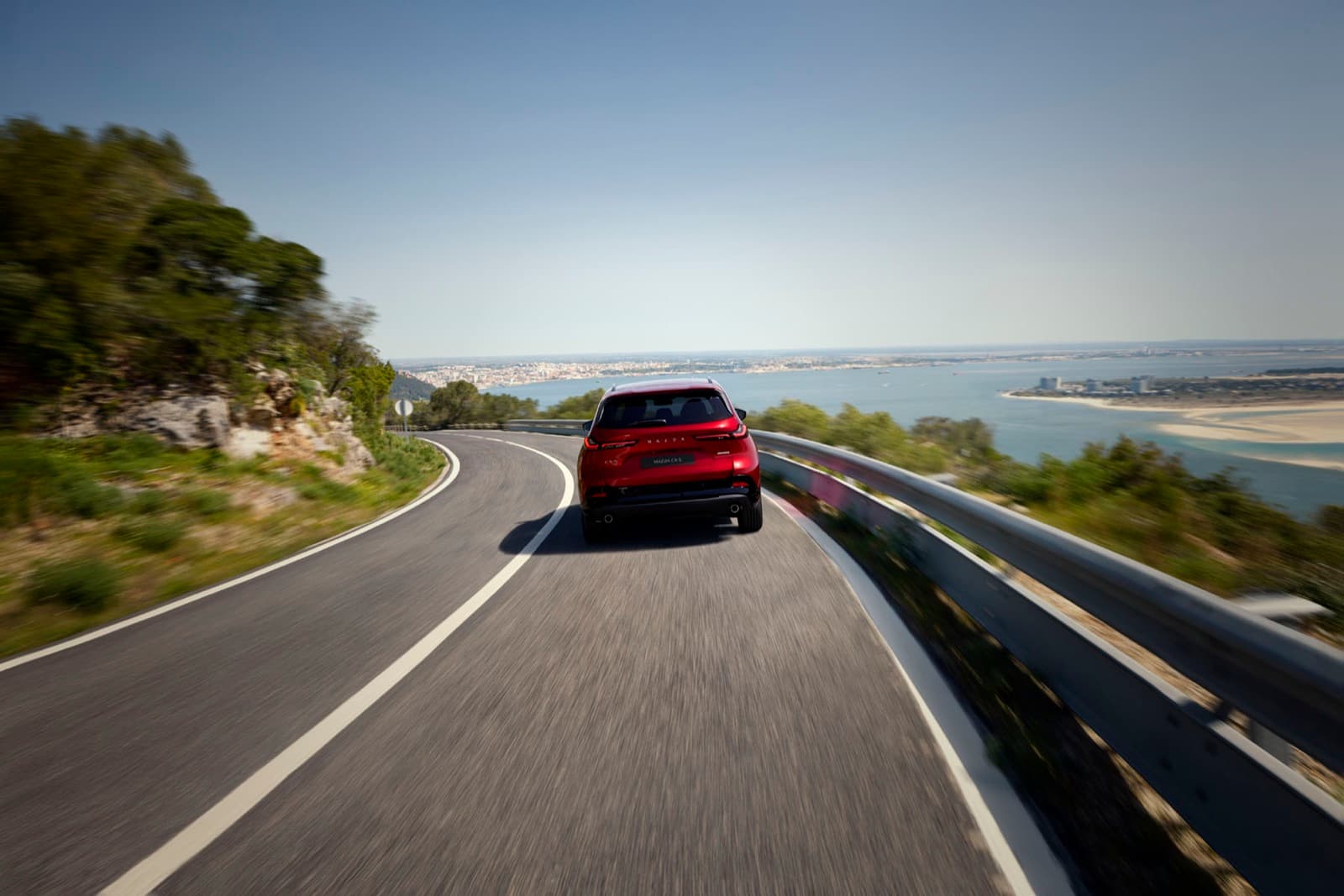
REVIEWS / SUVs
NEW2026 Mazda CX-5 Review
Mazda's best-seller is all-new for the first time in nearly a decade: bigger where families needed it, still the driver's pick of the class, and now a Google-built-in tech showcase, but the turbo is gone and the hybrid does not arrive until 2027.
Published June 1, 2026 / Updated June 4, 2026
Expert verdict
The 2026 Mazda CX-5 keeps the class's best driving manners and adds the rear-seat and cargo space that used to push families to a RAV4. The trade-offs are real: one modest 187-hp engine, a touchscreen that swallowed the physical controls, and a hybrid you have to wait a year for. At $29,990 to $38,990 with standard AWD, it is still one of the easiest value cases in the segment.
HIGHS
- All-new body adds 4.5 inches of wheelbase, 2+ inches of rear knee room, and 7.2 cubic feet of maximum cargo
- Standard AWD on every trim from $29,990, undercutting most rivals' AWD pricing
- Class-benchmark handling survives the size increase: 0.83 g tested grip and a refined, quiet ride
- Deep standard safety list and Google built-in tech from the base trim
LOWS
- Turbo engine is gone: one 187-hp four, an 8.0-second 0-60, and 26 mpg combined, down from 28
- Volume knob, climate buttons, and rotary controller all removed; early testers hit software glitches
- Hybrid does not arrive until 2027, while RAV4 and Sportage hybrids are on sale today
- 3-year/36,000-mile warranty and 1,500-pound tow rating trail key rivals
AT A GLANCE
- Score
- 8.4
- Price
- $29,990 - $38,990
- Horsepower
- 187 hp
- 0-60
- 8s
- Drivetrain
- AWD
- Body
- SUV
Buyer Verdict
The fast answer before you compare specs.
Built for shoppers who want the recommendation first and the details right after.
Buy it if
- The 2026 Mazda CX-5 is the driver's pick of the compact SUV class with the space problem finally fixed — 4.5 inches more wheelbase and 7.2 cubic feet more cargo. Buy the Preferred at $34,250 for the best content-per-dollar. Skip it only if you need a hybrid today or refuse touchscreen-based controls.
- Best for: Buyers who want the best-driving, best-finished compact SUV under $40K with standard AWD, and who can live with one modest engine and screen-based controls until the 2027 hybrid arrives.
- Our trim pick: 2.5 S Preferred from $34,250.
Skip it if
- Turbo engine is gone: one 187-hp four, an 8.0-second 0-60, and 26 mpg combined, down from 28
- Volume knob, climate buttons, and rotary controller all removed; early testers hit software glitches
- Hybrid does not arrive until 2027, while RAV4 and Sportage hybrids are on sale today
Closest rivals
- Toyota RAV4
Hybrid-first volume benchmark
- Kia Sportage Hybrid
Warranty-and-mpg spreadsheet rival
- Nissan Rogue Plug-in Hybrid
Plug-in efficiency alternative
Quick take
The 2026 Mazda CX-5 is the third generation of the brand's best-selling vehicle in America, and it is in US showrooms now after a phased spring rollout, with national inventory measured in the thousands of units by early June. Mazda prices five trims from $29,990 to $38,990 before the $1,495 destination charge, every one of them with i-Activ all-wheel drive standard, which makes the real range $31,485 to $40,485 and keeps the CX-5 one of the cheapest AWD crossovers in the class.
This is a MotorRank research-basis review, not an instrumented MotorRank road test. The analysis is built from Mazda's official January 2026 pricing and packaging announcement, Car and Driver's published instrumented test, WardsAuto, GearJunkie, and Consumer Reports first drives, current June 2026 incentive data, and the documented 2025-versus-2026 specification record. Crash-test ratings are pending and labeled as such.
Driving impressions
Why the CX-5 matters
The CX-5 matters because it is the car that proved a mainstream compact SUV could drive like it cost more, and the redesign attacks its one historic weakness: space. The new body is 4.5 inches longer on a 4.5-inch-longer wheelbase, rear knee room grows by more than two inches, and maximum cargo jumps 7.2 cubic feet to 66.5. Mazda sold over 100,000 CX-5s in the US last year with the old, smaller body; this one removes the reason most of those shoppers ever cross-shopped away.
What to watch before you buy
Watch four things before buying: whether the single 187-horsepower engine is enough for your use, because there is no turbo option anymore; whether you can live with volume and climate controls inside the touchscreen, which is the most polarizing change; whether waiting for the 2027 in-house hybrid serves you better than buying now; and what the out-the-door quote looks like, because June 2026 deals are already running a few hundred to about $1,400 under sticker.
SERP audit: what the current coverage owns, and what it skips
The 2026 CX-5 search results are a split decision. The top organic slots mix a Reddit owner thread, WardsAuto's first drive, Mazda's own site, and Car and Driver's hub. Car and Driver owns the instrumented numbers, an 8.0-second 0-60, 0.83 g of grip, 173-foot braking, and WardsAuto owns an early, thorough first-drive narrative. Anyone researching this car should read both, and we cite them throughout.
The gaps are specific and checkable. WardsAuto's piece, the top-ranking article for the review query, publishes no fuel economy numbers at all, no dimensions table, no 2025-versus-2026 comparison, no warranty information, no trim recommendation, and never mentions the 2027 hybrid that half the comment sections are asking about. It also states the lineup tops out at $39,990, which is $1,000 high: Mazda's own release, Car and Driver, and Consumer Reports all put the Premium Plus at $38,990.
This page is built to close exactly those gaps: the full official price ladder with destination math, the quantified size change against the 2025 model, the EPA and tested fuel economy record, the hybrid timing answer, warranty coverage, and a straight trim recommendation, all with sources named so you can verify rather than trust.
What Mazda officially announced
Mazda North American Operations priced the 2026 CX-5 on January 13, 2026: five trims, all badged 2.5 S, from $29,990 to $38,990 before the $1,495 destination charge. The lineup simplifies from eight trims to five, all-wheel drive is standard everywhere, and the sole launch engine is the SkyActiv-G 2.5-liter four with 187 horsepower and 186 pound-feet through a 6-speed automatic. Navy Blue Mica is the new standard color, with five premium paints at $595 including the signature Soul Red Crystal.
The packaging story is the headline: a 110.8-inch wheelbase, up 4.5 inches, inside a 184.6-inch body, with the cargo hold nearly two inches longer, a lower load floor, wider door openings, and a rear step plate. Mazda paired that with chassis updates, new shock absorbers, a new wheel and tire setup, and the latest G-Vectoring Control Plus with an electronic brake limited-slip differential, plus Mi-Drive modes including an Off-Road setting.
The cabin makes the bigger break with Mazda tradition. A 12.9-inch touchscreen is standard, a 15.6-inch unit, the largest screen Mazda has ever fitted, comes on Premium Plus, and the software is Google built-in with Gemini voice assistance and Google Maps native. The rotary controller, the climate buttons, and even the volume knob are gone; Mazda's interface chief says the goal was technology that keeps eyes on the road, with voice and steering-wheel controls doing the work the knobs used to.
Safety equipment is unusually deep at the base price: radar cruise with speed-limit assist, front and rear automatic braking, rear cross-traffic braking with pedestrian detection, emergency lane keeping with head-on avoidance, blind-spot monitoring, a driver-attention monitor, and front and rear parking sensors are all standard on the $29,990 car. Premium Plus adds front cross-traffic braking, a 360 camera, driver monitoring, and lane-change assist.
Price ladder, destination math, and June 2026 deal reality
Every advertised price needs $1,495 added before it is real: the $29,990 base 2.5 S transacts from $31,485, the $34,250 Preferred from $35,745, and the $38,990 Premium Plus from $40,485. Against the 2025 car, the base price rose $940 and the Premium Plus rose $3,310, increases of 3 to 9 percent for a substantially larger, better-equipped vehicle, and notably Mazda has so far absorbed the import tariff burden rather than passing it to the sticker.
The June 2026 market already favors buyers more than a typical hot launch. Edmunds' current pricing data shows transactions a few hundred dollars under MSRP on most trims, with savings up to about $1,400 in some markets. Mazda's national offers this month run 2.9% APR for 36 months or a $392-per-month, 36-month lease, and live dealer listings show four-figure discounts on mid trims. That is rare air for an all-new model three months into its rollout, and it likely reflects the volume Mazda is shipping.
The discipline rule on this ladder is to stop at the trim whose specific features you will use weekly. The jump from S to Select buys wireless convenience for $2,000; Select to Preferred buys heat, power, and the head-up display for $2,260; Preferred to Premium buys the roof, leather, ventilation, and Bose for $2,650; Premium to Premium Plus buys the giant screen and the advanced driver-assist bundle for $2,090. Each step is defensible; defaulting to the top because it exists is how a $31,000 value story becomes a $41,000 invoice.
The engine question: 187 horsepower and the missing turbo
The single biggest change in character is under the hood. The outgoing CX-5's optional 256-horsepower turbo is gone, kept exclusively for the related CX-50, and every 2026 CX-5 runs the naturally aspirated 2.5 with 187 horsepower. Car and Driver measured 0-60 in 8.0 seconds and the quarter mile in 16.2 at 85 mph, which is adequate, unremarkable, and slower than the old turbo by around two seconds.
The engine is the lineup's most proven component, a carryover unit refined over a decade, and that is the honest counterweight to any speed complaint: this powertrain's reliability record is long and clean, while everything else on the car is new. The 6-speed automatic draws criticism for its gear count against rivals running eight or more, but testers consistently note its shift logic is well sorted, and GearJunkie's drive flagged the Sport mode as adding little, a fair warning to not buy the drive-mode story.
Fuel economy is the real cost of the bigger body: 24 city, 30 highway, 26 combined, down from the 2025 model's 28 combined, with Car and Driver observing exactly 24 mpg in mixed testing. A RAV4 hybrid will beat that by double digits, which is precisely why the next section matters to half the people reading this page.
The handling, at least, survived the growth. Car and Driver recorded 0.83 g of grip and praised the same sharp handling the nameplate is known for; WardsAuto called the ride sporty, firm yet comfortable, with excellent noise suppression below 45 mph; GearJunkie compared the ride quality to vehicles with air suspensions. The one dynamic complaint on record is GearJunkie's note of surprisingly numb steering by Mazda standards, an observation worth testing for yourself.
The hybrid question: should you wait for 2027?
The answer most coverage skips: yes, a CX-5 Hybrid is coming, no, it is not here, and what arrives in 2027 will be Mazda's own in-house Skyactiv-Z hybrid system, not the Toyota-sourced hardware in the CX-50 Hybrid. Car and Driver estimates it from around $37,000, and Mazda's US leadership describes it as a driver's hybrid, efficiency gains with Mazda character. Beyond that, official details remain thin.
Whether to wait is a real decision with a real framework. Wait if your annual mileage is high enough that the gas-versus-hybrid fuel gap, likely 8 to 12 mpg combined based on segment patterns, pays the premium back quickly, or if you simply will not accept 26 mpg combined in 2026. Buy now if you need the vehicle this year, if first-year-powertrain caution is part of your buying DNA, in which case the proven carryover gas engine is the conservative pick and the all-new hybrid is the gamble, or if the current under-sticker deals outweigh a speculative future price.
The strategic note for cross-shoppers: if a hybrid compact SUV is non-negotiable today, the honest answer is a different vehicle, a RAV4 hybrid, a Sportage Hybrid, or a Rogue Plug-in, all of which MotorRank has reviewed, not a wait of indeterminate months for unannounced pricing. The CX-5's case in 2026 is driving feel, space, and value, not efficiency.
Which CX-5 trim should you actually buy?
The Preferred at $34,250 is the MotorRank pick, and we are not alone: Car and Driver's buying advice lands on the same trim. It adds the equipment that changes daily life, heated front seats and steering wheel, a power liftgate, the head-up display, a 10-way power driver's seat with memory, and 19-inch wheels, while staying $4,740 under the top of the lineup. Edmunds' market data currently shows Preferreds transacting around the mid-$34,000s with destination, which is strong value for the content.
The Select at $31,990 is the budget pick that costs you little in lived experience: wireless CarPlay, wireless charging, keyless entry, and leatherette cover most modern expectations, and Edmunds currently flags it as its own editors' pick on value grounds. The base S at $29,990 is genuinely complete on safety and screens; its case is pure price, and there is no equipment hole in it that should embarrass an owner.
The Premium at $36,900 is for buyers who know the panoramic roof, ventilated seats, leather, and Bose system will get weekly use, a fair luxury step that keeps the invoice under $38,500 with destination. The Premium Plus at $38,990 is the only way to get the 15.6-inch display and the full advanced-assist bundle, and it is also where the value math thins: Car and Driver's own test car stickered at $41,080, which is RAV4 Limited and CR-V Sport Touring money. Buy it for the driver-assist hardware if you commute in dense traffic; skip it if the attraction is mainly the bigger screen.
Bigger where it counts: the 2025-versus-2026 size record
The size change is the reason this redesign exists, so here is the record, measurement by measurement. Length grows from 180.1 to 184.6 inches. Wheelbase grows from 106.2 to 110.8 inches. Width adds 0.6 inches. Cargo behind the rear seats grows from 29.1 to 33.7 cubic feet, and maximum cargo from 59.3 to 66.5, a 7.2-cubic-foot gain that moves the CX-5 from the back of the class to genuinely competitive with the RAV4 and CR-V.
The space went where families needed it: Car and Driver measures more than two inches of additional rear knee room, the rear bench reclines and splits 40/20/40 with a center pass-through from the base trim, rear air vents arrive at Select, and the load floor drops while the door openings widen. The old CX-5's deal-breaker, a tight second row behind taller drivers, is closed.
Two practical numbers stay modest: ground clearance is 8.2 inches, fine for dirt roads and bad weather, no rock crawler despite the Off-Road drive mode, and towing is rated at 1,500 pounds, half to a third of what the CX-50 handles. If a small boat or camper is in your life, that single line item decides between the two Mazdas.
The screen takeover: genuinely better and honestly worse
Mazda spent a decade arguing that touchscreens distract drivers, so the total reversal here deserves scrutiny in both directions. The good: Google built-in is the real thing, native Maps, Gemini voice control that testers found fast and accurate, app support without a phone tethered, and wireless CarPlay and Android Auto from Select up. GearJunkie called the connectivity suite a major improvement, and the voice layer mostly delivers on the eyes-on-road promise.
The bad is equally documented. The volume knob is gone, with the on-screen control placed toward the passenger side; climate adjustments live inside the touchscreen; and the beloved rotary controller is retired. Car and Driver reported actual software glitches including a frozen display during testing, the kind of first-year-software issue over-the-air updates can fix but only Mazda's execution will prove. Notably, Mazda delayed the production start six weeks specifically to verify this software, which reads as either reassurance or foreshadowing depending on your temperament.
The practical advice: spend ten minutes of any test drive using only the screen and voice controls for volume, temperature, and navigation. Buyers who adapt to steering-wheel and voice control report little friction; buyers who want a knob will not be argued out of it by a spec sheet, and the 2026 CX-5 simply no longer has one.
Safety record and ownership coverage: what is proven and what is pending
Be precise about what exists today: the 2026 CX-5 carries one of the deepest standard active-safety lists under $30,000, ten airbags, and more high-strength steel than before, but as of June 9, 2026, neither IIHS nor NHTSA has published crash-test ratings. Edmunds attended an IIHS test of this car and reports results are expected later this summer. Mazda's track record, currently more Top Safety Pick+ awards than any other brand, is favorable context, not a substitute for the pending scores. We will update when they publish.
Warranty is the spec where the CX-5 loses on paper: 3 years or 36,000 miles basic and 5 years or 60,000 miles powertrain, with no complimentary maintenance. A Sportage carries 10 years of powertrain coverage and a RAV4 includes two years of free maintenance. Mazda's counterargument is the reliability record of the carryover powertrain and the brand's consistently strong owner-satisfaction data, but on coverage terms alone, the Koreans win this column.
On reliability itself, honesty requires patience: this is a first-year vehicle on a heavily reworked platform with brand-new software, and no organization has owner data yet. Consumer Reports has bought its own test car and the early signals, proven engine, deliberate software-quality delay, are good ones. First-year caution is rational here exactly the way it is on every redesign, and the modest discounts already available partly price that in.
How it stacks up against rivals in June 2026
Against the Toyota RAV4, freshly redesigned and reviewed on MotorRank, the CX-5 wins on driving feel, interior design, and price per feature with standard AWD, and loses on efficiency, hybrid availability, and resale-brand gravity. A RAV4 hybrid's double-digit mpg advantage is the single hardest number the Mazda faces, and the CX-5's answer does not arrive until 2027.
Against the Kia Sportage Hybrid, the value fight is closer than badge prestige suggests: the Kia brings 38-plus mpg, the 10-year powertrain warranty, and aggressive pricing; the Mazda brings clearly superior dynamics, a nicer cabin, and standard AWD at the bottom of the ladder. Against the Nissan Rogue Plug-in Hybrid, the question is whether your charging access can exploit the plug; if it cannot, the CX-5 is the simpler, sharper buy.
The most interesting comparison is inside Mazda's own showroom. The CX-50, mechanically related and similar in size, keeps the 256-hp turbo, tows up to 3,500 pounds, offers a Toyota-built hybrid today, and skews outdoorsy where the CX-5 skews refined. Buyers who left the old CX-5 for power, towing, or a hybrid no longer need to leave the brand, and a cross-drive of the two is twenty minutes well spent.
What could move this score up or down
The 8.4 climbs if the pending IIHS results land at Top Safety Pick+ as Mazda's recent record suggests, if the infotainment software stabilizes through over-the-air updates without further glitch reports, and if real-world economy holds nearer the 30-mpg highway number than the 24 Car and Driver observed. A well-priced Skyactiv-Z hybrid launch in 2027 would lift the whole nameplate's trajectory.
The score slides if software complaints accumulate the way Car and Driver's frozen-display experience hints they could, if crash results disappoint, or if transaction prices firm up as the rollout completes and the current under-sticker deals evaporate. The 6-speed and 187 horsepower are known quantities already priced into the number; the software is the live variable.
For now, 8.4 says this is one of the two or three strongest value-and-character packages in the compact SUV class, scored with appropriate reserve for a first-year vehicle whose crash ratings, software maturity, and reliability record are all still being written.
The verdict: where the 2026 CX-5 fits
The 2026 Mazda CX-5 fixes the one thing that kept the old car from being the default recommendation in its class: space. It is now big enough for the family that previously settled for something duller, it still drives better than nearly everything at the price, the equipment list embarrasses crossovers costing thousands more, and standard AWD under $31,500 out the door is a quietly excellent deal.
Buy the Preferred if you want the smartest single configuration, the Select if budget leads, and the Premium Plus only if the advanced driver-assist bundle earns its keep on your commute. Wait for the 2027 hybrid, or buy a rival hybrid today, if fuel economy is your first filter, and test the screen-only controls before you commit either way.
Mazda sold five million CX-5s by making a sensible category feel like a choice rather than a surrender. The third generation grows up without giving that up, and in a June 2026 market where it is already transacting under sticker, it earns its place on any compact SUV shortlist, very near the top of it.
Specs Snapshot
The numbers shoppers compare first.
Key numbers to compare against alternatives before you commit.
| Base price | $29,990 - $38,990 |
|---|---|
| Horsepower | 187 hp |
| 0-60 mph | 8.0 sec |
| Drivetrain | AWD |
| Transmission | Automatic |
| Fuel type | Gas |
| Combined MPG/MPGe | 26 |
Media Proof
Exterior and interior visuals with source receipts.
Every asset shown here links back to its source and license so the page can gain trust without borrowing competitor media.
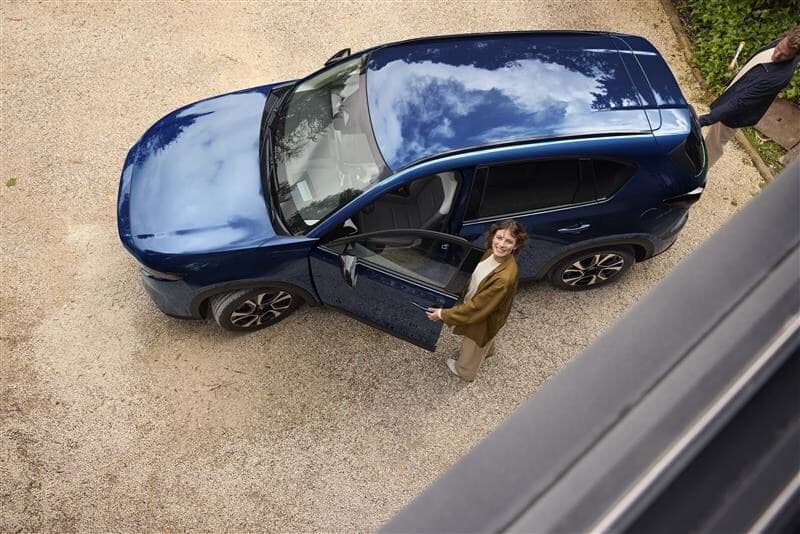
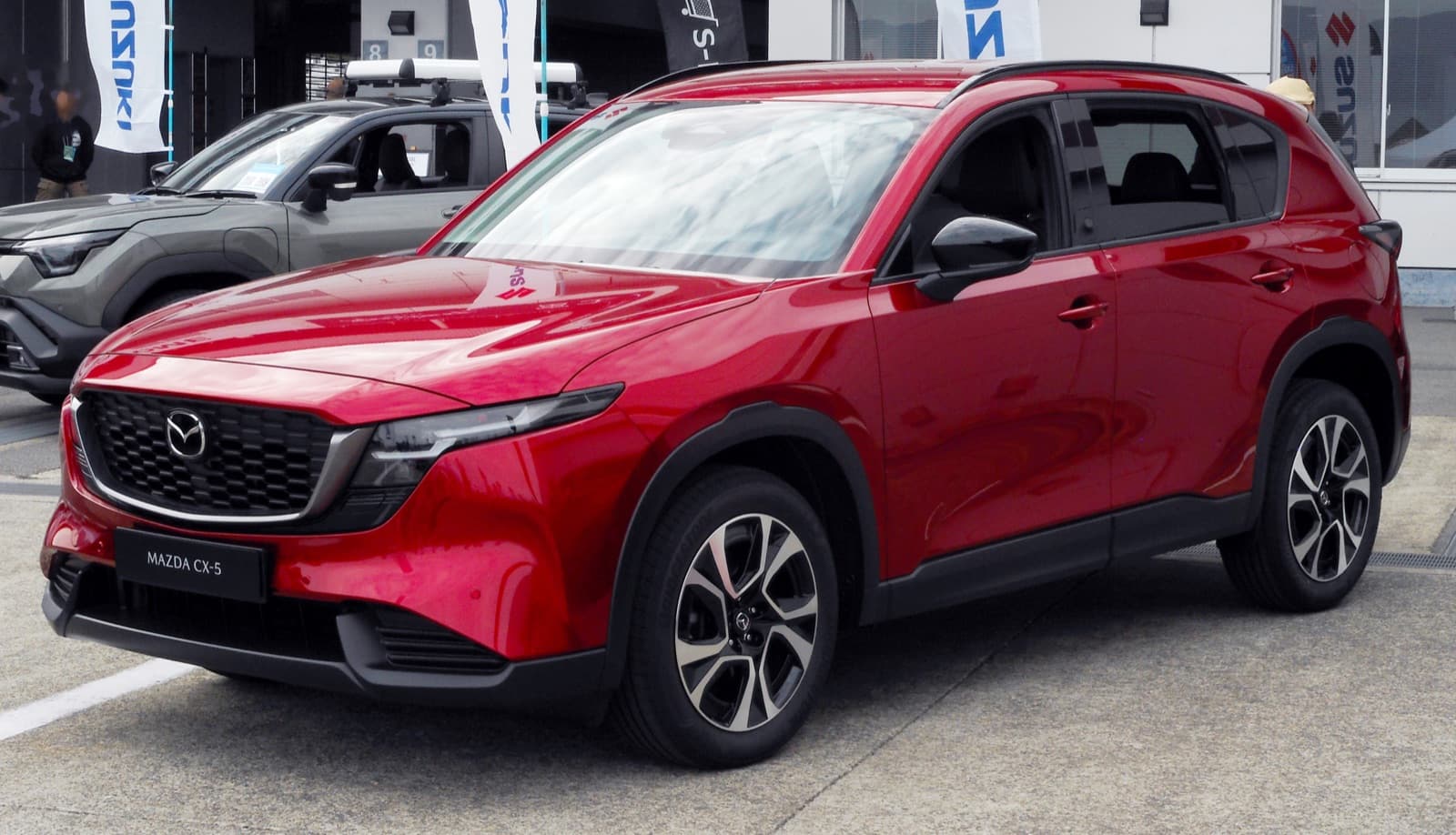
Source Receipts
Source pages, creator credits, and reuse licenses are visible for editorial trust and legal hygiene.
Related Video
A closer look at the all-new CX-5
Mazda USA
Embedded from Mazda USA's official YouTube channel as manufacturer reference media for the new cabin and 15.6-inch display, not as an independent MotorRank road test.
Interior
Cabin views before you choose a trim.
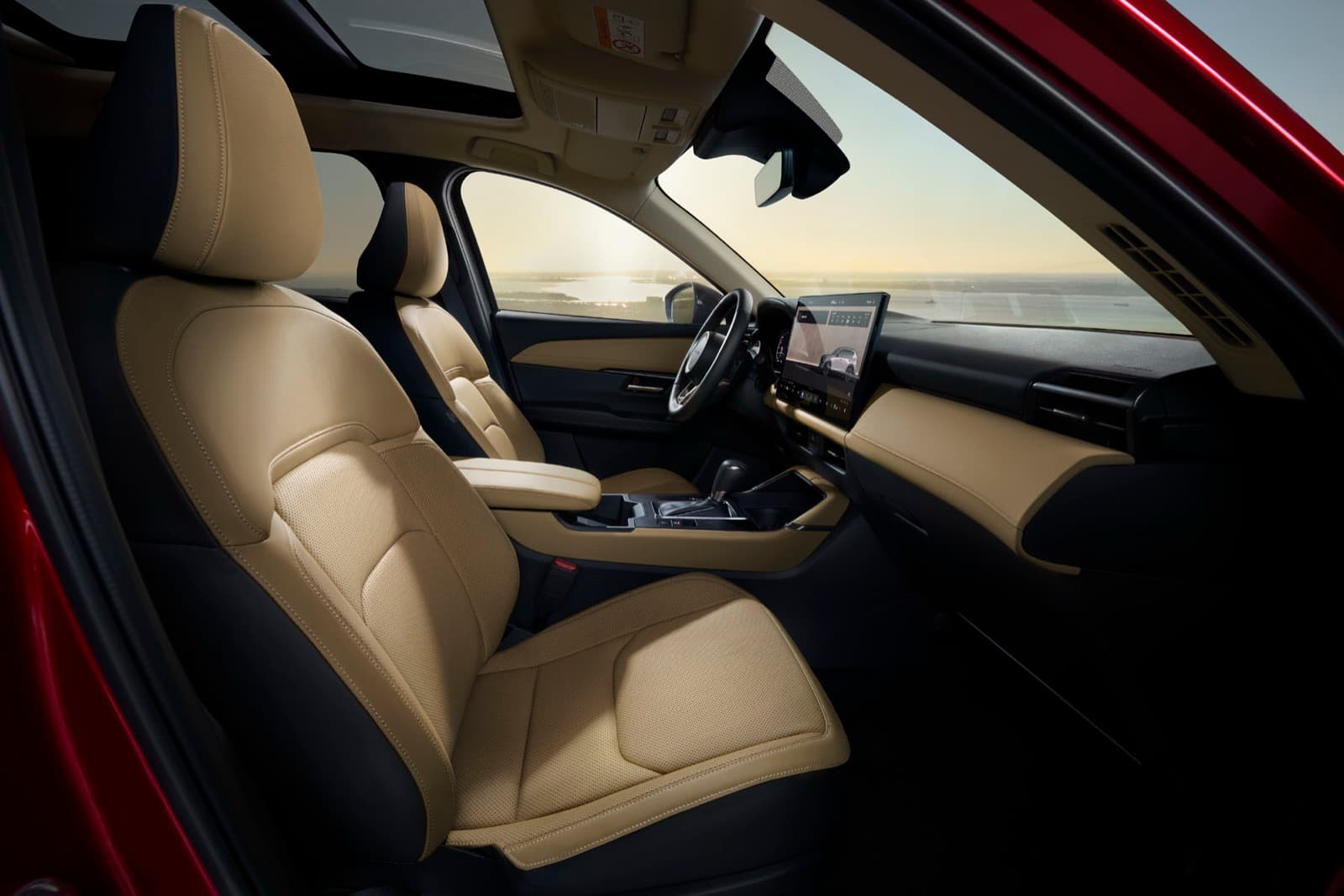
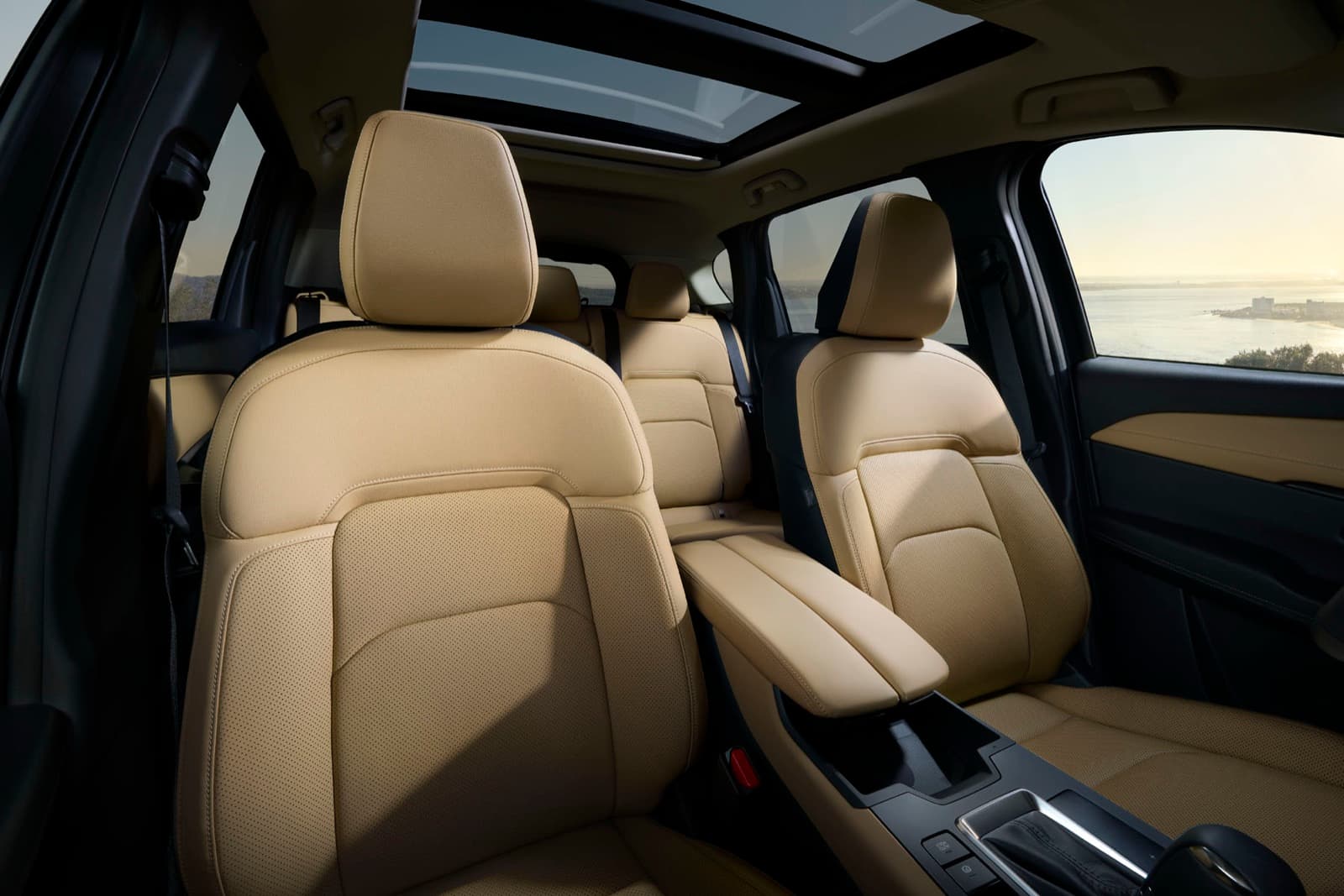
The cabin is the redesign's biggest swing: a 12.9-inch touchscreen standard, the largest screen Mazda has ever fitted (15.6 inches) on Premium Plus, Google built-in with Gemini voice control — and the rotary controller, climate buttons, and volume knob all gone. It is also genuinely more spacious, with over two inches of added rear knee room.
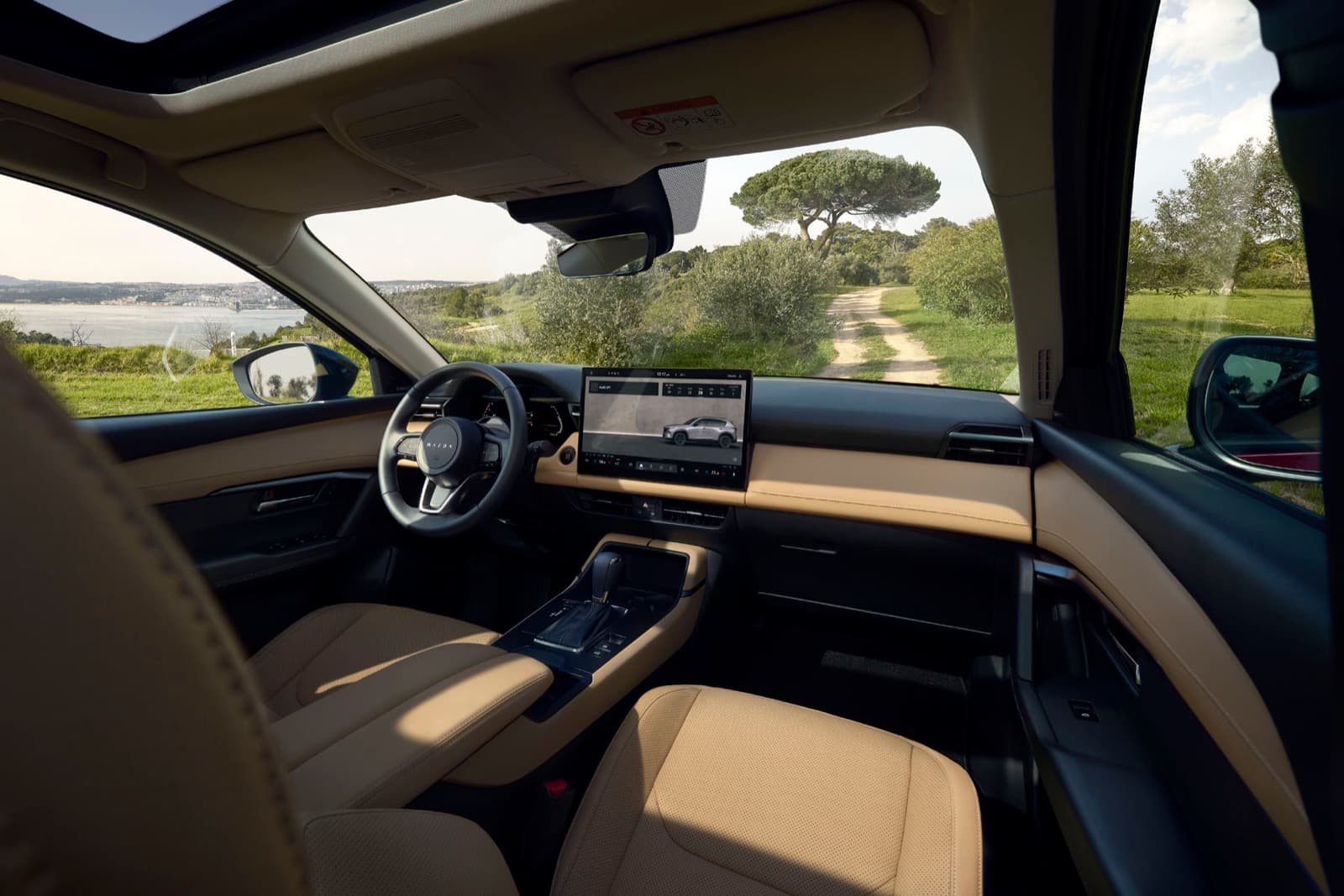
Interior Source Receipts
Research basis
Updated June 9, 2026
Compiled from Mazda's January 13, 2026 pricing and packaging announcement, Car and Driver's published instrumented test and model hub, WardsAuto, GearJunkie, and Consumer Reports first drives, Edmunds' June 2026 pricing and IIHS-test reporting, documented 2025-model specifications for the size comparison, and current June 2026 incentive data.
MSRP figures are Mazda's published prices before the $1,495 destination charge ($1,540 Alaska). Acceleration, grip, braking, and observed-mpg figures are Car and Driver instrumented results and attributed as such. Crash-test ratings are pending at both agencies and labeled accordingly. MotorRank has not instrument-tested the 2026 CX-5 yet.
Update when IIHS publishes the crash results Edmunds reports are due this summer, when 2027 CX-5 Hybrid pricing is announced, and when early-owner reliability and infotainment-stability data accumulate.
Which 2026 MAZDA CX-5 to Buy
Which trim is right for you?
2.5 S
$29,990
The honest entry point: standard AWD, the 12.9-inch screen, Google built-in, and the full safety suite under $30K before destination.
2.5 S Select
$31,990
Adds the daily-life conveniences: wireless CarPlay, wireless charging, keyless entry, leatherette, and rear vents.
2.5 S Preferred
$34,250
The value pick most testers land on: heated seats and wheel, power liftgate, head-up display, 19-inch wheels, power driver seat.
Our pick
2.5 S Premium
$36,900
The comfort stretch: panoramic roof, leather, ventilated front seats, Bose 12-speaker audio, and the black-accent look.
2.5 S Premium Plus
$38,990
The full tech dump: 15.6-inch display, 360 camera, lane-change assist, driver monitoring, and hands-free liftgate.
Performance
- Horsepower
- 187hp
- 0–60 mph
- 8.0s
Scorecard
- Performance7.6
- Comfort8.5
- Value8.7
- Ownership8
- Technology8.4
- Safety8.6
- Reliability8.3
- Interior8.8
Shopping Tools
Next steps for 2026 Mazda CX-5 shoppers.
Research tools to help you move from browsing to buying.
Compare rivals
Line up the closest alternatives before you commit.
Check deal signals
Review pricing pressure, incentives, and value angles.
Read owner signal
Balance the expert take with ownership patterns.
Open vehicle hub
Keep specs, reliability, rankings, and review links together.
Compare Against
Cross-shop before you commit.
The closest alternatives in this price range, with our read on each.
Hybrid-first volume benchmark
Toyota RAV4
The all-new RAV4's hybrid lineup wins the fuel-economy fight by double digits and tows more. The CX-5 wins on driving feel, cabin quality, and standard-AWD pricing — the classic head-versus-heart split, with both heads and hearts well served.
Warranty-and-mpg spreadsheet rival
Kia Sportage Hybrid
The Sportage Hybrid's 38-plus mpg and 10-year powertrain warranty beat the Mazda's rational columns outright. The CX-5's reply is everything you feel from the driver's seat — and that reply is convincing.
Plug-in efficiency alternative
Nissan Rogue Plug-in Hybrid
The Rogue Plug-in serves households with reliable charging access that want EV-grade commuting without full EV commitment. Without a place to plug in, the CX-5 is the simpler, sharper, cheaper buy.
All-weather utility cross-shop
Subaru Outback
The Outback counters with standard AWD of its own, more cargo length, and Subaru's foul-weather image. The CX-5 is the better-finished, better-driving machine; the Subaru is the better tool for gear-heavy, dirt-road lives.
Buyer FAQ
2026 Mazda CX-5 buyer questions, answered.
27
buyer answers
Question Map
Decision
Should you buy the 2026 Mazda CX-5?
The space problem is fixed and the value case is strong — the open questions are the single engine, the screens, and the hybrid wait.
Is the 2026 Mazda CX-5 a good SUV?
Yes — it keeps the class's best driving manners while finally matching rivals on space, with standard AWD under $31,500 out the door.+
Car and Driver rates it 8/10, praising the roomier back seat, bigger cargo hold, and the same sharp handling, with 0.83 g of measured grip backing the reputation. WardsAuto calls the ride sporty yet comfortable with excellent noise suppression, and GearJunkie compares its composure to vehicles with air suspensions. MotorRank's research-basis score is 8.4. The deductions are concrete: one modest engine, a 26-mpg combined rating, and controls that moved almost entirely into the touchscreen.
Who should skip the 2026 CX-5?
Hybrid-first shoppers, volume-knob loyalists, and anyone who tows more than 1,500 pounds.+
If fuel economy leads your decision, the CX-5's 26 mpg combined cannot answer a RAV4 or Sportage hybrid today, and Mazda's own hybrid is a 2027 story. If physical controls are non-negotiable, this cabin removed the rotary dial, the climate buttons, and the volume knob — no trim brings them back. And the 1,500-pound tow rating is half to a third of what Mazda's own CX-50 handles, which settles the choice for anyone with a trailer.
Why does this redesign matter right now?
Mazda's best-seller just fixed its only structural weakness, and June 2026 deals are already running under sticker.+
The CX-5 sold over 100,000 units in the US last year with a body whose rear seat and cargo hold trailed the class. The third generation adds 4.5 inches of wheelbase, over two inches of rear knee room, and 7.2 cubic feet of maximum cargo — removing the reason shoppers defected to the RAV4 and CR-V. With national inventory in the thousands and Edmunds showing transactions up to about $1,400 under MSRP this month, it is a live deal, not a launch-markup story.
Is 187 horsepower enough?
For typical commuting, yes — 8.0 seconds to 60 is adequate — but drivers who loved the old turbo should test before assuming.+
Car and Driver measured 0-60 in 8.0 seconds and the quarter mile in 16.2, calling acceleration unhurried. The engine itself is the most proven part of the car, a decade-refined carryover unit, and the chassis remains the segment's most rewarding. But the 256-hp turbo is gone to the CX-50 exclusively, so buyers stepping out of a turbo CX-5 are stepping down roughly two seconds of sprint pace. Drive it back-to-back with a CX-50 before deciding which Mazda you actually want.
What do first drives agree on?
Real gains in space, refinement, and tech — with shared reservations about the engine, the screens, and the steering.+
The consensus praise: genuinely roomier, impressively quiet, premium-feeling, and still the best-handling mainstream compact SUV. The consensus complaints map just as cleanly: Car and Driver misses the turbo and the physical switchgear and hit software glitches including a frozen display; GearJunkie calls the steering surprisingly numb by Mazda standards and questions the dated 6-speed; Consumer Reports headlines the missing hybrid. None of the criticisms contradicts the value case — they define who should and should not buy.
2026 Changes
What is actually new — and how much bigger is it?
An all-new third generation: one engine, five trims, standard AWD, a Google-built-in cabin, and a quantified size jump.
Is the 2026 CX-5 bigger than the 2025?
Meaningfully: +4.5 inches of length and wheelbase, +2 inches of rear knee room, and +7.2 cubic feet of maximum cargo.+
The record, measurement by measurement: length grows from 180.1 to 184.6 inches, wheelbase from 106.2 to 110.8, width by 0.6 inches. Cargo behind the rear seats rises from 29.1 to 33.7 cubic feet and maximum cargo from 59.3 to 66.5. Car and Driver measures over two inches of added rear knee room. The load floor drops, the doors open wider, and the cargo hold runs nearly two inches longer — the family-duty complaints about the old car are answered with numbers, not adjectives.
What happened to the trim lineup?
Simplified from eight trims to five, every one with the 2.5-liter engine and standard AWD.+
The 2026 walk is clean: 2.5 S at $29,990, S Select at $31,990, S Preferred at $34,250, S Premium at $36,900, and S Premium Plus at $38,990, all before the $1,495 destination charge. i-Activ AWD is standard across the board — there is no FWD model and no engine choice. Navy Blue Mica is the new standard color, with five premium paints at $595 including Soul Red Crystal.
What is genuinely new in the cabin?
The largest screen Mazda has ever fitted, Google built-in with Gemini, and the removal of nearly every physical control.+
A 12.9-inch touchscreen is standard and Premium Plus runs a 15.6-inch unit, both on Google built-in software with native Maps, Gemini voice assistance, and app support. Wired CarPlay and Android Auto are standard, going wireless from Select. The flip side of the modernization: the rotary Mazda Connect controller, the physical climate panel, and the volume knob are all retired, with Mazda betting on voice and steering-wheel controls to keep eyes up.
Did the driving character survive the growth?
Largely yes — 0.83 g of grip, well-judged damping, and a quieter cabin — with one new steering complaint on record.+
Car and Driver's test recorded 0.83 g of skidpad grip and 173-foot braking from 70 mph, and its highs list includes the same sharp handling. New shock absorbers, a stiffer structure, and G-Vectoring Control Plus with a brake-based limited-slip function carry the dynamics brief. The dissent: GearJunkie found the steering surprisingly numb for a Mazda. That is a test-drive question — the chassis baseline remains the class benchmark.
Real Cost
Price, destination, and what to actually pay
$29,990 to $38,990 plus $1,495 destination — and June 2026 buyers are already transacting under sticker.
How much does the 2026 Mazda CX-5 cost?
$31,485 to $40,485 with destination — among the cheapest standard-AWD crossovers at every rung.+
Add the $1,495 destination charge to Mazda's prices and the real ladder reads: S $31,485, Select $33,485, Preferred $35,745, Premium $38,395, Premium Plus $40,485. Versus 2025, increases run $940 at the base to $3,310 at the top — 3 to 9 percent for a substantially larger vehicle. One accuracy note: some early coverage lists a $39,990 top price; Mazda's own announcement puts the Premium Plus at $38,990.
How much should you actually pay in June 2026?
A few hundred to about $1,400 under MSRP depending on market — plus 2.9% APR or a $392/month lease nationally.+
Edmunds' current data shows suggested prices running under sticker on every trim — a Preferred around the mid-$34,000s before destination-equivalent adjustments, with total savings up to roughly $1,400 in some markets. Mazda's national June offers are 2.9% APR for 36 months or a 36-month lease at $392 per month. Real listings already show four-figure discounts on mid trims. For an all-new model three months into rollout, that is unusually buyer-friendly — negotiate from sticker down.
Which single trim is the best value?
The Preferred at $34,250 — heated seats and wheel, power liftgate, head-up display, and power driver's seat for $2,260 over Select.+
Car and Driver's buying advice and MotorRank's both land on the Preferred: it concentrates the comfort equipment owners touch daily while staying $4,740 under the lineup ceiling. The budget alternative is the Select at $31,990, which covers the modern-life basics — wireless CarPlay, wireless charging, keyless entry — and currently carries Edmunds' own editors' pick nod on value grounds.
Engine
The missing turbo, the 6-speed, and real fuel economy
One engine, honestly assessed: proven, modest, and thirstier than the class's hybrids by a wide margin.
What MPG does the 2026 CX-5 get?
EPA 24 city / 30 highway / 26 combined — down from the 2025 model's 28 combined, with C&D observing 24 in testing.+
The bigger body and standard AWD cost two combined mpg against the old car. Car and Driver's observed 24 mpg in mixed driving suggests the EPA figures are honest rather than optimistic. Context decides the verdict: against gas rivals the number is mid-pack; against a RAV4 hybrid's 39-plus combined it loses by double digits, which is exactly why the hybrid timing question matters.
Why is there no turbo CX-5 anymore?
Mazda reserved the 256-hp turbo for the CX-50 — the CX-5 runs one 187-hp engine, full stop.+
Lineup strategy, not engineering limitation: the related CX-50 keeps the turbo, the higher tow ratings, and the Toyota-built hybrid, while the CX-5 plays the refined-value role with the proven naturally aspirated 2.5 and 6-speed automatic. Testers note the gearbox's logic is well sorted even if its gear count trails rivals, and GearJunkie's drive found Sport mode adds little. Buyers who want Mazda dynamics with real power have a one-showroom answer: drive the CX-50 too.
Should you wait for the 2027 CX-5 Hybrid?
Wait only if efficiency is your first filter — it will be Mazda's own Skyactiv-Z system, estimated from around $37,000.+
The confirmed facts: a CX-5 Hybrid arrives for 2027 using Mazda's in-house Skyactiv-Z system — not the Toyota hardware in the CX-50 Hybrid — with Car and Driver estimating pricing from about $37,000 and Mazda's US chief promising a driver's hybrid. Pricing and EPA numbers are unannounced. High-mileage drivers gain the most by waiting; first-year-powertrain skeptics should note the inversion: in 2026 the gas car is the proven choice and the new hybrid will be the gamble.
Can the 2026 CX-5 tow?
1,500 pounds — enough for a small utility trailer, far short of the CX-50's 3,500.+
The rating covers jet-ski and light-utility duty and nothing more. Mazda's own CX-50 tows 2,000 to 3,500 pounds depending on engine, and mainstream rivals like the RAV4 reach 3,500 in the right configuration. If towing is anywhere in your annual routine, this single specification line should redirect the search before any test drive.
Tech
Living with the screen-only cabin
Google built-in is genuinely good; the control philosophy is genuinely divisive. Both things are true.
Is the new Google built-in system good?
Fast and accurate in testing — GearJunkie calls the connectivity a major improvement — but C&D logged real glitches.+
The system runs native Google Maps, Gemini voice control that testers found responsive time after time, and app support without a tethered phone. The honest asterisk: Car and Driver experienced usability problems including a frozen display during its test, first-year software behavior that over-the-air updates can fix but only Mazda's execution will prove. Notably, Mazda delayed the production start six weeks specifically to verify this software's quality.
Ownership
Reliability signals, warranty, and the pending crash ratings
A proven engine inside an all-new body with brand-new software — the honest ownership picture is mixed signals, mostly good.
Is the 2026 Mazda CX-5 reliable?
No owner data exists yet for the new generation — but the carryover powertrain and Mazda's deliberate software delay are favorable signals.+
Honesty first: this is a first-year vehicle and no organization has reliability data on it. The favorable evidence: the 187-hp 2.5 and 6-speed are decade-proven components, Mazda's brand-level reliability record is consistently strong, and the company delayed production six weeks specifically to verify the new software's quality. The caution flag: Car and Driver's frozen-display experience shows the software is the live variable. Consumer Reports has bought its own test car, and we will update as owner data accumulates.
What are the disadvantages of the 2026 CX-5?
No turbo, no hybrid until 2027, screen-only controls, a dated 6-speed, 26 mpg, 1,500-pound towing, and a short warranty.+
The complete honest list: one modest engine where rivals offer choice; a hybrid gap until the 2027 Skyactiv-Z arrives; the removal of physical controls including the volume knob; a 6-speed automatic against rivals' 8-plus gears; fuel economy down to 26 combined; a 1,500-pound tow rating; early software glitches on record; numb steering per one major tester; and a 3-year/36,000-mile basic warranty that Korean rivals double. None of these is hidden — and none touches the space, safety equipment, cabin quality, or value that carry the score.
Has the 2026 CX-5 been crash-tested?
Tested but not published: Edmunds attended an IIHS test with results expected later this summer.+
As of June 9, 2026, neither IIHS nor NHTSA has published 2026 CX-5 ratings — claims of a current Top Safety Pick+ award circulating on dealer pages are unverified. The relevant context: Edmunds witnessed the IIHS moderate-overlap test and reports results are due this summer, the structure carries ten airbags and more high-strength steel, and Mazda currently holds more Top Safety Pick+ awards than any other manufacturer. We will update this review when the scores publish.
How does the warranty compare?
3 years/36,000 basic and 5 years/60,000 powertrain — the weakest column on the CX-5's spec sheet.+
Mazda includes no complimentary maintenance and its coverage trails the class anchors: Kia and Hyundai run 10-year powertrain warranties, and Toyota includes two years of free maintenance. Mazda's counterargument is the track record of the carryover powertrain and strong owner-satisfaction data, but buyers who weight paper coverage heavily should price a Sportage against it and decide which kind of confidence they prefer.
Compare
What should you cross-shop before signing?
The RAV4 is the volume benchmark, the Sportage Hybrid is the warranty-and-mpg play — and the CX-50 is the in-house plot twist.
2026 Mazda CX-5 or Toyota RAV4?
CX-5 for driving feel, cabin quality, and AWD value; RAV4 for hybrid efficiency, towing, and resale gravity.+
The all-new RAV4's hybrid-heavy lineup beats the CX-5's 26 mpg combined by double digits and tows up to 3,500 pounds, and Toyota's resale reputation is the segment's strongest. The Mazda answers with a measurably sharper chassis, a cabin that reads a class above, deeper standard safety equipment at the base price, and standard AWD under $31,500. Efficiency-first households should take the Toyota; everyone who enjoys driving should at least test the Mazda before defaulting.
CX-5 or Kia Sportage Hybrid?
The Kia wins the spreadsheet — 38+ mpg and a 10-year powertrain warranty; the Mazda wins the test drive.+
The Sportage Hybrid undercuts the CX-5's running costs decisively and doubles its powertrain coverage, making it the rational-column winner. The CX-5 counters where spreadsheets do not reach: steering, body control, cabin materials, and standard AWD pricing. Households splitting the difference should drive both in one afternoon — the contrast is instructive and the decision usually makes itself.
Should you just buy the Mazda CX-50 instead?
If you want the turbo, real towing, or a hybrid today, yes — the answer to the CX-5's three gaps is one showroom over.+
The CX-50 keeps the 256-hp turbo, tows up to 3,500 pounds, and offers a Toyota-built hybrid right now, trading the CX-5's extra refinement and rear-seat polish for an outdoorsy brief. Buyers who left the old CX-5 over power or efficiency no longer need to leave Mazda. A back-to-back drive of the two is twenty minutes that will settle which value set is actually yours; the Nissan Rogue Plug-in Hybrid is the further cross-shop when charging access makes a plug worthwhile.
Ready to buy?
Configure your 2026 Mazda CX-5.
Get matched with a Mazda dealer or build your spec sheet from scratch.