
REVIEWS / Compact SUVs
NEW2026 Subaru Forester Review
The compact SUV that makes all-wheel drive and a Top Safety Pick+ standard — now with a 35-mpg hybrid that finally answers the Forester's biggest weakness.
Published June 1, 2026 / Updated June 4, 2026
Expert verdict
Buy the Forester Premium Hybrid at $34,730 (plus the $1,450 destination fee, so about $36,180 before tax): it fixes the gas Forester's two real flaws — sluggish acceleration and so-so economy — for a reasonable premium while keeping standard Symmetrical AWD, EyeSight, and the IIHS Top Safety Pick+ structure. Choose the Wilderness ($36,995) instead only if you genuinely need 9.3 inches of ground clearance, all-terrain tires, and the 3,500-pound tow rating; it is the most honest version of the car but the thirstiest and gas-only. The one thing every 2026 buyer must check first: this model year carries an active NHTSA moonroof recall (campaign 26V346) covering roughly 69,663 Foresters — confirm the VIN has been remedied before you sign. Skip the base gas engine unless budget is the only thing that matters; at 180 hp it is the weakest part of an otherwise easy car to recommend.
HIGHS
- Standard Symmetrical AWD on every trim, from the $29,995 base to the Touring Hybrid
- New 35-mpg hybrid finally fixes the Forester's weak fuel economy
- 2026 IIHS Top Safety Pick+ with standard EyeSight and Automatic Emergency Steering on every trim
- Best-in-class outward visibility and an airy, upright, roomy cabin
- Premium Hybrid undercuts most gas trims — the better powertrain costs less than many gas upgrades
- Wilderness adds real capability: 9.3-in clearance, all-terrain tires, 3,500-lb tow rating
LOWS
- Active 2026 moonroof recall (NHTSA 26V346, ~69,663 vehicles) — verify the VIN is fixed before buying
- Slow 180-hp gas engine (about 9.2 sec to 60, attributed: Edmunds) makes highway merging stressful
- Touchscreen swallows the climate controls and is criticized as slow to wake
- Cabin materials only turn genuinely nice near the top of the range
- Average warranty length — Hyundai and Kia print longer powertrain terms
AT A GLANCE
- Score
- 7.4
- Price
- $30.0K - $41.5K
- Horsepower
- 194 hp
- 0-60
- 8.8s
- Drivetrain
- AWD
- Body
- SUV
Buyer Verdict
The fast answer before you compare specs.
Built for shoppers who want the recommendation first and the details right after.
Buy it if
- Buy the 2026 Forester Premium Hybrid at $34,730 (about $36,180 with the $1,450 destination fee): it fixes the gas Forester's slow, thirsty powertrain with 35 mpg combined and smoother response while keeping standard Symmetrical AWD and the IIHS Top Safety Pick+ structure. Choose the gas Wilderness ($36,995) instead only if you need its 9.3-inch ground clearance, all-terrain tires, and 3,500-pound tow rating. The one pre-purchase check that overrides everything: confirm your VIN has had NHTSA recall 26V346 (the moonroof-detachment fix) completed before you take delivery.
- Best for: Buyers who want standard all-wheel drive, top-tier safety, and strong outward visibility in a compact SUV — and who want the new hybrid's 35-mpg efficiency without giving up any of it.
- Our trim pick: Forester Premium Hybrid from $34,730.
Skip it if
- Active 2026 moonroof recall (NHTSA 26V346, ~69,663 vehicles) — verify the VIN is fixed before buying
- Slow 180-hp gas engine (about 9.2 sec to 60, attributed: Edmunds) makes highway merging stressful
- Touchscreen swallows the climate controls and is criticized as slow to wake
Closest rivals
- 2026 Toyota RAV4 Hybrid
The best-selling compact SUV and the hybrid benchmark
- 2026 Mazda CX-5
The driver's choice with the premium cabin
- 2026 Kia Sportage Hybrid
The value rival with bold styling and a long warranty
Quick take
You probably landed here because you have already half-decided the 2026 Subaru Forester is the safe, sensible compact SUV for your life — and now you are stuck on the two questions Subaru's own configurator does not answer cleanly: gas or hybrid, and Wilderness or not. That is the decision this review is built to settle. The Forester has been a default recommendation in this class for nearly thirty years because it bundles standard all-wheel drive, a genuinely strong safety record, and Subaru's outdoorsy reputation into a price most families can stomach. For 2026 the story changed in two ways that matter to your wallet: a proper series-parallel Hybrid now exists across four trims, and a tougher Wilderness raises the off-road ceiling. We will walk every trim's official MSRP, the EPA numbers by powertrain, the safety story, and the one recall you must verify before you buy — then tell you exactly which Forester to put in your driveway.
Research basis: this review is assembled from primary and named third-party sources, not from a MotorRank instrumented test. Pricing, powertrain, warranty, and equipment figures come from Subaru's official channels — subaru.com and the Subaru U.S. Media Center pricing release dated February 10, 2026. EPA fuel-economy numbers come from the EPA via fueleconomy.gov and cars.com's trim-by-trim breakdown. Acceleration figures are attributed third-party track results from Edmunds (gas and hybrid) and MotorWeek (Wilderness) — MotorRank did not run these tests. Reviewer judgments on ride, handling, and cabin quality are credited to Edmunds, Car and Driver, MotorTrend, The Drive, and Consumer Reports. The recall data is from NHTSA campaign 26V346. We have not independently measured reliability, repair costs, or resale value, so we quote no invented numbers for those — where you see a reliability comment, it is reputation, clearly labeled.
Driving impressions
Why the Forester matters
The compact SUV class is the most-shopped segment in America, and most rivals make you choose between value and capability. The Forester's pitch is that you do not have to: every single trim, from the $29,995 base to the $41,545 Touring Hybrid, includes Subaru Symmetrical All-Wheel Drive as standard, where Toyota, Honda, Mazda, and Hyundai still charge extra for AWD on most trims. Layer on a 2026 IIHS Top Safety Pick+ award — the agency's highest — with EyeSight driver assistance and Automatic Emergency Steering standard across the line, and the Forester becomes one of the few SUVs where the cheapest version is also fully safety-equipped. The new hybrid finally gives it competitive fuel economy, and the Wilderness gives it real trail credibility. That combination of standard safety, standard AWD, and now-credible efficiency is why this car still matters in 2026.
What to watch before you buy
Three things deserve a hard look before you sign. First, the recall: 2026 is the model year hit by NHTSA campaign 26V346, a moonroof-bonding defect that can let the glass panel detach while driving, covering roughly 69,663 Foresters and Forester Hybrids. It is a free dealer fix, but you must confirm your exact VIN has been remedied. Second, the gas powertrain: the 180-hp non-hybrid is genuinely slow — Edmunds measured about 9.2 seconds to 60 mph, and reviewers consistently call highway merging stressful. If you can stretch to the hybrid, do; it is quicker and far more efficient. Third, the cabin tech: the big 11.6-inch portrait touchscreen swallows most climate controls, and several outlets flag it as slow to wake and fiddly to use while driving. None of these are dealbreakers, but all three should shape which trim — and which powertrain — you choose.
SERP audit: who the 2026 Subaru Forester has to beat right now
Run a SERP audit for '2026 Subaru Forester review' today and the first page is unusually unsettled for such a mainstream car. Google's AI Overview sits at the top, then Car and Driver's model hub, then a Reddit r/SubaruForester thread, then The Truth About Cars' Wilderness review, a small enthusiast site, Edmunds' consumer-reviews page, an Australian outlet ranking in a U.S. search, and YouTube. When small enthusiast blogs and foreign publications are holding page-one slots in a U.S. query, it is a tell: no single page has locked down the buyer's real decision, so Google is stitching together partial answers.
Here is the gap those pages leave. Car and Driver's hub is authoritative on driving impressions and instrumented numbers, but it spreads pricing, the gas-versus-hybrid math, and the Wilderness case across separate articles — you have to assemble the decision yourself. Edmunds' strength is its rated road tests (a 5.8/10 for the gas Forester, 6.3/10 for the hybrid) and its consumer reviews, but its trim and pricing data is split across gas and hybrid sub-pages. Reddit is candid but anecdotal and unsourced. None of the top results cleanly resolves the three questions a real shopper has at once: which trim, gas or hybrid, and Wilderness or not — with every official MSRP, the destination fee, EPA numbers, and the active recall all on one page.
That is exactly the hole this review fills. We name the sources, separate official facts from third-party opinion, lay out all eleven trim and powertrain combinations with their real prices, and hand you a single recommendation with the one pre-purchase check that the AI Overview will not give you. Beating Edmunds and Car and Driver here is not about out-driving them — it is about out-organizing them for the person actually about to spend $35,000.
The bottom line up front: is the 2026 Subaru Forester worth buying?
Yes, for the right buyer — and for 2026 that buyer should look hard at the hybrid. The Forester has always been an easy car to recommend on fundamentals: standard all-wheel drive, a Top Safety Pick+ rating, a roomy and airy cabin, and a resale reputation that holds up. What held it back was a slow, thirsty gas engine. The new series-parallel hybrid closes most of that gap, delivering 35 mpg combined and noticeably smoother low-speed response while keeping every safety and AWD advantage intact.
The honest counterpoint is that this is not a quick or especially plush vehicle, and the 2026 model year specifically carries an active moonroof recall you must verify. Rivals like the Honda CR-V and Toyota RAV4 hybrids offer more cabin polish and, on paper, more cargo volume. But none of them give you standard AWD at the Forester's entry price, and few match its outward visibility or its standard driver-assist suite. If your priorities are all-weather security, safety, and low running costs over outright speed or a premium interior, the 2026 Forester is worth buying — specifically the Premium Hybrid.
Official pricing: every 2026 Forester trim, plus the $1,450 destination fee
Start with the number Subaru does not put on the window sticker: the MSRP figures below are all pre-destination. Subaru charges a $1,450 Destination & Delivery fee on the Forester (it may differ in nine northeastern states plus Hawaii, and runs $1,600 in Alaska), and that fee is mandatory — so a $29,995 base Forester is really about $31,445 before tax, title, and any dealer add-ons. Treat MSRP as the starting line, not the out-the-door price. Subaru's February 10, 2026 pricing release explicitly framed this round of pricing around 'affordability,' and it adjusted prices on more than 90% of the lineup, so the figures here reflect current mid-year pricing, not the launch sheet.
The gas ladder runs Base ($29,995), Premium ($31,995), Sport ($34,795), the new Sport Onyx Edition ($36,495), Wilderness ($36,995), Limited ($35,995), and Touring ($39,995). The Hybrid ladder runs Premium Hybrid ($34,730), Sport Hybrid ($37,930), Limited Hybrid ($38,995), and Touring Hybrid ($41,545). Notice that the Premium Hybrid ($34,730) actually undercuts the gas Sport, Onyx, Wilderness, Limited, and Touring — so stepping into the hybrid powertrain costs less than many gas trim upgrades.
Two pricing notes worth knowing at the dealer. Several gas trims carry optional equipment packages (codes 15, 24, 33, 42) ranging from $1,200 to $2,200 that bundle the power tailgate, blind-spot detection, navigation, the Harman Kardon system, and reverse automatic braking; the hybrids include much of that content as standard. And premium paint colors (River Rock Pearl, Daybreak Blue Pearl) add $395. Build the car you actually want before you compare it to a rival's price.
The core decision: 2026 Forester gas vs hybrid (and Wilderness or not)
This is the question that brought you here, so let's resolve it. The gas Forester uses a 180-hp, 178-lb-ft 2.5-liter Boxer four with a CVT; the Hybrid pairs a specially developed 2.5-liter Boxer with electric motors for 194 total system horsepower, also through a CVT, and crucially keeps full Symmetrical AWD with what Subaru says is no loss of capability. On fuel, the split is decisive: the best gas trims manage 29 mpg combined, while every hybrid trim is EPA-rated at 35 mpg combined (35 city / 34 highway) — Subaru quotes up to 40% better economy and a 581-mile combined range on a tank. Edmunds matched the 35-mpg figure in its own testing and clocked the hybrid at roughly 8.8 seconds to 60 mph versus about 9.2 for the gas car.
So who should buy gas? Buyers on a tight budget who want the lowest entry price, buyers who want the Wilderness (hybrid is not offered on it), and buyers who drive so few miles that the fuel savings never repay the roughly $2,700 step from gas Premium to Premium Hybrid. Everyone else should default to the hybrid: it is quieter and more responsive in the daily stop-and-go where the gas car feels laziest, it costs less than several gas trim upgrades, and it adds the bigger digital cockpit as standard. The math favors the hybrid for most commuters.
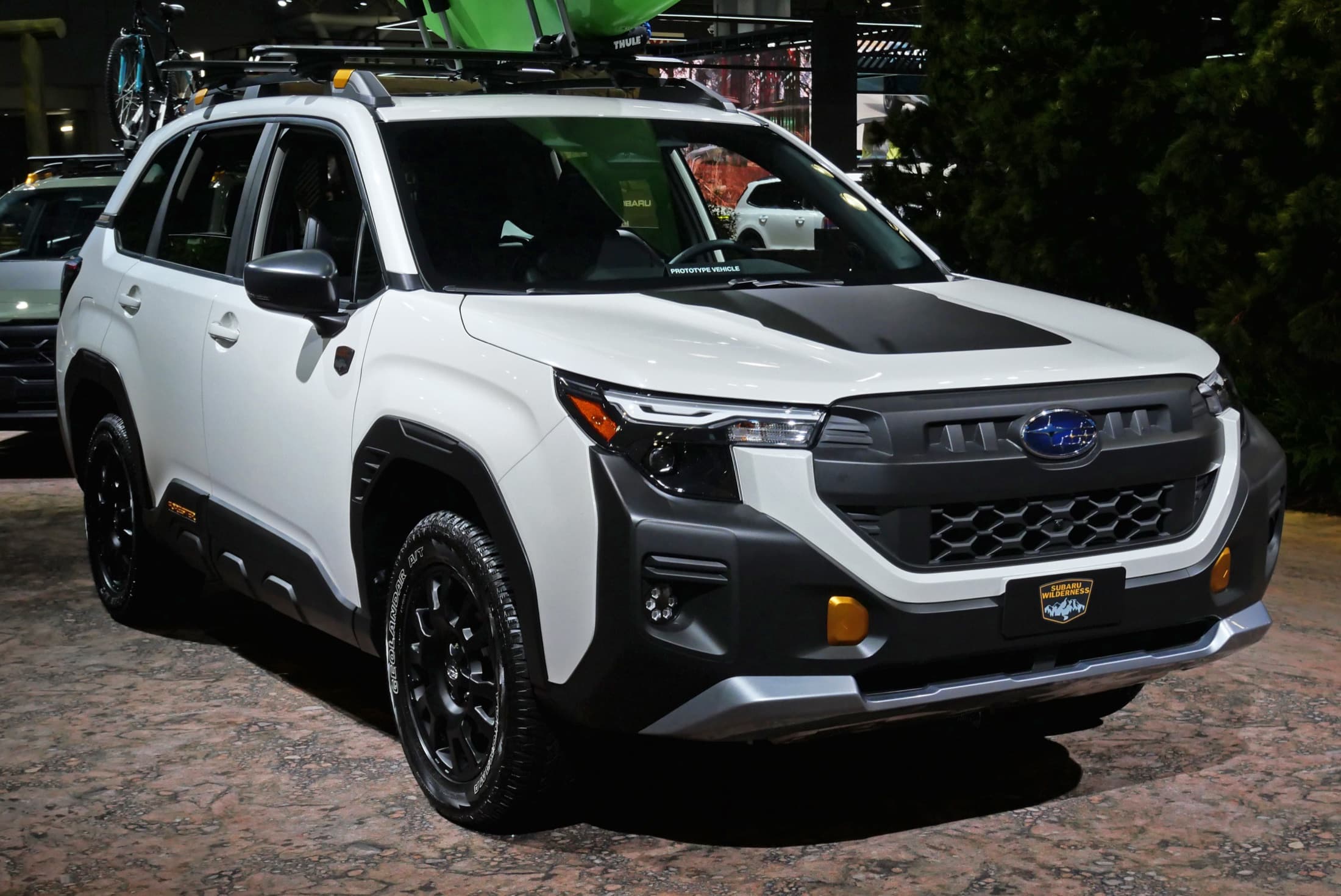
The Wilderness is a separate axis. It is gas-only, raises ground clearance to 9.3 inches, adds all-terrain tires, dual recovery points, and bumps towing to 3,500 pounds via an upgraded transmission cooler. Reviewers from The Drive and The Truth About Cars praised it as the most honest, capability-true Forester — but it is also the thirstiest (24/28 mpg) and rides on knobbier rubber. Buy it if you actually leave the pavement; if 'Wilderness' is mostly an aesthetic to you, the Sport or Sport Hybrid gives you the look for less compromise.
Fuel economy: what the EPA numbers actually say
The EPA ratings break into four clean tiers. The most efficient gas trims — Base, Premium, and Limited — are rated 26 city / 33 highway / 29 combined. The Sport and Touring drop slightly to 25 / 32 / 28. The Wilderness, with its taller stance and all-terrain tires, falls to 24 / 28 / 26 — the trade-off for its capability. And every Hybrid trim (Premium, Sport, Limited, Touring) lands at 35 city / 34 highway / 35 combined. These are EPA estimates, cited via fueleconomy.gov and cars.com's trim breakdown, not MotorRank-measured numbers.
What does that mean in dollars? The jump from a 29-mpg gas Forester to a 35-mpg hybrid is roughly a 20% reduction in fuel use, and Subaru's quoted 581-mile combined range means fewer fill-ups on road trips. For a 12,000-mile-a-year driver, the hybrid's six-mpg combined advantage saves a meaningful but not enormous amount annually — the stronger case for the hybrid is the smoother drive plus the efficiency, not fuel savings alone. Run your own miles-per-year against your local gas price before deciding the premium is 'worth it.'
One honest caveat: unlike a plug-in hybrid, this is a self-charging hybrid, so there is no electric-only commuting and no plug to manage — it simply sips less gas. That makes it effortless to live with but means the efficiency ceiling is the EPA's 35 mpg, not the 80-100 MPGe a plug-in might promise. If you want to drive on electricity, this is not that car; if you want a no-homework efficiency bump, it is exactly right.
Trim walk, part one: Base, Premium, and the value sweet spot
The Base Forester ($29,995) is more car than its price suggests. Standard Symmetrical AWD, EyeSight with Automatic Emergency Steering, the 11.6-inch touchscreen, and the Top Safety Pick+ structure are all here. There is a hidden bonus: without the moonroof, the base trim actually has the most cargo room in the lineup — 29.6 cubic feet behind the rear seats versus 27.5 on moonroof-equipped trims, and 74.4 cubic feet folded. If you want maximum hauling and minimum price and can live without a sunroof and some comfort features, the base is a legitimately smart buy, not a stripper.
The Premium ($31,995) is the mainstream gas choice and the trim most gas buyers actually want. For $2,000 over base it opens up the popular option packages (power tailgate, blind-spot detection, the Harman Kardon system, navigation) and adds the comfort touches that make daily use nicer. It is the natural cross-shop against a Honda CR-V LX/EX or Toyota RAV4 LE/XLE — except those rivals charge extra for the AWD the Forester includes.
But here is the value sweet spot we keep pointing to: the Premium Hybrid at $34,730 sits just $2,735 above the gas Premium and gives you the better powertrain, 35 mpg, and the larger digital gauge cluster as standard. For most buyers comparing the gas Premium to a loaded gas trim, the Premium Hybrid is the smarter place to spend the money — which is why it is our recommended default.
Trim walk, part two: Sport, Sport Onyx, and the style trims
The Sport ($34,795) is for the buyer who wants the Forester to look less granola and more athletic. It brings bronze and gloss-black exterior accents, unique suspension tuning shared with the new Onyx, SI-Drive with Intelligent and Sport Sharp modes, and StarTex animal-free upholstery. It does not change the 180-hp engine, so this is about appearance and a slightly sharper chassis feel, not speed. The matching Sport Hybrid ($37,930) is the more compelling version: same styling story, plus 35-mpg efficiency and the smoother hybrid drivetrain.
New for 2026 is the Sport Onyx Edition ($36,495), Subaru's blacked-out treatment. It adds 19-inch dark-metallic wheels, gloss-black underguards and inserts, dark-gray badging, a black-and-gray StarTex interior with brown stitching, a simulated-leather dash panel, and a standard Harman Kardon system with a 576-watt-equivalent amp. It is the move-up pick for the gas buyer who wants a richer-looking cabin and standard premium audio without going all the way to Limited or Touring.
Our take: if styling is your driver, get the Sport Hybrid — you keep the look and gain the efficiency. The gas Sport and Onyx make sense mainly if you specifically do not want a hybrid (towing, budget, or simplicity) but still want the sportier presentation. None of these trims changes the fundamental driving character; they dress it up.
Trim walk, part three: Limited, Touring, and the loaded flagships
The Limited ($35,995, gas) and Limited Hybrid ($38,995) are the comfort-equipment trims. Limited adds leather-trimmed seats, an 8-way power passenger seat, rain-sensing wipers, navigation, and the Harman Kardon system, with chrome-and-black exterior accents. The Limited Hybrid layers the 35-mpg powertrain and StarTex upholstery with blue stitching on top. This is the trim for buyers who want most of the luxury without paying flagship money — and the Limited Hybrid is the value pick among the upper trims if you want both comfort and efficiency.
At the top sit the Touring ($39,995, gas) and Touring Hybrid ($41,545). These add the genuinely premium kit: ventilated front seats, heated rear seats, a heated steering wheel, a 360-degree Surround View Monitor, DriverFocus driver monitoring, a Smart Rearview Mirror, leather with Ultrasuede inserts, and 19-inch wheels. Subaru positions the Touring Hybrid as undercutting similarly equipped rivals, and for a loaded compact SUV with standard AWD and a hybrid drivetrain, $41,545 is competitive against a top RAV4 or CR-V hybrid.
The honest question on the flagships: most of what makes the Forester great — AWD, EyeSight, the Top Safety Pick+ structure, the hybrid's efficiency — is already present several trims down. The Touring is worth it if you specifically want ventilated seats, the surround camera, and the nicest materials; if you do not, the Premium Hybrid delivers the core experience for $7,000 less.
Trim verdict by buyer type
Here is the matrix, distilled. The budget buyer: gas Base ($29,995) — most cargo room, fully safety-equipped, no apologies needed. The smart-default buyer (most people): Premium Hybrid ($34,730) — the best blend of price, efficiency, and standard kit, and our overall recommendation. The style-conscious buyer: Sport Hybrid ($37,930) — the bronze-accented look plus 35 mpg. The off-road or towing buyer: Wilderness ($36,995) — 9.3-inch clearance and 3,500-pound towing, accepting the gas-only thirst.
The comfort-and-value buyer: Limited Hybrid ($38,995) — leather-trimmed comfort with hybrid efficiency, without flagship pricing. The 'I want everything' buyer: Touring Hybrid ($41,545) — ventilated seats, surround camera, and the richest cabin, still with standard AWD. The simplicity buyer who tows or has a tight budget: a gas Premium or Limited — no hybrid complexity, lower entry price, and the gas car's familiar behavior.
If you remember one line from this section: unless you need the Wilderness's hardware or the absolute lowest price, the hybrid version of whatever trim you like is the one to buy. The powertrain premium is small relative to the daily improvement, and it is what finally makes the Forester feel modern rather than merely sensible.
Drivetrain and capability: AWD, the Wilderness, and towing
Every Forester gets Subaru's Symmetrical All-Wheel Drive as standard — that is the brand's core selling point and the single biggest reason snow-belt and gravel-road buyers gravitate to it. For 2026 Subaru says the AWD system has quicker center-differential lockup and reduced wheelspin in off-road conditions, and the hybrid was engineered to keep full AWD capability with no compromise. X-MODE with Hill Descent Control is standard on the hybrids and available across the range, giving the Forester more genuine all-surface ability than most car-based crossovers in the class.
The Wilderness is where capability peaks. It raises ground clearance from the standard 8.7 inches to 9.3 inches, fits all-terrain tires, improves the approach and departure angles, and adds dual recovery points front and rear. Subaru upgraded the transmission cooler to lift towing from 3,000 to 3,500 pounds — the highest ever on a Forester, and, as reviewers noted, more than the Ford Bronco Sport Badlands can pull. The Drive and The Truth About Cars both praised the Wilderness as a genuinely more capable adventure machine, not just a styling package.
For most buyers, though, the standard AWD is already enough — it handles snow, wet leaves, dirt roads, and light trails without thinking about it. The Wilderness earns its premium only if you regularly tackle rougher terrain or tow near that 3,500-pound limit. If you do, it is the most honest Forester. If you do not, you are paying for hardware (and a fuel-economy penalty) you will not use.
Interior, tech, and safety: the cabin you'll actually live with
Inside, the 2026 Forester leads with space and visibility. It is an airy, upright cabin with big windows — outward sightlines are a real, underrated strength — and seating for five with 39.4 inches of rear legroom. The dashboard is dominated by an 11.6-inch portrait touchscreen (standard across the line), with a 12.3-inch full digital gauge cluster standard on the hybrids. Higher trims bring StarTex or leather upholstery, a Harman Kardon system, ventilated and heated seats, and a 360-degree camera. Cargo is competitive at 27.5-29.6 cubic feet behind the rear seats and up to 74.4 folded, and Edmunds noted the Forester swallowed more real luggage than its on-paper figures suggest, beating a CR-V hybrid in their loading test.
On tech, the experience is a mixed bag and you should go in clear-eyed. The big screen runs wireless Apple CarPlay and Android Auto and looks modern, but multiple outlets criticize it for routing climate controls through the touchscreen and for waking slowly. If you prefer physical climate knobs, this cabin will frustrate you — test it before you buy. Materials, too, only turn genuinely nice near the top of the range; lower trims are well-built but plain, and reviewers note rivals offer plusher cabins.
Safety is the standout. The 2026 Forester is a 2026 IIHS Top Safety Pick+ — the agency's highest award — with Good ratings across crashworthiness evaluations. Standard EyeSight Driver Assist now includes Automatic Emergency Steering, blind-spot detection with rear cross-traffic alert, and more, on every trim. This is one of the few SUVs where the cheapest version is as safe as the most expensive, which is a large part of why it stays on our recommendation list despite its tech gripes.
Ownership, warranty, reliability, and resale
Warranty is where the Forester is competitive but not class-leading. Subaru's coverage is the standard mainstream package: 3 years / 36,000 miles bumper-to-bumper, 5 years / 60,000 miles powertrain, and 5 years / unlimited-mileage rust-perforation protection. Hyundai and Kia still beat that on paper with longer powertrain terms. Where the Forester answers back is the hybrid: the hybrid system carries 8 years / 100,000 miles of coverage, extended to 10 years / 150,000 miles on the battery and related components in California and other CARB states. If you are buying the hybrid, that long battery warranty meaningfully de-risks the new powertrain.
On reliability and resale, we will be careful: MotorRank has not run a reliability study or a resale analysis on this car, so we publish no invented scores or percentages. What we can say honestly is that the Forester carries a strong reputational track record — Subaru's Boxer/AWD hardware is well understood, the 2026 was named a Consumer Reports Top Pick, and Subarus generally hold value well in snow-belt markets. Treat that as reputation, not a measured MotorRank figure. The new hybrid is the one unknown: it is a second-year design, which lowers first-year-launch risk, but it has less long-term field history than the gas car.
The biggest ownership caveat is the active recall. NHTSA campaign 26V346 covers roughly 69,663 model-year 2026 Foresters and Forester Hybrids for a moonroof-bonding defect that can let the glass detach while driving; the remedy is a free dealer inspection and, if needed, replacement. This does not make the car a bad buy, but it is a non-negotiable pre-purchase check: run the VIN through NHTSA or a Subaru dealer and confirm the fix is done before you take delivery.
Same-brand cross-shop: 2026 Forester vs 2026 Subaru Outback
The natural in-family step-up from the Forester is the Subaru Outback, and the choice is mostly about size and use. The Forester is the taller, boxier, easier-to-park compact SUV with the better outward visibility and the lower entry price. The Outback is longer, wagon-shaped, rides a bit lower, and offers more cargo length and a turbocharged engine option the Forester does not get — making it the better pick for big road trips, larger dogs and gear, or buyers who want more power than the Forester's 180-hp gas four provides.
For a single buyer deciding between them: if your driving is mostly urban and suburban, you value the upright seating and tight turning radius, and you want the new hybrid's efficiency, the Forester is the right Subaru. If you regularly haul long cargo, tow toward the upper limits, or want the available turbo grunt and a slightly more premium road-trip feel, step up to the Outback. Both share Subaru's standard AWD and safety DNA, so you are not giving up the brand's core advantages either way — you are choosing footprint and powertrain.
Cross-shop: RAV4, CR-V, CX-5, Sportage Hybrid — and who should wait
Against the Toyota RAV4, the Forester trades the RAV4's broader hybrid lineup and stronger resale for standard AWD at a lower entry price and better outward visibility; cross-shop both hybrids closely on price and cargo. Against the Honda CR-V Hybrid, the CR-V offers a plusher cabin and more on-paper cargo volume, but charges for AWD and lacks the Forester's standard-safety-at-base-price story — Edmunds even found the Forester out-carried a CR-V hybrid in real-world loading. The Mazda CX-5 counters with a nicer interior and sharper handling but lags on rear space and (currently) hybrid efficiency. The Kia Sportage Hybrid brings bold styling, a long warranty, and competitive efficiency, and is the value rival to beat on paper.
So who should wait? If physical climate controls and a top-tier cabin are non-negotiable for you, wait and drive the CR-V and CX-5 back-to-back before committing — the Forester's touchscreen-heavy interior is its weakest point. And on the 2026 specifically, anyone uneasy about an open recall should either insist on a remedied VIN or wait until inventory has cleared the moonroof fix. For everyone else — buyers who prioritize standard AWD, safety, visibility, and now efficiency — the Forester earns its place at the top of the shopping list, with the hybrid as the version to buy.
For shoppers wanting on-site comparisons, see our reviews of the 2026 Toyota RAV4, 2026 Honda Passport, 2026 Mazda CX-5, 2026 Kia Sportage Hybrid, 2026 Jeep Cherokee, and the same-brand 2026 Subaru Outback.
How to buy, and the final verdict
Here is the buying playbook. First, decide gas or hybrid using your real annual mileage and whether you need the Wilderness or towing — for most commuters, the hybrid wins. Second, pick your trim: the Premium Hybrid ($34,730) is our default; step to Limited Hybrid or Touring Hybrid only for specific comfort features you will actually use. Third, before you sign, run the VIN through NHTSA for campaign 26V346 and confirm the moonroof recall is remedied. Fourth, remember the $1,450 destination fee is mandatory and on top of every MSRP — negotiate on the vehicle price, not the destination charge, which is fixed.
The final verdict: the 2026 Subaru Forester is one of the most sensible buys in the compact SUV class, and the new hybrid finally fixes the one thing that held it back. Buy the Forester Premium Hybrid for the best blend of price, efficiency, standard AWD, and Top Safety Pick+ safety; choose the Wilderness only if you genuinely need its trail hardware and tow rating; skip the base gas engine unless price is the single deciding factor. Verify the recall, factor the destination fee, and you are buying a car that will be easy to live with for a long time. Our research-basis score: 7.4 out of 10 — a strong, safe, efficient recommendation held just short of the top tier by a slow gas engine, a fiddly touchscreen, and an open 2026 recall.
Specs Snapshot
The numbers shoppers compare first.
Key numbers to compare against alternatives before you commit.
| Base price | $30.0K - $41.5K |
|---|---|
| Horsepower | 194 hp |
| 0-60 mph | 8.8 sec |
| Drivetrain | AWD |
| Transmission | CVT |
| Fuel type | Hybrid |
| Combined MPG/MPGe | 35 |
Media Proof
Exterior and interior visuals with source receipts.
Every asset shown here links back to its source and license so the page can gain trust without borrowing competitor media.
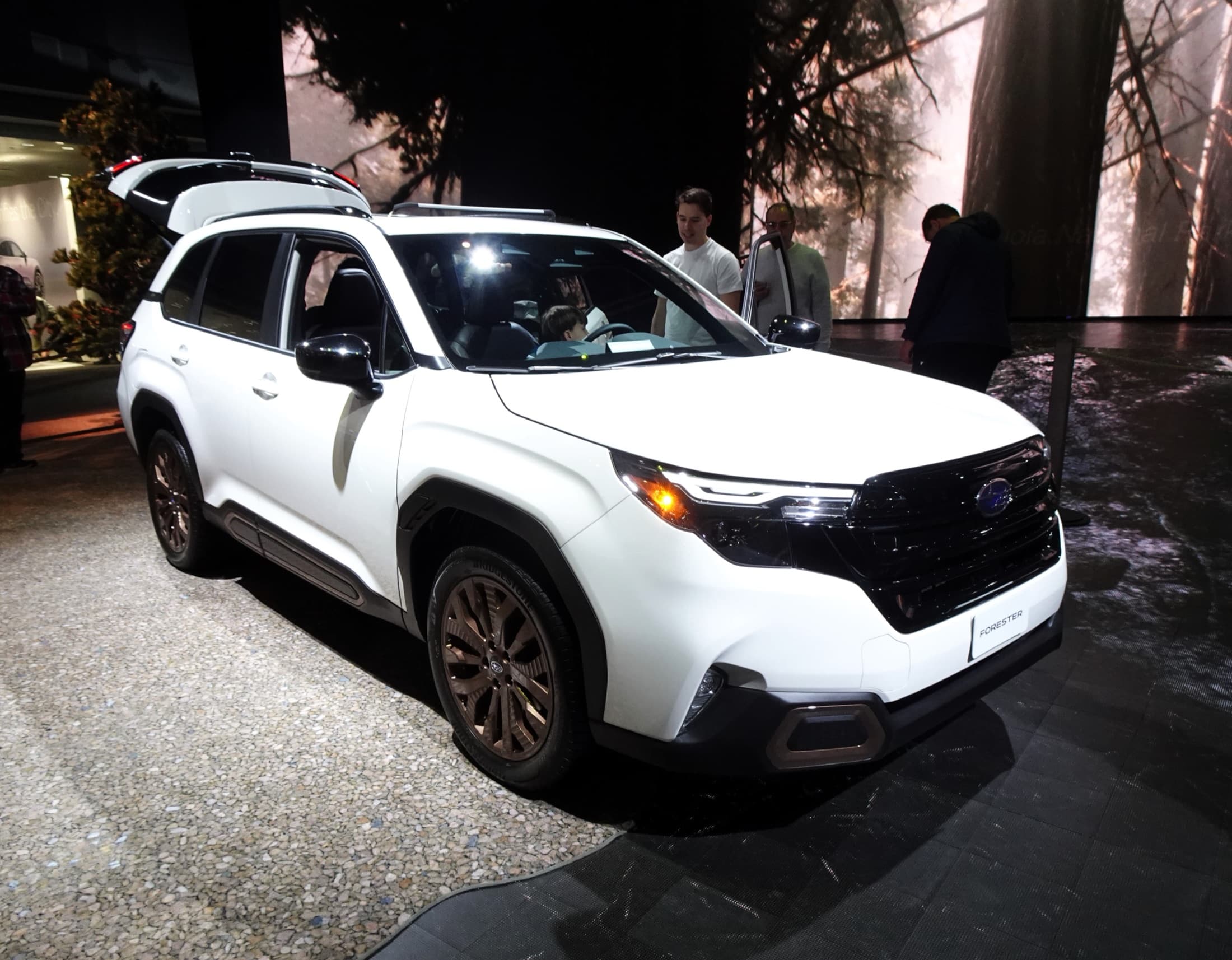
Source Receipts
Source pages, creator credits, and reuse licenses are visible for editorial trust and legal hygiene.
Related Video
2026 Subaru Forester Wilderness | MotorWeek Road Test
MotorWeek
Embedded from MotorWeek's official YouTube channel as third-party reference media (Forester Wilderness road test) — not an independent MotorRank road test.
Interior
Cabin views before you choose a trim.
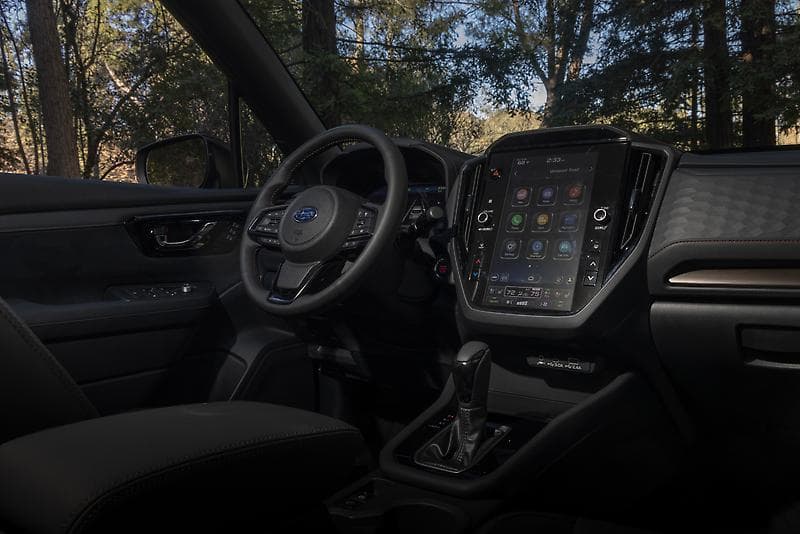
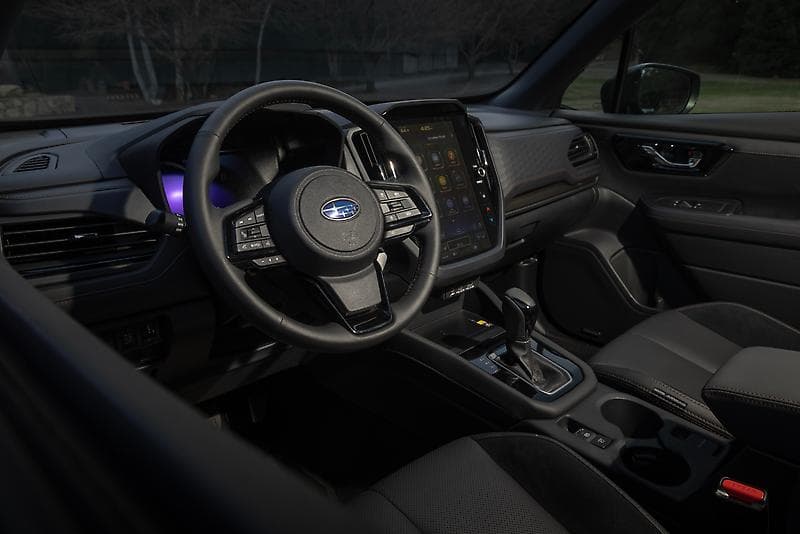
Every Forester gets an 11.6-inch portrait touchscreen with wireless Apple CarPlay and Android Auto; the hybrids add a 12.3-inch digital gauge cluster as standard. The cabin's strengths are space and outward visibility; its weakness, flagged by multiple outlets, is that the touchscreen swallows the climate controls and can be slow to wake. Material richness only arrives near the top of the range.
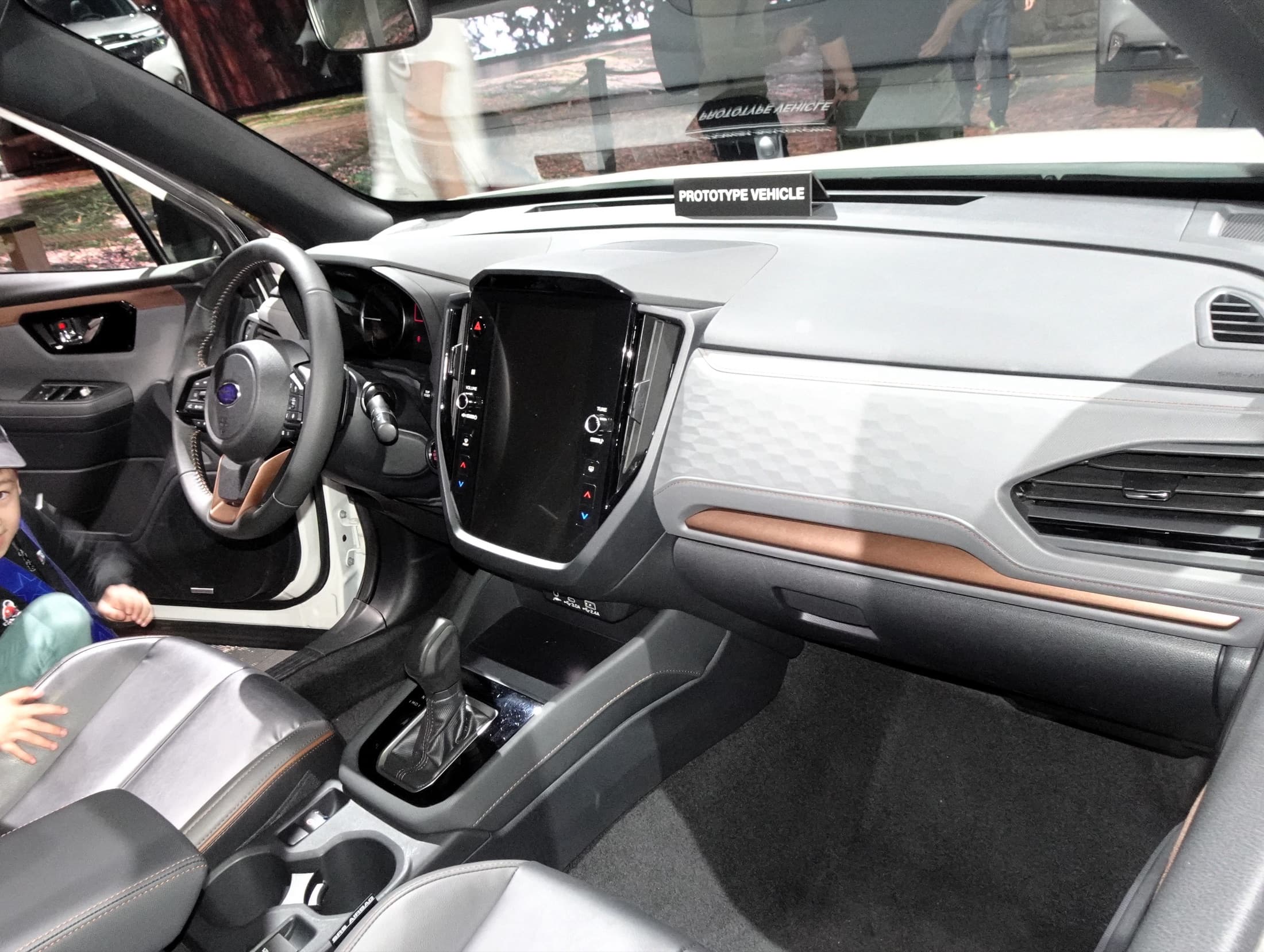
Interior Source Receipts
Research basis
Updated June 11, 2026
Built from Subaru's official pricing release (February 10, 2026) and subaru.com specifications, EPA fuel-economy data via fueleconomy.gov and cars.com, NHTSA recall campaign 26V346, and named third-party road tests from Edmunds, Car and Driver, MotorTrend, MotorWeek, The Drive, and Consumer Reports.
All MSRPs are official and exclude the $1,450 Destination & Delivery fee (higher in some northeastern states and $1,600 in Alaska). Acceleration figures are attributed third-party track results, not MotorRank-measured; no reliability, repair-cost, or resale numbers are invented.
We will update this review when Subaru revises 2026 pricing, when NHTSA closes or expands recall 26V346, or when MotorRank conducts its own instrumented test.
Which 2026 SUBARU FORESTER to Buy
Which trim is right for you?
Forester (Base)
$29,995
The value entry: standard Symmetrical AWD, EyeSight, and the 11.6-inch screen, with the most cargo room in the lineup (no moonroof means 29.6 cubic feet behind the rear seats).
Forester Premium
$31,995
The volume gas trim that opens up the popular option packages and creature comforts — the mainstream 'just-right' gas pick.
Forester Premium Hybrid
$34,730
Our default pick: the cheapest way into the 35-mpg series-parallel hybrid, with full Symmetrical AWD and the 12.3-inch digital cockpit standard.
Our pick
Forester Sport
$34,795
Bronze-and-black styling, SI-Drive, and unique suspension tuning for the buyer who wants the look without the off-road kit.
Forester Sport Onyx Edition
$36,495
New for 2026: a blacked-out treatment with 19-inch dark wheels and a standard Harman Kardon audio system.
Forester Sport Hybrid
$37,930
The styling-forward hybrid: bronze 19s, Harman Kardon audio, StarTex seats, plus 35-mpg efficiency.
Forester Wilderness
$36,995
The rugged one: 9.3 inches of ground clearance, all-terrain tires, a 3,500-pound tow rating, and dual recovery points (gas only).
Forester Limited
$35,995
Leather-trimmed comfort with a power passenger seat and rain-sensing wipers for the equipment-focused gas buyer.
Forester Limited Hybrid
$38,995
Hybrid efficiency with the Limited's comfort kit and StarTex upholstery with blue stitching.
Forester Touring
$39,995
The loaded gas flagship: ventilated heated seats, a 360-degree camera, DriverFocus monitoring, and leather with Ultrasuede.
Forester Touring Hybrid
$41,545
The top of the range — every luxury feature plus 35-mpg hybrid efficiency.
Performance
- Horsepower
- 194hp
- 0–60 mph
- 8.8s
Scorecard
- Performance6.2
- Comfort7.8
- Value8.2
- Ownership7.6
- Technology6.8
- Safety9
- Reliability7.5
- Interior7.4
Shopping Tools
Next steps for 2026 Subaru Forester shoppers.
Research tools to help you move from browsing to buying.
Compare rivals
Line up the closest alternatives before you commit.
Check deal signals
Review pricing pressure, incentives, and value angles.
Read owner signal
Balance the expert take with ownership patterns.
Same-brand step-up
Deciding between Subaru's two AWD staples? Our Outback review covers where the longer, turbo-available wagon-SUV beats the Forester — and where it does not.
Open vehicle hub
Keep specs, reliability, rankings, and review links together.
Compare Against
Cross-shop before you commit.
The closest alternatives in this price range, with our read on each.
The best-selling compact SUV and the hybrid benchmark
2026 Toyota RAV4 Hybrid
Broader hybrid lineup and stronger resale, but charges for AWD on most trims and offers less outward visibility — cross-shop the hybrids closely on price and cargo.
The driver's choice with the premium cabin
2026 Mazda CX-5
Nicer interior and sharper handling, but trails the Forester on rear space and standard-AWD value, and lacks the Forester Hybrid's efficiency.
The value rival with bold styling and a long warranty
2026 Kia Sportage Hybrid
Strong efficiency, striking design, and a longer powertrain warranty make it the paper value leader — but it lacks Subaru's standard-AWD-everywhere story and trail credibility.
The same-brand step-up for more space and power
2026 Subaru Outback
Longer, with available turbo grunt and more cargo length — the better road-tripper, while the Forester is easier to park and now more efficient with its hybrid.
Buyer FAQ
2026 Subaru Forester buyer questions, answered.
24
buyer answers
Question Map
Decision
Which 2026 Forester should you actually buy?
The trim and powertrain decision, settled.
What's the single best 2026 Forester trim to buy?
The Premium Hybrid at $34,730.+
For most buyers the Forester Premium Hybrid ($34,730 official MSRP, plus the $1,450 destination fee) is the smart default. It is the cheapest way into the new 35-mpg series-parallel hybrid, keeps standard Symmetrical AWD and the IIHS Top Safety Pick+ structure, and adds the 12.3-inch digital gauge cluster as standard. It even undercuts several gas trims like the Sport, Wilderness, Limited, and Touring, so the better powertrain costs less than many gas upgrades.
Is the base gas Forester worth it to save money?
Yes if budget rules — it's fully safety-equipped.+
The $29,995 Base trim is no stripper: standard AWD, EyeSight with Automatic Emergency Steering, the 11.6-inch screen, and the Top Safety Pick+ structure are all included. Skipping the moonroof actually gives it the most cargo room in the lineup (29.6 cubic feet behind the seats). The only real downside is the slow 180-hp engine. If lowest price and maximum cargo matter most, it is a legitimately smart buy.
Should I get the Touring Hybrid or save money lower in the range?
Only if you want ventilated seats and the 360 camera.+
The Touring Hybrid ($41,545) adds ventilated front seats, heated rear seats, a heated wheel, a 360-degree camera, DriverFocus monitoring, and leather with Ultrasuede. But the Forester's core strengths — AWD, EyeSight safety, and the hybrid's 35-mpg efficiency — are already present on the Premium Hybrid for $7,000 less. Buy the Touring only if you specifically want those top-end comfort features; otherwise the money is better saved.
What's the one thing I must check before buying any 2026 Forester?
Confirm recall 26V346 (moonroof) is fixed.+
The 2026 model year is covered by NHTSA recall campaign 26V346, a moonroof-bonding defect affecting roughly 69,663 Foresters and Forester Hybrids that can let the glass panel detach while driving. The fix is a free dealer inspection and, if needed, replacement. Before you sign, run the VIN through NHTSA's recall lookup or ask the dealer to confirm the remedy has been completed.
Gas vs Hybrid
The 2026 Forester's biggest decision
Powertrain, efficiency, and price math.
Gas or hybrid — which 2026 Forester is the better buy?
Hybrid, for most commuters.+
The hybrid makes 194 total system horsepower versus 180 for the gas car, returns 35 mpg combined versus up to 29, and Edmunds clocked it about 0.4 second quicker to 60 mph (roughly 8.8 vs 9.2 seconds). It also feels smoother in daily stop-and-go where the gas car feels laziest. Because the Premium Hybrid ($34,730) costs less than many gas trim upgrades, the hybrid is the better buy unless you need the gas-only Wilderness or the lowest possible price.
How much more efficient is the Forester Hybrid?
About 20% better — 35 mpg vs 29 combined.+
Every hybrid trim is EPA-rated 35 city / 34 highway / 35 combined, while the best gas trims manage 26/33/29. That is roughly a 20% reduction in fuel use, and Subaru quotes up to 40% better economy and a 581-mile combined range on a tank. These are EPA estimates via fueleconomy.gov and cars.com, not MotorRank-measured. The savings are real but modest for low-mileage drivers — the smoother drive is the bigger reason to choose it.
Is the Forester Hybrid a plug-in?
No — it's a self-charging hybrid, no plug.+
The 2026 Forester Hybrid is a series-parallel (self-charging) hybrid, not a plug-in. There is no charging port and no electric-only commuting; it simply uses the electric motors to cut fuel consumption, topping out at the EPA's 35 mpg combined. That makes it effortless to own — no charging homework — but it will not deliver plug-in-style electric range. If you want to drive on electricity, this is not that car; if you want a no-hassle efficiency bump, it is ideal.
Does the hybrid keep Subaru's all-wheel drive?
Yes — full Symmetrical AWD, no compromise.+
Subaru states the hybrid powertrain was specifically engineered to integrate into the Forester's existing all-wheel-drive architecture with no loss of AWD capability. Every hybrid trim keeps standard Symmetrical AWD plus X-MODE with Hill Descent Control. So you do not trade away the Forester's signature all-weather security to get the efficiency — that is a key reason the hybrid is such an easy recommendation over rivals that water down AWD on their hybrids.
Real Cost
What a 2026 Forester actually costs
MSRP, destination, packages, and out-the-door reality.
What's the real out-the-door price of a 2026 Forester?
Add the mandatory $1,450 destination fee to MSRP.+
MSRP excludes Subaru's $1,450 Destination & Delivery fee, which is mandatory — so a $29,995 base Forester is about $31,445 before tax, title, and any dealer add-ons. The fee can differ in nine northeastern states and Hawaii and is $1,600 in Alaska. Negotiate on the vehicle price, not the destination charge, which is fixed. Factor in optional packages ($1,200-$2,200 on gas trims) and $395 premium paint before comparing to rivals.
How much does it cost to step from gas to hybrid?
About $2,735 from gas Premium to Premium Hybrid.+
The gas Premium is $31,995 and the Premium Hybrid is $34,730 — a $2,735 step. Crucially, the Premium Hybrid still undercuts the gas Sport ($34,795), Onyx ($36,495), Wilderness ($36,995), Limited ($35,995), and Touring ($39,995). So moving to the hybrid powertrain costs less than many gas trim upgrades, which is why we recommend the Premium Hybrid as the overall best buy.
Did Subaru change 2026 Forester prices mid-year?
Yes — a February 2026 affordability adjustment.+
Subaru's February 10, 2026 pricing release adjusted pricing on more than 90% of the Forester lineup with an explicit focus on affordability and value, and added the new Sport Onyx Edition. The figures in this review reflect that current pricing, not the original launch sheet. Always confirm the current MSRP on subaru.com's build-and-price tool, since trim pricing can drift through a model year.
Are the option packages worth it on the gas trims?
Often yes — they bundle features hybrids include standard.+
Gas trims offer packages (codes 15, 24, 33, 42) from $1,200 to $2,200 that add the power tailgate, blind-spot detection, navigation, the Harman Kardon system, and reverse automatic braking. The hybrids include much of that content as standard, which narrows the real price gap between a well-equipped gas trim and the equivalent hybrid. Build the gas car with the equipment you actually want before deciding the hybrid premium is not worth it.
Drivetrain & Capability
AWD, towing, and off-road ability
What the Forester can do off the pavement and at the hitch.
How much can the 2026 Forester tow?
Up to 3,500 lbs on the Wilderness.+
Standard Foresters are rated lower, but the Wilderness tows up to 3,500 pounds — the highest ever on a Forester — thanks to an upgraded transmission cooler, up from 3,000 pounds. Reviewers noted that is more than a Ford Bronco Sport Badlands can pull. If towing near that limit matters, the Wilderness is the trim to get; it is gas-only, since the hybrid is not offered on the Wilderness.
Is the Forester Wilderness worth it for off-roading?
Yes if you genuinely leave the pavement.+
The Wilderness raises ground clearance to 9.3 inches (from 8.7), adds all-terrain tires, better approach/departure angles, and dual recovery points. The Drive and The Truth About Cars praised it as a genuinely more capable adventure machine, not just a styling package. The trade-off is the lineup's worst fuel economy (24/28 mpg) and knobbier tires. Buy it if you actually go off-road or tow; if 'Wilderness' is just a look to you, the Sport gives you the style for less compromise.
Does every 2026 Forester come with all-wheel drive?
Yes — standard Symmetrical AWD on all 11 trims.+
Every Forester, from the $29,995 Base to the $41,545 Touring Hybrid, includes Subaru Symmetrical All-Wheel Drive as standard — where Toyota, Honda, Mazda, and Hyundai typically charge extra for AWD on most trims. For 2026 Subaru says the system has quicker center-differential lockup and reduced wheelspin off-road. That standard all-weather security at the base price is the Forester's single biggest competitive advantage in the class.
How fast is the 2026 Forester?
Not fast — about 9.2 sec gas, 8.8 sec hybrid to 60.+
This is the Forester's weakest area. Edmunds measured the gas 180-hp Forester at about 9.2 seconds to 60 mph and the 194-hp hybrid at about 8.8 seconds; MotorWeek clocked the Wilderness around 8.6 seconds. Reviewers consistently call highway merging in the gas car stressful. These are attributed third-party figures, not MotorRank-measured. If acceleration matters to you, the hybrid is the better choice and a turbocharged rival or the Subaru Outback's available turbo is worth a look.
Daily Use
Living with the 2026 Forester
Cabin, cargo, tech, and visibility day to day.
How much cargo space does the 2026 Forester have?
27.5-29.6 cu ft behind the seats; up to 74.4 folded.+
The base trim (no moonroof) leads with 29.6 cubic feet behind the rear seats and 74.4 folded; moonroof-equipped trims offer 27.5 and 69.1. On paper that trails some rivals, but Edmunds found the Forester swallowed more real luggage than its figures suggest — out-carrying a CR-V hybrid in their loading test, with only the Hyundai Tucson doing better. The boxy shape and wide opening make it easy to load.
Is the Forester's touchscreen and tech any good?
Big screen, but climate controls frustrate.+
Every Forester gets an 11.6-inch portrait touchscreen with wireless Apple CarPlay and Android Auto, and hybrids add a 12.3-inch digital gauge cluster. It looks modern, but multiple outlets criticize it for routing climate controls through the touchscreen and for waking slowly. If you prefer physical climate knobs, test the cabin before buying — this is the Forester's weakest point versus rivals like the CR-V and CX-5.
Is the 2026 Forester comfortable for tall passengers?
Yes — roomy, upright, with great visibility.+
The Forester offers 39.4 inches of rear legroom and an airy, upright cabin that seats five. Its standout daily trait is outward visibility — big windows and a tall greenhouse make it easy to place and park. Reviewers note the hybrid's ride is notably smoother than the gas car's without being floaty. Material richness only arrives near the top of the range, but space and comfort are strong throughout.
Does the Forester have a moonroof, and is it safe given the recall?
Most trims do; verify the 26V346 fix first.+
Moonroofs are standard on most trims (the base omits it, gaining cargo room). However, the 2026 model year carries NHTSA recall 26V346 for a moonroof-bonding defect that can let the glass detach while driving, affecting roughly 69,663 vehicles. It is a free dealer fix. Do not let it scare you off the car, but absolutely confirm via VIN that the remedy is complete before taking delivery of any 2026 Forester with a moonroof.
Ownership
Warranty, reliability, recalls, and resale
What owning a 2026 Forester looks like long-term.
What's the 2026 Forester's warranty?
3/36k basic, 5/60k powertrain, 8/100k hybrid.+
Subaru's coverage is standard mainstream: 3 years/36,000 miles bumper-to-bumper, 5 years/60,000 miles powertrain, and 5 years/unlimited-mile rust-perforation. Hyundai and Kia beat that on paper. The hybrid's advantage is its 8-year/100,000-mile hybrid-system warranty, extended to 10 years/150,000 miles on the battery and related parts in California and other CARB states — which meaningfully de-risks the newer powertrain. This is official Subaru of America coverage.
Is the 2026 Subaru Forester reliable?
Strong reputation — but we publish no invented score.+
MotorRank has not run its own reliability study on this car, so we will not quote a number we did not measure. Honestly: the Forester carries a strong reputational track record, Subaru's Boxer/AWD hardware is well understood, and the 2026 was named a Consumer Reports Top Pick. The hybrid is a second-year design, which lowers first-year-launch risk but has less field history than the gas car. Treat reliability here as reputation, not a measured MotorRank figure.
Does the 2026 Forester have any recalls?
Yes — an active moonroof recall, campaign 26V346.+
Yes. As of June 11, 2026, the 2026 Forester is subject to NHTSA recall campaign 26V346 for a moonroof-bonding defect that can let the glass panel detach while driving, covering roughly 69,663 Foresters and Forester Hybrids. Dealer notifications began May 28, 2026, with owner letters following. The remedy is a free inspection and, if needed, replacement. Verify the fix is complete on any specific VIN before purchase. We do not assert crash ratings beyond the verified IIHS Top Safety Pick+ award.
Does the Forester hold its value?
Historically strong — but that's reputation, not a measured figure.+
Subarus, and Foresters specifically, have a strong resale reputation, especially in snow-belt markets where standard AWD is prized. We do not publish a depreciation percentage because MotorRank has not run that analysis, and we will not invent one. What we can say is that the brand's value retention is well-regarded and the 2026's safety awards and new hybrid efficiency should support demand. Confirm current resale data with a dedicated valuation source before factoring it into your purchase math.
Ready to buy?
Configure your 2026 Subaru Forester.
Get matched with a Subaru dealer or build your spec sheet from scratch.